
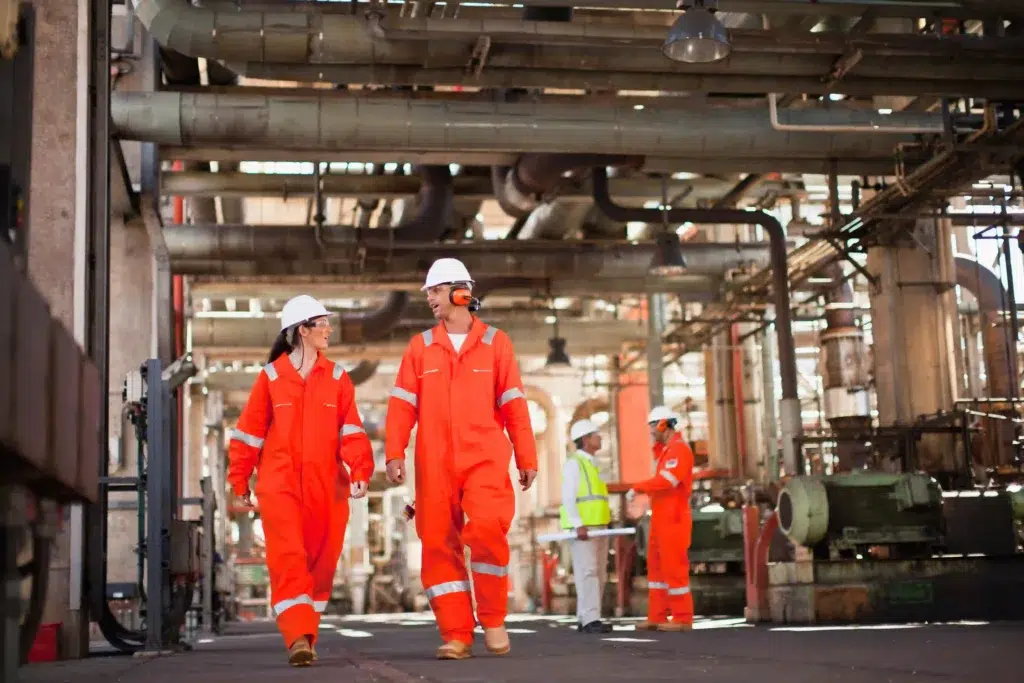
RTLS hazardous area deployment looks different depending on where you are in an industrial facility. In standard areas, tracking people, assets, tools, and equipment is often manageable. Yet in hazardous zones, the same challenge becomes significantly harder. The devices that work everywhere else are not always suitable where explosive gases, vapors, or combustible dust may be present, leaving teams with limited visibility into asset movement, equipment use, tool location, and personnel presence across some of the facility’s most demanding areas.
For organizations operating in oil and gas, chemical production, mining, pharmaceuticals, energy, utilities, and similar industries, this is not a new frustration. RTLS hazardous area coverage has long been difficult to achieve with standard connected hardware. Teams working in these zones have often had to manage critical workflows with less real-time awareness than other parts of their operations.
That is the visibility gap the Litum ATEX Family is designed to close.
With the Litum ATEX Gateway and Litum ATEX Dualis Tag, organizations can extend high-precision, intrinsically safe RTLS capability into ATEX Zone 1 and Zone 2 hazardous environments, including areas where standard connected devices cannot be safely deployed.
Why We Built It
The need was clear. Organizations running operations in hazardous environments were telling us the same thing: the areas carrying some of the highest operational and safety risk were often the ones they could see the least. Not because they had not tried, but because the tools available to them were not built for those conditions.
We wanted to change that. The Litum ATEX Family was built specifically for environments where ignition risk must be carefully controlled, where standard connected devices cannot go, and where limited visibility can affect asset availability, equipment use, maintenance workflows, workforce awareness, emergency readiness, and operational efficiency.
What the ATEX Family Includes
The family comprises two purpose-built hardware components that work together to deliver complete intrinsically safe RTLS capability for hazardous area environments, fully integrated with the broader Litum platform.
Litum ATEX Gateway
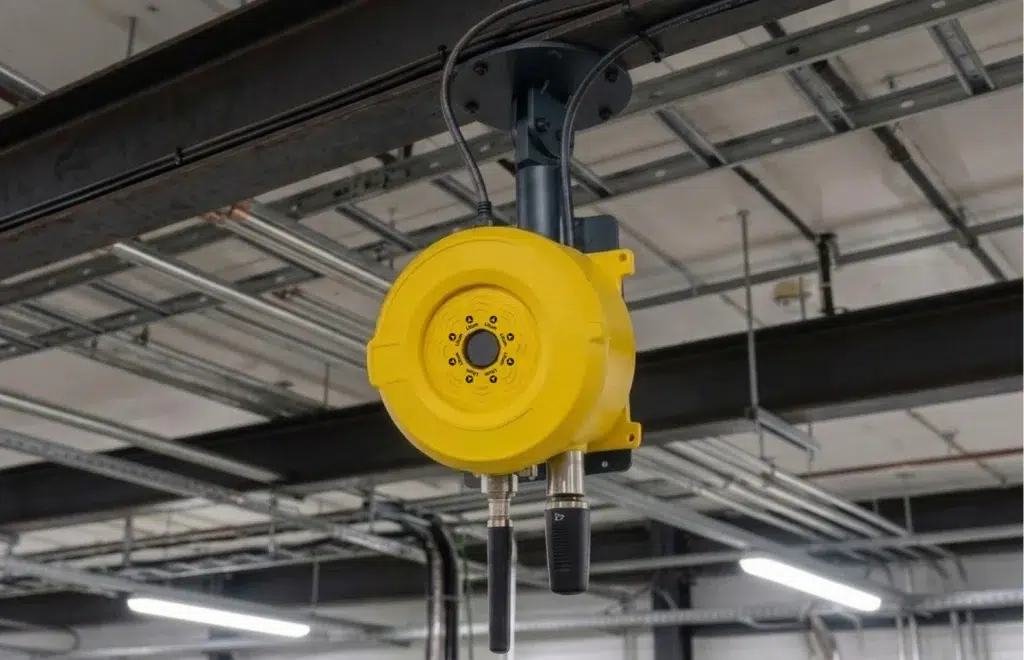
The ATEX Gateway is the infrastructure backbone of the system. Compliant with ATEX Zone 1 and Zone 2 environments, it acts as a bridge between location devices in the field and the central RTLS platform. It supports both UWB and BLE technologies, features a robust aluminum Ex d enclosure with dual Gas and Dust certifications, and can be installed via PoE with secure Ethernet connectivity and flexible mounting options for walls, ceilings, or walkways.
Litum ATEX Dualis Tag

The ATEX Dualis Tag enables accurate tracking of assets, equipment, and personnel in hazardous areas. Built with hybrid UWB and BLE RTLS technology, it supports sub-meter accuracy, intrinsically safe dual Gas and Dust certifications, an IP67-rated enclosure, up to five years of battery life with a replaceable battery, tamper detection, and over-the-air firmware updates.
Built for Zone 1: Why That Matters
For teams working in the most demanding parts of a hazardous facility, the zone classification of their equipment is not an abstract compliance detail. It determines what can physically be there with them.
Zone 1 areas are where explosive conditions exist during normal operations, not just in worst-case scenarios. They are also the areas where RTLS hazardous area visibility has historically been hardest to achieve, because most available hardware simply was not built to go there.
The ATEX Family hardware was. Both the Litum ATEX Gateway and Litum ATEX Dualis Tag are Zone 1 certified, enabling intrinsically safe RTLS coverage in classified hazardous areas that have traditionally sat outside the reach of standard location technology.
What the ATEX Family Enables
With the ATEX Family in place, organizations gain real-time visibility into some of the most challenging areas of their operations.
- For safety and EHS teams, that means workforce visibility in classified zones, faster emergency mustering, and clearer evidence of compliance with area access requirements.
- For operations managers, it means knowing where critical assets, tools, and equipment are at any given moment, without the manual effort that typically fills that gap.
- For IT and technology teams, it means extending an existing RTLS investment into hazardous area zones that were previously out of reach, without standing up a separate system or infrastructure.
The use cases span asset tracking, workforce visibility, zone access control, process tracking, and emergency response across oil and gas, petrochemicals, pharmaceuticals, mining, energy, utilities, and heavy manufacturing.

A Step Forward for Industrial Visibility
Hazardous environments have long represented the hardest edge of industrial operations to get right. The Litum ATEX Family is our answer to that challenge: purpose-built RTLS hazardous area technology that meets the safety requirements of classified zones without compromising on the accuracy and reliability teams depend on every day.
If your organization operates in hazardous environments and you are looking to extend real-time visibility into classified zones, we would love to show you what is possible.
ATEX Family FAQ
What Is the ATEX Family?
The Litum ATEX Family is a purpose-built, intrinsically safe RTLS solution for hazardous industrial environments. It comprises two devices, the Litum ATEX Gateway and the Litum ATEX Dualis Tag. Together, they extend real-time location visibility into classified hazardous areas where standard connected devices cannot be safely deployed, and integrate with the broader Litum RTLS platform.
What Makes the ATEX Family Different from Standard RTLS Hardware?
Standard RTLS hardware is designed for general industrial, warehouse, or healthcare environments. It is not suitable for classified hazardous areas where explosive gases, vapors, or combustible dust may be present, because standard electronic components, batteries, signals, and heat can create ignition risks. The ATEX Family is specifically designed and certified for these RTLS hazardous area environments, meaning it can be safely deployed in areas where standard devices cannot go.
What Does Intrinsically Safe Mean?
Intrinsically safe equipment is designed to limit electrical and thermal energy within a device, reducing the risk of ignition in areas where explosive gases, vapors, mist, or combustible dust may be present. This is what allows connected hardware to be used in hazardous environments where standard electronic devices may not be suitable. The Litum ATEX Family is built on this intrinsically safe RTLS foundation. While ATEX is a European certification framework, hazardous-area requirements exist globally. For projects outside the ATEX framework, Litum is ready to work with organizations that require other hazardous-area certifications and assess the appropriate path to support their deployment.
What Is Unique About the ATEX Family Compared to Other Intrinsically Safe RTLS Options?
The Litum ATEX Family is the first RTLS hardware family to combine ATEX Zone 1 and Zone 2 suitability with both Ultra-Wideband (UWB) and Bluetooth Low Energy (BLE) RTLS location capability, integrated with a full enterprise RTLS platform. UWB delivers high-precision location accuracy. BLE provides flexible, low-power coverage across larger areas. This combination in a single intrinsically safe system is what sets the ATEX Family apart for RTLS hazardous area deployments.
Why Does Zone 1 Suitability Matter?
Most intrinsically safe hardware available in the market targets Zone 2, where the certification bar is lower and the environments are less demanding. ATEX Zone 1 covers the areas of a facility closest to the source of the hazard, where the risk is present every day. Building hardware that can operate safely in Zone 1 means building for the hardest version of the RTLS hazardous area problem. For organizations managing the most safety-critical parts of their facilities, Zone 1 suitability is not a technical detail. It determines where the hardware can physically and legally go.
Is ATEX Certification Only Relevant for EU Operations?
ATEX is a European certification framework, but the need Litum’s ATEX Family addresses is global. Industrial sites around the world operate in hazardous areas where standard electronic devices may not be suitable, and where intrinsically safe hardware is required to support safer, compliant operations. The ATEX Family was developed for these RTLS hazardous area environments from the ground up, with intrinsically safe design principles. For projects outside the EU, certification requirements may vary by country, site, or industry. In those cases, Litum can review the relevant regional requirements with the customer and assess the appropriate certification path for the deployment.
Does the ATEX Family Integrate with Litum’s Broader RTLS Platform?
Yes. The ATEX Family is designed to integrate with the Litum RTLS platform, allowing organizations to manage visibility across both standard and hazardous areas from a single system. This means teams do not need a separate platform or infrastructure for classified zones. The ATEX deployment extends an existing Litum RTLS investment rather than replacing it.
What Use Cases Does the ATEX Family Support?
The ATEX Family supports a wide range of operational and safety use cases for RTLS hazardous area deployments, including asset and equipment tracking in classified zones, workforce visibility and zone access control, emergency mustering and headcount accountability, contractor management, process tracking and operational flow, portable gas detector and safety equipment tracking, serialized asset and chain-of-custody management, and maintenance and inspection asset readiness.
How Do I Know if the ATEX Family Is Right for My Facility?
If your facility includes classified hazardous areas where standard connected devices cannot be safely deployed, and you need real-time visibility into people, assets, or equipment in those zones, the ATEX Family is designed for that RTLS hazardous area challenge. The most relevant starting point is a conversation with Litum about your specific zones, use cases, and existing RTLS infrastructure. For more information or to start a conversation about your facility’s requirements, you can visit litum.com or contact the Litum team at [email protected].