


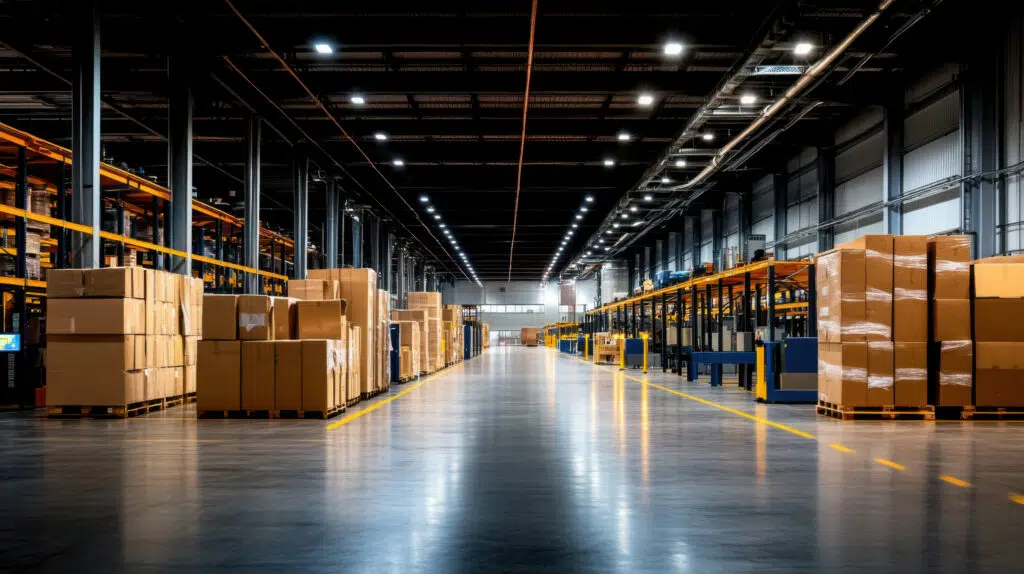
Across modern facilities, the gap between what leaders know and what is actually happening on the floor is closing. Hospitals track the location of infusion pumps in real time. Manufacturers know exactly where a forklift is operating and whether it is approaching a restricted zone. Warehouse operators see how assets move between zones without manual scanning or radio check-ins.
This is what RTLS makes possible.
Real-time location systems have moved from specialist applications into core operational infrastructure. In 2026, organizations deploying RTLS are not simply adding a tracking layer. They are building the foundation for safer workplaces, faster responses, and more informed operational decisions. Whether the goal is protecting a vulnerable patient, locating a piece of equipment before a procedure, or preventing a collision between a forklift and a pedestrian, the underlying need is the same: knowing what is happening, where, and when.
This guide covers what RTLS is, how these systems work in practice, which technologies are involved, and what distinguishes a platform built for long-term operational value.
Key Takeaways
- The business case for RTLS investment has strengthened considerably. MarketsandMarkets estimates the global RTLS market at approximately $6.7 billion in 2025, with the trajectory pointing toward $15.7 billion by 2030. Two forces are driving this RTLS expansion: tightening workplace safety regulation in industrial environments and the acceleration of digital transformation in healthcare, where location visibility is becoming a clinical requirement rather than an operational convenience. (MarketsandMarkets).
- Geographically, North America remains the biggest RTLS market today, though Asia-Pacific’s growth curve is steeper, driven by rapid industrialization and rising healthcare investment across the region. Spending still skews toward hardware, tags, anchors, and gateways, but that balance is shifting: services and software are growing faster than any other segment as deployments mature and organizations invest more in configuration, integration, and analytics.
- The healthcare segment alone is projected to grow from roughly $3.4 billion in 2026 to between $14 and $17 billion by 2035, at a CAGR of around 17-18% (ResearchNester).
- Ultra-Wideband (UWB) adoption is accelerating as organizations move from room-level presence detection toward sub-meter accuracy for safety-critical use cases such as forklift collision avoidance and infant protection.
- Without RTLS, staff routinely spend significant time each shift searching for equipment, vehicles, or people, time that a real-time location system reduces to seconds.
What Is RTLS?

Ask any facilities or safety lead what slows their team down most, and “finding things” comes up constantly: a missing wheelchair, a forklift nobody can locate, a contractor who wandered into a restricted zone. RTLS, short for Real-Time Location System, exists to close that gap by keeping a continuous, live record of where people, vehicles, equipment, and other assets are inside a physical space.
What makes it different from a badge scanner or a periodic inventory count is the word “continuous.” There is no checkpoint to pass or scan to trigger; position updates flow in as they happen. That changes the nature of the data itself: instead of a snapshot showing where something was ten minutes ago, teams get a live picture they can act on the moment conditions change.
Satellite positioning works by triangulating a receiver’s position against orbiting satellites, a method that requires an unobstructed view of the sky. Walls, floors, and structural steel interfere with that signal path, which is why GPS accuracy collapses indoors. RTLS solves a different engineering problem: instead of reaching outward to satellites, it builds location intelligence from infrastructure already inside the facility, anchors, readers, or access points mounted throughout the space. That is what makes it reliable in the exact settings where GPS fails: multi-floor buildings, enclosed plants, and campuses that blend indoor and outdoor zones.
The environments where RTLS delivers the most value tend to share common characteristics: large physical footprints, high asset or personnel density, regulatory requirements around safety or security, and operational costs that rise sharply when people or equipment cannot be found quickly.
That includes:
- Hospitals and healthcare campuses
- Manufacturing facilities — see RTLS for manufacturing
- Warehouses and distribution centers — see RTLS for warehouses and logistics
- Airports and transportation hubs — see Aviation RTLS
- Construction sites — see Construction RTLS
- Senior living communities — see Senior Living Safety
- Industrial yards and mixed indoor-outdoor operations — see Energy and Oil and Gas RTLS
In Practice
A leading aerospace and defense manufacturer in Europe deployed Litum’s UWB-based RTLS to track 1,800 assets across its facility, replacing a manual process that was time-consuming and error-prone. Within months, the deployment cut asset search time by 70% and saved an estimated $280,000 per year. Read the full case study. This kind of result is typical of what a well-implemented RTLS delivers once it is running at scale.
A Fortune 10 oil and gas company used Litum’s RTLS during a major facility turnaround to track workforce and equipment across the site. The deployment detected roughly $300,000 in lost time and helped the company complete the turnaround with zero recorded accidents. Read the full case study.
A Fortune 500 automotive manufacturer deployed Litum’s forklift-pedestrian collision warning system on its production floor. The result was a 35% to 55% improvement in operational efficiency alongside a measurable drop in forklift-related incidents. Read the full case study.
A global EPC (engineering, procurement, and construction) provider combined Litum’s UWB workforce tracking with HR system integration and safety monitoring across its job sites. The deployment delivered an estimated $2.8 million in annual cost savings. Read the full case study.
At its core, RTLS helps operations teams answer the questions that drive daily decisions: where is a critical asset right now, which staff member is closest to an incident, is a patient, infant, or resident entering a restricted area, where are forklifts or vehicles operating, how much time are people or equipment spending in specific zones, and where are bottlenecks forming across a workflow.
For enterprise teams, this is not just about location. It is about turning physical movement into operational intelligence that can be acted on before a problem escalates.
Across these deployments, the pattern is consistent: real-time visibility drives accident prevention as much as it drives operational efficiency.
How Do Real-Time Location Systems Work?
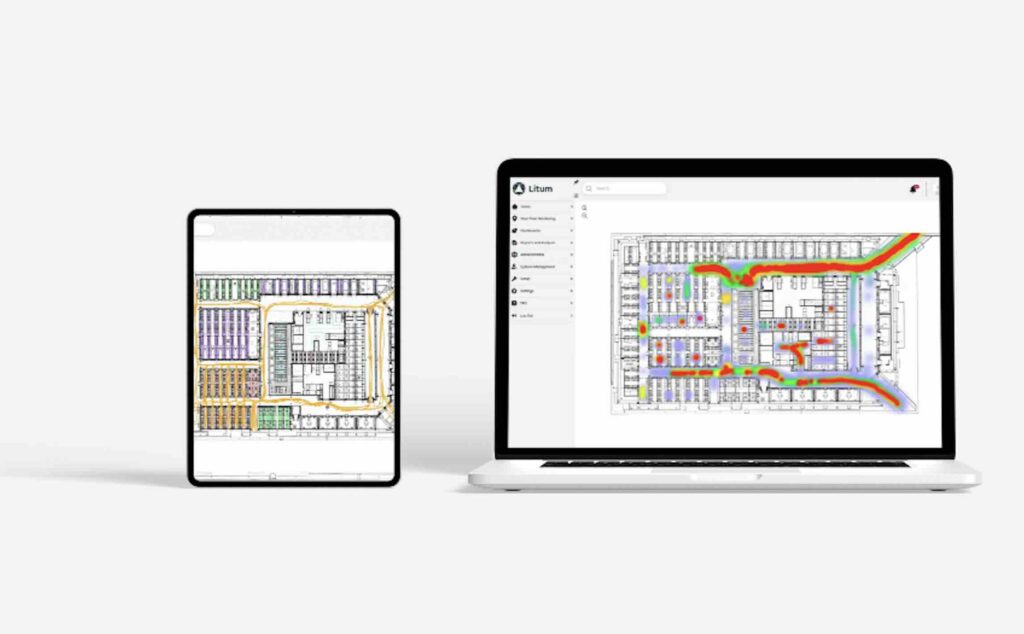
An RTLS captures location by detecting wireless signals from tracked devices and converting those signals into spatial data within a software platform. The underlying mechanics vary depending on which wireless technology the deployment uses, but the operational chain is the same across every production-grade RTLS: a tag or badge emits a signal, fixed infrastructure receives and forwards it, a location engine calculates position, and software surfaces that position as actionable information to the people and systems that need it.
Most production-grade RTLS deployments are built around four layers that work together.
Tags, Badges, or Tracked Devices
The tracked object, whether an asset tag clipped to a wheelchair, a badge worn by a nurse, a device embedded in a vehicle, or a patient wristband, emits or responds to wireless signals at regular intervals. The form factor and transmission frequency depend on the use case. A staff duress badge needs to update its location multiple times per second. An asset tag on a storage rack may only need to update when it moves zones.
In Litum deployments, tags range from compact UWB badges worn by lone workers in industrial facilities to passive RFID wristbands used in emergency mustering scenarios, with the tag type selected based on the accuracy and battery life requirements of each use case. Getting this layer right matters, since the accuracy of the entire RTLS depends on reliable signal transmission from the tag itself emits or responds to wireless signals at regular intervals. For a closer look at how these devices work, see our guide on RTLS tags.
Infrastructure: Anchors, Readers, Gateways, or Sensors
Fixed devices installed throughout the facility receive transmissions from tracked devices and pass that data to the platform. The density and placement of this infrastructure determines coverage and accuracy. Depending on the technology, the system calculates location using proximity detection, received signal strength, time difference of arrival, or angle of arrival methods. The National Institute of Standards and Technology (NIST) actively researches indoor positioning infrastructure as a distinct discipline from GPS.
Litum’s anchor infrastructure is designed for both standard indoor environments and demanding industrial conditions, with IP67-rated enclosures available for facilities where exposure to dust, moisture, or temperature extremes is a factor. This infrastructure layer is what turns a set of tags into a functioning RTLS.
RTLS Software Platform
Raw signal data means nothing on its own. The software layer translates it into live maps, zone entry and exit events, alerts, movement histories, utilization reports, and workflow triggers. This is where the operational value becomes visible to safety coordinators, clinical staff, warehouse managers, and security teams. The best platforms make it straightforward to configure rules, respond to events, and pull insights from historical data.
Litum’s software platform supports live floor plan visualization, geofencing rule configuration, historical movement playback, and utilization reporting without requiring custom development for standard deployment scenarios. Without this layer, an RTLS is little more than hardware collecting signals nobody can act on.
Integrations and Automation
Modern RTLS platforms often connect with enterprise systems such as access control, nurse call, WMS, MES, ERP, BI platforms, or security applications. This allows location events to trigger broader workflows, notifications, and business logic.
In practical terms, a well-deployed RTLS converts a physical environment into a connected operational layer where movement, presence, and events are continuously monitored and available to the systems and people who need them.
This is the point where a standalone RTLS becomes part of a connected operational ecosystem.
Which Technologies Are Used in RTLS?
Choosing an RTLS technology is an operational decision before it is a technical one. The right choice depends on the accuracy the use case requires, the scale of the deployment, the infrastructure that already exists, and the budget available for tags and anchors. Most enterprise deployments combine more than one technology across different zones or use cases.
Ultra-Wideband (UWB)
Among all indoor RTLS technologies, UWB pushes accuracy the furthest, placing tags within 10 to 30 centimetres of their true position. Litum’s UWB infrastructure runs on the 6 to 8 GHz band and scales to thousands of tags reporting simultaneously without degrading performance. That combination of precision and scale is why organizations turn to UWB specifically for safety-critical scenarios, cases where being approximately right is not good enough. Its use in commercial location systems is possible because the FCC set aside dedicated spectrum for UWB devices.
See how Litum applies UWB in forklift collision warning and infant security.
Bluetooth Low Energy (BLE)
BLE takes a different tradeoff: broader facility coverage at a fraction of UWB’s infrastructure cost, in exchange for zone- or room-level rather than centimetre-level accuracy. For most RTLS use cases, tracking assets, monitoring staff workflow, following patient movement through a care pathway, that resolution is plenty. Litum builds its BLE deployments on the Bluetooth 5.x specification, which adds direction-finding capability and tightens zone accuracy well beyond what older Bluetooth versions could deliver. BLE also has a practical advantage built in: since it is already present in most phones and commercial tag hardware, compatibility is rarely a deployment obstacle. The standard itself is maintained by the Bluetooth Special Interest Group.
See how Litum uses BLE in staff workflow and wander management.
RFID
RFID is not a single technology so much as a family of them. Passive tags, which carry no battery and cost very little to deploy at scale, are built for checkpoint visibility, confirming that an item passed a specific reader rather than tracking it continuously. Active RFID tags trade that low cost for a battery and more continuous positioning. Where RFID still wins outright is emergency mustering and roll call, situations where confirming a full headcount quickly and reliably matters more than pinpoint location. Within a broader RTLS, RFID is often the most cost-effective layer to deploy at scale.
RTLS vs RFID: What’s the Difference?
RFID and RTLS are closely related, and the terms are often used interchangeably, but they are not the same thing. Understanding the distinction matters when evaluating which tracking approach fits a given use case.
RFID (Radio Frequency Identification) is a hardware technology. It uses radio signals to identify and communicate with a tagged object. A basic RFID setup consists of a tag attached to an asset or person and a reader that detects the tag when it passes within range. Standard RFID confirms that an object passed a specific point, a gate, a doorway, a conveyor checkpoint, but it does not report where that object is at any given moment between scans.
RTLS is a complete system built on top of tracking hardware like RFID, BLE, or UWB. It combines tags, fixed anchor readers, a location engine, and software to calculate and display position continuously rather than at isolated checkpoints. Where RFID alone gives a scan event, RTLS gives a live, uninterrupted location.
In practice, this is why RFID in RTLS tends to split into two modes. Passive RFID is well suited to checkpoint-based visibility, inventory confirmation, and roll call, scenarios where knowing that something passed a point is enough. Active RFID extends this toward more continuous tracking, closing part of the gap with BLE or UWB, though still without the positional precision either of those technologies delivers.
The practical takeaway: RFID is the communication layer. RTLS is the system that turns those signals into actionable, continuous location intelligence, delivered through RTLS tags and anchors working together.
Wi-Fi
Wi-Fi-based tracking has one clear advantage: it runs on network infrastructure most facilities have already installed, so there is no dedicated anchor hardware to budget for. The tradeoff shows up in precision and response time, both fall short of UWB or BLE. Where an organization already has solid Wi-Fi coverage and only needs coarse, zone-level visibility, it is a reasonable low-cost entry point rather than a long-term precision solution. For organizations easing into RTLS for the first time, Wi-Fi is frequently the lowest-friction entry point.
GPS and Cellular
For operations that extend beyond building perimeters, GPS and cellular connectivity extend RTLS coverage into yards, campuses, fleets, and container tracking environments. See Litum’s yard management RTLS for how outdoor and indoor tracking can be combined into a single operational view.
Vision and Smart Sensing
Next-generation deployments increasingly combine RTLS with AI-driven vision systems and environmental sensors to add situational context that wireless signals alone cannot provide. This is particularly relevant in complex industrial environments where proximity data needs to be combined with behavioural and environmental signals.
The practical implication for enterprises is that flexibility matters as much as accuracy. A platform that supports multiple technologies allows organizations to match the right tool to each use case rather than forcing every deployment through a single technical approach.
| Technology | Typical Accuracy | Relative Cost | Best For | Learn More |
| UWB (Ultra-Wideband) | Sub-meter to centimeter | Higher | Safety-critical tracking: forklift collision avoidance, infant protection, OR / ICU asset tracking | UWB vs BLE |
| BLE (Bluetooth Low Energy) | Room-level | Low to moderate | Large-scale asset tracking, patient flow, staff safety | UWB vs BLE |
| RFID (Active / Passive) | Zone / proximity-level | Low (passive), moderate (active) | Inventory counts, access control, proximity-based tracking | RFID Asset Tracking |
| Wi-Fi | Zone-level | Low (existing infra) | Coarse tracking where Wi-Fi infrastructure already exists | RTLS Platforms |
Why RTLS Matters in 2026

RTLS has reached a point where treating it as optional infrastructure is itself a risk. What began as a niche investment for a handful of industries has become table stakes for any organization running dense, high-stakes physical operations. Facilities that deployed RTLS early are no longer the exception, they are the benchmark competitors get measured against. And the organizations still without a real-time location system in place are increasingly the ones absorbing costs that RTLS has already engineered out of daily operations elsewhere: wasted search time, delayed incident response, and preventable safety failures.
The case for RTLS in 2026 is no longer built on novelty. It is built on operational pressure.
Facilities are running leaner and the operational pressure to deploy RTLS has never been higher. Regulatory expectations around worker safety, patient protection, and asset accountability have tightened. And the cost of not knowing where something is, whether a critical piece of equipment, a vulnerable resident, or a vehicle operating in a shared pedestrian zone, has become harder to absorb.
RTLS addresses this directly. A well-deployed system reduces the time clinical staff spend locating equipment before procedures. It triggers an alert the moment a forklift crosses into a restricted pedestrian area. It confirms within seconds that every worker on a site has been accounted for during an emergency. These are not abstract improvements. They are measurable reductions in risk, delay, and cost.
According to the U.S. Bureau of Labor Statistics, workplace injuries cost employers billions annually. RTLS is increasingly deployed as a direct mitigation layer in high-risk environments, not as a monitoring tool but as an active operational control.
The broader shift is this: location data is moving from a reporting input to a real-time operational signal. Organizations that treat RTLS as infrastructure rather than a one-off project extract compounding value as each new RTLS use case builds on the same shared foundation.
Common RTLS Use Cases Across Industries
The value of RTLS becomes clear when location data is tied directly to operational challenges. While use cases vary by industry, the underlying goals are often the same: better safety, faster response, tighter control, and more efficient workflows.
RTLS in Healthcare

Clinical environments place unique demands on location systems. Equipment moves constantly across wards, theatres, and corridors. Staff respond to emergencies that require knowing not just that something happened, but where the nearest available person is. Patients, infants, and residents in certain care settings require continuous monitoring without the restriction of physical observation.
Litum’s healthcare RTLS deployments address these pressures directly. A staff duress system ensures that when a clinician activates an alert, the response is directed to the right location immediately rather than announced broadly. An infant security system detects unauthorized movement toward exit points before it becomes an incident rather than after. Medical asset tracking eliminates the time clinical staff spend searching for infusion pumps, wheelchairs, or monitoring equipment before a procedure. Patient flow visibility identifies where bottlenecks are forming across a care pathway in real time rather than in an end-of-day report. Staff workflow data shows how teams are actually moving through a shift, supporting both performance analysis and safety compliance. And wander management protects at-risk residents while preserving their dignity and freedom of movement within defined safe zones. Together, these use cases show how one RTLS foundation can support very different clinical needs at the same time.
RTLS in Manufacturing and Industrial Environments
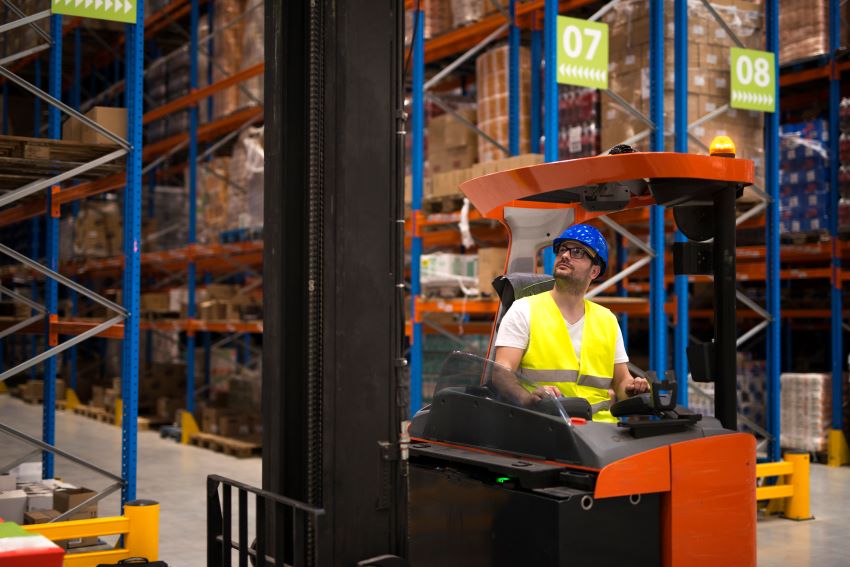
Industrial facilities combine high asset density, heavy equipment, time-critical processes, and significant safety exposure into a single operational environment. RTLS in these settings is not primarily a visibility tool. It is a safety and efficiency layer that operates continuously in the background.
The most safety-critical application is forklift and pedestrian collision warning. UWB-based proximity detection allows a system to intervene before a collision occurs rather than recording that one did. Forklift tracking provides operational visibility across large yard and warehouse environments without requiring manual check-ins. Asset tracking ensures tools, parts, and equipment are locatable across large floor areas without the overhead of manual searches. Lone worker safety monitors personnel working in isolated zones and triggers alerts when expected movement patterns break down. Emergency mustering confirms headcount in seconds rather than minutes during evacuation scenarios. Yard management extends visibility from the interior of a facility to its outdoor perimeter, covering vehicle movements, container locations, and gate activity. Process tracking maps how work actually moves through production stages, surfacing delays that manual reporting misses. And connected worker safety systems give field teams the protection and visibility they need when operating in high-risk or remote sections of a facility. Each of these runs on the same underlying RTLS, which is what makes expanding from one use case to the next relatively straightforward.
RTLS in Logistics and Large Campuses
Logistics and supply chain environments present a different challenge: coverage across dynamic, high-throughput spaces where assets and personnel move continuously and zone boundaries shift with operational demand. RTLS in these environments is less about pinpoint accuracy and more about continuous visibility across large and irregular footprints.
Litum’s warehouse and logistics RTLS supports zone-level asset visibility, personnel monitoring, and operational analytics across distribution centers, fulfilment operations, and transportation hubs. Restricted zone monitoring flags when contractors or visitors enter areas they are not authorized to access. Asset utilization analysis identifies equipment that sits idle in one zone while being searched for in another. Real-time occupancy data supports both operational management and compliance reporting across sites where workforce density and movement patterns shift by shift. As with healthcare and manufacturing, the value compounds once RTLS is treated as shared infrastructure rather than a single-purpose tool.
What Are the Benefits of RTLS?
Improved Safety
The most direct value of RTLS is the ability to act before an incident escalates. A staff duress alert triggers an immediate response rather than a delayed one. A collision warning system stops a forklift before it reaches a pedestrian. A lone worker who has not moved in an unexpected amount of time triggers a welfare check automatically. According to OSHA, powered industrial trucks are among the leading causes of serious workplace injuries. RTLS converts that risk from something that is managed reactively into something that is controlled in real time. These are the kinds of outcomes that make RTLS as much a safety investment as an operational one.
Greater Operational Efficiency
In healthcare environments, clinical staff can spend up to 30 minutes per shift searching for equipment before procedures. In manufacturing, tool and material searches represent a measurable percentage of direct labor hours. RTLS eliminates this overhead by making asset location continuously visible, not searchable after the fact. RTLS eliminates that search time by making asset location visible continuously. In manufacturing environments, this supports tighter process control and faster throughput. In healthcare, it means equipment is where it needs to be when it is needed. Across both environments, it reduces the invisible overhead of manual status tracking. These efficiency gains tend to compound the longer an RTLS has been deployed and the more workflows it touches.
Stronger Security and Control
Zone-based rules and location-triggered alerts give security and operations teams a layer of control that access systems alone cannot provide. Infant security systems detect unauthorized movement toward exits before it becomes an incident. Wander management protects at-risk residents without restricting their independence unnecessarily. Digital audit trails support compliance reporting and incident investigation across both healthcare and industrial environments. This level of control is difficult to replicate without an RTLS supplying the underlying location data.
Better Workflow Visibility
Location data reveals how work actually flows through a facility, not how it is assumed to flow. Dwell time analysis surfaces equipment that sits idle longer than expected. Zone transition data identifies where handoffs break down. Movement patterns across a shift expose bottlenecks that never appear in manual reports. See how this applies in process tracking and patient flow. None of this visibility is possible without a real-time location system feeding continuous data into the analysis.
Scalable Digital Infrastructure
For enterprises running complex operations across multiple sites, RTLS becomes a shared data layer that connects physical events to digital systems. Industry analysts including Gartner and ABI Research have documented the growing role of RTLS as a foundational layer in enterprise operations, not a standalone tool but a platform that integrates with broader digital infrastructure over time.
What Should Enterprises Look for in an RTLS Platform?

Selecting an RTLS platform is a long-term operational decision. The wrong choice tends to become visible only after deployment, when the system cannot scale to a second use case, cannot integrate with an existing enterprise system, or cannot deliver the accuracy a specific environment demands.
These are the characteristics that distinguish platforms built for enterprise deployment from those optimized for a single use case.
Independent recognition is a useful signal when evaluating a long-term RTLS partner. Litum has been named a Visionary in the Gartner Magic Quadrant for Indoor Location Services for three consecutive years (2022-2024), included in Fast Company’s Most Innovative Companies list (2024), and ranked among Deloitte’s fastest-growing technology companies for five consecutive years. Backed by two decades of in-house RTLS research and development, Litum’s UWB and BLE solutions are deployed across industrial and healthcare facilities in more than 50 countries, including several Fortune 500 organizations.
Flexible Technology Architecture
No single technology solves every RTLS challenge across a complex facility. UWB delivers the precision needed for safety-critical applications. BLE provides scalable coverage at lower infrastructure cost. RFID handles checkpoint and inventory workflows efficiently. A platform that supports multiple technologies allows organizations to deploy the right approach for each environment rather than compromising across all of them.
Modular Growth Path
Most enterprise RTLS deployments start with one focused use case: asset tracking, staff duress, or forklift safety. The platform’s ability to expand that deployment without a rebuild determines whether the initial investment compounds or becomes a ceiling. Modular design means a second use case is an expansion, not a restart. This is one of the clearest signs of whether a platform was actually built to function as enterprise RTLS, or just a single-use tracking tool.
Strong Software and Analytics
The infrastructure is only as useful as what the software does with the data it receives. Live maps and zone alerts are the baseline. What differentiates capable platforms is the depth of analytics available: utilization trends, movement pattern analysis, historical event review, and the ability to configure complex rules without custom development. Operations teams need to be able to act on the data without depending on IT for every configuration change.
Enterprise Integration Capability
Location events become more valuable when they can trigger responses in adjacent systems. An RTLS that integrates with access control, nurse call, WMS, MES, or security platforms allows location data to flow into broader operational workflows rather than sitting in a separate dashboard. Review Litum’s industrial case studies and healthcare case studies to see how this has been applied across different integration environments.
Proven Cross-Environment Experience
The physical and operational requirements of an NHS hospital trust are fundamentally different from those of a high-bay automotive manufacturing facility. A platform vendor with real deployment experience across both environments brings an understanding of infrastructure constraints, workflow complexity, and edge cases that cannot be replicated from a spec sheet.
The Litum RTLS Adoption Curve
Most organizations don’t adopt RTLS all at once. They move through it in stages, and understanding which stage you’re in shapes what to prioritize next.
Stage 1: Visibility
The starting point for almost every deployment. The goal is simple: know where critical assets, equipment, or people are, in real time, instead of relying on manual searches or periodic counts. Most organizations begin here with a single high-friction use case, typically asset tracking. This is the stage that produces the fastest, most measurable ROI, exactly what the aerospace and defense deployment above shows: 1,800 assets, 70% less search time, $280,000 saved annually.
Stage 2: Safety & Control
Once visibility is in place, the same infrastructure extends naturally into active safety controls: collision warnings, restricted-zone alerts, staff duress systems, automated mustering. The data isn’t just descriptive anymore, it triggers real-time intervention before an incident happens rather than documenting one after the fact. The automotive manufacturer’s forklift-pedestrian deployment sits squarely in this stage: the same tags and anchors used for tracking now actively prevent collisions, delivering a 35-55% efficiency gain alongside fewer incidents.
Stage 3: Predictive Intelligence
The most mature stage treats location data as an input to broader operational decisions, integrated with WMS, ERP, nurse call, or HR systems, feeding analytics that surface bottlenecks, idle assets, and workflow inefficiencies before they compound. This is where RTLS stops being a tracking layer and becomes infrastructure the rest of the organization builds on. The Fortune 10 oil and gas turnaround and the global EPC workforce deployment both operate at this stage, combining tracking, safety, and system integration into a single operational layer, together responsible for over $3 million in documented savings and a zero-accident outcome on a major turnaround.
Knowing which stage a facility is in is often more useful than knowing which technology to pick first, the technology follows from the stage, not the other way around.
How Litum Approaches RTLS
At Litum, we approach real-time location systems as a strategic operational layer, not just a tracking tool.
Our focus is on helping organizations build safer, more intelligent environments through location visibility, event-driven workflows, and flexible deployment models. That means delivering RTLS solutions that do more than show where something is. It means helping teams respond faster, operate more efficiently, and scale their visibility across multiple use cases.
Hybrid Technology Support
Litum supports hybrid RTLS architectures, including UWB, BLE, LoRaWAN, and GPS, allowing organizations to align precision, scalability, and cost with the needs of each use case.
Modular Platform Design
Our platform is designed to support multiple applications on a shared foundation, from asset tracking and staff safety to infant security, patient flow, emergency mustering, and industrial safety.
Cross-Industry Expertise
Litum supports both healthcare RTLS and industrial RTLS environments, giving customers a partner with experience across complex, high-stakes operations.
Action-Oriented Software
We focus on turning real-time location data into live visibility, alerts, operational workflows, and meaningful analytics that help teams make better decisions.
Integration Readiness
Litum solutions are built to fit broader ecosystems, helping customers connect RTLS data with security, clinical, and operational systems already in place. That readiness is often what separates a successful RTLS rollout from one that stalls after the first use case.
For enterprises evaluating RTLS in 2026, this matters. The goal is not simply to install infrastructure. The goal is to invest in a platform that can solve immediate challenges and support long-term operational transformation.
RTLS Is Becoming Essential Infrastructure
The organizations getting the most from RTLS in 2026 are not the ones that deployed the most sensors. They are the ones that connected location data to operational decisions.
That distinction matters because the infrastructure itself is no longer the hard part. The hard part is building the workflows, integrations, and analytical habits that make location data actionable across every function that needs it: clinical, operational, safety, security, and executive.
For healthcare providers, that means RTLS that integrates with nurse call systems, supports compliance reporting, and gives clinical leadership the data they need to optimize care delivery. For manufacturers and logistics operators, it means a platform that connects location events to safety systems, production management, and workforce analytics without requiring a separate integration project for every data feed.
The question for enterprise leaders evaluating RTLS deployments is no longer whether RTLS technology works or whether RTLS delivers measurable value.
Frequently Asked Questions About RTLS
What does RTLS stand for?
RTLS is short for Real-Time Location System, a category of technology built to keep continuous tabs on where people, assets, vehicles, or equipment are inside a defined space, a hospital floor, a warehouse, an industrial plant. What sets it apart from other tracking methods is timing: location updates arrive as events happen, not in a batch report generated after the fact.
How accurate is RTLS?
There is no single accuracy figure for RTLS, what matters is how much precision your use case actually requires. Safety-critical applications like collision warning or infant security need location narrowed to 10-30 centimetres, which is where UWB comes in. Asset visibility, patient flow, and staff tracking rarely need that level of resolution; room- or zone-level positioning from BLE does the job at a lower cost. Rather than standardizing on one technology, most enterprise deployments run UWB where the stakes are highest and BLE across everything else.
What is the difference between RTLS and GPS?
Take a GPS-enabled phone into a parking garage or a hospital basement and watch the blue dot freeze or drift, that is the core issue. GPS needs a clear line of sight to orbiting satellites, and building materials get in the way. RTLS was designed around that exact limitation: rather than reaching up to satellites, it references fixed points already inside the building, anchors, readers, access points, so it keeps working precisely where GPS gives out.
What industries use RTLS?
Healthcare and industrial facilities account for most current deployments, but the technology has spread into logistics, warehousing, construction, aviation, energy, and senior living care as well. What connects these industries is not the sector itself, it is a shared set of conditions: large physical footprints, dense concentrations of people or assets, and a real cost that shows up whenever something cannot be located quickly.
How much does an RTLS system cost?
There is no single number, because cost scales with facility size, the technology chosen, how many tags are in play, the accuracy required, and how many use cases run at once. Anchor density, software licensing, and how much integration work is involved all add to the total. Rather than budgeting for a full rollout up front, most organizations start with a pilot around one high-value use case, which surfaces real costs and proves out value before scaling further. Contact Litum for a deployment assessment specific to your environment.
How does RTLS work?
It starts with a tag or badge, attached to an asset, mounted in a vehicle, or worn by a person, broadcasting a wireless signal. Anchors positioned around the facility pick up that signal and work out the tag’s position. From there, software takes over: turning raw position data into a live location view, and firing off alerts or automated workflows whenever specific location events occur.
What technologies does RTLS use?
Four technologies cover most deployments: Ultra-Wideband for sub-metre precision, Bluetooth Low Energy for room-level tracking at a lower cost, RFID for proximity-based identification, and Wi-Fi for organizations that want to build on network infrastructure they already have. It is common to combine more than one, matching the technology to what each use case actually needs.
Is RTLS the same as RFID?
No, though the two get conflated often. RFID is one of the technologies an RTLS can use, not a synonym for it. On its own, RFID typically confirms that a tagged item passed near a specific reader. A full RTLS goes further, tracking the precise, continuously updating location of tags across an entire facility, frequently pairing RFID with UWB, BLE, or Wi-Fi to do it.
How long does it take to implement an RTLS?
Timelines depend on facility size, the technology mix, and how much integration work is required. A BLE deployment focused on core use cases can often go live within a few weeks. Larger UWB rollouts spanning multiple buildings take longer, mainly because of the additional anchor installation and calibration those deployments require.