

Forklifts cause 84 worker fatalities and more than 25,000 serious injuries every year in the United States, according to the National Safety Council. Of those fatalities, 36% involve pedestrians — workers on foot who were in the wrong place when a forklift turned a corner, reversed, or accelerated through an intersection.
The pattern behind these incidents is consistent: it is rarely about negligence. It is about the structural limits of any environment where heavy vehicles and people share the same floor. Forklift operators have significant blind spots. Pedestrians cannot always hear an approaching vehicle. Blind corners are built into almost every warehouse layout.
Technology now closes the gap that training and floor markings alone cannot. This guide covers every major forklift safety technology available in 2026, how each works, what it protects against, and how to layer them to build a warehouse safety system that holds up when operations are at their most demanding.
Why Forklift Accidents Keep Happening – Even in Well-Managed Warehouses
Most warehouse managers have the fundamentals covered: OSHA-certified operators, documented pre-shift inspections, marked pedestrian lanes, and clear speed limits. And yet near-misses persist. Three structural factors explain why:
- Blind spots are built into the vehicle. A loaded forklift has significant sightline obstructions around the mast and forks. Traveling in reverse, necessary with many load types, means relying on mirrors and audible signals rather than direct vision.
- Ambient noise masks warnings. Forklift horns are standard but unreliable in loud environments. A worker wearing hearing protection in a busy distribution center may not register an audible warning until a vehicle is already close.
- Peak season multiplies every risk factor simultaneously. Incident rates spike precisely when throughput pressure rises. New temporary workers unfamiliar with traffic patterns, faster pace, and more vehicles on the floor all compound the base risk at the moment the safety system is under the most stress.
“The question is not whether your team is careful. It is whether your safety infrastructure gives people the information they need, in time to act on it.”
Technology-based warehouse safety systems address this by providing continuous real-time awareness, coverage that does not depend on operator attention, pedestrian compliance, or line-of-sight visibility.
The Main Technologies for Improving Forklift Safety
Effective forklift safety in 2026 is built in layers. The starting point is collision prevention at the vehicle level. From there, facilities that need broader visibility add real-time location intelligence across the entire operation. Understanding where one layer ends and the next begins is what makes a safety investment scale correctly instead of turning into overlapping, redundant systems.
1. PathAware: Tagless Collision Warning at the Vehicle Level
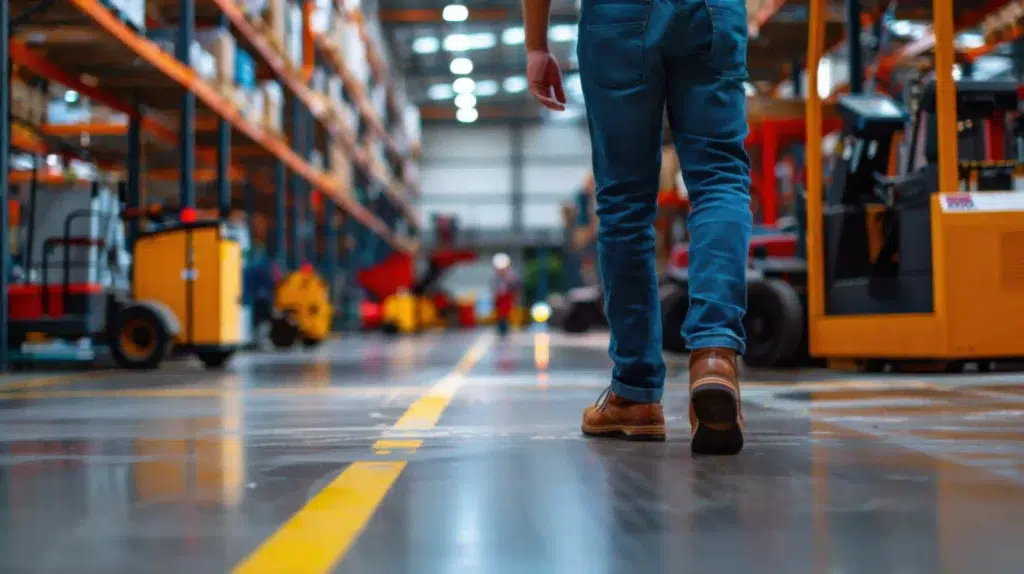
PathAware is Litum’s self-contained forklift safety layer, designed to solve the immediate problem: preventing contact between a forklift and a pedestrian, obstacle, or another vehicle in real time.
Unlike traditional proximity systems, PathAware does not require pedestrians to wear tags. It combines AI-enhanced sensors with UWB-enabled vehicle-mounted hardware to deliver 360-degree situational awareness around the forklift, including blind corners and areas with no direct line of sight. Everything runs on the vehicle’s existing battery, with no anchors, no network infrastructure, and no calibration required before use.
PathAware operates across two configurable alert thresholds:
- Caution zone: A wider perimeter where the operator receives an early warning with time to adjust speed or route.
- Danger zone: A tighter perimeter requiring immediate action, triggering simultaneous alerts regardless of who notices the hazard first.
UWB vs. AI-Enhanced Sensors vs. Camera-Based Detection
Pedestrian detection technology varies significantly in accuracy and deployment requirements:
- UWB (Ultra-Wideband) tag-based detection: Provides sub-meter accuracy, works reliably in metal-heavy racking environments, and is unaffected by the radio frequency interference that degrades Wi-Fi and BLE-based systems in dense facilities.
- AI-enhanced sensor detection: Identifies pedestrians without requiring them to carry a wearable tag. Most useful in environments with frequent visitors, contractors, or temporary workers, where ensuring 100% tag compliance is operationally difficult. This is the approach PathAware uses.
- Camera and vision-based systems: Rely on image processing to detect movement. Performance varies with lighting conditions and is unreliable around corners and obstructions, exactly the areas where collision risk is highest.
Because detection is sensor-based rather than image-based, PathAware performs consistently in the conditions that defeat camera-based systems: dust, poor lighting, and obstructed sightlines. It also does not depend on 100% tag compliance from pedestrians, which matters in facilities with high visitor or contractor turnover.
What to look for: dual-sided alerting, tagless pedestrian detection, UWB accuracy in metal-dense environments, and true plug-and-play installation with no fixed infrastructure.
Best for: any facility’s first safety technology investment. This is the layer with the highest immediate impact on the leading cause of forklift-related injury, pedestrian collisions in shared zones.
2. RTLS: Facility-Wide Intelligence Built on Top of PathAware
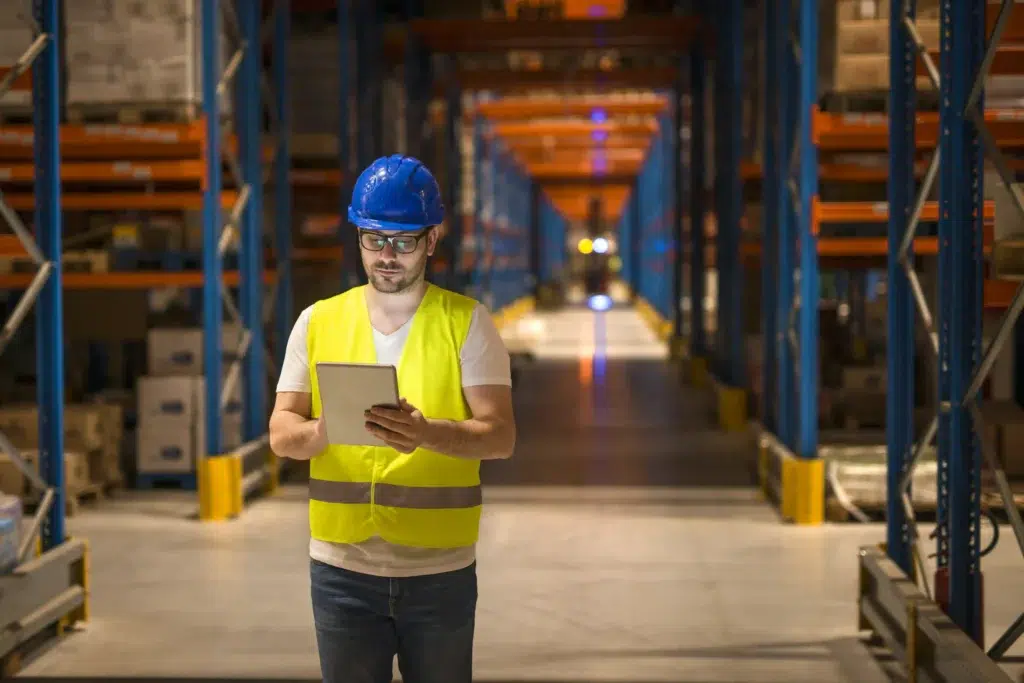
Where PathAware protects the immediate zone around one vehicle, RTLS extends that same UWB foundation across the entire facility. This is the layer facilities add once vehicle-level safety is in place and the next question becomes operational: not just “did we prevent a collision” but “how is our whole fleet actually moving, and what else can that location data tell us.”
RTLS requires anchor infrastructure installed across the facility, which is a meaningful difference from PathAware’s self-contained model. In exchange, it unlocks a set of capabilities that proximity alerting alone cannot provide:
Fleet-wide safety and compliance
- Speed monitoring with automatic alerts when a vehicle exceeds a zone-specific limit
- Geofencing that enforces automatic speed reduction in high-risk zones, dock entrances, and narrow aisles, without depending on operator compliance
- Event logging for near-miss review and post-incident OSHA documentation, with a full audit trail of every alert and intervention
- Operator behavior analytics identifying individuals who consistently exceed limits or take high-risk routes
Operational visibility beyond forklifts
- Facility-wide asset and equipment tracking, extending location visibility to pallets, tools, and inventory, not just vehicles
- Route density analysis showing which areas of the facility carry the highest forklift-pedestrian interaction risk
- Historical movement playback and heatmaps that reveal layout inefficiencies invisible in day-to-day operations
- Utilization data to right-size fleet deployment and cut unnecessary vehicle movement
Scale and integration
- Multi-site visibility for enterprise operations managing more than one facility from a single dashboard
- Integration with WMS, ERP, and other operational systems, so location events can trigger workflow actions automatically
- Real-time dashboards accessible simultaneously to safety, operations, and facilities management, each seeing the data relevant to their role
This is why Litum built PathAware to be scalable into RTLS rather than as a separate product line. The vehicle-mounted hardware installed on day one stays in place. Geofencing, analytics, and full facility tracking are added as modules on top of it, so the initial safety investment is never replaced, only extended.
Best for: multi-vehicle facilities that need audit trails for compliance, safety managers who need data to prioritize infrastructure investment, and operations that want forklift data connected to broader facility intelligence rather than isolated in a single-purpose safety tool.
3. Forklift Access Control
Access control systems require operator authentication, typically a PIN, RFID card, or biometric scan, before a forklift can be started. This prevents unauthorized use and creates an automatic operator log documenting who operated each vehicle and when.
For OSHA compliance under 29 CFR 1910.178, access control provides verifiable evidence that only certified operators used each vehicle, a requirement manual sign-in sheets routinely fail to enforce reliably. When paired with RTLS, operator authentication data can feed directly into the same behavior analytics and compliance reporting layer, connecting who drove a vehicle to how it was driven.
How to Choose the Right Forklift Safety Technology for Your Facility
The right combination of technology depends on your facility’s specific risk profile. These questions help identify where to start:
Where do pedestrian-forklift interactions concentrate?
Audit your floor layout for intersection points, dock entrances, and areas with obstructed sightlines. These are the locations where collision warning and pedestrian detection have the highest immediate impact. Start technology deployment here before expanding to facility-wide tracking.
How complex is your installation environment?
Systems requiring fixed network infrastructure, anchors, access points, cabling, take longer to deploy and disrupt operations during installation. Tag-based systems that run on the forklift’s existing battery with no external infrastructure can typically be operational within hours. In environments with metal racking and concrete floors, UWB-based systems maintain accuracy where Wi-Fi and BLE-based alternatives lose precision.
Does the system need to scale over time?
Many facilities begin with collision warning and expand to geofencing, speed control, and full location tracking as operational familiarity grows. A modular platform that allows phased expansion without replacing existing hardware is significantly more cost-effective than purchasing separate systems from different vendors. Litum’s platform is built around this model: collision warning is the foundation, and geofencing, automated speed control, and full RTLS can be layered on top without changing the hardware already installed on each vehicle.
What does your compliance requirement look like?
OSHA 29 CFR 1910.178 requires safe operating environments for powered industrial trucks, including pedestrian separation, operator certification, and equipment maintenance. Technology-based systems support compliance by generating documented records of incidents, near-misses, and operator behavior. In 2024, OSHA issued 2,248 forklift-related citations totaling $8 million in penalties, documented safety systems are increasingly the difference between a warning and a fine.
What Makes a Forklift Safety System Reliable Under Real Operating Conditions
A system that works on a quiet Tuesday performs differently than one tested during peak season with a full team and maximum throughput. Three factors determine whether a forklift safety system is genuinely reliable:
- Performance under operational load: As vehicle and worker density increases, do alert accuracy and response time hold? Systems with configurable zone thresholds and UWB-based location accuracy handle high-density environments more consistently than alternatives that were tested in controlled conditions.
- Coverage that does not depend on human compliance: Wearable-only systems protect just the workers who remembered to put their tag on that shift. Facilities with high turnover, frequent visitors, or contractor presence cannot guarantee that consistently. This is exactly the gap tagless detection closes, protecting everyone in a zone regardless of whether they are carrying a device, while tag-based tracking still adds value for the assets and personnel a facility chooses to monitor individually.
- Maintenance footprint: Systems that run on the forklift’s existing battery with no additional power infrastructure, no network cabling, and no fixed anchors have significantly fewer failure points. Lower complexity means higher uptime.
The Case for Starting with Collision Warning and Scaling Up
For facilities making their first significant forklift safety investment, collision warning with pedestrian alerting is the most practical starting point. This is where the statistical risk is most concentrated: 36% of forklift fatalities involve pedestrians, and proximity incidents in shared zones are the leading cause of serious injury.
Starting here also generates the data needed to justify expanding the system. Operators and workers experience the alert system in real time. Near-miss awareness increases. The incident log the system produces makes the operational case for adding geofencing and full location tracking self-evident.
From that foundation, geofencing and automated speed control enforce zone-level behavior without relying on operator judgment under pressure. Full forklift tracking and fleet analytics then provide the facility-wide visibility to drive data-based decisions about layout, routing, and training priorities.
This phased approach reduces upfront investment, minimizes installation disruption, and builds operational familiarity with the technology before expanding its scope.
Frequently Asked Questions
How can I improve forklift safety in my warehouse?
Start by identifying where pedestrian-forklift interactions are most frequent, intersection points, dock approaches, and areas with limited sightlines. Deploy collision warning technology with dual-sided pedestrian alerting in those zones first. Layer in geofencing to enforce speed limits automatically in high-risk areas, and use real-time tracking data to identify routes and behaviors that create ongoing risk. Training and procedures remain essential, but technology closes the gap that human attention alone cannot reliably cover in a busy warehouse environment.
What technology prevents forklift pedestrian accidents?
Proximity-based pedestrian detection systems are the most direct technology solution. UWB tag-based systems provide sub-meter accuracy and alert both the operator and the pedestrian simultaneously when they enter a configurable danger zone. AI-enhanced sensor systems detect untagged pedestrians, which is valuable in visitor-heavy or high-turnover environments. Both approaches outperform passive measures such as floor markings and mirrors, which depend on visual attention that cannot be guaranteed when operations are moving quickly.
What are the best forklift safety systems available?
The most effective setups in 2026 combine collision warning with real-time pedestrian detection as a base layer, then add geofencing for automatic speed enforcement and RTLS tracking for fleet-wide visibility. Systems that use UWB technology for accuracy in metal-dense environments, operate without fixed infrastructure, and can scale from a single safety layer to full fleet management tend to deliver the strongest combination of deployment speed, accuracy, and long-term value. See Litum’s full forklift collision warning and safety platform for a detailed look at how these layers work together.
What is the best forklift collision warning system for warehouses?
The best system depends on facility layout, fleet size, and whether the priority is pedestrian alerting, zone-level speed enforcement, or full fleet visibility. For most distribution center environments, a UWB tag-based collision warning system that alerts both the operator and the pedestrian, runs on the forklift’s existing battery with no fixed infrastructure, and can expand to include geofencing and RTLS tracking provides the best combination of accuracy, low installation complexity, and long-term scalability.
How do companies prevent forklift accidents in distribution centers?
Companies with strong safety records combine OSHA-compliant training and inspection routines with active technology intervention. The most common technology measures include collision warning in pedestrian-forklift overlap zones, geofencing to enforce speed limits near loading docks and high-traffic intersections, and real-time location tracking to give supervisors fleet-wide visibility into vehicle behavior. These systems are treated as operational infrastructure rather than optional add-ons, installed permanently and generating data continuously, not deployed reactively after an incident.
How do companies prevent pedestrian-forklift accidents during peak season?
Peak season is when safety systems face their real test. The facilities that maintain safe operations during high-throughput periods typically share three characteristics: they use technology-based collision warning rather than relying on training and floor markings alone; they have geofencing in place to enforce speed limits automatically in high-risk zones; and they brief temporary workers on pedestrian safety protocols and tag compliance before they start. A system that works only in controlled conditions is not the same asset as one designed to perform when operations are at maximum pressure.