



Table of Contents
What Is UWB RTLS? Ultra-Wideband (UWB) RTLS is a real-time location system that uses short radio pulses across a wide frequency spectrum to track people and assets indoors with sub-meter accuracy. Compared to BLE, GNSS, Wi-Fi, and GSM-based RTLS, UWB RTLS offers the highest precision and the strongest resistance to interference, making it the preferred choice for safety-critical and high-density environments.UWB operates within spectrum
rules defined by the FCC,
which support its low interference profile in dense industrial environments.
When selecting a Real-Time Location System (RTLS), businesses must balance precision, scalability, and cost to meet their operational needs. RTLS technology like UWB, BLE, GNSS, Wi-Fi, and GSM each excel in specific areas. This comparison highlights their strengths and trade-offs, focusing on how Ultra-Wideband (UWB) stands out as a versatile, high-precision solution for modern challenges.
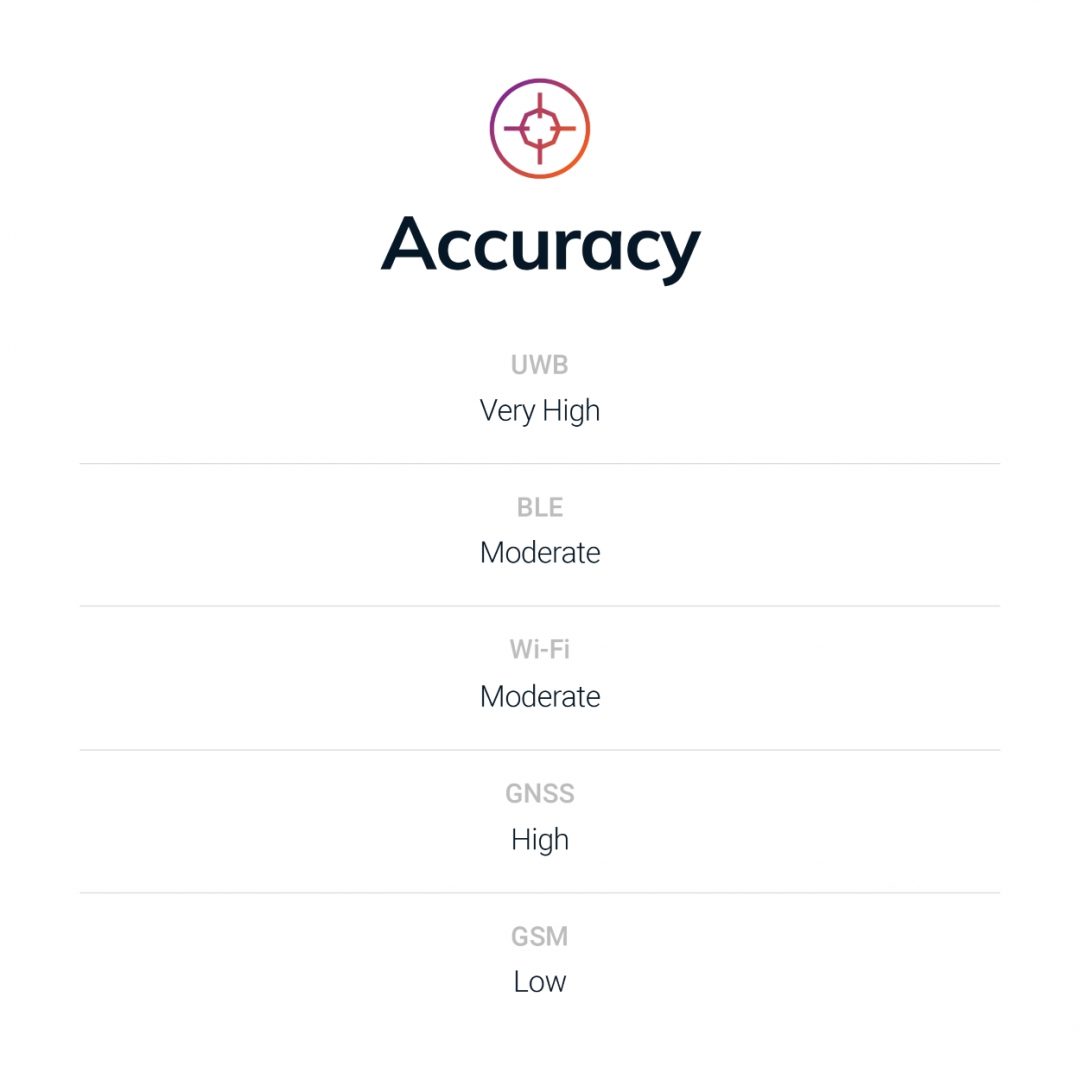
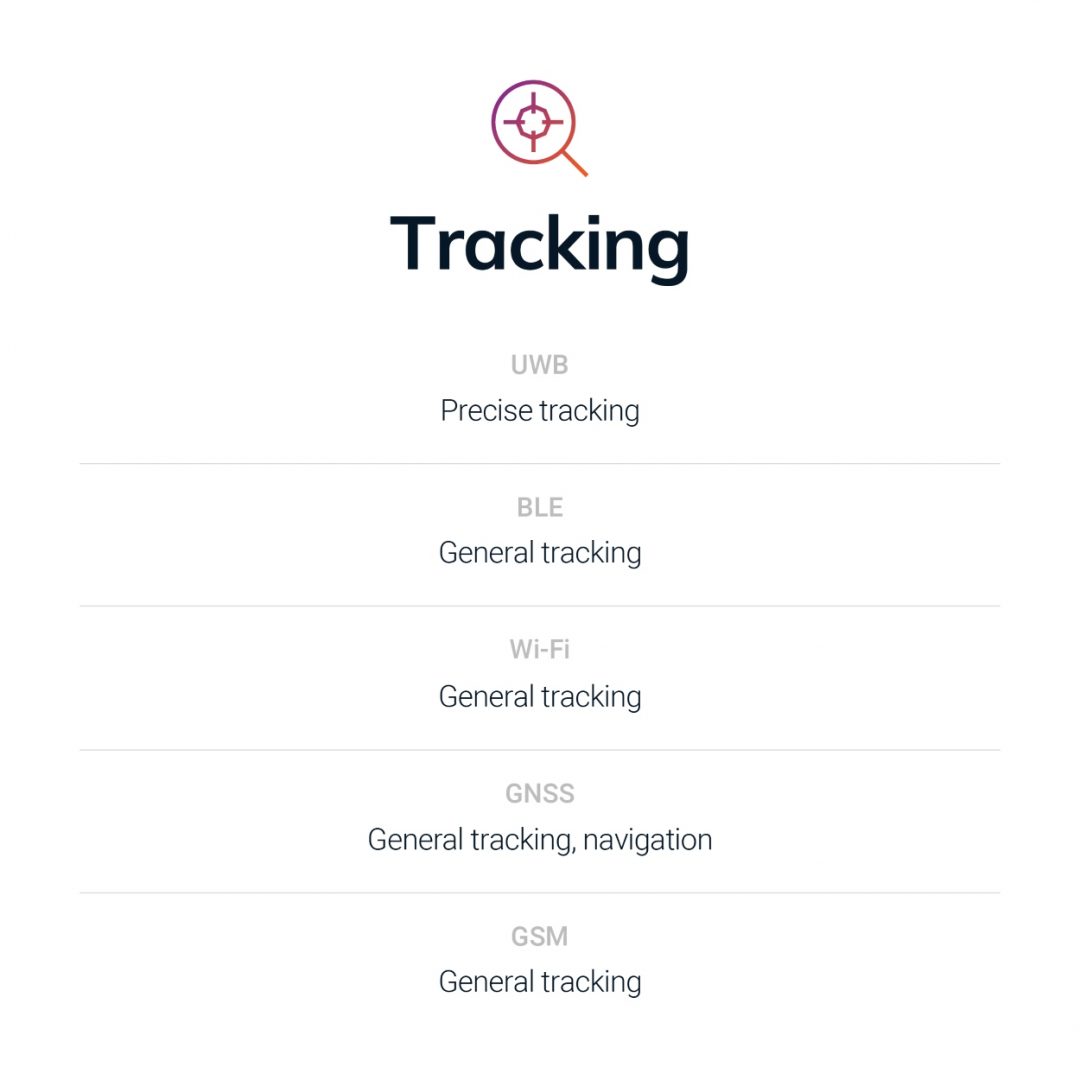
1. Accuracy: Meeting Precision Demands
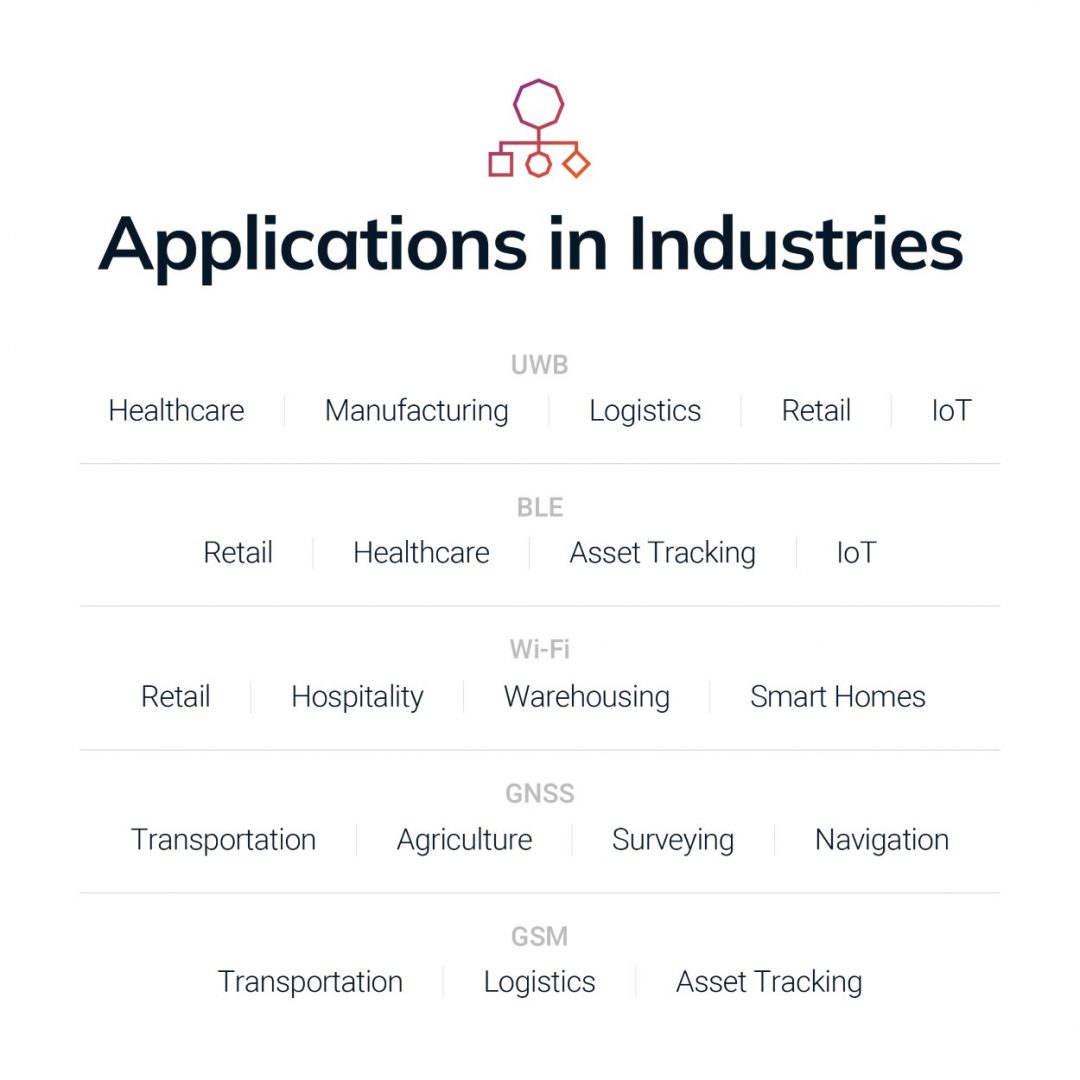
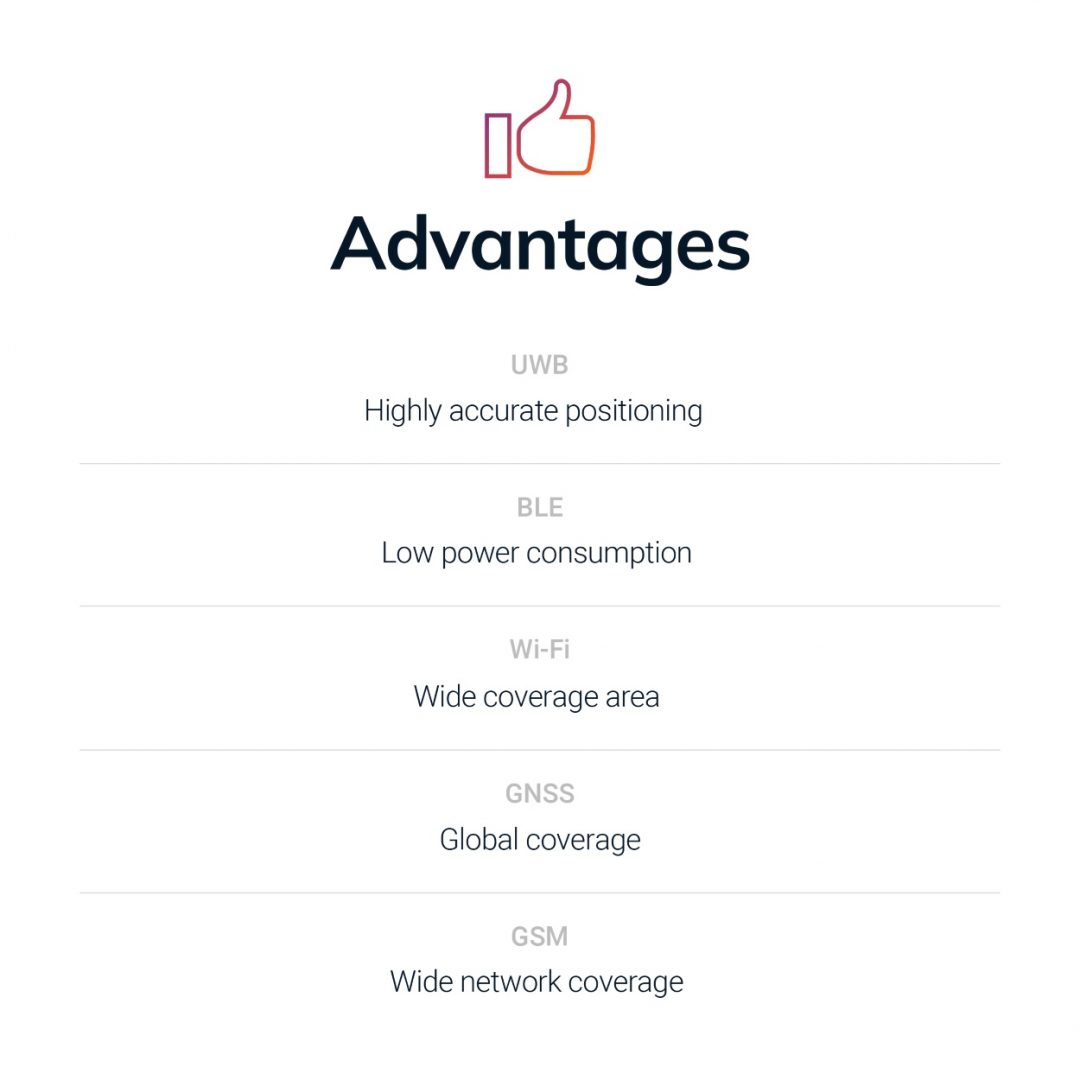
UWB: Delivers very high accuracy, ideal for operations requiring precise tracking, such as healthcare, manufacturing, and logistics. This level of precision is why healthcare RTLS tracking increasingly relies on UWB for patient and equipment location.
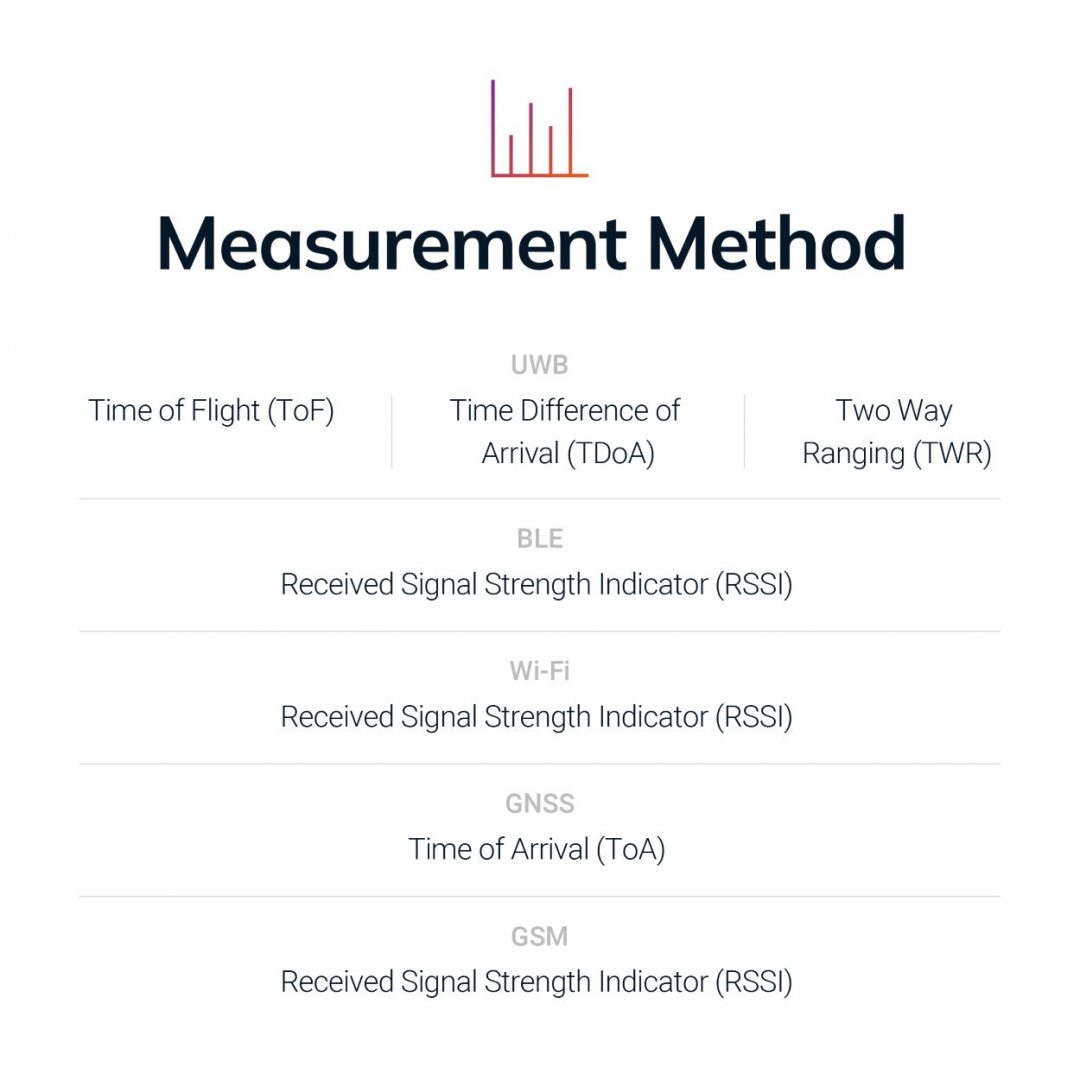
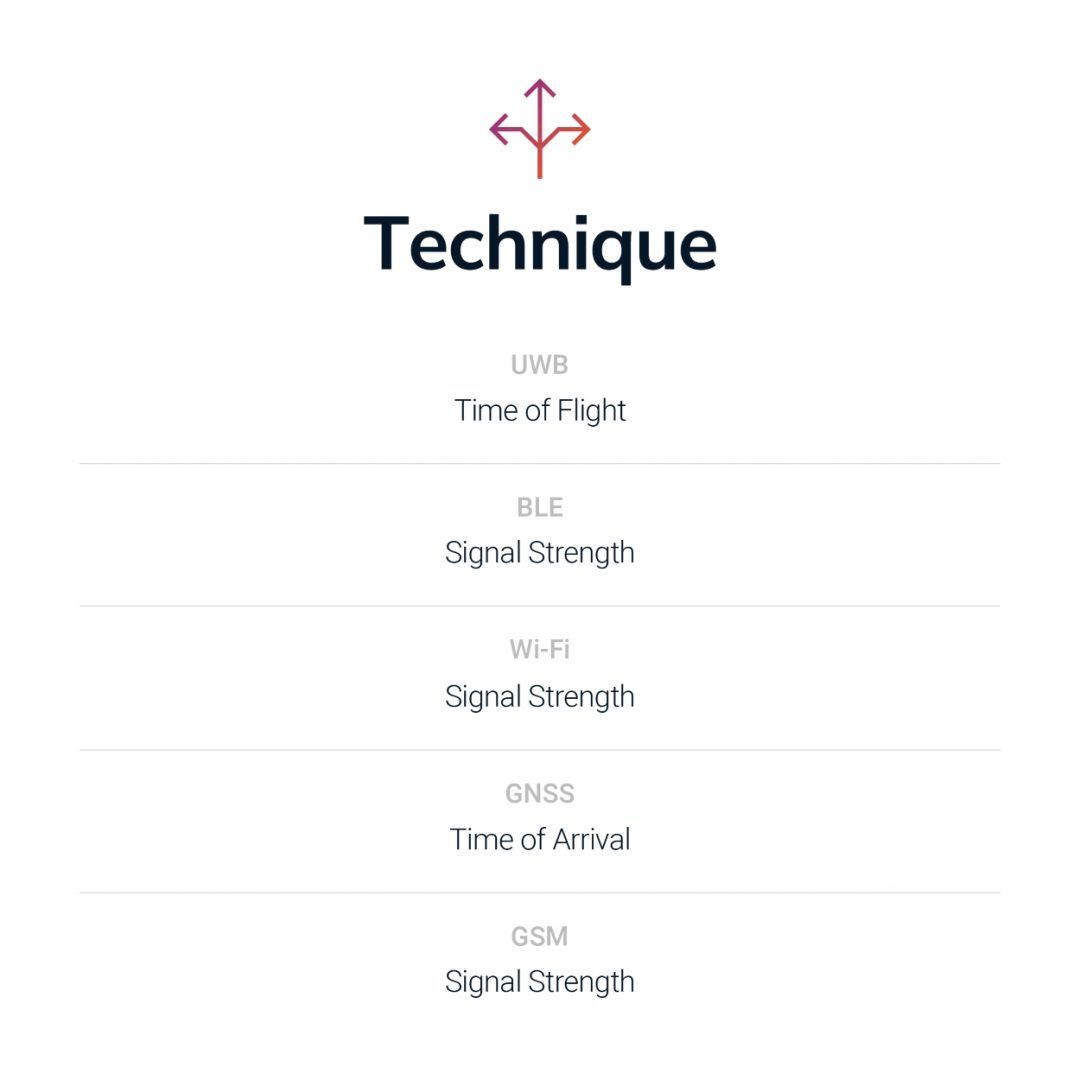
BLE & Wi-Fi: Offer moderate accuracy based on signal strength (RSSI), which is sufficient for general tracking but less reliable for critical tasks.
GNSS & GSM: While GNSS provides strong outdoor accuracy, it struggles indoors, whereas GSM has the lowest accuracy overall.
Takeaway: UWB’s precision gives it a distinct edge for environments where small location errors can lead to safety or operational inefficiencies.
2. Range and Scalability
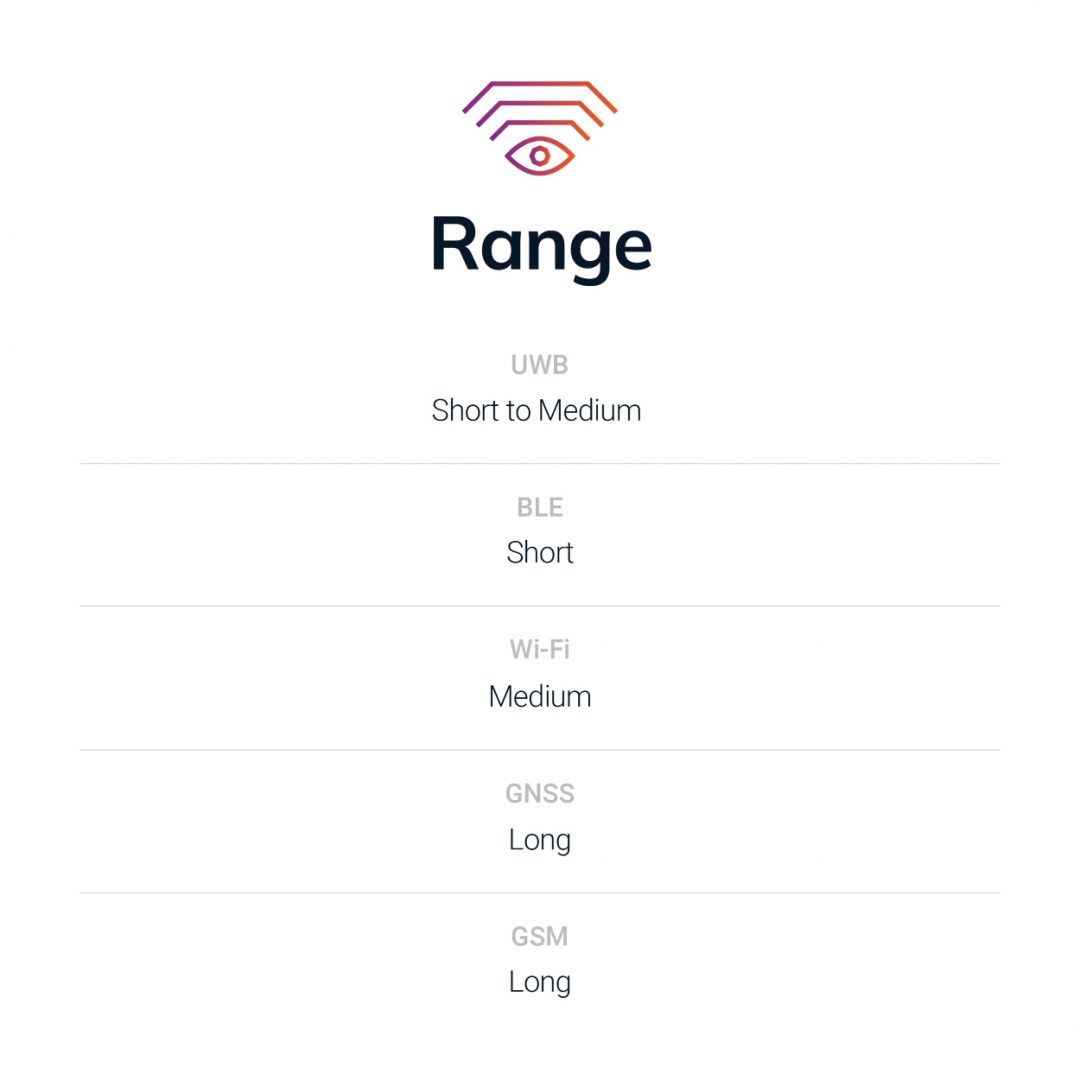
UWB: Provides short-to-medium range with high scalability, performing well in dense, multi-zone deployments.
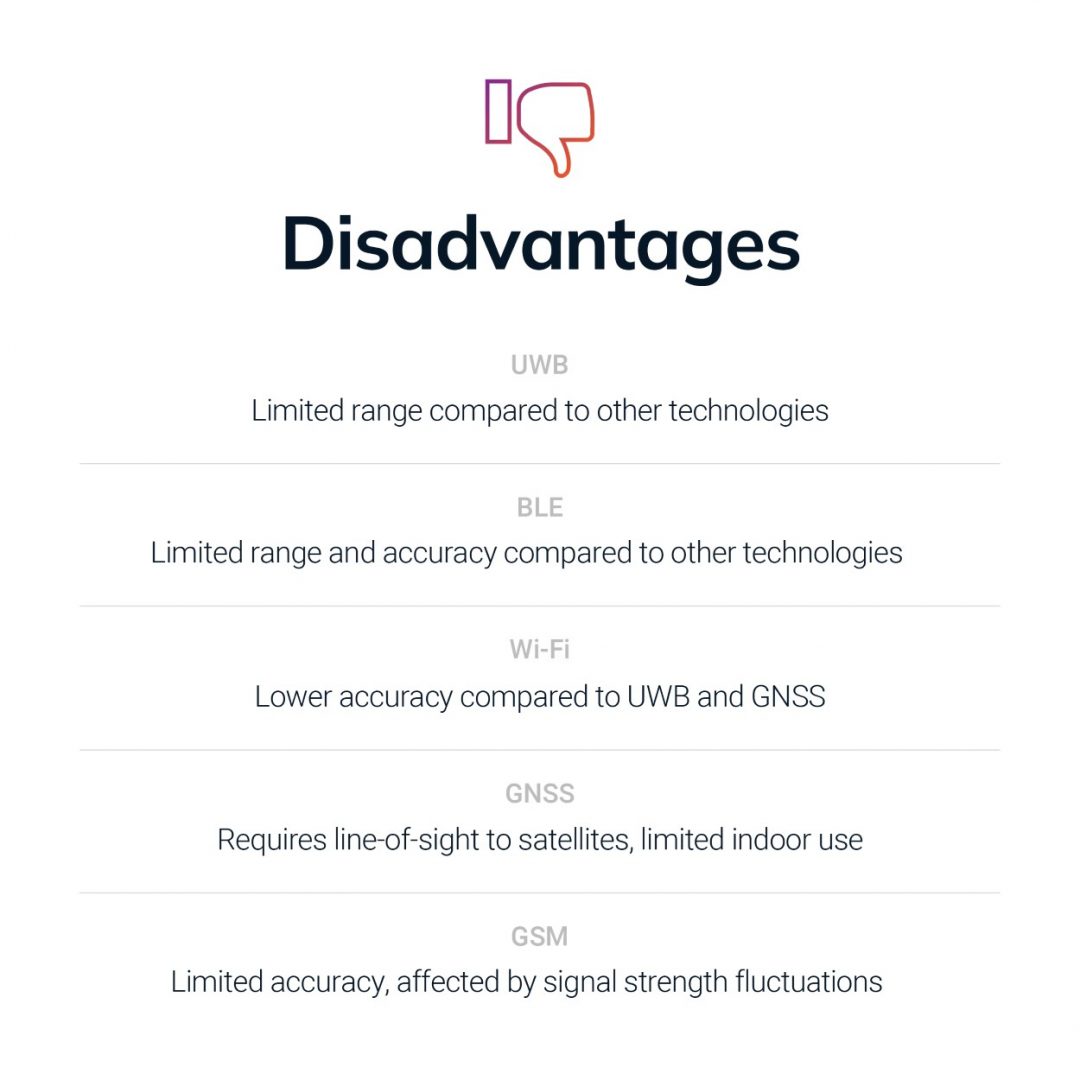
BLE & Wi-Fi: Suitable for smaller operations due to limited range and scalability.
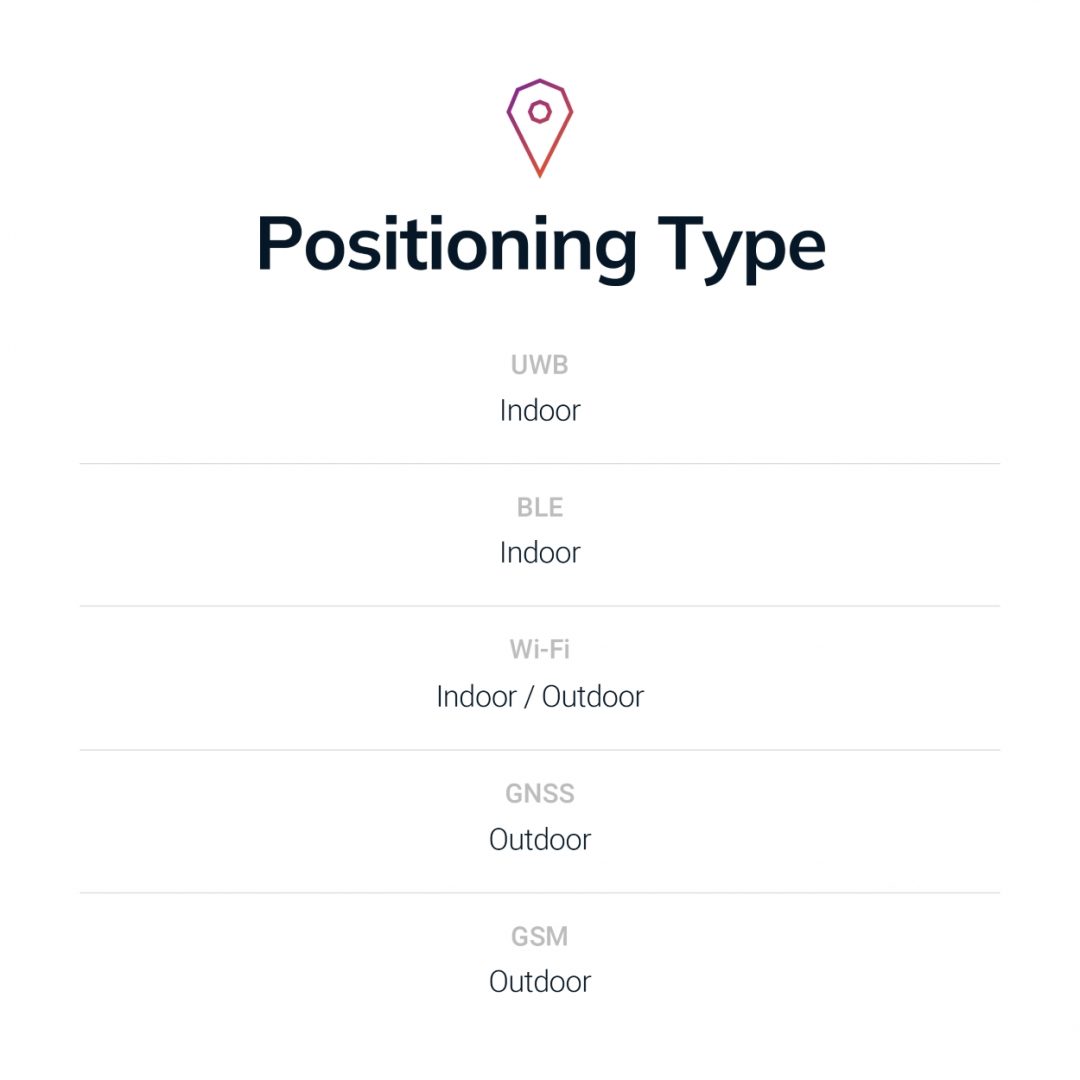
GNSS & GSM: Offer long-range coverage but are best suited for outdoor use.
Takeaway: UWB combines flexibility and performance, scaling efficiently to accommodate growing or complex tracking needs.
3. Security and Reliability
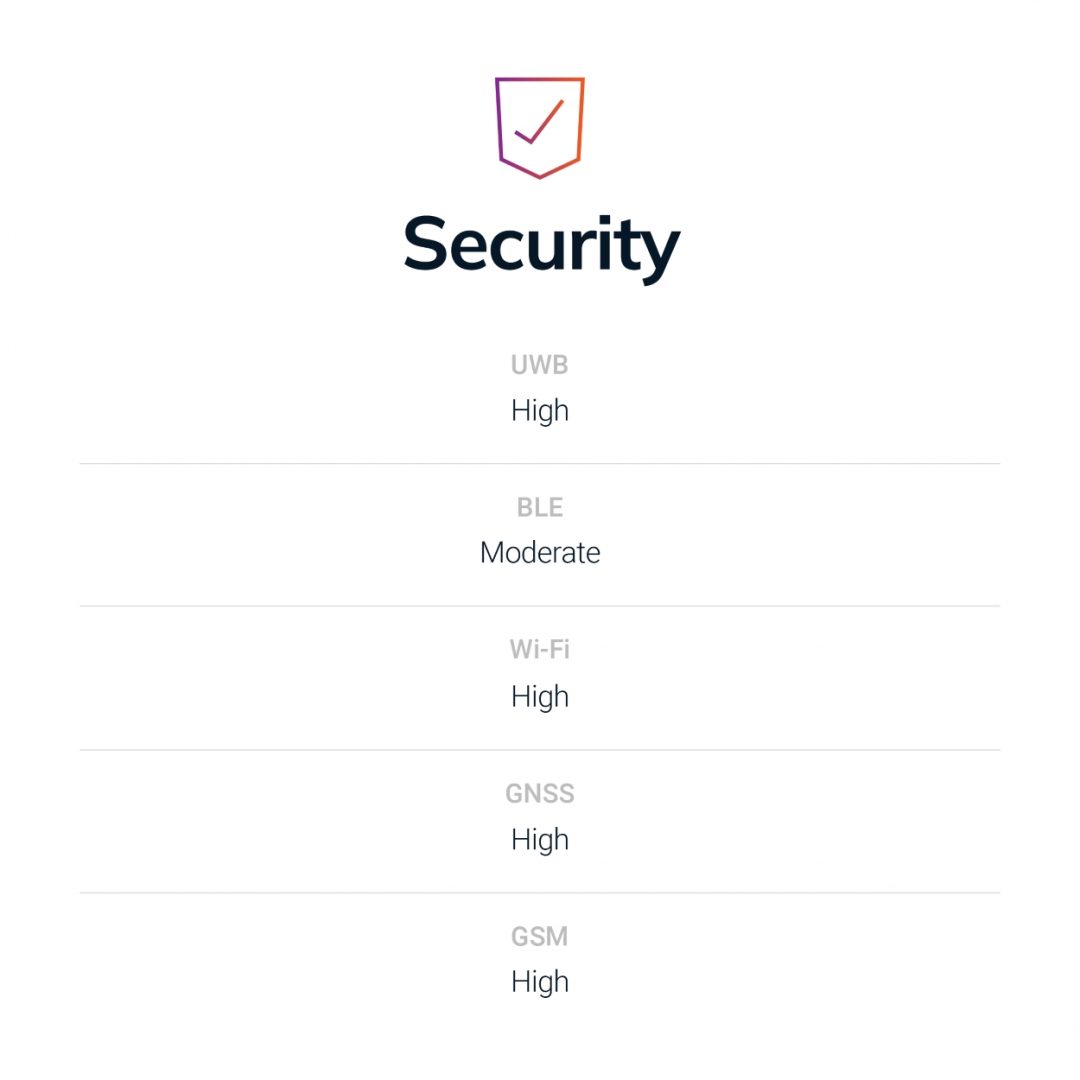
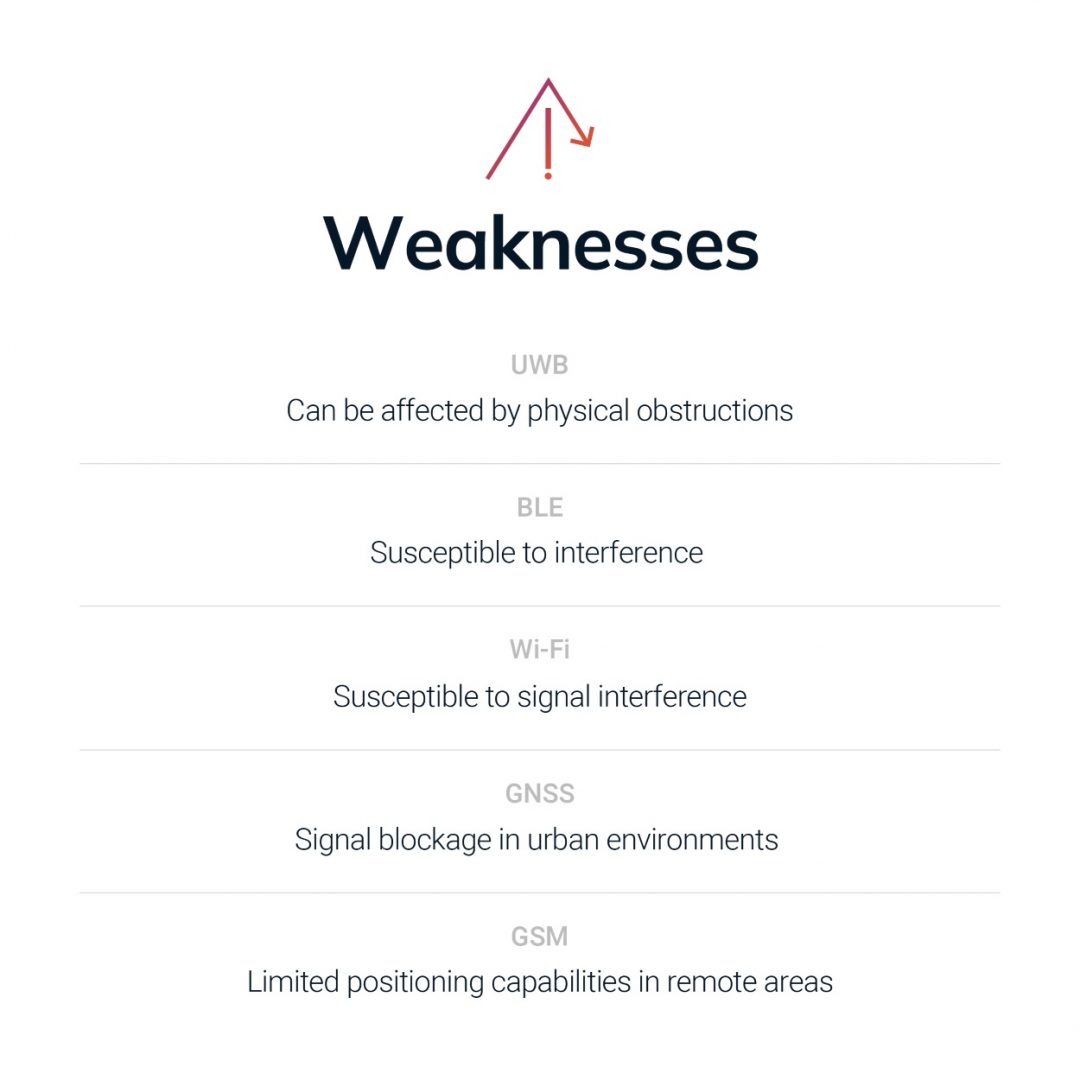
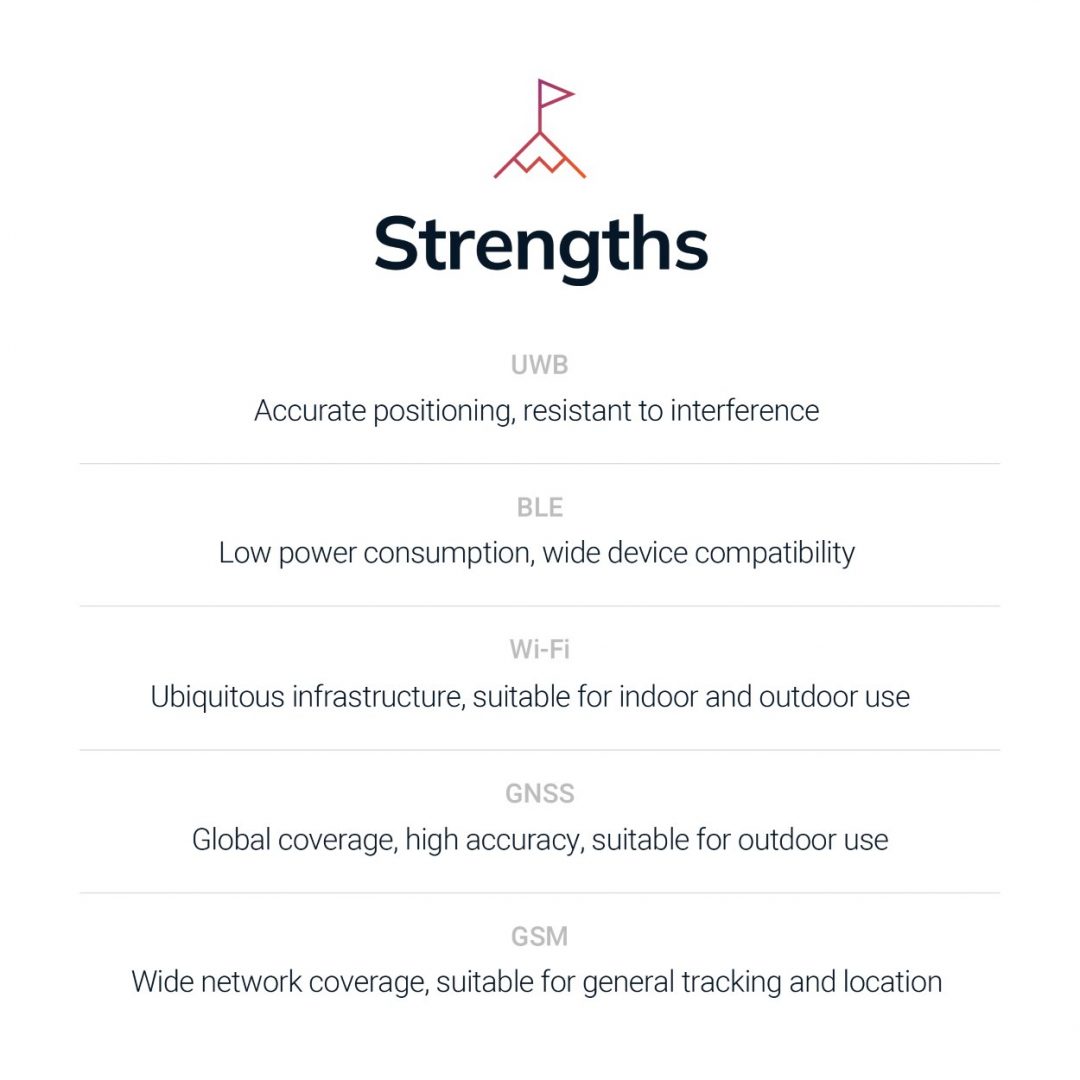
UWB: Features high security, as its wide signal spectrum is resistant to interference and unauthorized interception. This reliability also supports staff duress and connected worker safety applications, where a missed signal cannot be an option.
BLE & Wi-Fi: Provide moderate security but are more vulnerable to interference and hacking.
GNSS & GSM: Secure in outdoor applications but less effective indoors.
Takeaway: UWB’s secure, interference-resistant performance ensures reliability in mission-critical applications.

4. Installation and Cost Considerations
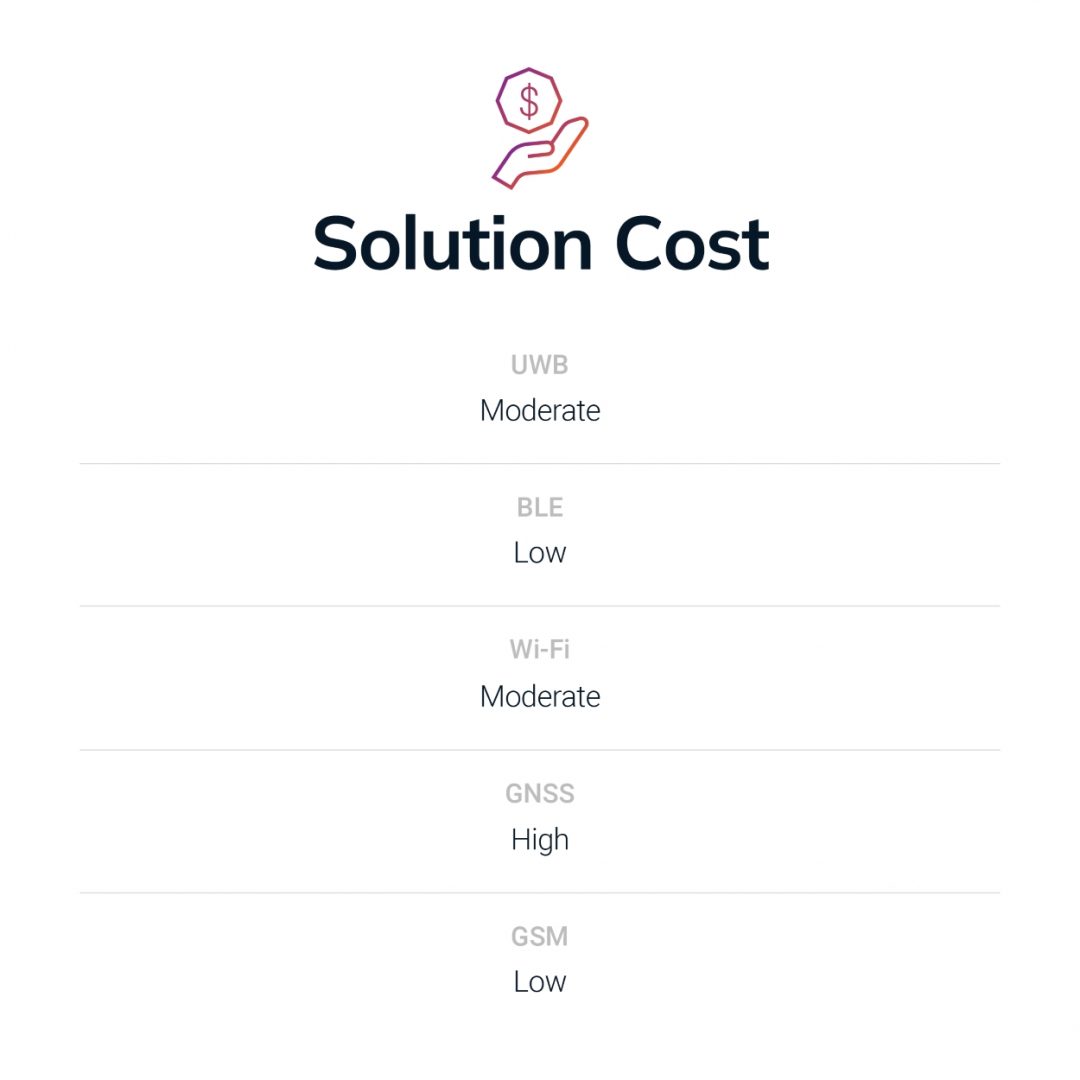
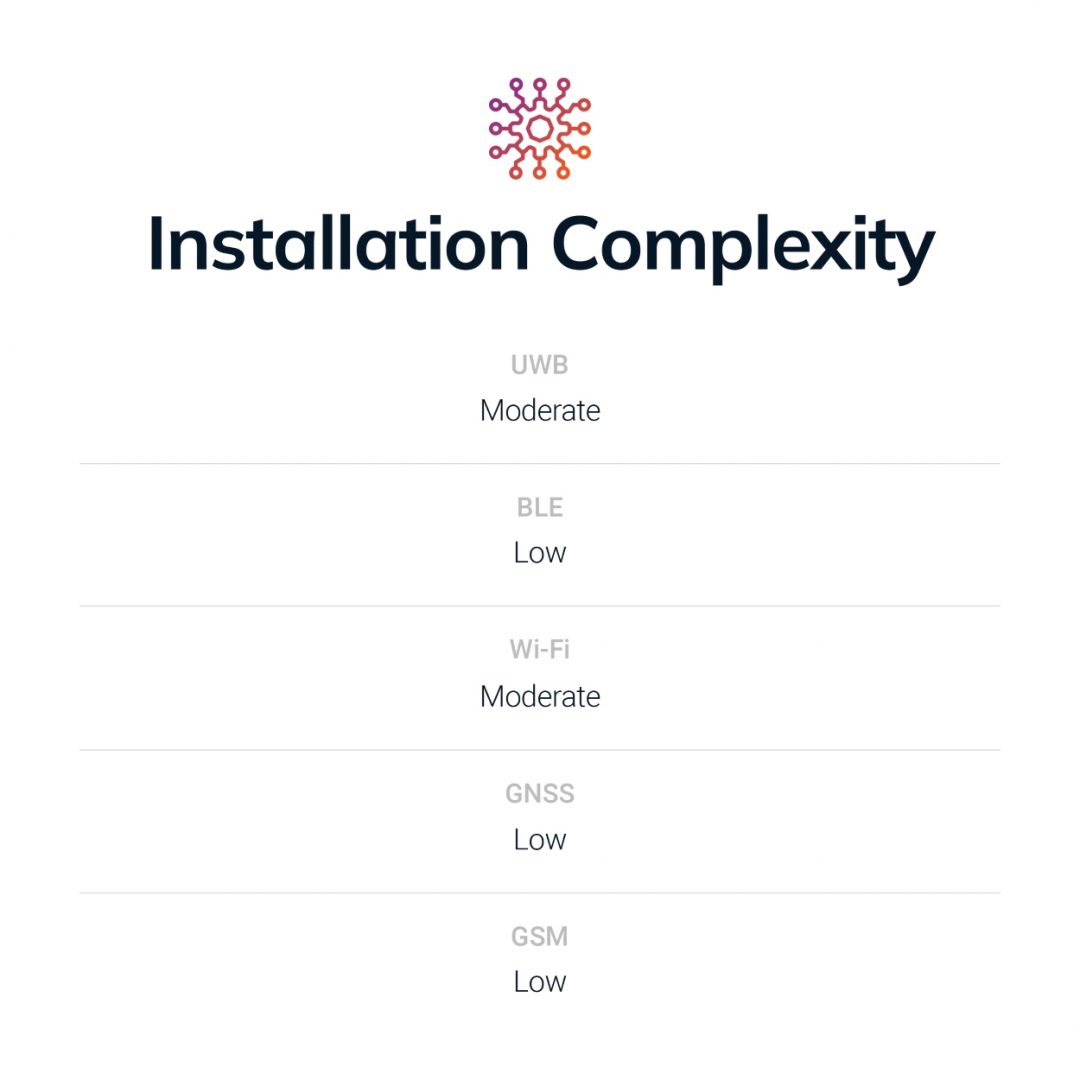
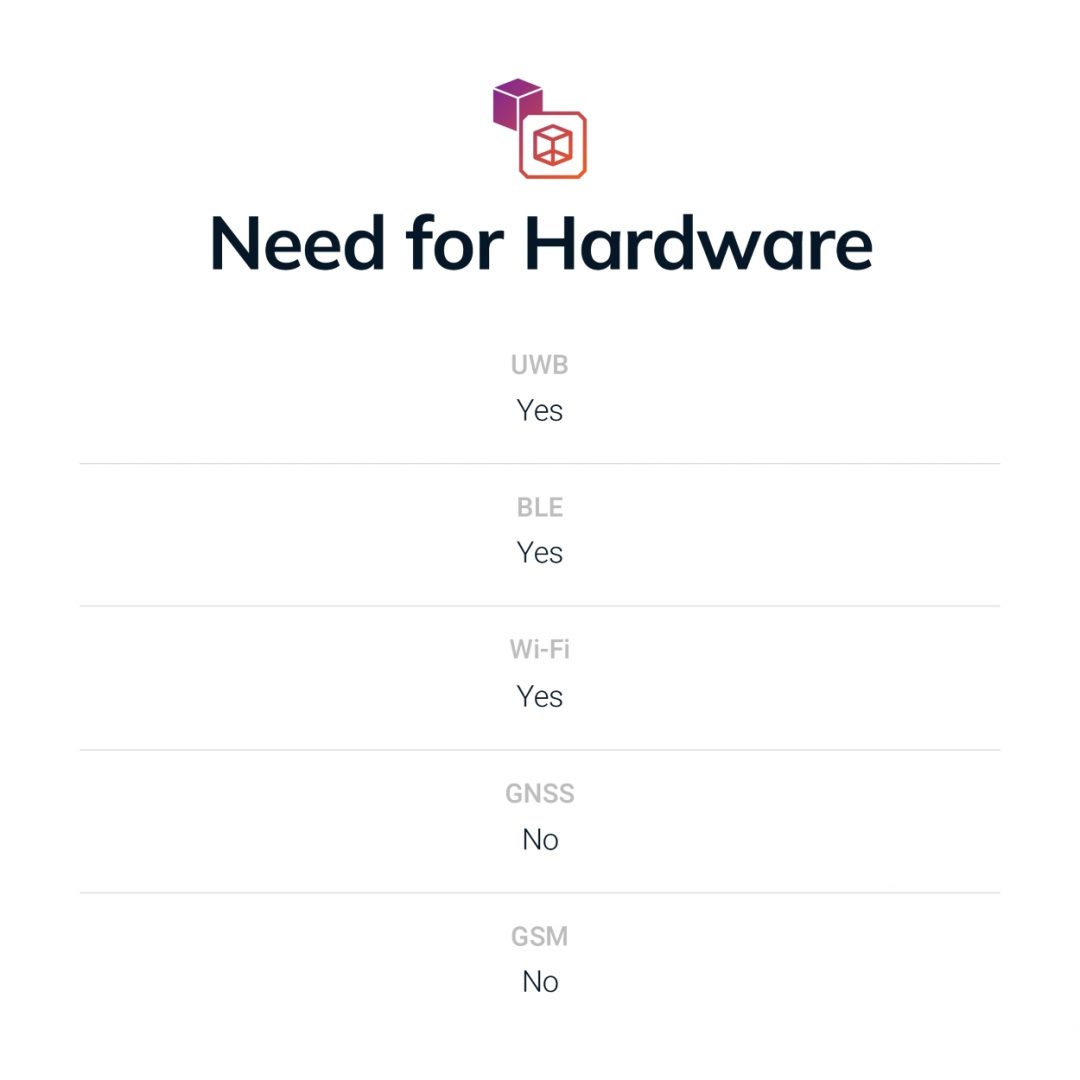
UWB: Requires moderate installation complexity with strong ROI due to its high performance.
BLE & Wi-Fi: Low installation cost and effort, but performance limitations can impact long-term value.
GNSS & GSM: Low installation complexity but limited to outdoor use.
Takeaway: While UWB demands slightly higher upfront effort, its accuracy and reliability make it a cost-effective choice over time.
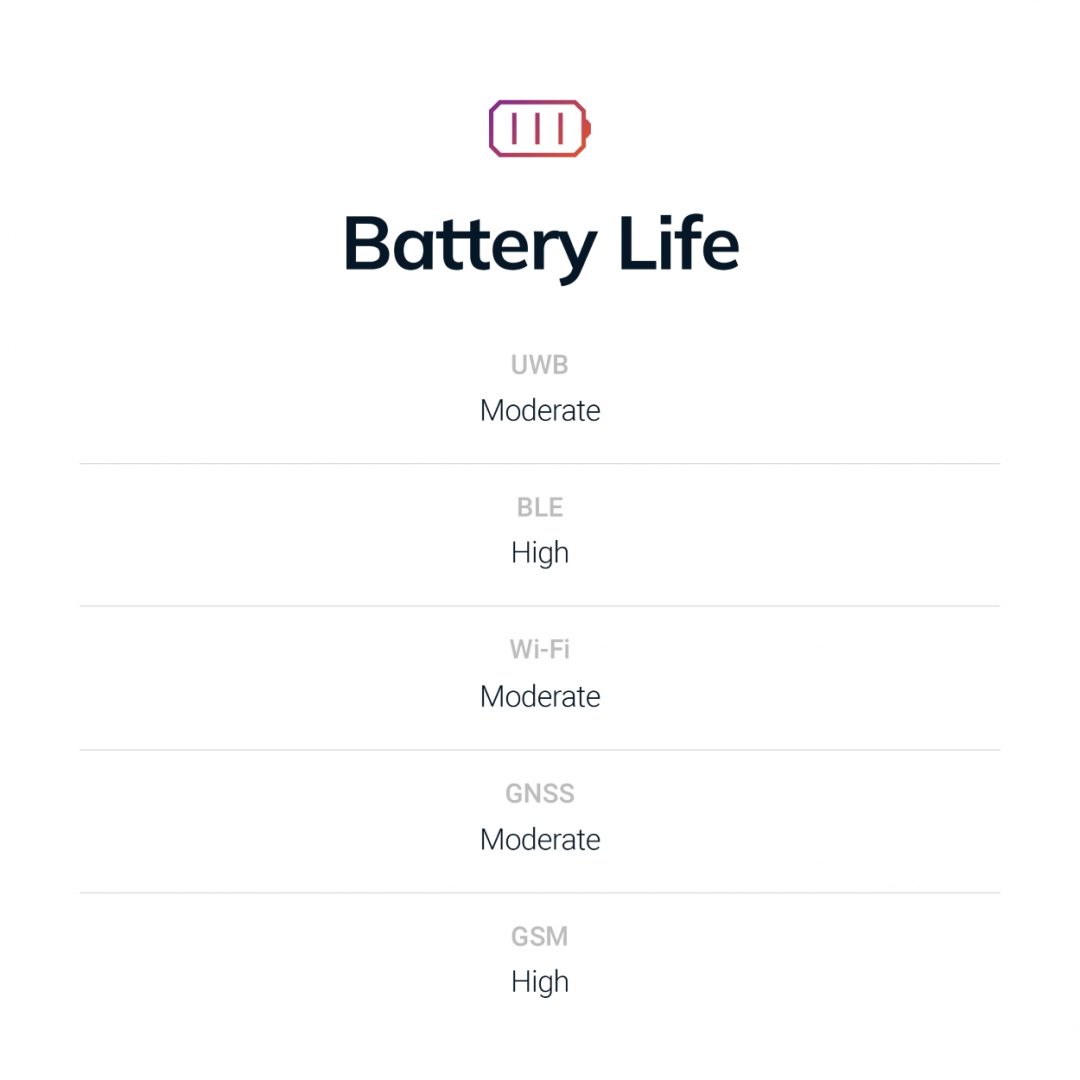
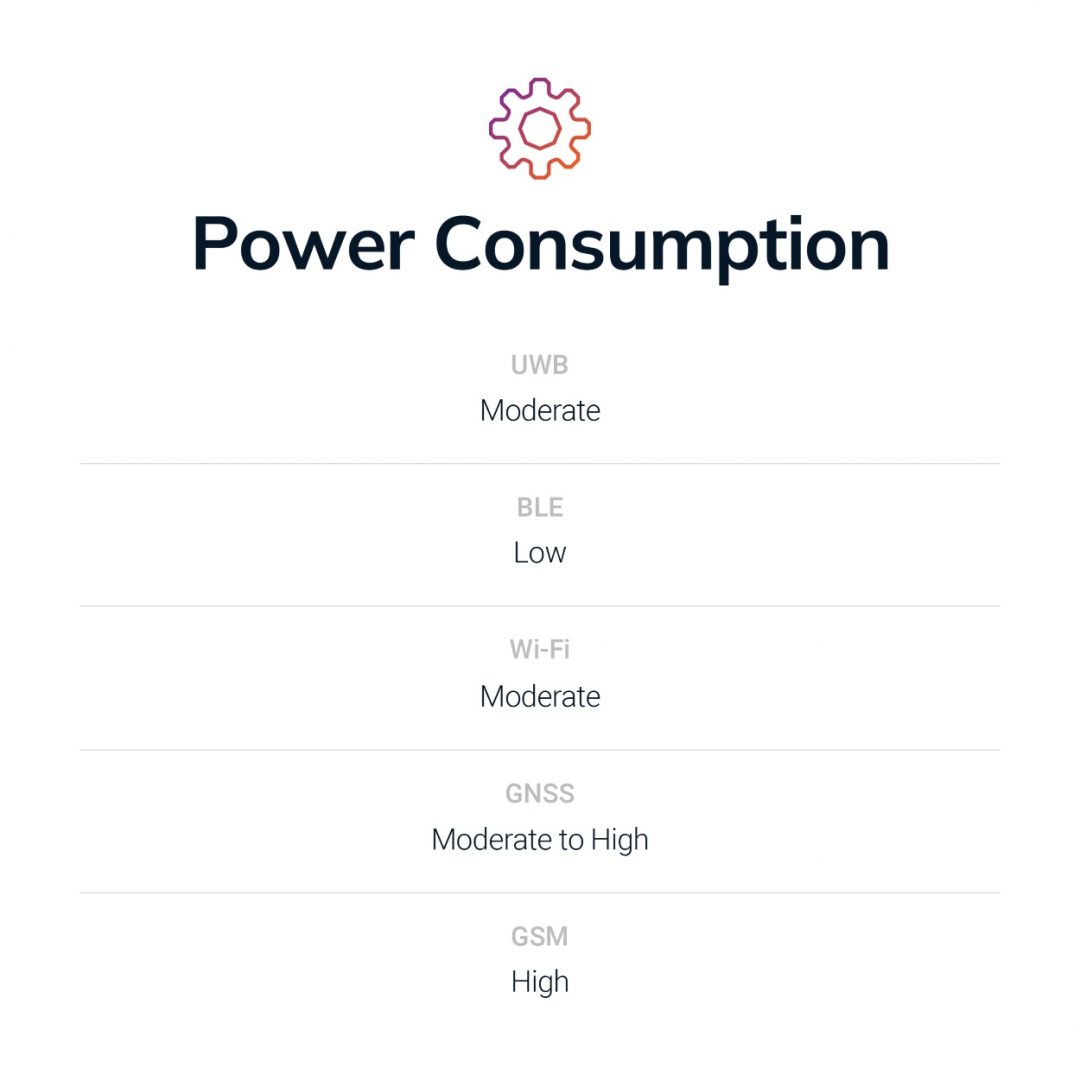
Battery Life and Power Consumption
UWB: Moderate power consumption, with ongoing innovations improving energy efficiency.
BLE & GSM: Lead in power efficiency, making them ideal for simple, low-demand applications.
Wi-Fi & GNSS: Tend to consume more power due to higher signal strength requirements.
Takeaway: UWB’s balance of power efficiency and performance enables robust, long-term deployments without compromising precision.
UWB RTLS vs. BLE, GNSS, Wi-Fi, GSM: Comparison Table
Criteria | UWB | BLE | GNSS | Wi-Fi | GSM |
Accuracy | sub-meter | 1–3 m (RSSI) | Strong outdoors, weak indoors | 3-10 m (RSSI) | Lowest overall |
Range / Scalability | Short-medium, high scalability | Limited range/scale | Long range, outdoor only | Limited range/scale | Long range, outdoor only |
Security | High — wide spectrum, interference-resistant | Moderate | Secure outdoors, weak indoors | Moderate | Secure outdoors, weak indoors |
Install Cost | Moderate, strong ROI | Low | Low, outdoor only | Low | Low, outdoor only |
Power Use | Moderate, improving | High efficiency | Higher draw | Higher draw | High efficiency |
Why UWB RTLS Is a Future-Ready Solution
While every RTLS technology has its place, UWB offers a combination of benefits that address current and future demands:
High Precision: Centimeter-level accuracy supports critical applications.
Scalable Deployments: Handles complex, large-scale operations with ease.
Resilient and Reliable: Resistant to interference and signal obstructions.
Continuous Innovation: Advancements in hardware improve energy efficiency and cost-effectiveness.
Adoption by Industry Leaders: Integration into consumer and enterprise devices signals strong long-term growth.
This is especially visible in industrial safety, where UWB-based forklift safety systems are now being adopted to prevent collisions in real time.
Frequently Asked Questions
Q1: Is UWB better than BLE for RTLS?
Yes, for applications that need centimeter-level accuracy. UWB delivers sub-meter precision versus 1–3 meters for BLE, making it the better choice for safety-critical tracking such as forklift collision avoidance or patient location. BLE remains a lower-cost option when precise positioning is not required.
Q2: How accurate is UWB RTLS compared to GPS and Wi-Fi?
UWB RTLS achieves sub-meter accuracy indoors, far exceeding Wi-Fi (1–3 meters) and GNSS/GPS, which loses accuracy indoors entirely. This makes UWB the preferred technology for indoor industrial and healthcare environments.
Q3: How much does a UWB RTLS system cost to install?
UWB RTLS installation requires moderate upfront investment compared to BLE or Wi-Fi, but its accuracy and reliability typically deliver stronger long-term ROI by reducing safety incidents and operational inefficiencies.
Q4: Can UWB RTLS be combined with BLE or Wi-Fi in a hybrid system?
Yes. Many facilities deploy UWB for zones requiring high precision and pair it with BLE or Wi-Fi for lower-cost, lower-accuracy coverage elsewhere, balancing performance and budget across the site.
The Key Takeaway
While BLE, GNSS, Wi-Fi, and GSM serve specific use cases, UWB offers unmatched precision, security, and scalability, making it a compelling choice for industries that demand reliability and accuracy.
Whether you’re managing critical workflows, enhancing safety, or improving asset visibility, UWB positions your RTLS technology investment to deliver sustainable value well into the future.
Explore how UWB can support your business needs. If UWB does not solve all your problems, Litum offers hybrid solutions as well. Explore Litum’s UWB-based asset tracking solutions, or read our complete guide to RTLS technology for a deeper look at how UWB RTLS compares across every industrial use case. Get in touch with our team today to learn more!