


The market for Real-Time Location Systems continues to expand rapidly. The healthcare RTLS segment alone is projected to grow from roughly $3.4 billion in 2026 to between $14 and $17 billion by 2035, and industrial deployments are scaling at a similar pace. Buyers evaluating RTLS today face a wider field of vendors, more technology options, and higher stakes than at any point in the category’s history. The upside is more choice. The downside is that meaningful differences between vendors are harder to identify from marketing materials alone.
This guide cuts through that. It covers every major evaluation criterion, explains the technology tradeoffs that actually affect performance in industrial environments, and provides the specific questions buyers should ask before committing to a vendor. It is written for operations managers, facility directors, and safety leads evaluating RTLS for warehouses, distribution centers, manufacturing facilities, and healthcare sites.
If you are still early in understanding what RTLS is and how it works, start there first. This guide assumes you already know the basics and are ready to evaluate vendors.
Step 1: Define What You Actually Need the System to Do
The single most common mistake in RTLS vendor evaluations is starting with the vendor instead of the use case. Every vendor can demonstrate a polished dashboard and a compelling deployment case study. What matters is whether their system solves your specific problem in your specific environment.
Before you contact a single vendor, answer these four questions:
- What is the primary use case? Asset tracking, forklift safety, personnel safety, emergency mustering, healthcare patient flow, or a combination? Different use cases require different technology foundations. A system optimized for asset tracking may not perform reliably enough for real-time collision warning.
- Where will the system operate? Indoor only, outdoor only, or both? Dense metal racking environments behave differently from open floor plans. Hazardous areas (ATEX zones) require intrinsically safe hardware. Multi-site deployments need centralized management capabilities.
- How many tags will the system manage? A 10-forklift pilot behaves very differently from a 200-asset production deployment. Vendors who have only delivered small pilots may not have the software architecture to manage enterprise-scale tag density without latency issues.
- What does success look like? A measurable outcome, incident reduction, asset search time, compliance audit trail, utilization rate, gives you a benchmark to evaluate vendor proposals against. Vendors who cannot map their solution to your specific success metric are a red flag.
Step 2: Understand the Technology Options

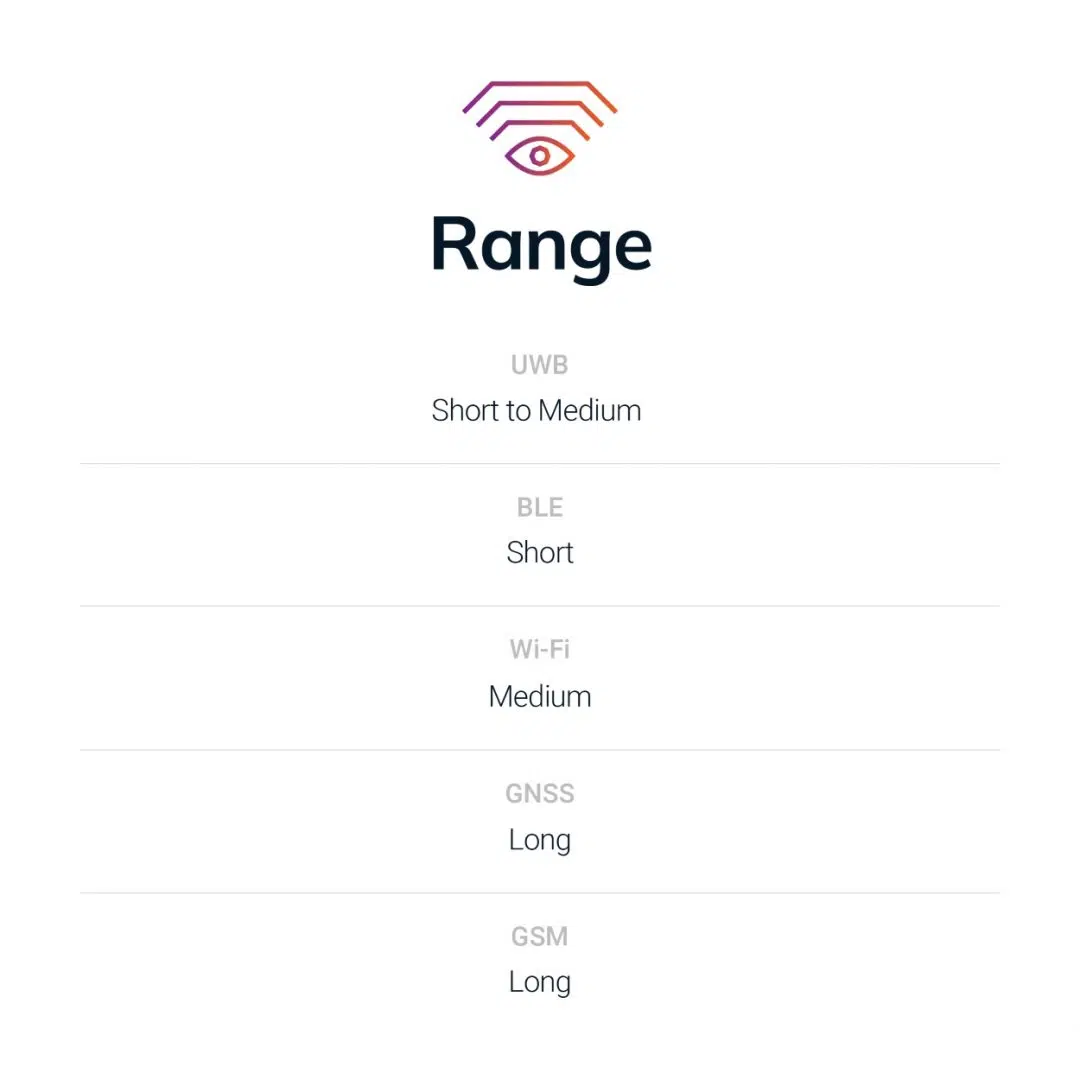
RTLS vendors use different underlying wireless technologies, and the choice affects accuracy, installation complexity, cost, and performance in your specific environment. The four main options for industrial and healthcare deployments:
| Technology | Accuracy | Range | Best For | Key Limitation |
|---|---|---|---|---|
| UWB (Ultra-Wideband) | 30 cm | 10 to 50m per anchor | Forklift safety, high-precision asset tracking, dense racking environments | Higher hardware cost than BLE |
| BLE (Bluetooth Low Energy) | 1–3 m | Up to 50m per beacon | Room-level asset tracking, healthcare staff location, lower-cost deployments | Accuracy degrades around metal and interference |
| RFID (Active) | Zone-level (3–10m) | 50 – 200m | Supply chain checkpoints, inventory management, access control zones | Not suitable for real-time continuous tracking |
| Wi-Fi RTLS | 3–15 m | Facility-wide | Large facilities with existing Wi-Fi infrastructure | Network congestion, latency issues in dense environments |
For a full breakdown across additional dimensions including battery life, installation complexity, power consumption, and security, see the comparison below.
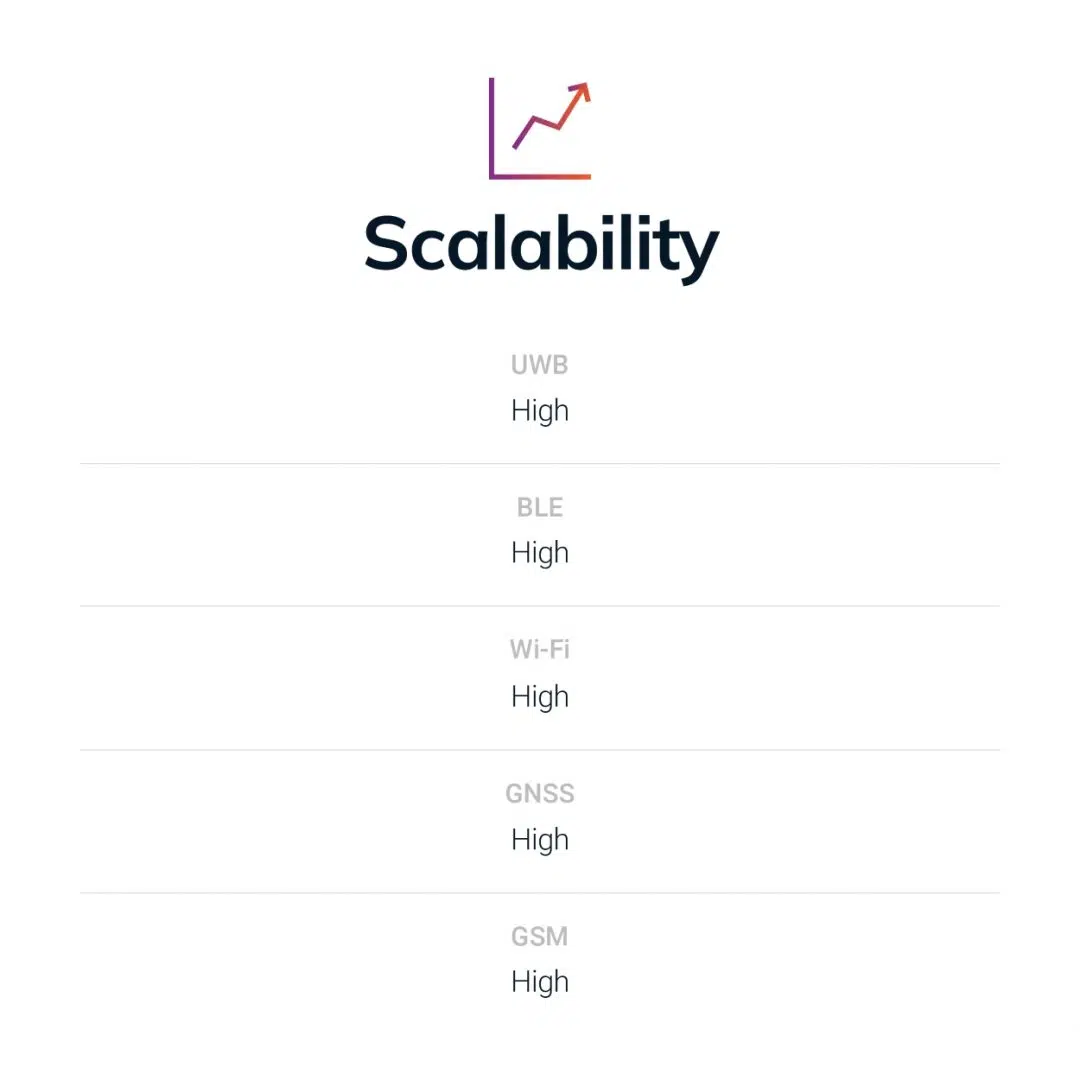
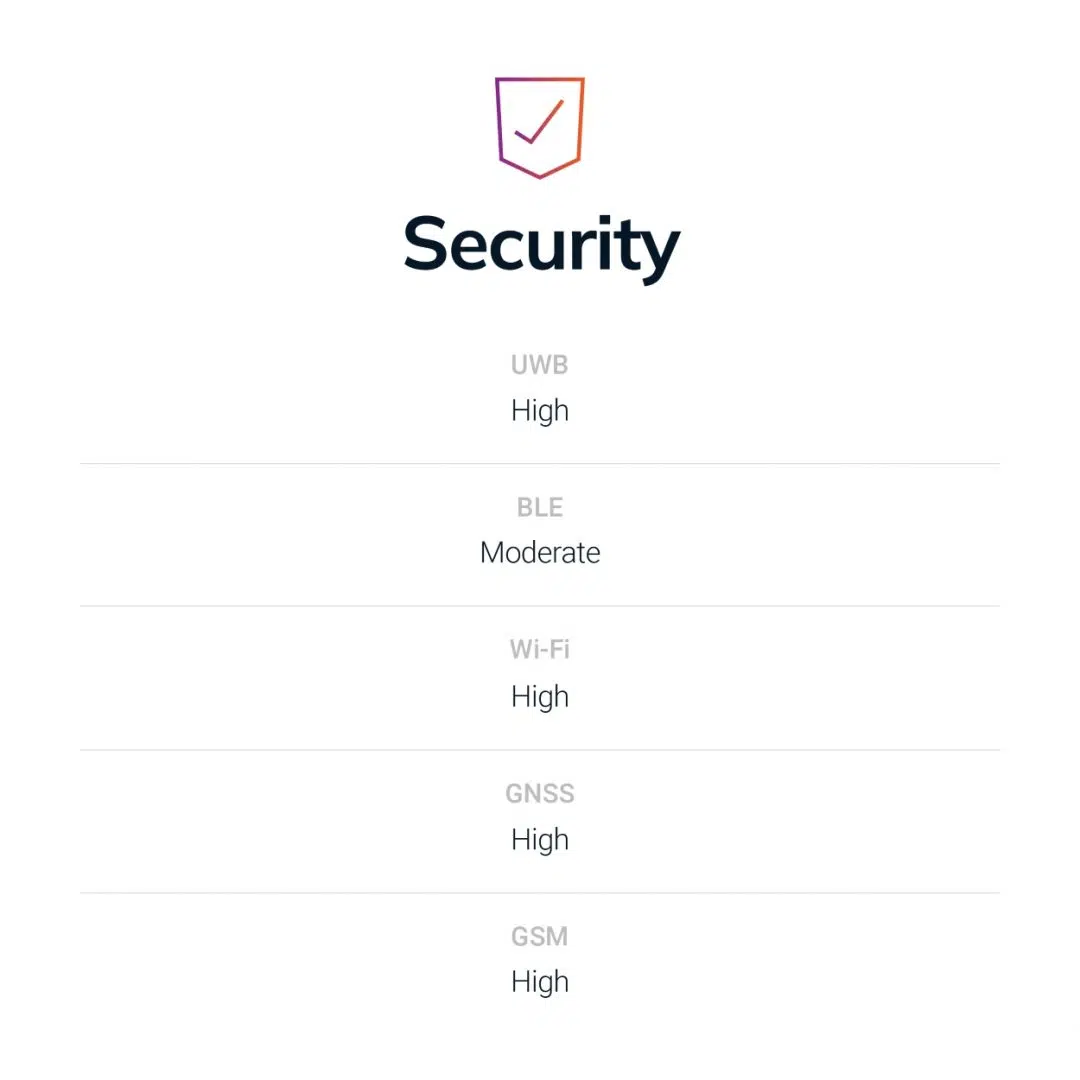
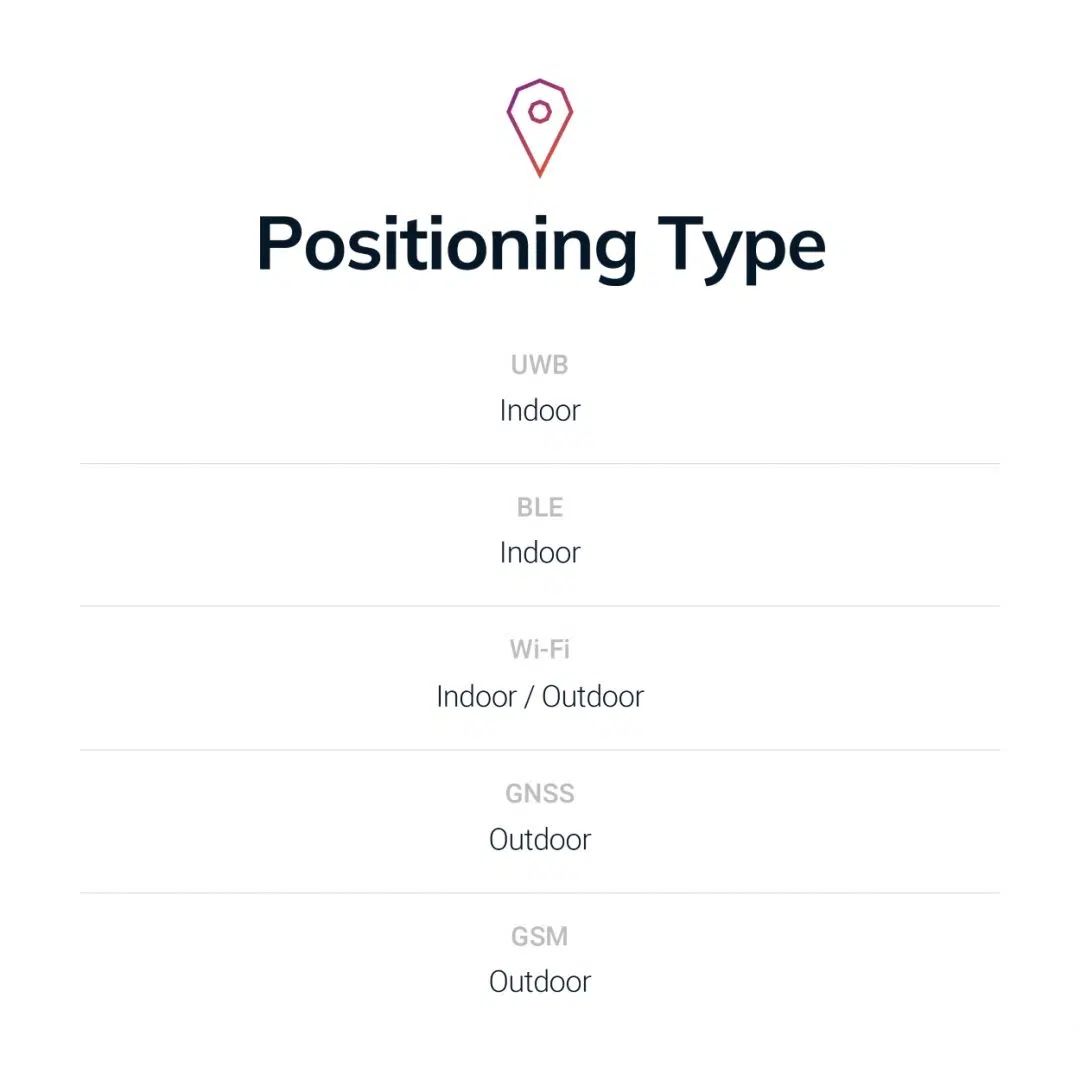
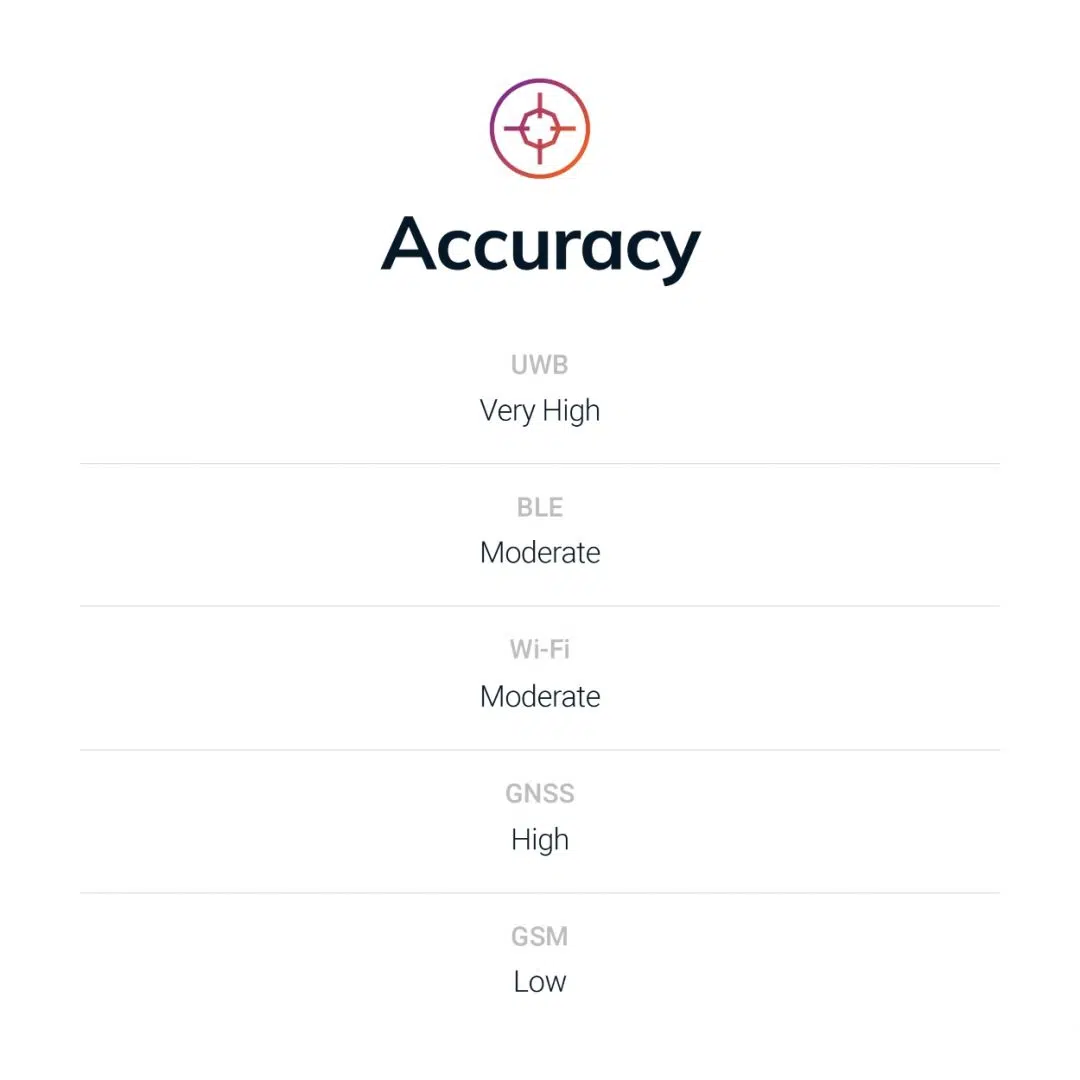
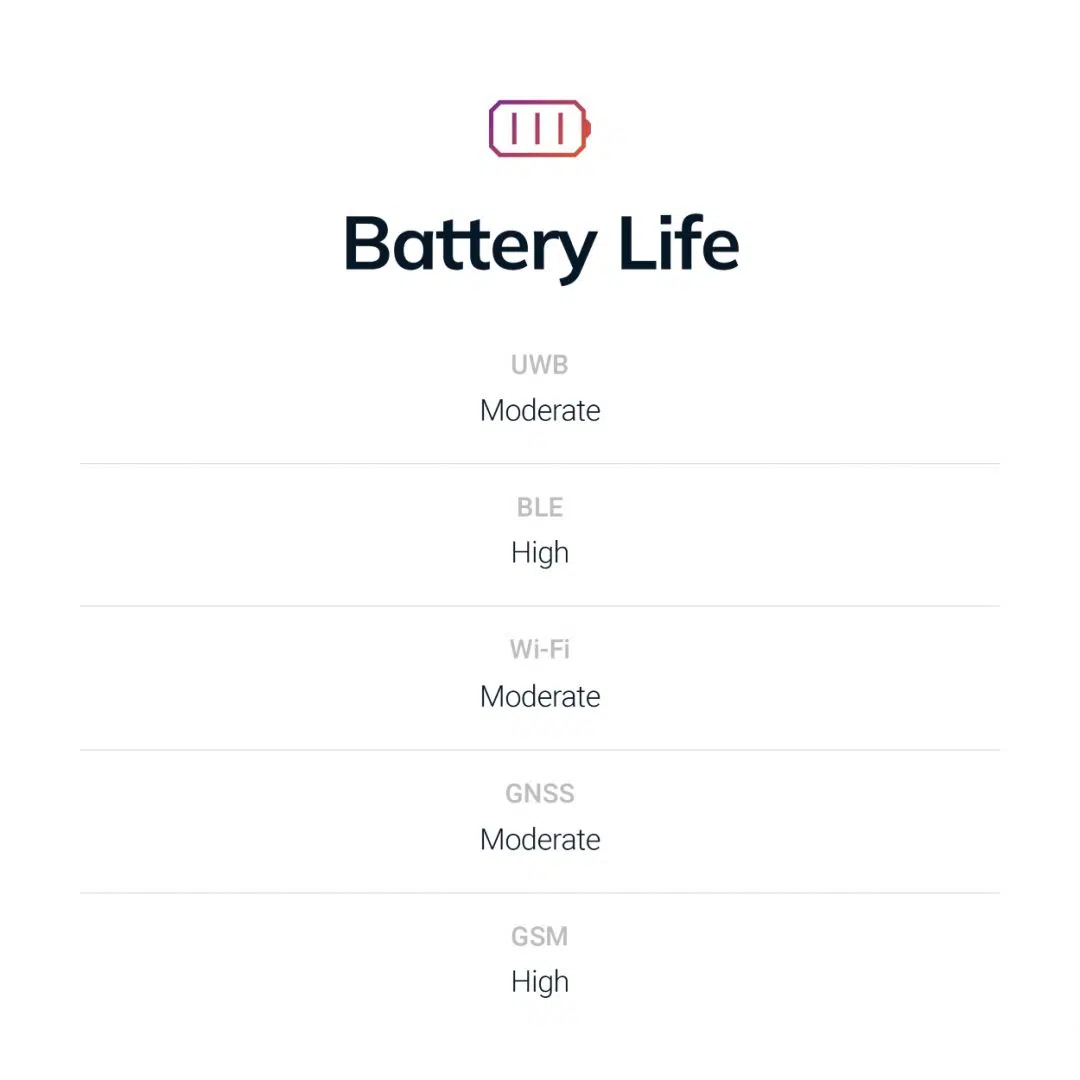
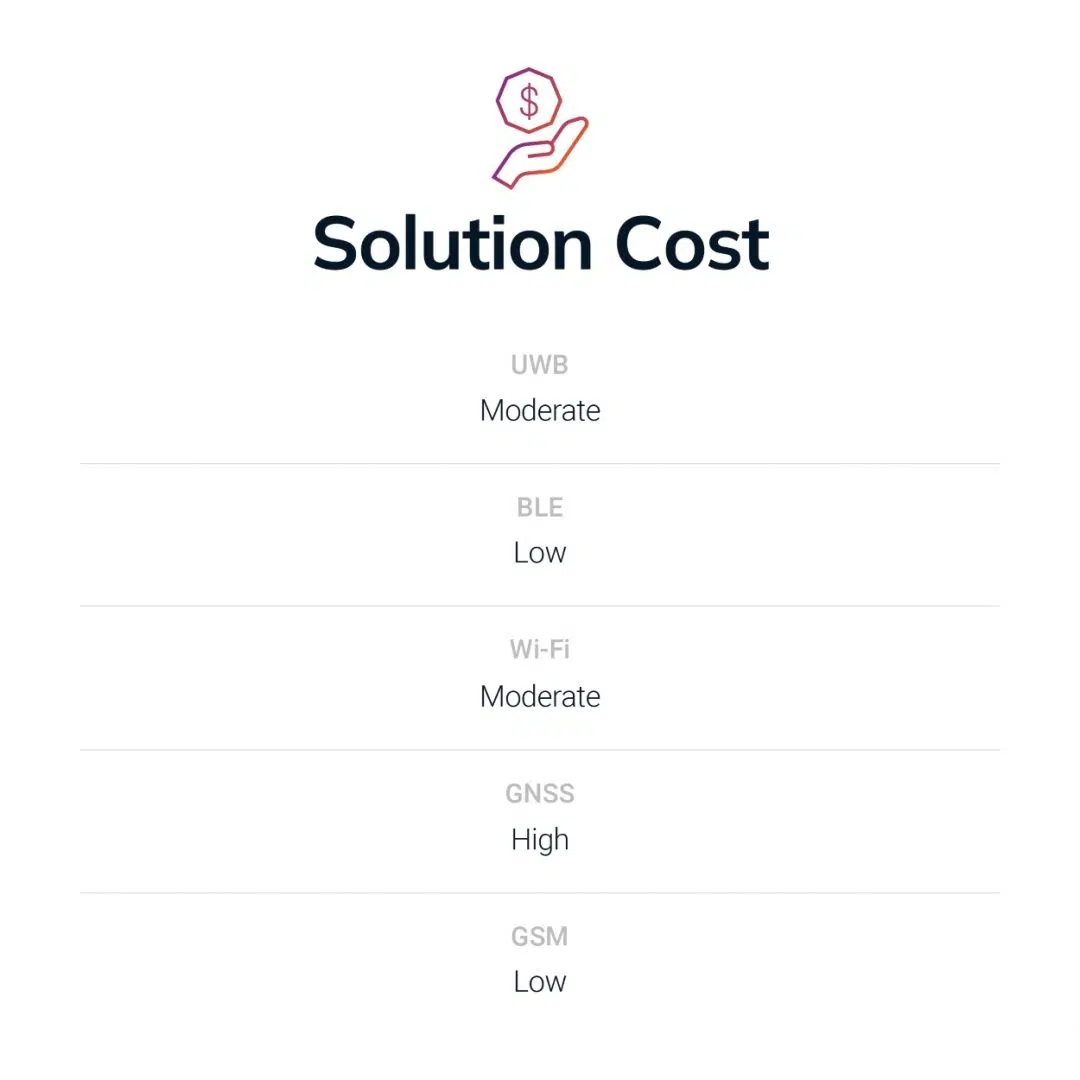
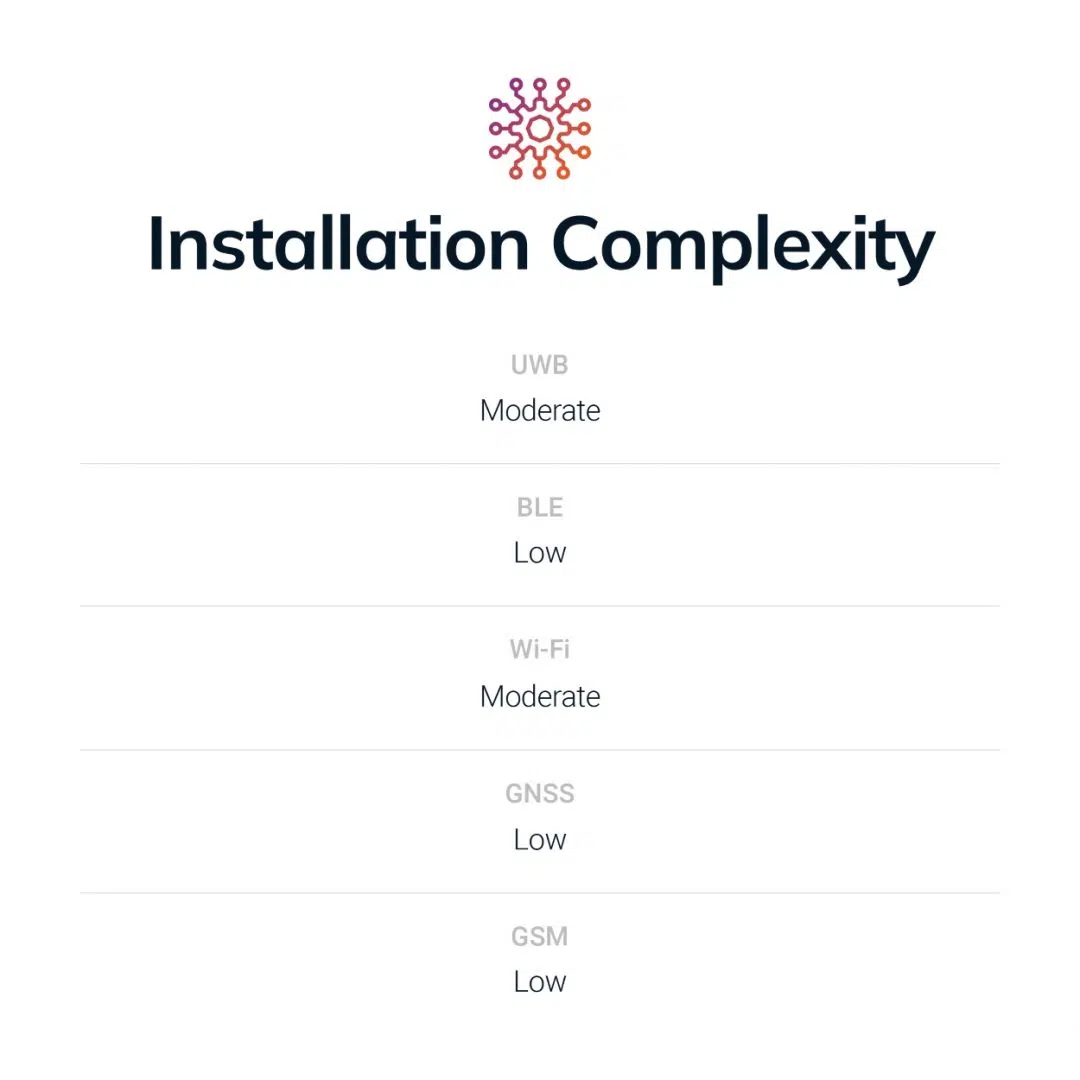
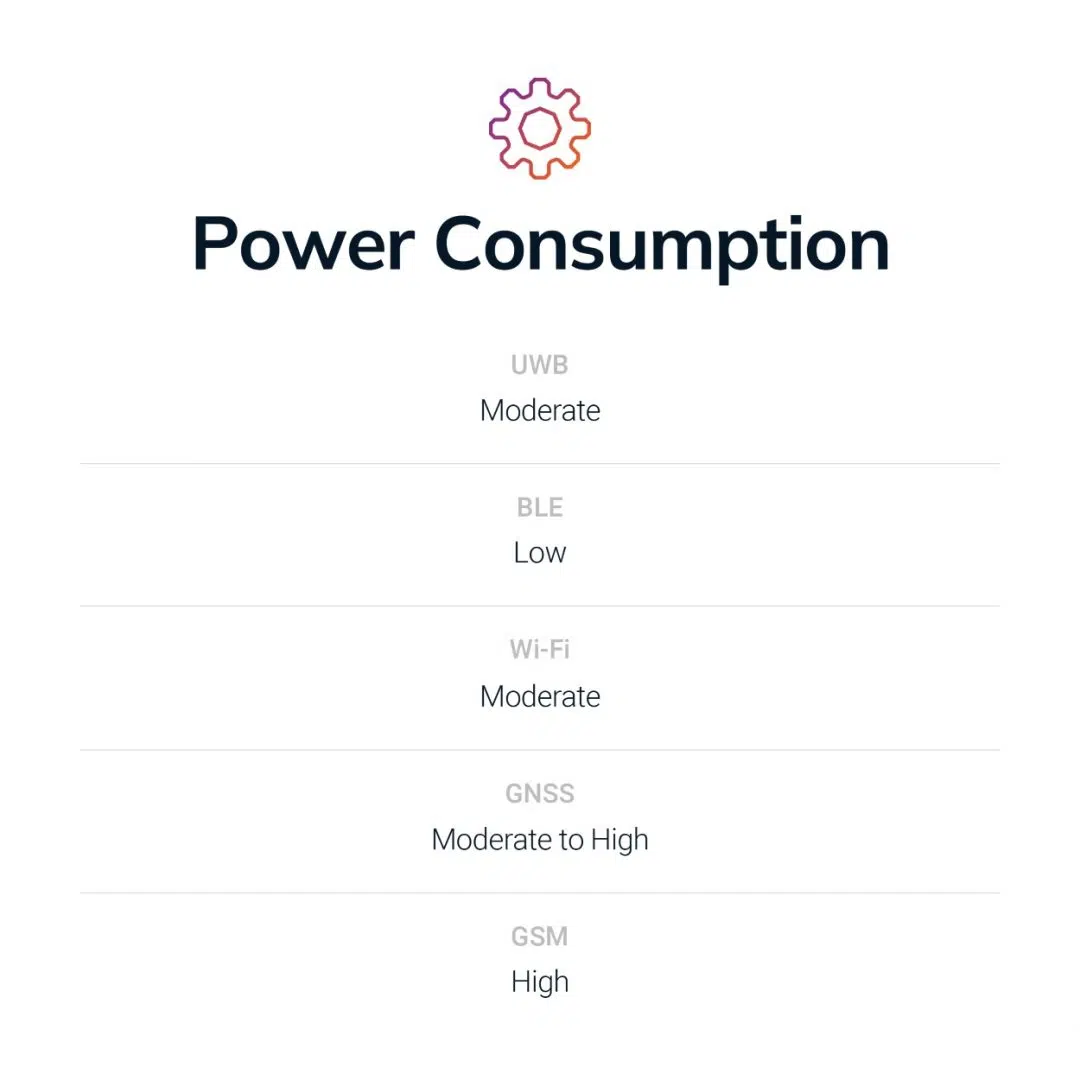
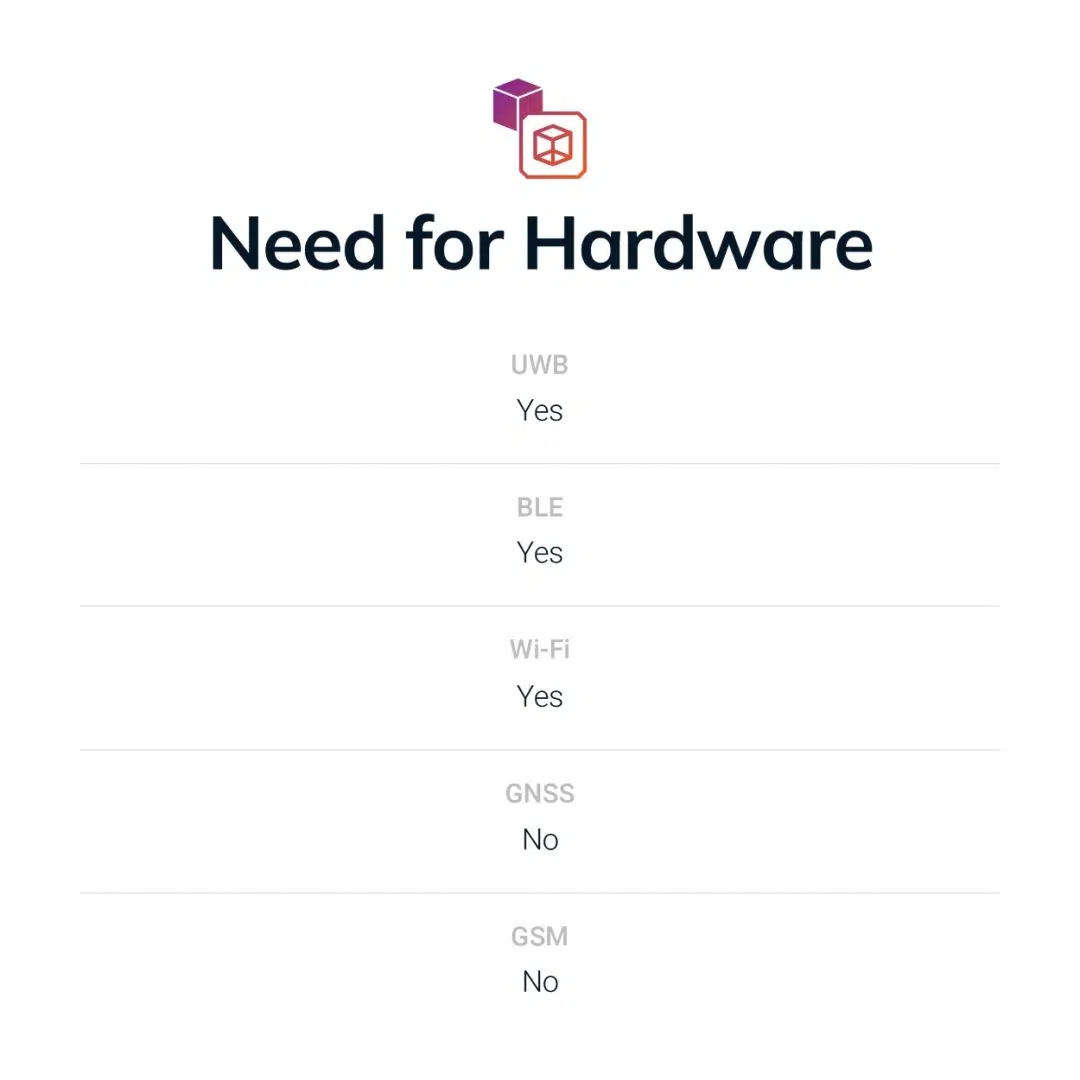
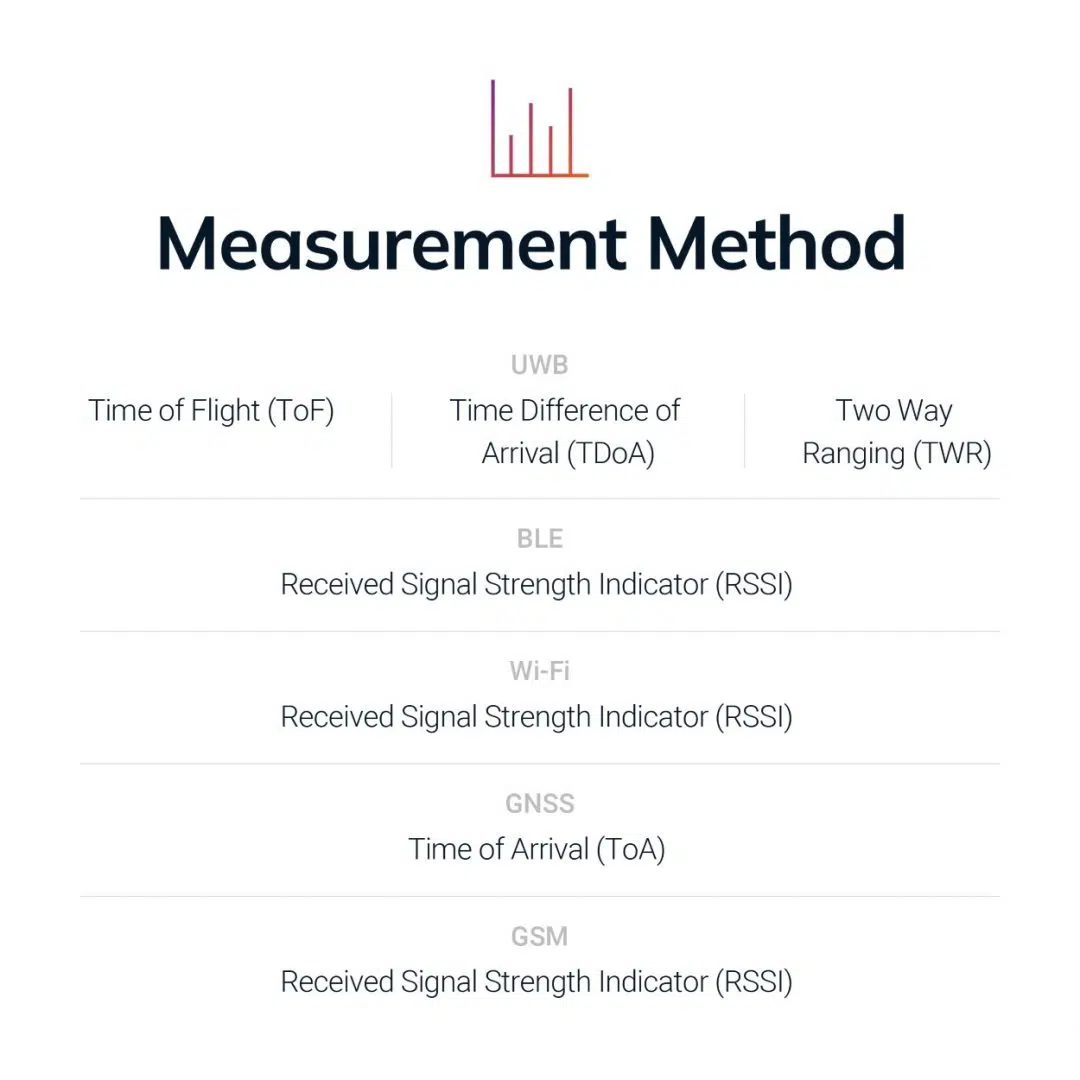
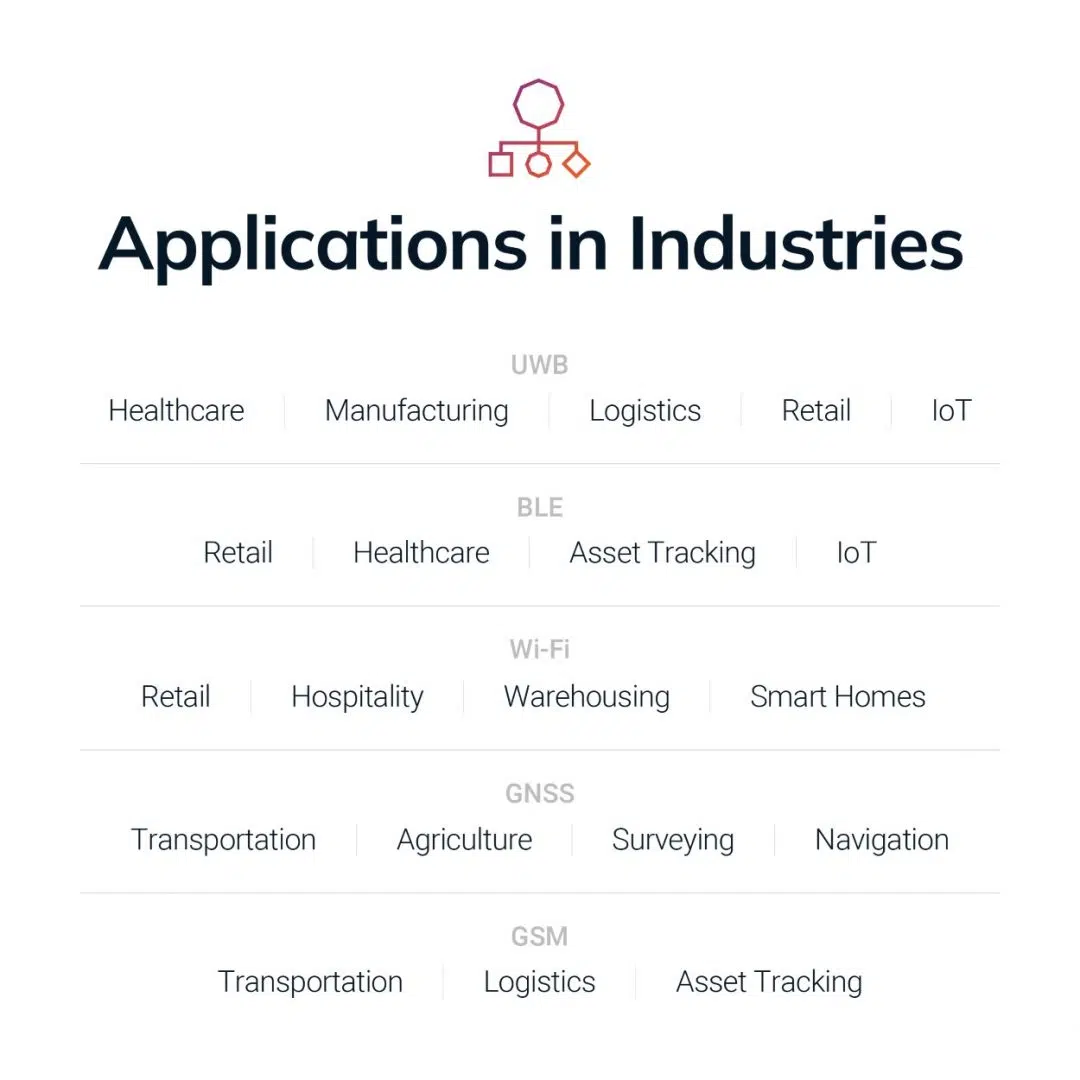
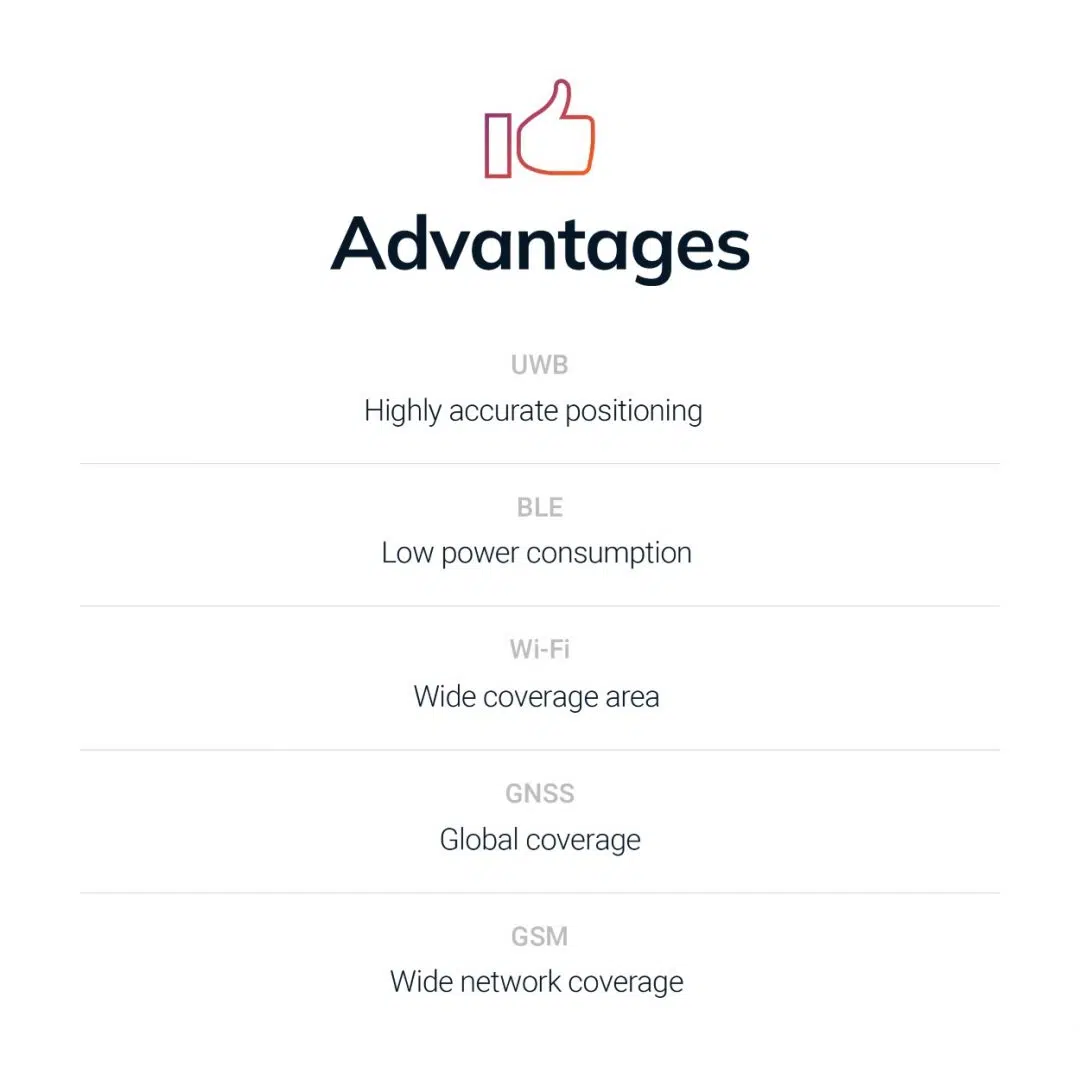
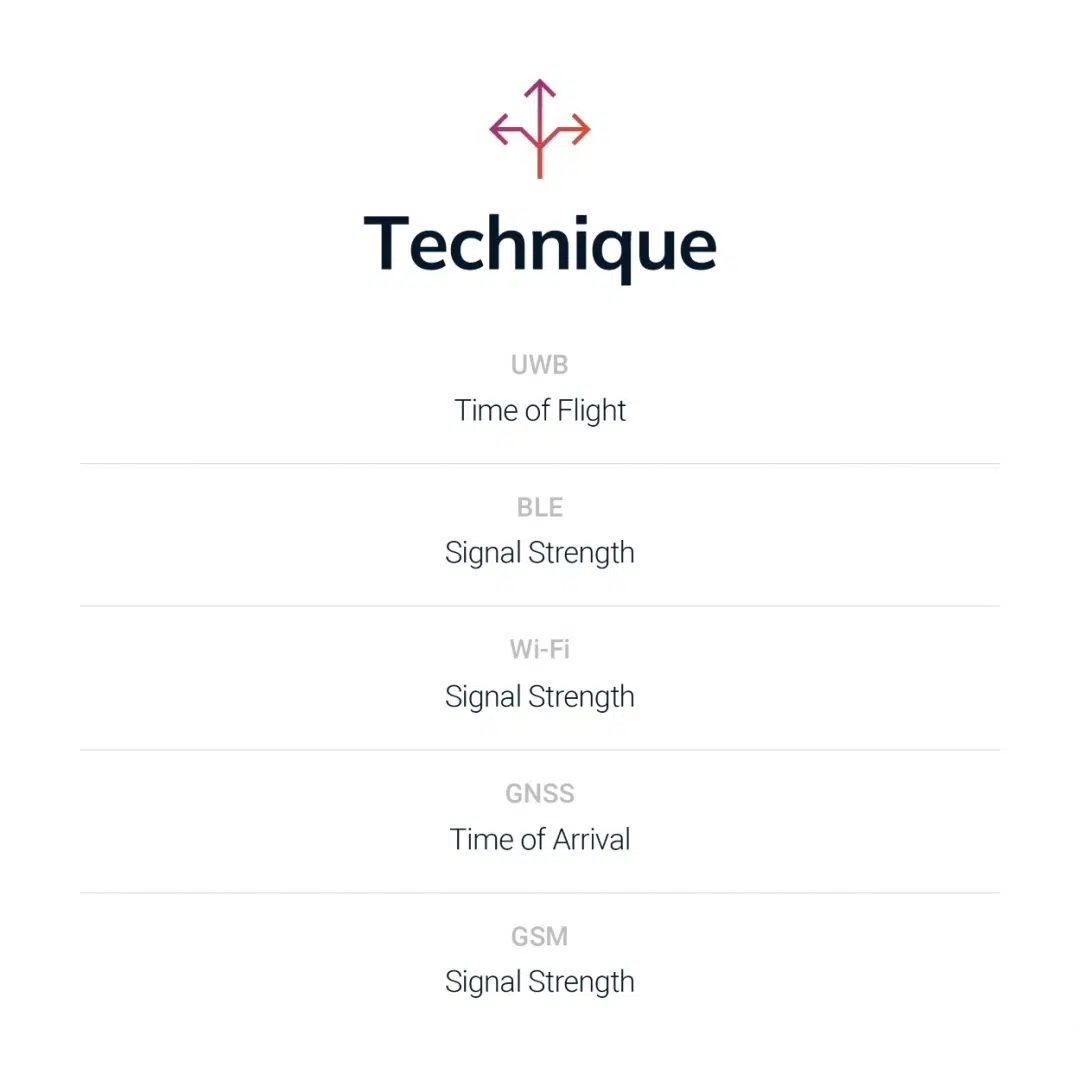
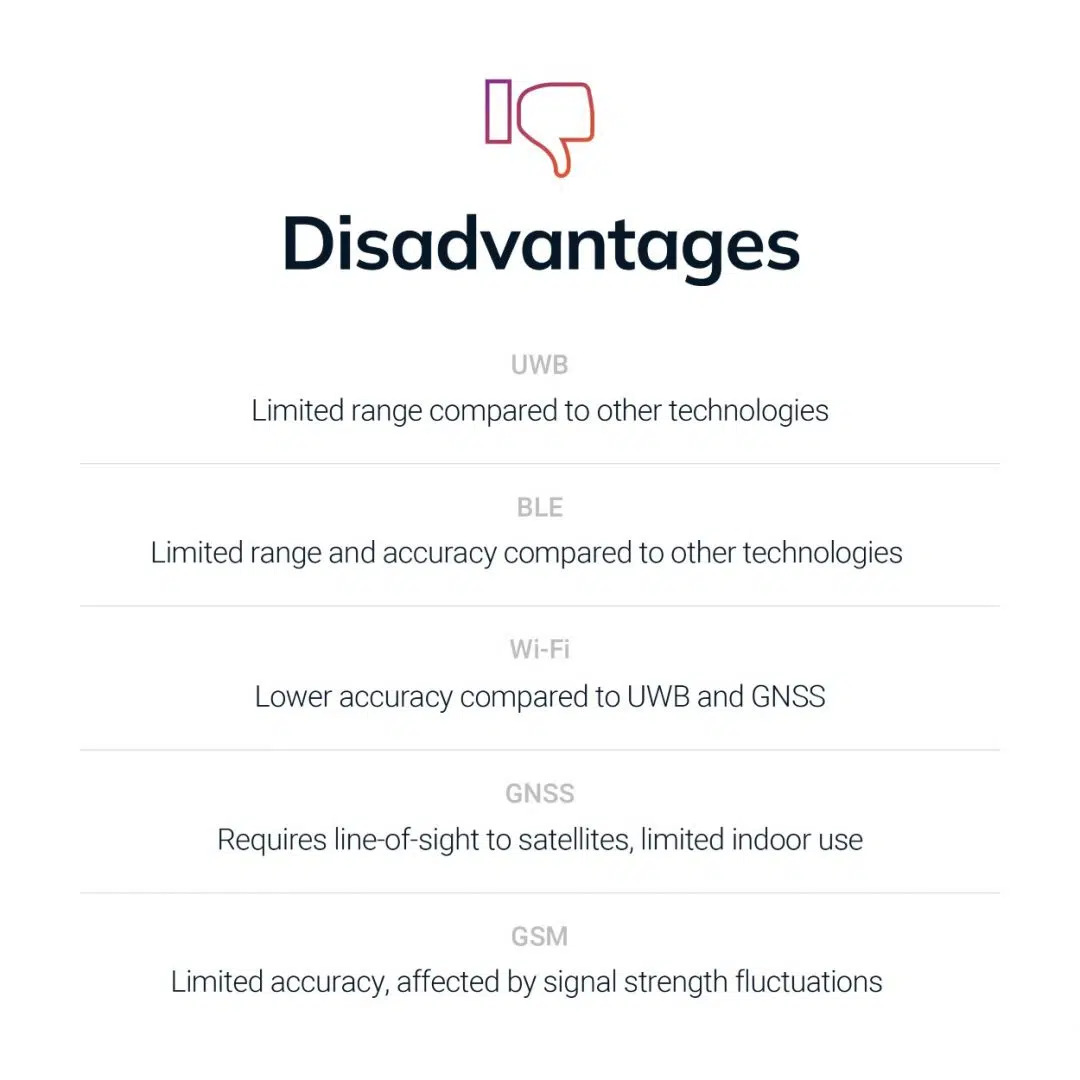
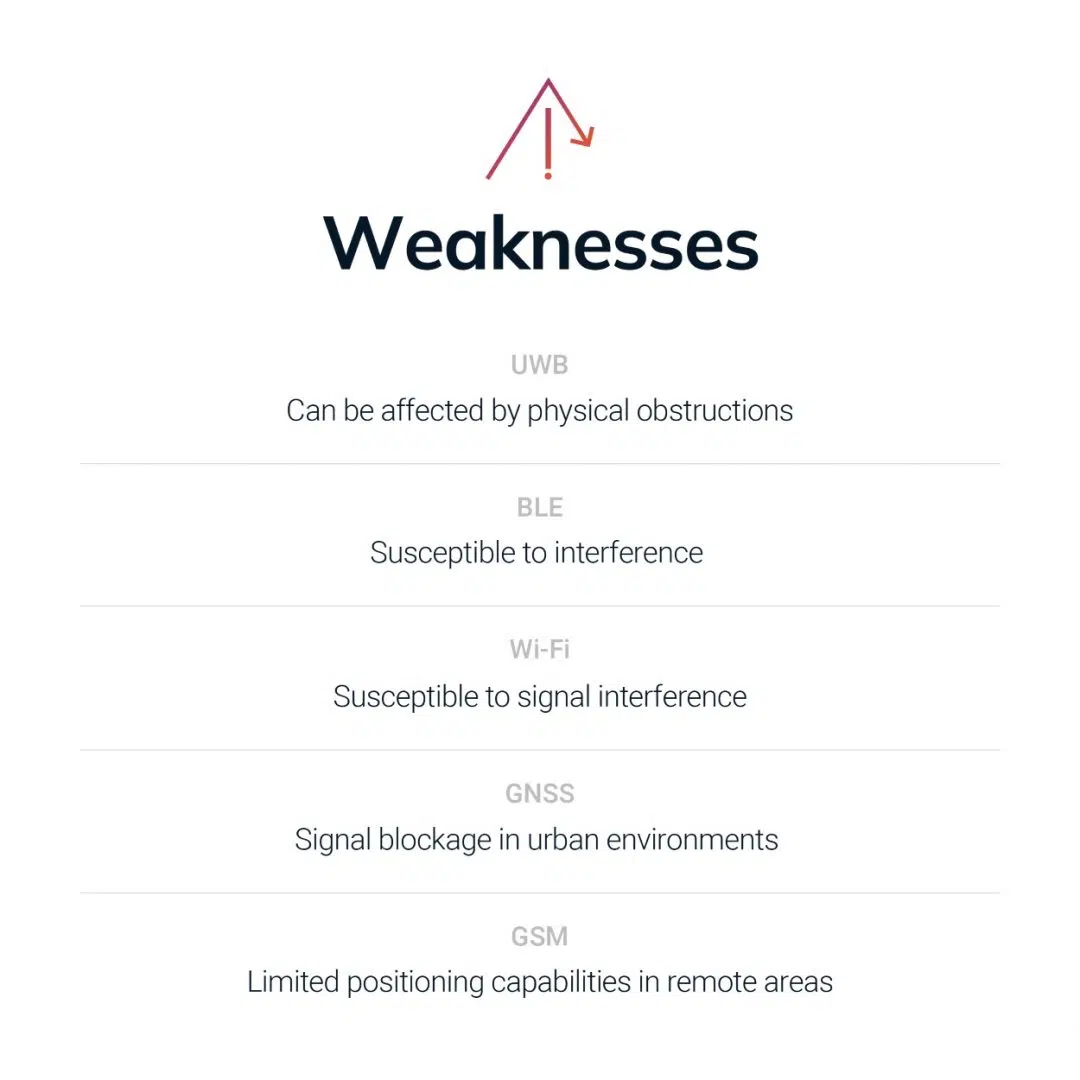
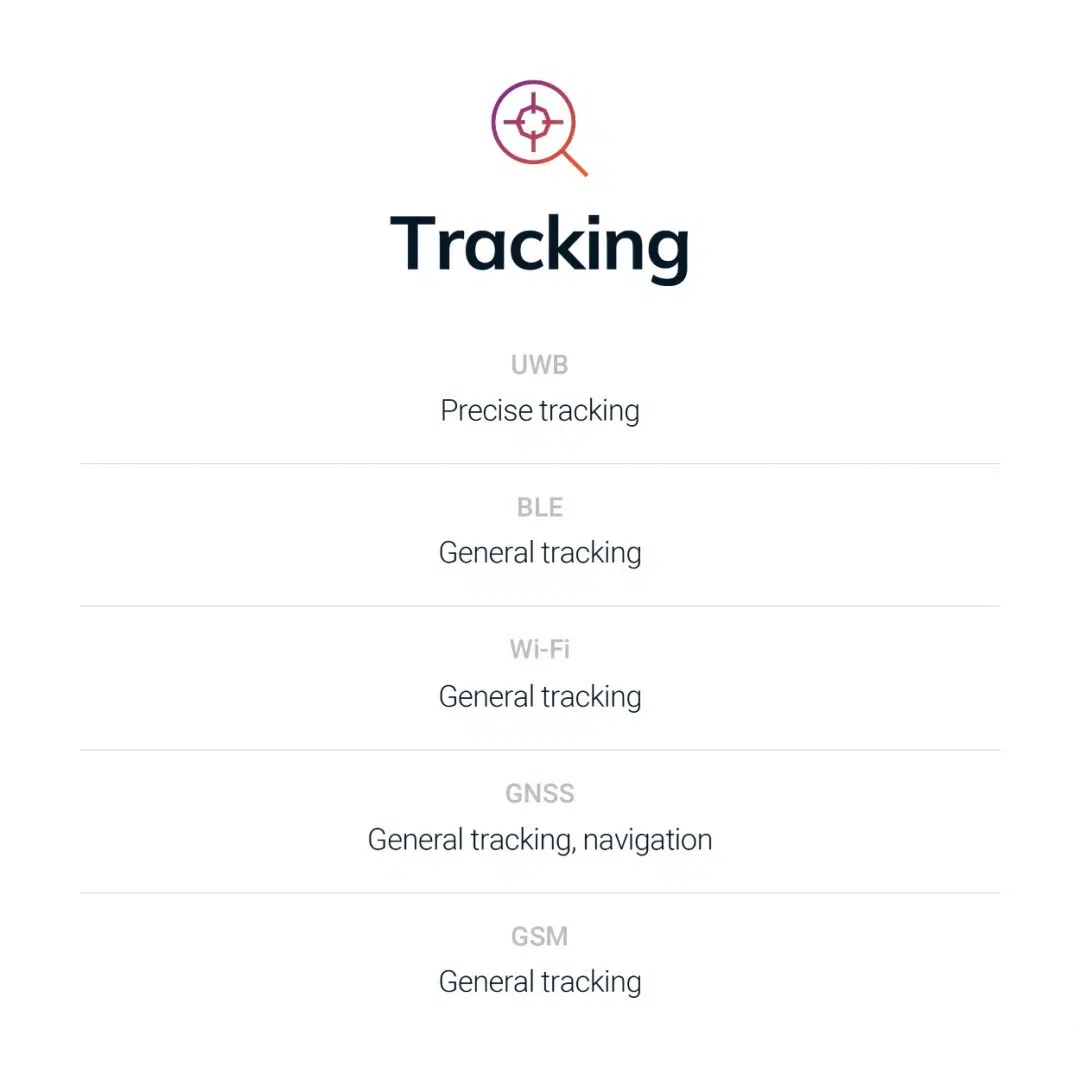
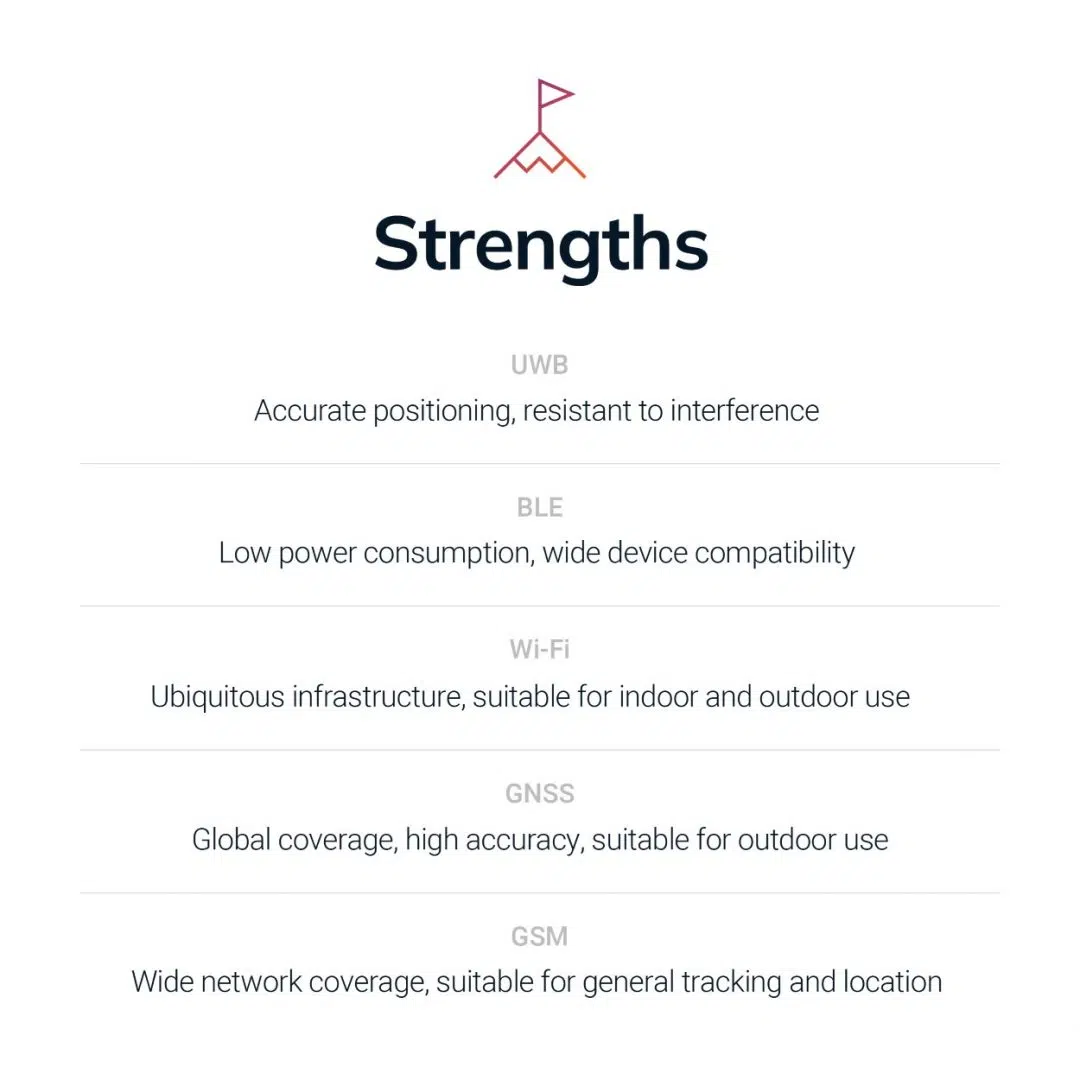
For forklift safety and collision warning applications, UWB-based systems are the most reliable choice. UWB provides the sub-meter accuracy needed to reliably detect when a forklift and a pedestrian are within a dangerous proximity, and maintains that accuracy in the metal-dense racking environments where BLE and Wi-Fi degrade.
For healthcare asset tracking where room-level accuracy is sufficient, BLE offers a cost-effective alternative. For facilities that need both industrial safety and healthcare-grade asset tracking on a single platform, only a handful of vendors support both technology layers simultaneously, this is an important evaluation criterion for organizations operating across multiple site types.
Step 3: Evaluate Vendors on These Six Criteria

1. Track Record at Scale
Request references from deployments that are similar to yours in scale, industry, and environment type. A vendor with a strong pilot record but limited enterprise deployments may not have encountered the failure modes that appear at full production scale: anchor placement edge cases, tag firmware update management across hundreds of devices, dashboard performance under high query load.
Litum, for example, has equipped more than 15,000 forklifts across deployments in over 50 countries. That kind of scale exposes operational edge cases that pilot-only vendors have never encountered.
2. Hardware, Firmware, and Software Ownership
Ask every vendor: who manufactures your hardware? Who writes your firmware? Who owns your software stack?
Vendors who manufacture their own hardware and develop their own firmware and software have a fundamental advantage: they can customize faster, diagnose problems at every layer, and provide a single point of accountability when something goes wrong. Vendors who resell third-party hardware and integrate third-party software have a longer resolution chain when issues arise, and those issues inevitably do.
End-to-end ownership also affects long-term cost. Vendors dependent on third-party hardware components pass along those supply chain costs and cannot offer the same pricing flexibility as manufacturers.
3. Installation and Deployment Complexity
Infrastructure-heavy systems, those requiring network cabling, fixed anchor installation, or dependency on the facility’s existing Wi-Fi infrastructure, carry significant deployment cost and operational disruption. For a 50-forklift deployment, the infrastructure installation can represent as much cost and time as the technology itself.
Tag-based systems that run on the forklift’s existing battery with no external infrastructure requirement can typically be operational within hours of mounting, with no facility downtime. Ask vendors for a realistic installation timeline based on your fleet size and facility layout, not the best-case scenario from their fastest deployment.
4. Scalability and Modularity
Most organizations start with one RTLS use case and expand over time. The forklift safety deployment that starts with 20 vehicles may need to scale to 120. The asset tracking pilot in one building may need to extend to five sites.
Evaluate whether the vendor’s platform is genuinely modular, meaning additional capabilities (geofencing, speed control, full location tracking, analytics) can be added without replacing existing hardware, or whether expansion requires a new deployment. Litum’s platform is built on this modular model: a forklift collision warning deployment can be extended to include geofencing, automated speed control, and full fleet tracking without changing the hardware already installed on each vehicle.
5. Data Ownership and Integration
RTLS generates continuous location data. Understand who owns that data, where it is stored, and how it can be accessed.
- API availability: Can the location data be exported to your WMS, ERP, or safety management system via API? Vendors who lock data inside their own dashboard create operational silos.
- On-premise vs cloud deployment: Some industries and regions require data to remain on-premise for compliance reasons. Confirm the vendor supports your required deployment model.
- Data retention and history: How long is location history retained? For post-incident investigation and OSHA compliance purposes, the OSHA 300 Log and incident reports must be retained for a minimum of five years. Confirm the vendor’s system supports this retention requirement, and that location history data can be exported in a format usable in a compliance audit.
6. Support Model and Response Time
RTLS in safety-critical applications is operational infrastructure, not a software subscription. When a collision warning system goes offline, someone needs to respond immediately.
Ask vendors specifically: what is your support SLA for production issues? Who is the escalation contact if the issue cannot be resolved remotely?
Step 4: The Questions to Ask Every Vendor in Evaluation

These questions are designed to surface differences that marketing materials obscure. Ask them in every vendor conversation and compare answers directly.
About the Technology
- What wireless technology does your system use, and why is it the right choice for my specific environment?
- What accuracy level can you guarantee in a facility with dense metal racking and multiple vehicles operating simultaneously?
- How does your system perform when tag density is high, for example, 200 assets in a 50,000 sq ft space?
- Does your system require line-of-sight between the tag and the anchor, or does it work around obstructions?
About the Hardware
- Do you manufacture your own hardware and firmware, or do you integrate third-party components?
- What is the tag battery life under continuous tracking conditions, and how are tags recharged or replaced at scale?
- Does the forklift safety system require external power infrastructure, or does it run on the vehicle’s existing battery?
- What is the hardware warranty, and what is the replacement process for failed units in production?
About the Deployment
- What does a realistic installation timeline look like for our fleet size and facility layout?
- Have you deployed in an environment similar to ours, same industry, similar scale, similar layout type?
About the Vendor
- Who manufactures your hardware? Who develops your software? Is everything developed in-house?
- What is your support SLA for production issues?
- What is your roadmap for the next 12-18 months, and how are existing customers informed of changes?
- What happens to our data and our system if your company is acquired or goes out of business?
Step 5: Evaluate the Pilot Before You Commit

A vendor who discourages a structured pilot is a vendor who does not expect their system to perform well under scrutiny. A structured pilot should be mandatory for any RTLS deployment above a certain scale.
Structure your pilot to test the system under the conditions that matter, not the conditions that are easiest for the vendor:
- Test at peak load, not quiet periods. Run the pilot during your busiest operational period. A system that performs at 20% load may fail at 100%.
- Test in your worst-case zones. Identify the areas of your facility where the technology will face the hardest conditions, densest racking, most interference, narrowest aisles, and test there first.
- Measure against your defined success criteria. Set specific, measurable benchmarks before the pilot begins: alert accuracy rate, false positive rate, system uptime. Evaluate against those numbers, not against a general impression.
- Test the support response. Deliberately create a support ticket during the pilot and measure how long it takes to get a useful response. This is more informative than any SLA document.
What Separates a Purpose-Built RTLS Provider from a General Platform

Not all RTLS vendors are the same type of company. Understanding the difference matters more than comparing feature lists, because the type of vendor determines what you actually get after the contract is signed.
The RTLS market broadly divides into two categories:
General enterprise platforms are large technology companies for which RTLS is one product line among many. They often integrate third-party hardware components, resell location software built on someone else’s stack, and route support through partner networks. Their sales process is polished, their brand is recognized, and their procurement paperwork moves easily through large organizations. What they struggle to offer is deep vertical expertise, fast customization, and direct accountability when something fails in production.
Purpose-built RTLS deployment companies exist specifically to deploy, operate, and support real-time location systems. Their entire R&D, engineering, and support capacity is focused on one thing. They have seen more edge cases, solved more integration problems, and built more deployment knowledge than any general platform will accumulate from a single product line.
The All-in-One Advantage: Why End-to-End Ownership Changes Everything
The most important question to ask any RTLS vendor is simple: who builds what you are selling?
Many vendors in this market assemble solutions from components made by different manufacturers, run location algorithms on software platforms they license from a third party, and present the result as a unified system. When something fails, the diagnosis requires involving multiple suppliers. When you need a custom feature, every layer of the stack introduces a dependency that slows delivery.
Litum designs, manufactures, and develops every component of its RTLS platform in-house: hardware, firmware, software, signal processing, and the API layer. This is not a marketing statement. It has direct operational consequences for buyers:
- Single point of accountability. When a production issue occurs, Litum engineers can diagnose and resolve it at every layer of the stack without involving a third party. For safety-critical applications like forklift collision warning, this is not a nice-to-have. It is the difference between a one-hour resolution and a three-day escalation chain.
- Faster customization. No facility is identical. Alert thresholds, geofence configurations, dashboard views, and API integrations all need to adapt to your specific environment and workflows. A vendor who owns the full stack can implement these changes in days. A vendor dependent on third-party components has to wait for upstream approval before anything can change.
- Consistent hardware quality. All Litum hardware is certified for industrial environments and meets FCC, CE, and IC standards. Because every tag, anchor, and gateway is manufactured to the same specification under one quality system, fleet-wide firmware updates and hardware replacements are predictable and controlled.
- One platform, multiple use cases. Because Litum’s platform is built on a unified infrastructure, a single deployment can support forklift safety, asset tracking, emergency mustering, staff duress, and healthcare patient flow simultaneously. Organizations that deploy RTLS across both industrial and healthcare environments do not need separate vendors, separate hardware ecosystems, or separate support contracts.
What a Genuine RTLS Deployment Partner Looks Like
When evaluating whether a vendor operates as a genuine deployment partner rather than a product reseller, look for these signals:
- They have deployed at your scale before. Not a pilot. A production deployment at comparable fleet size, facility type, and industry vertical.
- They talk about your problem first, their product second. A vendor who opens every conversation with a product demo before understanding your facility layout, use case priorities, and existing infrastructure is optimized for selling, not for deploying.
- They can describe what goes wrong. Vendors with genuine deployment experience can tell you exactly what failure modes appear in environments like yours and how they resolved them. Vendors who have only run pilots give you enthusiasm and case studies. Vendors who have run hundreds of production deployments give you operational knowledge.
- Their support team understands the hardware. If the support team cannot diagnose a hardware issue without escalating to a separate manufacturer, you have a vendor, not a partner. Ask directly: who do I call at 2am if the system goes offline, and what can they actually fix?
Litum has operated as an end-to-end RTLS deployment company for over two decades. Active deployments span industrial safety, healthcare asset tracking, connected worker, emergency mustering, and logistics across more than 50 countries. The platform supports all of these use cases on a single unified infrastructure. That breadth is operational record, not a product roadmap.
Frequently Asked Questions
How do I choose the right RTLS vendor for my facility?
Start by defining your specific use case and success criteria before contacting any vendor. The right vendor for forklift safety in a dense warehouse environment is not necessarily the right vendor for healthcare asset tracking. Evaluate vendors on six criteria: track record at comparable scale, end-to-end hardware and software ownership, installation complexity, platform modularity, data ownership and integration, and support model. Always run a structured pilot before committing, and test under your worst-case operational conditions, not ideal ones.
What is the best RTLS system for distribution centers?
For distribution centers where forklift-pedestrian interaction is a primary safety risk, UWB-based systems with real-time collision warning and pedestrian alerting are the most effective technology foundation. The best system for a specific distribution center depends on fleet size, facility layout, and whether the priority is immediate safety intervention, fleet visibility, or both. A modular platform that starts with collision warning and can scale to full fleet tracking and analytics gives distribution centers the flexibility to expand without replacing existing hardware.
What RTLS system works best for large warehouses?
Large warehouses require RTLS systems that perform reliably at scale, typically hundreds of assets, multiple simultaneous readers, and continuous operation across multiple shifts. UWB technology maintains accuracy in metal-dense environments where BLE and Wi-Fi degrade. Look for systems with a proven track record of large-scale deployments, not just pilot projects, and confirm the vendor’s software architecture can handle enterprise-level tag density without latency issues.
What should I look for when comparing RTLS vendors?
Focus your comparison on three dimensions that marketing materials rarely surface. First, end-to-end ownership: does the vendor design and manufacture its own hardware and software, or does it assemble components from multiple suppliers? This determines how fast issues get resolved and how readily the system can be customized. Second, deployment depth: ask for references from production deployments at comparable scale in your industry, not pilot projects. Third, platform breadth: if your organization operates both industrial and healthcare environments, a single unified RTLS platform eliminates the cost and complexity of managing multiple vendor relationships. Purpose-built RTLS deployment companies with full in-house stacks tend to outperform general enterprise platforms on all three dimensions in industrial safety applications.
How do I compare RTLS vendors effectively?
Use a structured scorecard with weighted criteria: technology accuracy in your environment, deployment complexity, scale references, hardware ownership model, API integration capability, and support SLA. Ask the same questions to every vendor and compare answers directly. Run a pilot in your worst-case operational zones before committing, and measure against the specific success metrics you defined before the evaluation began. Vendors who cannot provide direct references from comparable deployments should be treated with caution.
How does real-time location tracking improve warehouse safety?
Real-time location tracking improves warehouse safety through several complementary mechanisms. Collision warning systems provide immediate proximity alerts to both forklift operators and pedestrians before a dangerous situation develops. Geofencing enforces speed limits automatically in high-risk zones without depending on operator compliance. Fleet tracking identifies which routes, operators, and time periods carry the highest incident risk, enabling targeted training and layout improvements. The combination of real-time intervention and data-driven insight creates a safety environment that is both reactive and proactive, and that generates the documented audit trail that OSHA compliance increasingly requires.