

Contents
What is UWB? Ultra-wideband (UWB) is a low-energy, short-range radio technology that transmits data using extremely short pulses spread across a wide frequency spectrum of 6 to 8 GHz. Unlike Bluetooth or Wi-Fi which estimate location based on signal strength, UWB uses time-of-flight measurements to calculate precise distances between devices, achieving sub-meter accuracy. This makes UWB the technology of choice for safety-critical applications where exact location matters, from forklift collision warning in industrial facilities to infant security in hospitals.
Ultra-wideband (UWB) is one of those technologies poised to change how the world works fundamentally, and do so quickly! UWB is a technology that has been evolving for several years. The IEEE 802.15.4z standard defines the physical layer specifications that govern modern UWB deployments. In 2019 Apple released the world’s first mobile phone with a U1 chip; the ‘U’ in U1 stands for “ultra-wideband.” Samsung and Huawei later began offering smartphones with UWB technology.
Beyond mobile phones, UWB enables the internet of things (IoT), a network of physical objects with sensors, software, and other technologies for connecting with and exchanging data over the internet. UWB is the technology bringing machine learning, software, real-time analytics, and embedded systems together for the IoT industry by adding enhanced connectivity.
What is Ultra-Wideband (UWB)?
Unlike conventional radio technologies that transmit on a narrow frequency band, UWB spreads its signal across a bandwidth exceeding 500 MHz. This wide spectrum transmission is what gives UWB its precision advantage, allowing it to calculate time-of-flight measurements with nanosecond accuracy that narrowband technologies cannot achieve.
For UWB to work, it sends billions of pulses of RFs across a wide spectrum of frequencies while a corresponding transceiver translates the pulses into usable information. Pulses are VERY FREQUENT. Normally UWB devices send one pulse every 2 nanoseconds. This translates into approximately 500 million pulses every second. The FCC classifies radio technologies as UWB if they have a bandwidth exceeding 500 MHz, and strictly regulates transmission power to ensure coexistence with other wireless systems.
UWB operates across a frequency range of 6 to 8 GHz with a channel bandwidth exceeding 500 MHz. Standard enterprise RTLS deployments achieve sub-meter accuracy. A single infrastructure deployment can simultaneously locate thousands of tags, making UWB practical for large-scale industrial and healthcare environments.
How Does UWB Work? Ranging and Positioning Explained
UWB works by measuring time of flight: how long a radio pulse takes to travel between two devices. Radio waves cover about 30 centimeters per nanosecond. Because UWB pulses are only nanoseconds long, a receiver can timestamp them precisely enough to calculate distance within centimeters.
That distance measurement is called UWB ranging. Combine ranges or timing from several fixed reference points, and you get UWB positioning: a 2D or 3D location for a tag, a phone or a vehicle. There are three main ways to do it.
Two-Way Ranging (TWR)
In two-way ranging, a tag and an anchor exchange messages and measure the round-trip time. Single-sided TWR (SS-TWR) uses two messages. Double-sided TWR (DS-TWR) adds a third message so both devices can correct for small differences in their clocks, which improves accuracy. UWB TWR is the method phones, digital car keys and smart locks use, because it needs no network of synchronized anchors.
Time Difference of Arrival (TDoA)
In TDoA, the tag sends a short “blink” and several anchors receive it. The anchors share a synchronized clock, so the system compares the tiny differences in arrival time to calculate the tag’s position. The tag only transmits and never waits for replies, which saves battery and lets one installation track thousands of tags. That is why most industrial UWB RTLS deployments use TDoA.
Angle of Arrival (AoA and PDoA)
An anchor with two or more antennas can measure the angle a signal arrives from, using the phase difference between antennas (PDoA). Angle plus distance gives a position from a single anchor. AoA is common in phones (pointing to an item to find it) and in compact installations where fewer anchors are practical.
Method | How it works | What it needs | Best for |
|---|---|---|---|
TWR (SS-TWR, DS-TWR) | Round-trip time between tag and anchor | No anchor synchronization | Phones, digital keys, access control, peer-to-peer distance |
TDoA | Arrival-time differences across synchronized anchors | Synchronized anchor network | Large facilities, thousands of tags, long battery life |
AoA / PDoA | Signal angle from a multi-antenna anchor, plus distance | Anchors with antenna arrays | Item finding, small rooms, fewer anchors |
For deeper definitions of these terms, see the RTLS glossary.
UWB Indoor Positioning and Navigation
A UWB indoor positioning system places anchors at known points on walls or ceilings. To calculate a 2D position, a tag must be in range of at least 3 anchors. A 3D position needs at least 4. In standard RTLS deployments, UWB indoor positioning reaches 10 to 30 centimeters, compared with 1 to 3 meters for BLE.
The same precision supports UWB navigation. Phones use it for turn-by-turn wayfinding in venues and for pointing at a lost item. In warehouses and factories, AGVs and mobile robots use UWB to navigate aisles where GPS does not reach. Read more in our guide to indoor positioning systems.
UWB Channels and Frequencies
The IEEE 802.15.4z standard divides the UWB spectrum into numbered channels. Most commercial devices use two of them:
- Channel 5: centered at 6489.6 MHz, 499.2 MHz wide
- Channel 9: centered at 7987.2 MHz, 499.2 MHz wide, and the mandatory channel for high-band devices
Apple’s U1 chip and widely used RTLS chipsets support both. The next standard, IEEE 802.15.4ab, adds a narrowband radio to assist UWB and extend range. STMicroelectronics introduced the first 802.15.4ab chip family in March 2026 (source), and new devices are expected to stay backward compatible with 802.15.4z (overview of UWB standards).
UWB Safety
The power radiation levels of UWB are strictly regulated around the world and are required not to disturb existing equipment or cause harm to people. The spectrum of frequencies used in ultra-wideband technology and its applications are made to look like background noise.
Ultra-Wideband Vs. Wi-Fi and Bluetooth
UWB allows the distance between two devices to be measured much more precisely than using Bluetooth or Wi-Fi. This precision is possible because UWB enables distance calculations to greater accuracy between two UWB-enabled devices by calculating how long it takes for one radio wave to pass between each device.
Bluetooth and Wi-Fi use conventional radio transmission systems to vary the power level, frequency, or phase of sinusoidal waves. On the other hand, UWB occupies a much larger bandwidth and transmits signals based on generating radio energies at specific time intervals.
The polarity of pulses and their amplitude can be altered, or orthogonal pulses may be used, giving UWB greater flexibility and preciseness than Bluetooth or Wi-Fi technologies.
A further advantage of UWB over BLE and Wi-Fi is its resistance to relay attacks. Because UWB uses time-of-flight measurements with nanosecond-precision timing, it is significantly harder for attackers to spoof or intercept location signals compared to RSSI-based technologies. This makes UWB the preferred choice for secure access control and high-value asset protection.
The table below compares UWB against BLE and Wi-Fi across the key factors that matter for enterprise RTLS deployments.
| Feature | UWB | BLE | Wi-Fi |
|---|---|---|---|
| Accuracy | 10-30 cm | 1-3m | 3-5m |
| Frequency band | 6-8 GHz | 2.4 GHz | 2.4/5 GHz |
| Security | Relay-attack resistant | Moderate | Moderate |
| Best for | Safety-critical zones | Zone tracking | Broad coverage |
| Litum use | Forklift safety, staff duress, infant security | Asset tracking, patient flow | Not primary |
UWB and Bluetooth Working Together
UWB and Bluetooth are usually partners in the same device. Bluetooth Low Energy uses very little power, so it handles discovery: finding nearby devices and waking them up. UWB then takes over for precise ranging. Phones, digital car keys and many RTLS tags work this way.
In industrial tracking, hybrid UWB and BLE systems let you match the technology to the job. Use UWB where you need 10 to 30 centimeter accuracy, such as forklift collision warning. Use BLE where room-level accuracy is enough and cost per tag matters. Our UWB vs BLE industrial tracking guide compares both in detail. For the basics of Bluetooth, see What is BLE?
UWB Hardware: Anchors, Tags, Trackers and Beacons
Every UWB RTLS has the same building blocks: anchors fixed in the building, tags on the people and things you track, and software that turns timing data into locations.
UWB Anchors
A UWB anchor is a fixed receiver mounted at a known position, usually on a ceiling or wall. Anchors receive tag signals and send timing data to the location engine. In TDoA systems they also keep a shared, synchronized clock. Indoors, one anchor typically covers 10 to 50 meters, and coverage areas overlap so every tag is always seen by several anchors. Anchors are often powered and connected over Ethernet (PoE). Learn why anchors and gateways make an RTLS future-proof.
UWB Tags and Trackers
A UWB tag, or UWB tracker, is the battery-powered device attached to an asset, a vehicle or a person. Tags come as worker badges, asset tags and vehicle tags. Most also carry an accelerometer, so they transmit often while moving and sleep when still, which stretches battery life. Many combine UWB with BLE for low-power wake-up and configuration. See the Litum UWB RTLS badge guide and the UWB RTLS Tag Compact guide.
What Is a UWB Beacon?
“UWB beacon” is used loosely. In RTLS, it usually means a tag that broadcasts regular blinks for TDoA positioning. In phone-based navigation, it can mean a fixed UWB device that phones range against. Either way, the beacon sends signals and another device calculates position.
How the Pieces Form an Ultra-Wideband RTLS
- Tags send UWB blinks or ranging messages.
- Anchors receive them and timestamp each one.
- A location engine calculates each tag’s position, many times per second.
- RTLS software turns positions into alerts, analytics and workflows, such as forklift collision warning or real-time asset tracking.
UWB Chips, Chipsets, Modules and Antennas
Every UWB device is built around three components:
- UWB chip (chipset): the radio integrated circuit that sends and timestamps pulses. Some chipsets include a processor and security features on the same die.
- UWB module: a small pre-built board that combines the chip, antenna, crystal and often a microcontroller. Modules come pre-certified, so device makers can skip much of the RF design and radio certification work.
- UWB antenna: a wideband antenna tuned to the 6 to 8.5 GHz range. Placement matters, because the human body and metal surfaces detune it. AoA devices need two or three antennas in a fixed pattern.
Vendor | Example UWB chips | Typical use |
|---|---|---|
Apple | U1 (iPhone 11 to 14), U2 (iPhone 15 and later) | Phones, watches, AirTag |
NXP | Trimension SR150, SR040 (source) | SR150: anchors with AoA. SR040: low-power tags and trackers |
Qorvo | DW3000 family | RTLS tags and anchors, consumer trackers |
STMicroelectronics | ST64UWB (source) | First IEEE 802.15.4ab chips (2026): car keys, radar, consumer devices |
Qualcomm | FastConnect 7900 | Combined Wi-Fi, Bluetooth and UWB in Android phones |
Other UWB chip suppliers include Samsung, Infineon, Renesas and SPARK Microsystems (ABI Research).
Litum designs its UWB anchors and tags in-house, choosing chipsets and antennas for industrial conditions such as metal racking, moving forklifts and hazardous areas. See how this applies to ATEX-certified tracking in hazardous areas.
New to RTLS? Start with our complete guide to real-time location systems.
For a full breakdown of how UWB, BLE, Wi-Fi, and RFID compare for enterprise deployments, see our guide on choosing the right RTLS technology.

Applications of UWB: How Ultra-Wideband Is Used Today
UWB’s main applications fall into five groups.
Application | What UWB does | Example |
|---|---|---|
Industrial RTLS | Tracks people, assets and vehicles to 10 to 30 cm | Forklift collision warning, asset tracking, mustering |
Healthcare | Locates staff, patients and equipment, and detects motion without tags | Staff duress, infant security, fall detection |
Digital keys and access | Measures secure distance between phone and lock | Car keys, hotel doors, smart locks |
Consumer devices | Finds items and shares files by pointing | Item trackers, phone-to-phone transfer |
Radar sensing | Detects presence and breathing through materials | Child presence detection in cars, occupancy sensing |
The high frequency of pulsation allows UWB to quickly communicate large amounts of information and provide precise object locations. UWB devices can provide accurate location estimates within 10 to 30 centimeters of the object’s actual location.
UWB technology can be used to precisely guide people through buildings, find specific items, transfer data to a particular location, and securely transmit data over a short distance using a highly focused stream of information.
Daily use cases of Ultra-Wideband
Initially, a UWB was used for producing RF pulses lasting within a range of sub-nanoseconds for sensing and imaging objects. UWB radars were primarily used for military applications, such as detecting land mines. The private sector recently started adopting UWB radar for commercial purposes, such as medical imaging, ground penetrating, material characterization, and asset tracking. According to OSHA, powered industrial trucks are among the leading causes of serious workplace injuries, making UWB-based proximity detection one of the most impactful safety applications in industrial environments.
Real-time positioning and tracking systems (RTLS) with Ultra-Wideband
Real-time positioning and tracking systems (RTLS) using ultra-wideband technology is one of the most practical and useful applications of this technology because it is capable of generating highly precise location data using minimal power. Ultra-wideband technology and its applications are primarily for real-time positioning and tracking to improve workplace safety and operational efficiency in healthcare and industrial settings.
For a complete overview of how UWB fits into a broader RTLS system, see our complete guide to real-time location systems.
Workplace safety
RTLS with UWB can be applied to improve people’s safety, health, and welfare of people in many occupations.
Collision Warning Systems
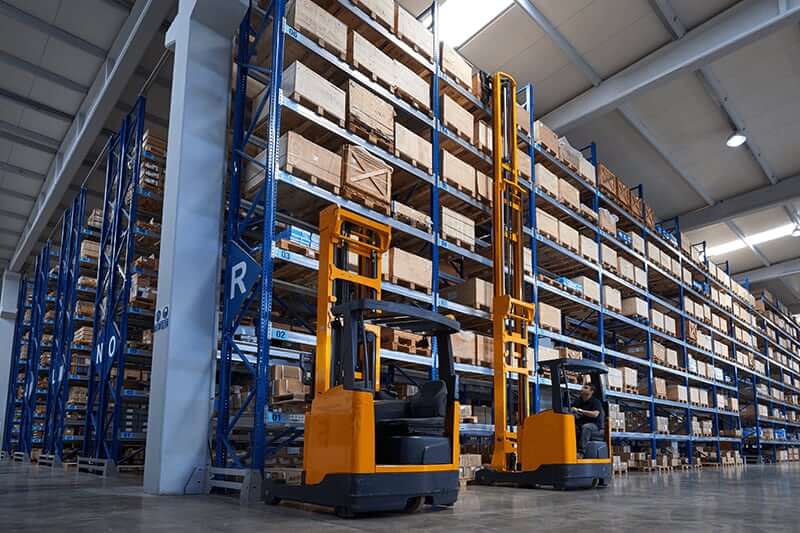
RTLS with UWB can be used in industrial settings to provide forklift or robotic collision warning systems with 360-degree awareness. RTLS with UWB can alert others in proximity to forklifts or autonomous robots, automatically control their functions and speed, monitor large working areas, and integrate data with other electronic systems in the working environment.
See how Litum deploys UWB for forklift collision warning in automotive and manufacturing facilities.
Employee Safety
Working remotely in the field comes with risks for all parties involved. If something goes wrong, there can be a long delay in figuring out how and why something went wrong. RTLS with UWB allows companies and their employees to have accident and risk monitoring systems (falls, collisions, prolonged inactivity, lone-worker safety, etc…), geo-fencing (for more security and control), automated safety alerts (too close to machinery or areas that may put the worker at risk), and panic buttons to immediately let others know they need help.
Connected Worker Safety
In 2026, UWB is central to connected worker programs in industrial environments. Workers wearing UWB-enabled badges can be monitored for proximity to dangerous machinery, lone worker situations, and emergency mustering. Unlike BLE-based systems, UWB delivers the sub-meter accuracy needed to reliably trigger alerts before incidents occur rather than after. See how Litum uses UWB for lone worker safety and emergency mustering.
Operational efficiency
The operational efficiency of workers and machines can be improved using RTLS with UWB because of the highly accurate location data and the large amount of data transfer the technology makes possible. Each company will have to implement RTLS with UWB in unique ways to reap the benefits of what is possible. Some common applications of RTLS with UWB for improving operational efficiency include:
Digital keys
UWB enables digital keys that operate based on their precise location between the UWB device and the lock it is programmed to. UWB keys can enable cars and homeowners to unlock doors and devices by using their mobile phones’ built-in UWB technology instead of using standard house keys or car key fobs.
Smart home
Smart home devices made using UWB will be commonplace in the future. UWB allows smart home products to quickly relay information throughout the house and do so in a more secure manner than Bluetooth or Wi-Fi technologies, making UWB smart home devices more secure and cost-efficient.
Medical imaging and monitoring with Ultra-Wideband
The low power consumption of UWB and its high precision makes it ideal for use in environments sensitive to radio frequencies, such as medical environments. It can also quickly identify the position of other objects nearby based on the relative position of the UWB device and the object.

UWB offers unique medical imaging and monitoring systems capabilities because it has powerful obstacle penetration, high precision at the centimeter level, low electromagnetic radiation, and low consumption of processing energy.
The benefits of using UWB in medical imaging and monitoring, as documented by researchers and the National Institutes of Health, include:
- UWB imaging and monitoring systems can be designed with extremely low energy consumption requirements, enabling long-life battery-operated medical devices.
- Low radiation produced in UWB is safe for the human body, even at close distances.
- The low noise of UWB allows it to be used with other systems without disrupting their performance, such as wireless sensor networks (WSN), which require strict power control and efficiency.
- UWB pulses possess strong temporal and space resolving capabilities making them suitable for localization and detection in medical applications requiring centimeter-level precision.
- UWB can penetrate through obstacles making it an ideal tool for imaging the human body in medical settings. For example, ultrasound is limited because bones obstruct its view, while UWB imaging is not blocked by bone.
Military Radar
UWB first gained attention for its potential use in radar in the 1990s by the US army who used the technology to build a synthetic aperture radar (SAR), a radar for creating two and three-dimensional reconstructions of objects. UWB SAR technology was developed to locate hidden enemy soldiers and IEDs while remaining at a safe distance.
Data transmission
The extensive throughput capabilities facilitated by UWB render it particularly suitable for various electronic devices such as computers, monitors, cameras, printers, smartphones, and more. This technology enables rapid and secure transfer of large volumes of data between interconnected devices.
UWB Sensors and Radar: Tag-Free Sensing
“UWB sensor” covers two kinds of device. The first is a UWB radar sensor. It sends pulses and reads their reflections, so it detects presence, movement and even breathing without anyone wearing a tag. The second is a UWB positioning tag that also carries sensors, such as an accelerometer or temperature sensor, and reports that data along with its location.
Radar sensing is growing fast. NXP’s Trimension SR250 combines UWB radar and secure ranging on a single chip (ABI Research). Carmakers use UWB radar to detect children left in vehicles.
Beyond positioning and data transfer, UWB is increasingly being used as a compact radar technology. Unlike traditional RTLS which requires a tag on the tracked object, UWB radar uses a single device that sends ultra-short pulses and interprets the reflected signals to detect objects or movements without any wearable.
In industrial environments, UWB radar can detect falls, monitor worker inactivity, and sense presence in restricted zones without cameras or privacy concerns. In healthcare, it enables fall detection and patient monitoring in care environments. In automotive applications, UWB radar supports in-cabin occupancy detection and breathing monitoring.
This shift from tag-based tracking to tag-free sensing represents the next frontier of UWB deployment in enterprise environments.
Ultra-Wideband is here to stay. What does the future of UWB look like?
The adoption of UWB is accelerating rapidly. Enterprise deployments that once required significant infrastructure investment are now more accessible, with modular anchor systems and hybrid BLE-UWB architectures reducing both cost and complexity. As chipset manufacturers continue to integrate UWB into standard hardware, the technology is moving from specialized industrial deployments into broader enterprise and consumer applications. In 2026, the question for most organizations is no longer whether to adopt UWB, but which use cases to prioritize first and how to scale from a pilot to a facility-wide deployment.
Regulation
The regulatory authorities around the world are developing and implementing reasonable regulations surrounding ultra-wideband technology and its applications. The Federal Communications Commission (FCC) of the United States classifies radio technologies as UWB if they have a bandwidth exceeding the lesser 500MHz or 20% of the arithmetic center frequency (the center channel between the upper and lower parts of the radio frequency).
The FCC set different limits for UWB transmitters and emitters. Transmitters have a power spectral density emission limit of -41.3 dBm/MHz, and emitters have a limit of -75 dBm/MHz. These limits are in place for UWB to reduce the technology’s potential to cause harm to people or infrastructure.
The FiRa Consortium, composed of over 120 members including major chipset and handset manufacturers, governs UWB interoperability standards globally. Devices must meet FiRa MAC/PHY conformance specifications to display the FiRa certification logo.
Frequently Asked Questions About UWB
What does UWB stand for? UWB stands for Ultra-Wideband. It is a wireless radio technology that transmits data using extremely short pulses spread across a wide frequency spectrum, typically 6 to 8 GHz, enabling highly accurate distance measurement and location tracking.
How accurate is UWB positioning? Standard UWB RTLS deployments achieve positioning accuracy of 10 to 30 centimeters. This is significantly more precise than BLE (1-3 meters) or Wi-Fi (3-5 meters), making UWB the preferred technology for safety-critical applications where exact location matters.
What is the difference between UWB and Bluetooth? UWB uses time-of-flight measurements to calculate precise distances between devices, while Bluetooth uses signal strength (RSSI) which is less accurate. UWB delivers centimeter-level accuracy compared to meter-level accuracy for Bluetooth, and is significantly more resistant to interference and relay attacks.
What industries use UWB technology? UWB is deployed across manufacturing, warehousing, healthcare, logistics, construction, automotive, and aerospace. Common applications include forklift collision warning, staff duress, infant security, medical asset tracking, and connected worker safety programs.
What is UWB RTLS? UWB RTLS (Real-Time Location System) is a technology framework that uses ultra-wideband radio signals to track the precise location of people, assets, and vehicles in real time across indoor environments. It combines UWB tags, anchors, and software to deliver live location visibility at centimeter-level accuracy.
Is UWB safe for humans? Yes. UWB power radiation levels are strictly regulated by the FCC and international bodies. UWB transmissions are required to operate at extremely low power levels that look like background noise, making them safe for use in hospitals, warehouses, and other occupied environments.
What is the range of UWB? UWB signals can reach up to 500 meters in open environments. For indoor RTLS deployments, effective range per anchor is typically 10 to 50 meters depending on the environment, with overlapping anchor coverage ensuring continuous tracking across larger facilities.
How does UWB work? UWB measures how long a radio pulse takes to travel between two devices. Radio waves travel about 30 centimeters per nanosecond, and UWB pulses are only nanoseconds long, so receivers can calculate distance within centimeters. Systems combine these measurements using two-way ranging (TWR), time difference of arrival (TDoA) or angle of arrival (AoA) to find a position.
What is a UWB anchor? A UWB anchor is a fixed receiver mounted at a known position on a wall or ceiling. Anchors pick up signals from UWB tags and send timing data to a location engine, which calculates where each tag is. Indoors, one anchor typically covers 10 to 50 meters.
How many UWB anchors do I need? A tag needs to be in range of at least 3 anchors for a 2D position and at least 4 for a 3D position. The total number depends on floor area, ceiling height, racking and walls. A site survey sets the final layout.
What is the difference between a UWB chip and a UWB module? A UWB chip is the radio integrated circuit that sends and timestamps pulses. A UWB module is a small ready-made board that combines the chip with an antenna, crystal and often a microcontroller. Modules are usually pre-certified, which shortens product development.
Conclusion
Ultra-wideband has moved from a niche military and research technology to essential enterprise infrastructure. In 2026, UWB is the standard for precision-dependent RTLS applications where centimeter-level accuracy directly affects safety outcomes.
For organizations evaluating UWB for industrial safety, healthcare asset management, or connected worker programs, the technology is mature, proven, and deployable at scale. Litum builds hybrid RTLS solutions combining UWB and BLE to give organizations the precision they need where it matters most.
For technical specifications on Litum’s compact UWB hardware, see the UWB RTLS tag guide.
Explore Litum’s UWB-based solutions for forklift safety, staff protection, and asset tracking, or contact us for a deployment assessment.