
Every forklift generates valuable operational signals throughout the day.
It approaches a pedestrian near a blind corner. It remains idle for hours while another vehicle runs continuously. A near miss occurs but is never formally reported. An operator begins a shift without completing the required inspection because the paper checklist is missing, inaccessible, or simply overlooked.
In many facilities, these moments disappear as quickly as they happen. They remain in an operator’s memory, on a clipboard, or nowhere at all.
PathAware® is built to close that visibility gap. Litum has taken PathAware® from a plug-and-play collision warning system into a connected forklift safety and utilization platform, bringing real-time alerts, operator control, safety reporting, digital inspections, and vehicle usage insight together on the forklift itself.
From Collision Warning to Connected Forklift Safety
PathAware® was originally developed to help forklift operators detect nearby risks and respond sooner. That purpose remains at the heart of the system. What has changed is how much PathAware® can now do around that critical moment.
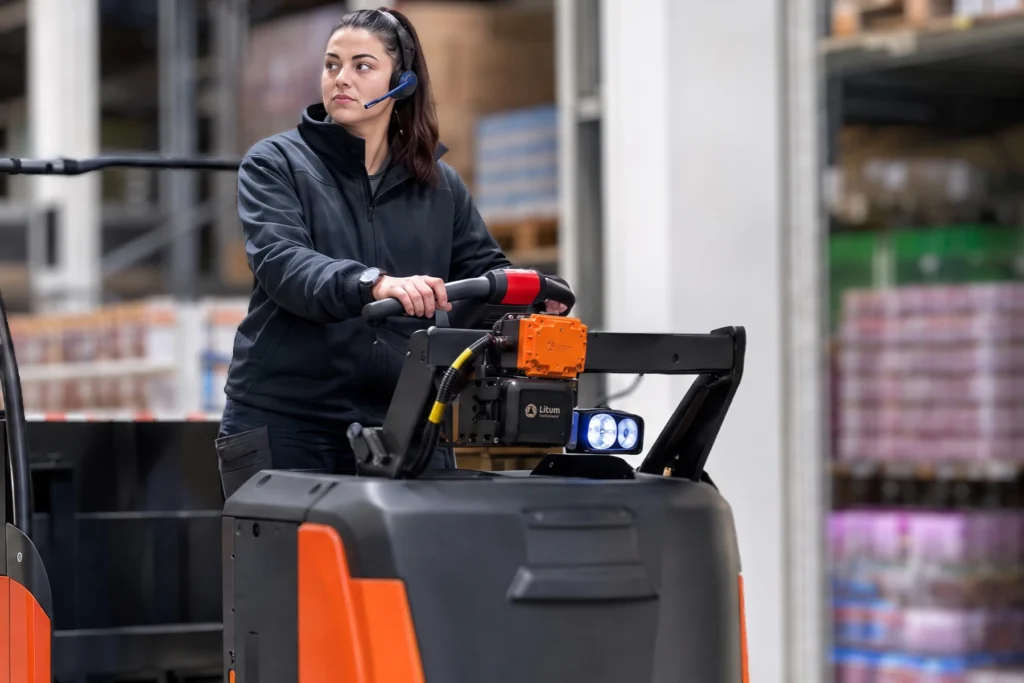
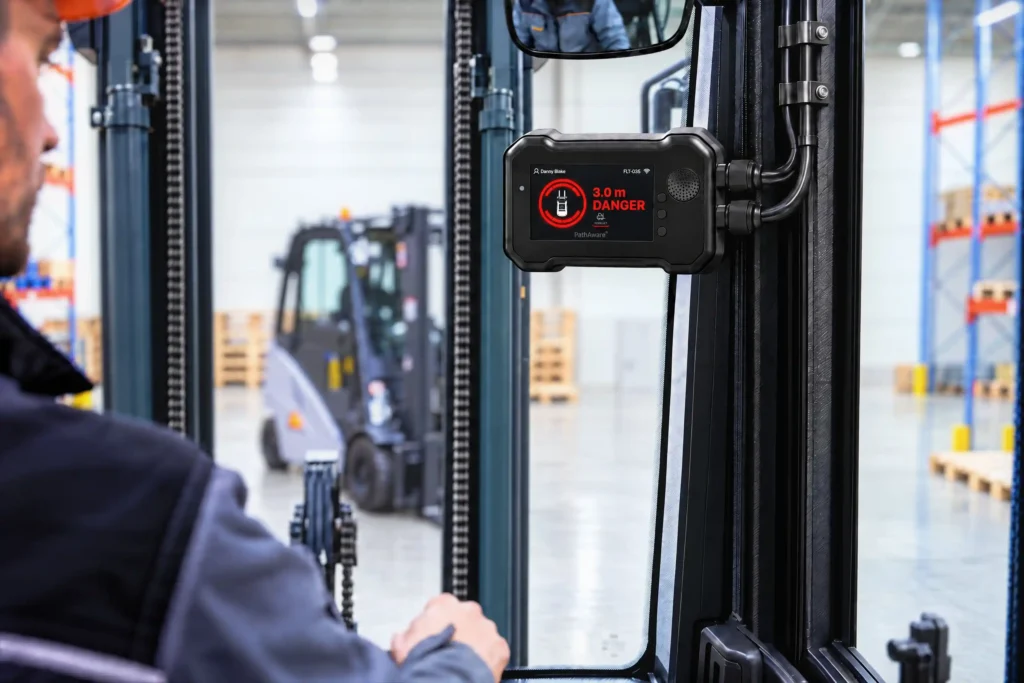
The warning itself has not changed. Whichever PathAware® tier a forklift runs, the operator receives clear audiovisual alerts in the cab when pedestrians, vehicles, or obstacles create a potential collision risk. PathAware® Core delivers those alerts through the Operator Display. PathAware® IQ and PathAware® IQ+ deliver them through the new Onboard Hub, which also carries everything built on top of the warning.
Depending on the tier, PathAware® now also supports:
- Operator authentication
- Vehicle access control
- Digital pre-operation checklists
- Automatic incident and alert reporting
- Active and idle time measurement
- Vehicle usage analysis
This means the same system that warns an operator about an immediate risk can also help safety and operations teams understand what is happening across vehicles, operators, and shifts. Near misses no longer have to remain anecdotal. Inspections no longer have to depend on paper records. Vehicle utilization no longer has to be estimated from assumptions or incomplete logs. The information becomes visible directly from the forklift.
No Facility-Wide Overhaul Required
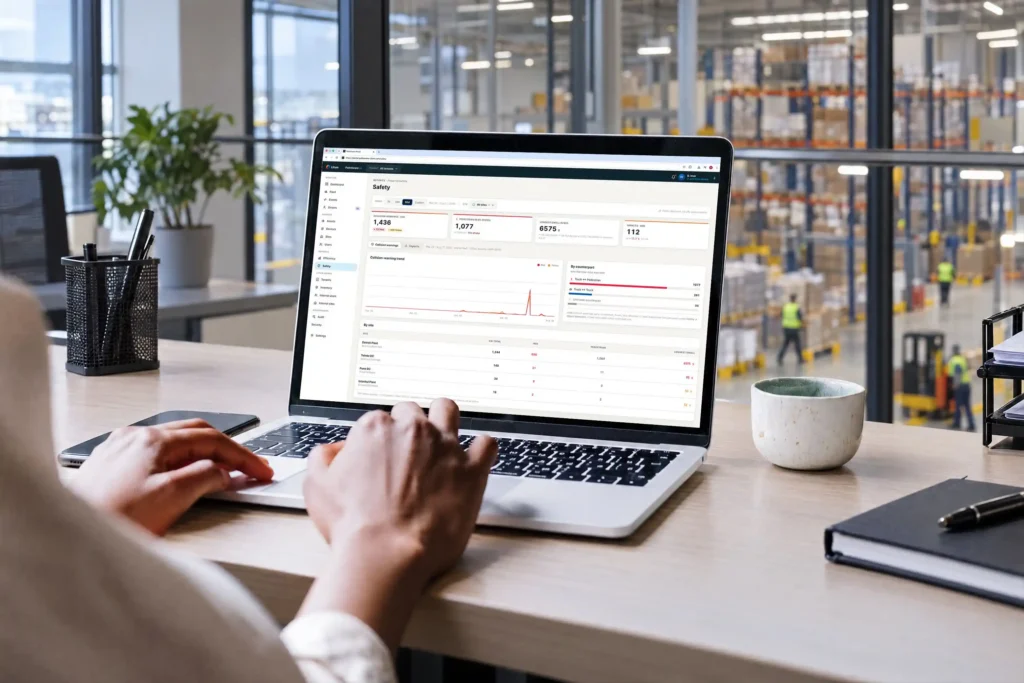
Forklift safety technology can become difficult to deploy when it requires extensive changes across an entire facility. A full Real-Time Location System (RTLS) may involve fixed infrastructure, network planning, installation across multiple zones, and wearable devices for pedestrians. Those capabilities can provide significant value when facility-wide location intelligence is needed, but they may be more than an operation requires when the immediate priority is forklift safety.
PathAware® takes a vehicle-based approach. Its capabilities operate through equipment installed directly on the forklift or powered industrial truck, so organizations can deploy connected collision awareness, safety reporting, operator workflows, and utilization insights without facility-wide RTLS, fixed anchors, a mesh network, cameras, or mandatory pedestrian wearables.
Pedestrian detection is tagless by default. There are no tags to distribute, assign, pair, charge, or maintain simply to begin detecting people around the vehicle.
Because the architecture travels with the vehicle, PathAware® also works across mixed fleets, spanning compatible forklifts from different manufacturers, regardless of brand, model, or whether the vehicle is leased or owned. Organizations can introduce a more consistent safety standard without replacing existing equipment or becoming dependent on a single forklift supplier.
Three PathAware® Tiers, One Retrofit Approach
PathAware® is offered in three tiers, so organizations can select the level of capability each vehicle or operating area requires. Every tier runs on the same on-vehicle set of AI Sensors and an Edge Controller, with the in-cab display matched to the tier.
PathAware® Core: Plug-and-Play Collision Awareness
PathAware® Core is the warning layer. AI Sensors and a UWB-based Edge Controller detect pedestrians, vehicles, and obstacles around the forklift, and the Operator Display alerts the driver with sound and light so they can respond sooner.
Pedestrian detection works without tags, so nothing needs to be issued, charged, or maintained for people on the floor. That makes PathAware® Core the simplest tier to deploy.
PathAware® IQ: Safety Reporting and Operator Accountability
PathAware® IQ turns those alerts into a record. Each event is logged with its severity, so real safety events stand apart from routine noise, and teams can see which risks repeat and where near misses cluster. Any period exports for safety reviews, audits, or insurers.
It also ties activity to a named driver. Operators identify themselves at the Onboard Hub, and authorizations can be set by truck type and enforced at start-up, so a forklift starts only for someone cleared to run it.
PathAware® IQ+: Digital Inspections and Utilization Insights
PathAware® IQ+ extends the system into digital compliance workflows and vehicle usage analysis.
It brings the pre-operation checklist into the cab. Operators run it on the Onboard Hub before the first move, completion can be required, and records are stored automatically. If a defect is reported, the truck is flagged, the supervisor is notified, and the record stays open until it is resolved.
PathAware® IQ+ also measures how each truck is used: active time, idle time, engine-on time, load ratio, and usage patterns. That reveals which forklifts carry the workload, which sit idle, and which could be reallocated, so lease renewals and new purchases rest on usage data rather than impressions.
Add Safety Capabilities Where They Matter Most
Three optional capabilities can be added to any PathAware® tier.
SlowDown can automatically reduce vehicle speed when a nearby risk is detected or when the forklift enters a defined safety area.
ZoneLite enables localized geofencing for intersections, pedestrian crossings, restricted areas, and other high-risk locations without requiring a full RTLS deployment.
People Tags provide an additional warning layer in blind spots and busy operating areas. Tag wearers receive vibration alerts, while PathAware® continues to provide tagless pedestrian detection as standard.
These options allow each deployment to reflect the actual risks and operating conditions of the site, rather than forcing every vehicle into the same configuration.
Start with the Vehicles That Need It Most
Connected forklift safety does not have to begin with an entire fleet. Organizations can start with a small number of vehicles, select different tiers based on risk or operational requirements, and expand over time. A high-traffic vehicle may call for PathAware® IQ+, while a forklift in a lower-risk area may begin with PathAware® Core. If the organization later needs facility-wide vehicle location, traffic analysis, movement history, or broader operational visibility, the deployment can be extended into Litum’s full RTLS platform.
PathAware® Core, PathAware® IQ, and PathAware® IQ+ are available on a per-vehicle subscription basis, so a single site can run different tiers across the same fleet.
Forklifts have always generated signals about risk, operator activity, inspections, and usage. The difference is that those signals can now be captured, connected, and turned into information teams can act on.
Ready to bring connected safety into the cab? Learn more about PathAware®.