


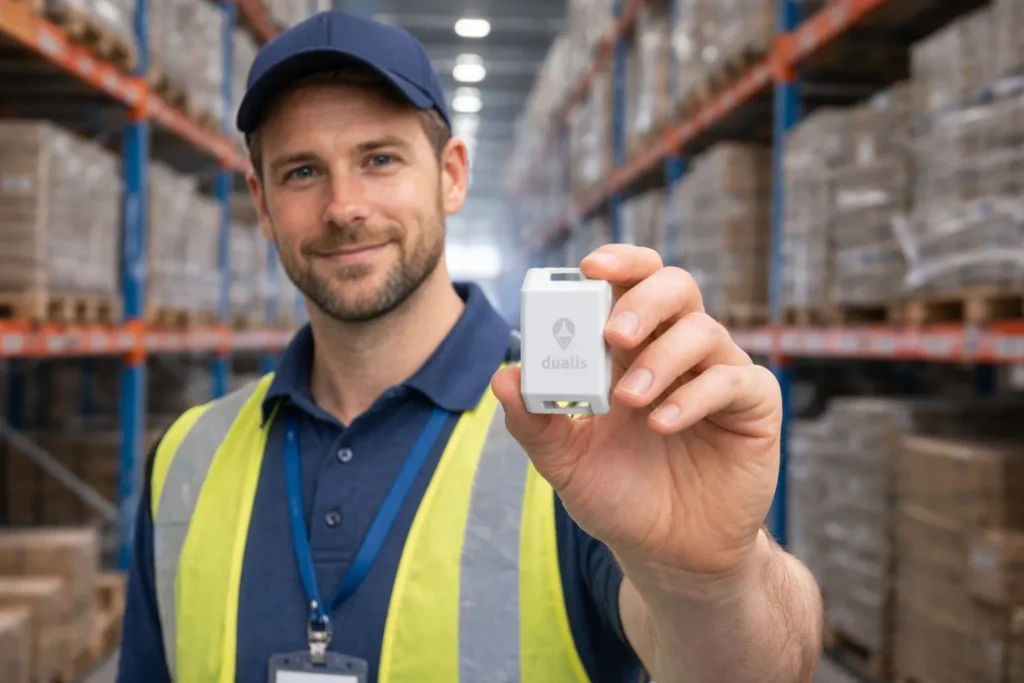
Why modern asset tracking needs a better approach
Asset tracking has become a much bigger priority in recent years. The evolution of enterprise asset tracking shows how businesses have moved from simple location monitoring to full operational optimization: reducing search time, improving asset availability, making better use of existing resources, and avoiding unnecessary replacement costs. They also want better control over how assets move across facilities and departments.
Yet the success of an asset tracking deployment depends on more than software or infrastructure. The tag itself matters just as much.
A tag stays with the asset. It moves through the workflow. It generates the location data that teams rely on to find, monitor, and manage critical items. If the tag is not built for real operational conditions, the entire asset tracking system becomes harder to maintain and harder to scale.
That is one of the biggest reasons we built Dualis Tag. We saw the need for a tag that could support high-precision asset tracking while also offering the battery life organizations need for long-term, practical use.
Why we built Dualis Tag
Dualis Tag was created for organizations that want better asset visibility without adding complexity to everyday operations.
In many environments, asset tracking projects can become harder to sustain over time if the tag strategy is not right. Frequent charging, constant battery replacement, inconsistent performance, or hardware limitations can all reduce the long-term value of a deployment. We wanted to build a tag that would support a more reliable and more manageable asset tracking experience.
High-precision asset tracking with multi-year battery life. That is the difference Dualis Tag is built to deliver.
In asset tracking, precision alone is not enough. Long battery life alone is not enough either. Many organizations are forced to compromise between knowing exactly where critical assets are and avoiding the constant maintenance burden that comes with short battery cycles. Dualis Tag was built to close that gap.
Why does that matter? Because modern operations do not just need visibility. They need operational awareness that lasts. If a tag delivers strong location accuracy but requires frequent battery replacement or recharge, it can quickly create extra work for already busy teams. If it lasts longer but does not provide the level of location precision needed, it limits the value of the entire asset tracking system. Dualis Tag is designed to help solve both problems at once, giving organizations a more practical way to support modern asset tracking at scale.
Across industrial facilities, warehouses, hospitals, and large campuses, teams depend on mobile assets every day. Tools, carts, equipment, bins, medical devices, and work-in-progress materials all play a role in keeping operations moving. But when those assets are difficult to locate, the result is often wasted time, slower workflows, reduced utilization, and unnecessary operational friction.
That is exactly why we built Dualis Tag.
That is why Dualis Tag was designed around two major priorities. Precise asset visibility, and extended battery life.
This combination makes a real difference. It helps organizations track the assets that matter with greater confidence, while reducing maintenance demands on the teams responsible for those deployments. It also helps make large-scale asset tracking programs more realistic, especially in environments where there may be many mobile assets in constant motion.

What makes Dualis Tag valuable
Dualis Tag is an asset-focused tracking device built to support modern operational needs. It is designed for organizations that want to improve visibility across valuable assets while keeping long-term maintenance practical.
Its value is not just in the tag itself. Its value comes from what that tag enables.
With better location precision, teams can find assets more quickly and reduce time wasted searching. With multi-year battery life, organizations can reduce service interruptions and avoid turning asset tracking into a maintenance-heavy effort. Together, those benefits help create a stronger foundation for real-time asset tracking as part of Litum’s broader RTLS platform.
This matters in both industrial and healthcare settings.
In industrial environments, better asset tracking can support visibility for tools, mobile equipment, returnable containers, work-in-progress materials, and shared operational assets. In healthcare, it can support visibility for mobile medical equipment and other high-value assets that need to be available when and where staff need them.
In both cases, the goal is the same. Make critical assets easier to locate, easier to manage, and easier to use effectively.
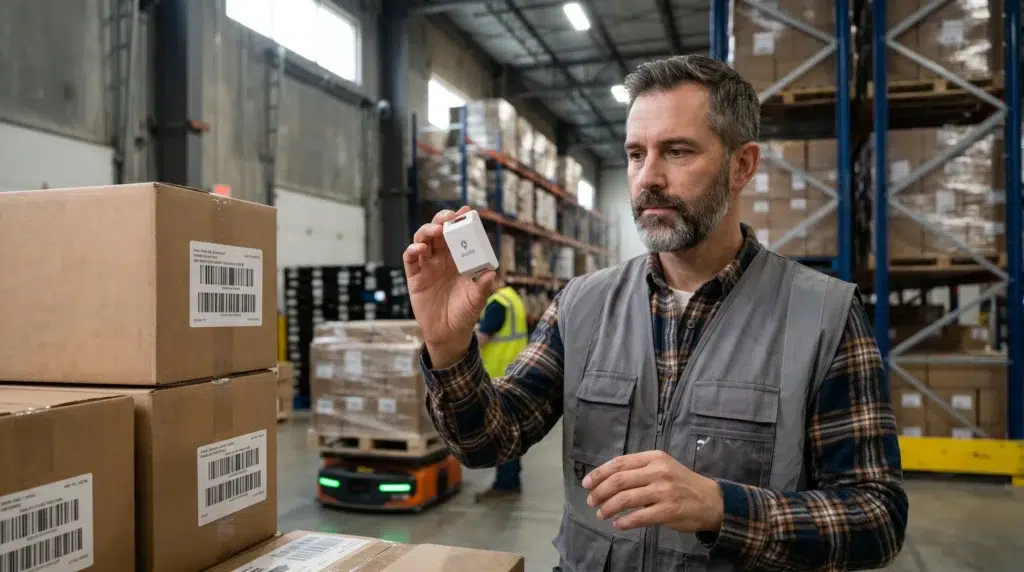
Why precision and battery life together matter
The reason we wanted to lead with this message is simple. Precision and battery life are often treated as separate strengths, but in real operations, they need to work together.
A highly precise tag with limited battery life can become difficult to maintain. A long-life tag without the right level of asset tracking performance may not deliver enough operational value. Dualis Tag is built for organizations that need both.
That balance is especially important for teams planning for long-term asset visibility. They do not just want a tracking project that works in theory. They want one that can continue delivering value over time, across real environments, with less maintenance burden and stronger day-to-day usability.

Built for modern asset visibility
We built Dualis Tag because asset tracking should be practical, scalable, and worth the effort. It should help organizations gain better control over the assets that keep operations running, without creating extra friction in the process.
Modern asset tracking is not just about knowing location. It is about making work more efficient, improving asset availability, supporting faster response, and helping teams operate with more confidence. Asset tracking technologies that deliver both precision and longevity are increasingly essential to modern warehouse and industrial operations. Dualis Tag was built to support that reality.
For organizations looking for high-precision asset tracking with multi-year battery life, Dualis Tag offers a stronger answer to what modern asset visibility should look like.
Frequently Asked Questions
Q1. What is the Dualis Tag?
Dualis Tag is an RTLS tag purpose-built for asset tracking, helping teams understand where critical assets are at any given time.
Within a Litum RTLS deployment, Dualis attaches to assets and serves as the source of location data. It communicates with the infrastructure across your facility and delivers that data to Litum’s platform, where teams can monitor asset positions, define zones, trigger alerts, and review movement history.
Unlike general-purpose asset trackers, Dualis is designed specifically around the demands of asset tracking, with a focus on long battery life, high location accuracy, and reduced maintenance over time.
Q2. What makes Dualis Tag different from other asset tags?
Most tags ask you to accept a trade-off: either high location accuracy with frequent battery replacements, or long battery life with less precise positioning.
Dualis Tag is built to deliver both.
It combines sub-meter indoor location accuracy with multi-year battery life and a user-replaceable battery, so you are not constantly swapping hardware or accepting lower-quality location data.
Q3. How accurate is the location data?
Dualis Tag uses Ultra-Wideband (UWB) technology for sub-meter indoor accuracy, meaning it can pinpoint an asset to within less than a meter.
For broader coverage across larger spaces or outdoor areas, it also uses Bluetooth Low Energy (BLE). The two technologies work together to keep location data reliable wherever your assets go within your facility.
Q4. How long does the battery last?
Battery life depends on configuration and usage, but in typical asset tracking scenarios, Dualis is designed to operate for multiple years, often in the range of 2 to 5 years.
The battery is also replaceable, which supports long-term use without needing to replace the entire device.
Q5. What happens when the battery runs out?
Replacing the battery is a simple process that takes just a few minutes, with no specialist tools and no sending the device away for servicing. You open the back panel, swap the battery, close it back up, and the LED confirms the tag is ready to go again. You keep the same hardware running for years, which makes Dualis Tag much more practical for large-scale asset tracking deployments.
Q6. How do I know when the battery needs replacing?
The tag’s LED indicator shows battery status at a glance. Green means you’re in good shape. Orange signals a medium level worth keeping an eye on. Red means it’s running low and should be replaced soon. You’ll also receive system alerts before the battery reaches a critical level, so there are no surprises.
Q7. What is the Dualis Cradle and do I need it?
The Dualis Cradle is a mounting accessory that secures the tag to a fixed surface, such as a shelf, piece of equipment, or wall bracket. It is optional for general asset tracking use, but required if you want tamper detection. When a tag is seated in its cradle, the system will alert your team if it is removed without authorization.
Q8. What are the options for mounting the tag?
Dualis offers versatile mounting options to suit different operational needs. For simple, quick deployments, the tag can be attached directly to an asset using cable ties.
For more permanent or flexible installations, the Dualis cradle is designed to support three alternative methods: screws for secure, permanent installations; cable ties when drilling is not an option; and industrial adhesive tape for surfaces where the other methods are not practical. All three are straightforward to install, and the right choice depends on your surface type and how long you intend the tag to remain in place.
Using the cradle also enables the tag’s integrated tamper-detection sensors, providing an extra layer of security for your equipment.
Q9. How does tamper detection work?
When a tag is seated in its cradle, the system monitors whether it stays in place. If the tag is removed without authorization, it triggers an immediate response: a visual signal on the device, an audible alert via the built-in buzzer, and an alert within the Litum platform. This is useful in any environment where asset security and accountability are a priority.
Q10. What environments is Dualis Tag designed for?
Dualis Tag is built for demanding, real-world conditions. The IP67 rating means it is fully protected against dust and water, so it holds up in industrial facilities, warehouses, and outdoor settings. It also meets the cleanliness requirements of healthcare environments, where equipment is regularly cleaned or sterilized.
Q11. What kinds of assets and industries is Dualis Tag suited for?
Dualis Tag is well-suited for any environment where assets need to be tracked consistently over time. It is equally effective for tracking stationary items as well as assets in motion. Common use cases include:
- Manufacturing and industrial: tools, shared production equipment, returnable containers, work-in-progress materials
- Healthcare: mobile medical equipment such as infusion pumps, wheelchairs, monitors, and specialty beds
- Warehousing and logistics: pallets, racks, bins, and shared operational carts
- General facilities: high-value spare parts, calibration equipment, and other hard-to-find assets
If your team spends time searching for equipment, deals with asset loss or underutilization, or needs better visibility over how assets move through your facility, Dualis Tag is built for those challenges.
Q12. Can I locate a specific tagged asset in the field?
Yes. Dualis makes finding assets an intuitive process that bridges your digital floor plan and the physical environment. Within the Litum RTLS Platform, you can navigate directly to an asset’s precise location on your digital floor plan, with the “Show on Map” function.
Dualis has a built-in buzzer and LED. On the floor, you can remotely trigger sound and light alerts to instantly pinpoint the exact item you need, even when surrounded by similar equipment.
Q13. Does tracking get interrupted during software updates?
No. Dualis Tag supports over-the-air (OTA) firmware updates, so the device stays current without any downtime or interruption to asset tracking.
Q14. What results can organizations expect from deploying Dualis Tag?
Clients using Litum’s asset tracking solutions have seen a 97% reduction in asset loss and 40% improvement in asset utilization. In practice, that means less time searching for equipment, fewer duplicate purchases, and stronger day-to-day control over the assets your operation depends on.
Across growing asset tracking deployments worldwide, organizations consistently report that better visibility into physical assets reduces operational friction and supports smarter resource management.
Q15. Is Dualis Tag certified?
Yes. Dualis Tag holds FCC (USA), CE (Europe), and IC (Canada) certifications, and complies with RoHS environmental standards. These cover safety, wireless emissions, and environmental requirements, ensuring the device is ready for deployment across global markets.