
For decades, forklift safety strategies have focused primarily on one critical objective: avoiding collisions. That focus remains essential. Forklifts operate near pedestrians, equipment, shelving, loading areas, and other industrial vehicles, often in environments where visibility can change from one aisle to the next.
However, collision warning alone does not address every factor that contributes to forklift risk.
Safety managers also need to know who is operating each vehicle, whether pre-operation inspections have been completed, where near misses are occurring, and whether recurring incidents point to a larger operational problem. At the same time, operations teams need better visibility into how forklifts are being used across the facility.
The usual answer to those questions is a facility-wide location system. But you should not need to instrument an entire building to know whether your forklifts are being operated safely and used effectively.
This is why forklift safety is evolving from isolated warning systems into a more connected approach, built on the vehicle rather than the facility. PathAware® is Litum’s version of that approach, offered in three tiers, Core, IQ, and IQ+, so companies can start with collision awareness and add safety visibility, inspections, and utilization insight as they need them.
Collision Warning Is the Foundation, Not the Finish Line
A forklift collision warning system can help operators detect pedestrians, vehicles, and obstacles early enough to respond. Audiovisual alerts provide an additional layer of awareness, especially around blind corners, busy intersections, loading zones, and congested aisles.
These capabilities form the foundation of an effective forklift safety program. Yet many important questions arise after an alert occurs:
- Was the event recorded?
- Has the same type of near miss happened before?
- Does a particular intersection generate more alerts than other areas?
- Was the operator trained and authorized to use the vehicle?
- Had the forklift passed its required inspection?
- Is excessive use, congestion, or poor vehicle allocation contributing to the risk?
A warning may help manage the immediate situation. However, connected forklift safety helps organizations understand what happened, identify patterns, and take preventive action.
Turning Forklift Near Misses into Usable Safety Data
Near misses frequently disappear once the operator continues working. Unless someone manually reports the event, the safety team may never know it happened.
This creates a significant visibility gap.
A facility may experience repeated proximity events at the same pedestrian crossing or blind corner without having enough documented evidence to recognize the pattern. Decisions are then based on isolated reports, personal observations, or incomplete recollections.
Connected incident reporting changes that process. Alerts and safety events can be captured automatically, creating a record that teams can review over time. Instead of treating each near miss as a forgotten moment, safety managers can examine trends involving:
- Frequently triggered locations
- Recurring vehicle-to-pedestrian interactions
- High-risk operating periods
- Specific vehicles or workflows
- Repeated operator behaviors
- Areas that may require speed control or geofencing
This allows organizations to move from reactive safety management toward proactive, evidence-based action.
Connecting Forklift Access to Authorized Operators
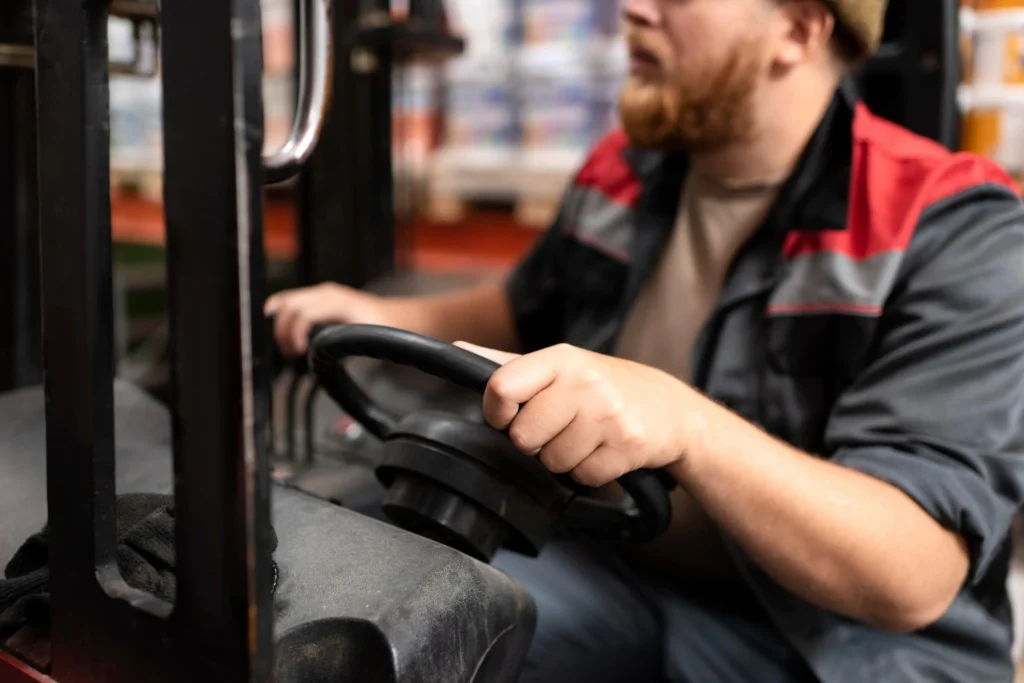
Another major component of forklift safety is operator accountability.
In many industrial environments, it can be difficult to verify who operated a specific forklift during a shift or whether that person was currently authorized and trained. Shared vehicles, changing shifts, temporary workers, and mixed fleets can make manual controls difficult to maintain.
Operator authentication and vehicle access control help close this gap.
When drivers identify themselves directly at the forklift, the organization can connect the operator to the vehicle and its activity. Authorizations can be set by truck type and enforced at start-up, so a forklift starts only for someone cleared to run it.
This supports several important safety and compliance goals. It helps prevent unauthorized operation, strengthens accountability, and makes it easier to investigate incidents with accurate information.
Rather than relying on keys, paper records, or informal processes, companies can introduce a consistent operator control system across their forklift fleet.
Moving Pre-Operation Forklift Inspections Beyond Paper
Pre-operation inspections are a basic part of forklift safety, but the inspection process is often still managed through paper forms or disconnected digital tools.
Paper checklists can be misplaced, completed inconsistently, or difficult to retrieve during an audit. Supervisors may also have limited visibility into whether an inspection was completed before the vehicle entered operation.
Digital forklift inspections bring the checklist directly to the vehicle.
Operators can complete required checks through an onboard screen before beginning work. Completion records are stored automatically, making them easier to review and retrieve.
A digital process can help organizations:
- Standardize inspection procedures
- Improve checklist completion
- Identify reported vehicle issues sooner
- Maintain accessible inspection records
- Strengthen audit readiness
- Reduce administrative work
When inspection workflows are connected with operator authentication and safety reporting, companies gain a clearer record of who used the vehicle, whether it was inspected, and what happened during operation.
Combining Safety with Forklift Utilization Insights
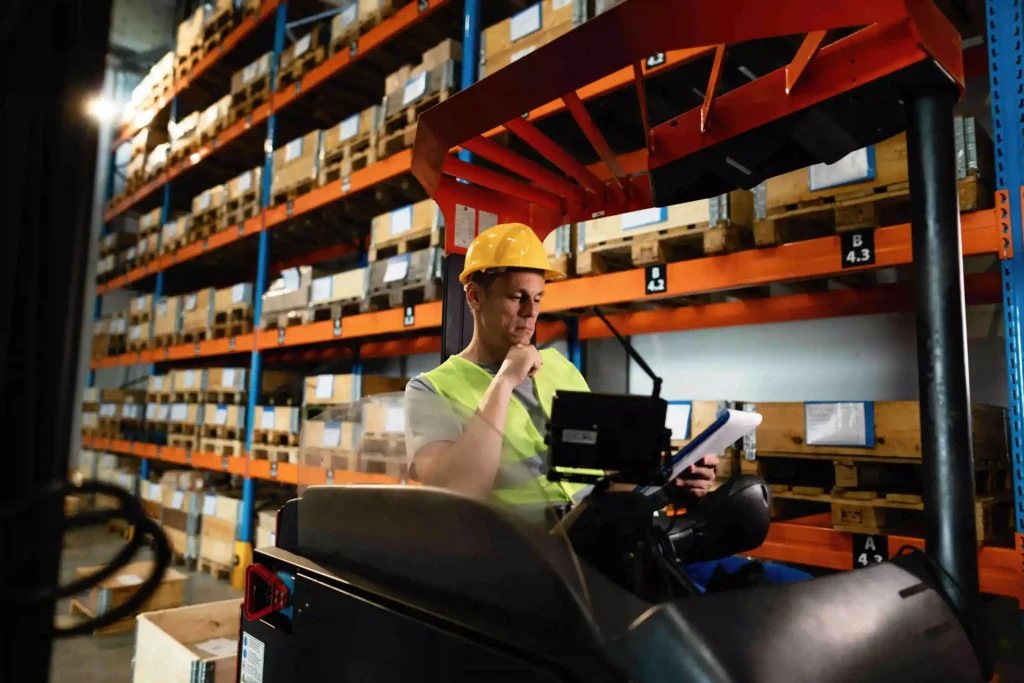
Forklift safety and forklift utilization are often managed as separate priorities. In practice, they are closely connected.
An overused forklift may experience more wear and require more frequent maintenance. An underused vehicle may represent unnecessary lease or ownership costs. Poor vehicle allocation can also increase traffic, travel distances, and congestion in certain parts of a facility.
Measuring active time, idle time, and broader usage patterns gives operations teams a more accurate picture of how the fleet is performing. These insights can help identify:
- Forklifts that are consistently overworked
- Vehicles that remain idle for long periods
- Uneven usage across similar equipment
- Opportunities to reallocate vehicles
- Candidates for lease reduction
- Whether additional vehicles are truly required
Before renewing a lease or purchasing another forklift, organizations can examine how the existing fleet is actually being used.
This does not replace a comprehensive fleet management platform. It provides targeted utilization metrics that help operations teams make better-informed equipment decisions while using the same onboard system that supports safety.
A Connected Approach Without Full Facility Infrastructure
Advanced forklift safety does not always need to begin with a facility-wide Real-Time Location System (RTLS).
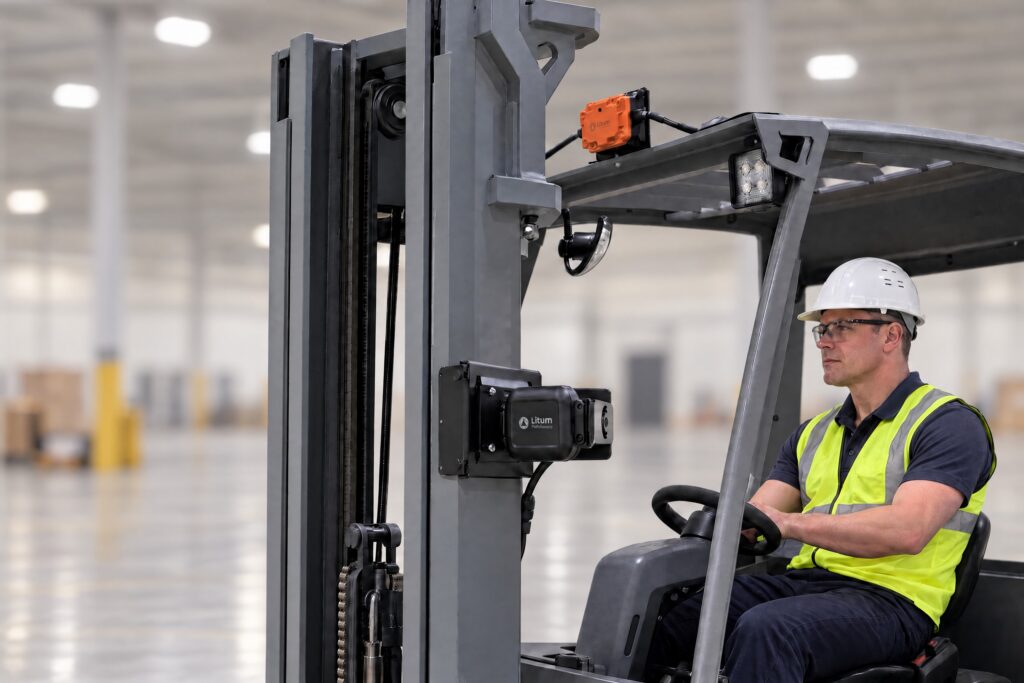
A vehicle-based solution can deliver collision warning, operator access control, digital inspections, incident reporting, and utilization insights through equipment installed directly on the forklift.
This approach removes the need for fixed infrastructure, cameras, mesh networks, or mandatory pedestrian wearables. It can also make deployment more practical for companies that want to improve forklift safety without introducing a broader location system across the entire facility.
A forklift-agnostic architecture provides another advantage. Organizations often operate mixed fleets that include several manufacturers, models, and ownership arrangements. Some vehicles may be owned, while others are leased.
A system that works across compatible powered industrial trucks allows companies to apply more consistent safety processes without being tied to a single forklift brand.
Starting on the vehicle also does not close the door on a facility-wide system. Organizations that later add RTLS can extend from vehicle-level safety and utilization into facility-wide vehicle location, traffic patterns, and congestion visibility, without committing to that investment on day one.
Building Forklift Safety in Stages
Not every site needs the same capabilities on day one.
Some organizations may initially need reliable collision warning. Others may already be ready for operator access control, automated safety reporting, digital inspections, and vehicle usage data.
PathAware® supports this progression through three tiers. See our forklift safety and telematics solutions page for the full breakdown of each tier.
PathAware® supports this progression through three tiers:
- PathAware® Core provides plug-and-play proximity detection and in-cab alerts that help reduce collision risk, covering pedestrians, vehicles, and obstacles.
- PathAware® IQ adds a connected software layer for safety visibility, accountability, and control, including incident reporting, operator identification, and vehicle access control.
- PathAware® IQ+ adds inspection workflows and utilization insights, including digital pre-operation inspections and metrics such as active and idle time.
Optional capabilities such as automated SlowDown, ZoneLite geofencing, and People Tags can provide additional protection in higher-risk operating areas.
All of this runs on equipment installed in the cab, where the operator gets warnings in real time. Litum’s new Onboard Hub is what unlocks the connected layer above that alerting, bringing safety visibility, operator control, digital inspections, and utilization data directly from the forklift.
The Future of Forklift Safety Is Connected
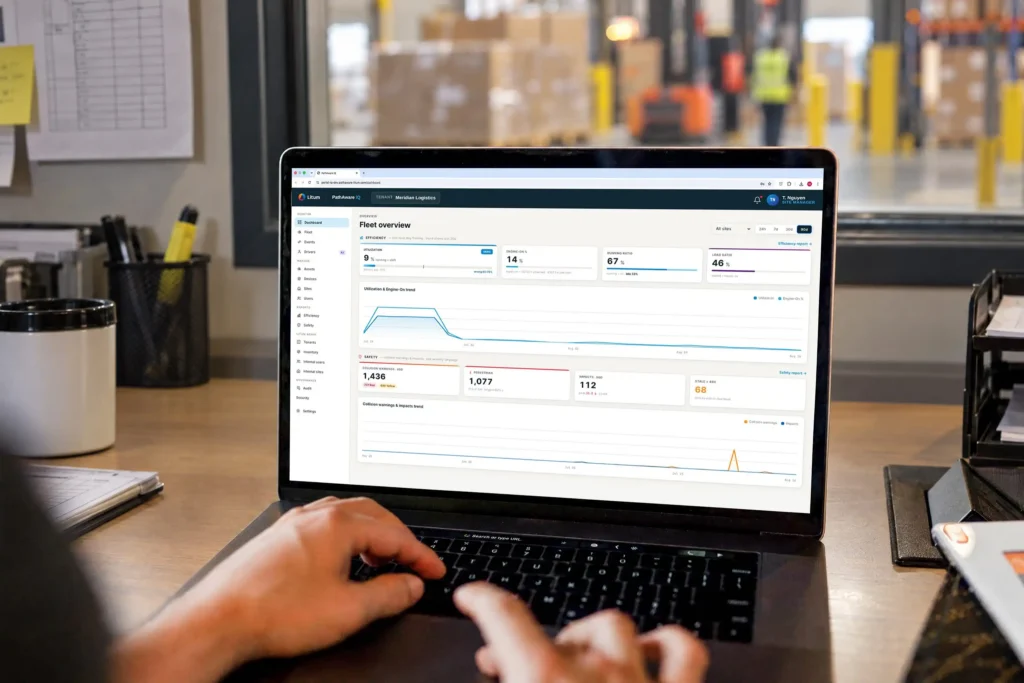
Reducing collision risk will always remain central to forklift safety. But leading safety programs increasingly need more than an alert at the moment of risk.
They need visibility into near misses, operator authorization, inspection completion, and vehicle usage. They need information that helps teams understand not only that an event occurred, but also why it may be happening repeatedly and what can be done to reduce the risk.
Connected forklift safety creates that foundation.
By bringing collision awareness, safety reporting, operator accountability, digital inspections, and utilization insights together, organizations can make forklift safety more measurable, consistent, and actionable.
Learn more about how Litum PathAware® helps organizations build a connected approach to forklift safety and utilization.