
Contents
Geofencing technology is transforming how industrial and healthcare organizations protect people, secure assets, and automate operational responses in 2026. This guide covers what geofencing technology is, how indoor geofencing works, which technologies deliver the best accuracy, and where geofencing is being deployed across industries today.
In 2026, geofencing technology has moved well beyond basic perimeter monitoring. Modern indoor geofencing platforms combine UWB and BLE radio technologies with intelligent rule engines that can trigger automated responses, safety alerts, workflow actions, and compliance records in real time. For enterprise operations, geofencing is no longer a security tool alone. It is a core layer of operational intelligence. See how real-time location systems use geofencing as a foundational capability.
What is geofencing?
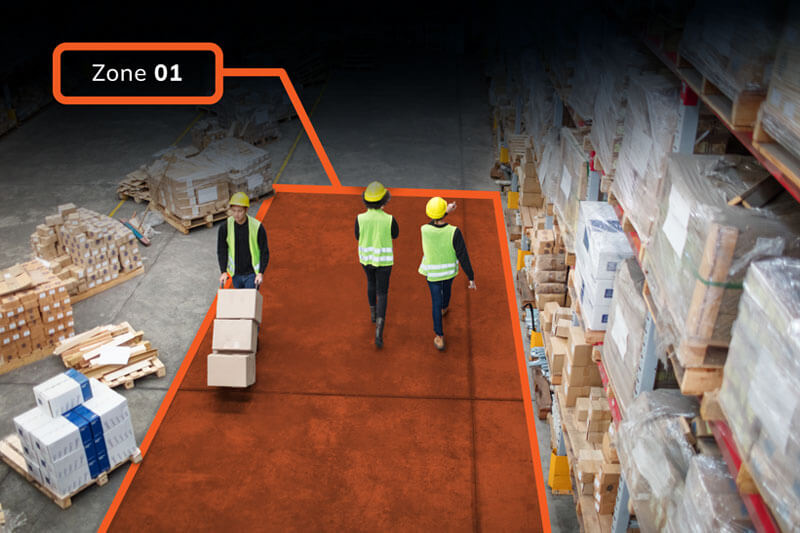
Geofencing is the process of establishing a virtual fence or perimeter around a physical location and is typically a part of real-time location tracking services (RTLS). It is a tool for tracking and monitoring physical devices coming into, out of, and moving within a pre-defined area. Think of a geofence like a high-tech version of a fence around your home. If something, or someone, jumps over your fence you would want to know more information about them, such as: the time they entered, the time they left, what they looked like, what they did, etc… It allows administrators to answer these questions and more by how, when, and what devices are doing within an area.
Example of geofencing in action: red light cameras
Red light cameras are a simple example of geofencing in practice. They are typically placed at intersections with high traffic volumes and/or intersections where drivers are frequently running red lights. Red light cameras work using sensors capable of detecting if vehicles are entering the intersection when the stop light is red.
If these sensors detect a car is entering an intersection during a red light, the sensors trigger cameras to take a picture of the vehicle running the red light. The geofenced area in this example is the intersection where vehicles are driving in multiple directions depending on their respective lights being red or green. When the traffic light is green, the sensors will not trigger pictures to be taken by the cameras placed in the intersection.
This demonstrates that it is not only for monitoring objects moving into and out of certain areas, but also that different rules and actions can be enforced as a response to events happening within a geofenced area.
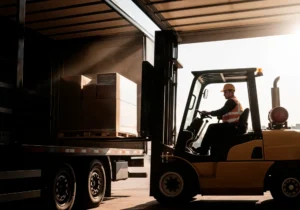
In industrial environments, the equivalent is a forklift approaching a pedestrian zone. A geofence around that zone can detect the forklift’s position in real time and trigger an automatic speed reduction, an audible alert, or an emergency stop before a collision occurs. See how Litum deploys forklift collision warning using UWB-based geofencing across manufacturing and warehouse facilities.
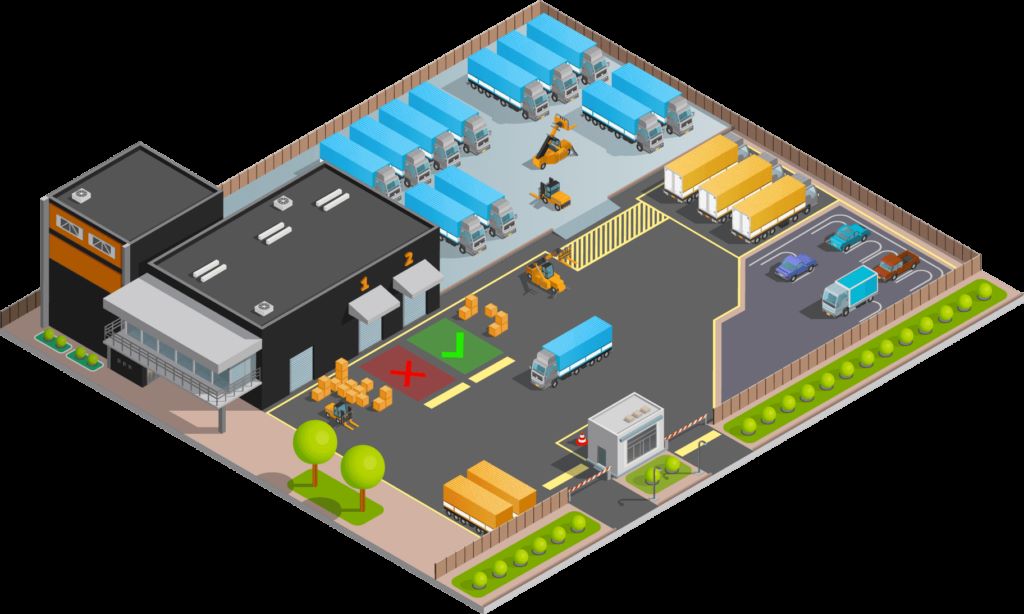
Modern technologies for geofence are far more advanced than the one done by red light cameras and are applied to solve problems faced by many industries, which we will discuss later in this article. For now, let’s focus on understanding how indoor geofencing works.
How does indoor geofencing work?
It works the same as outdoor, but faces more constraints to successfully implement due to a combination of technology interactions, physical barriers, obstructions, interference, and higher accuracy requirements.
The goal of its indoors is to create a virtual map with virtual boundaries that can monitor devices within its borders when they enter, exit, or move around. This information can be used to generate valuable data and execute specific events to occur in response to information gathered within a geofenced area, such as security alerts, mobile device management (MDM) policies, starting or stopping of machinery, prompts for people to take a certain action, and much more.
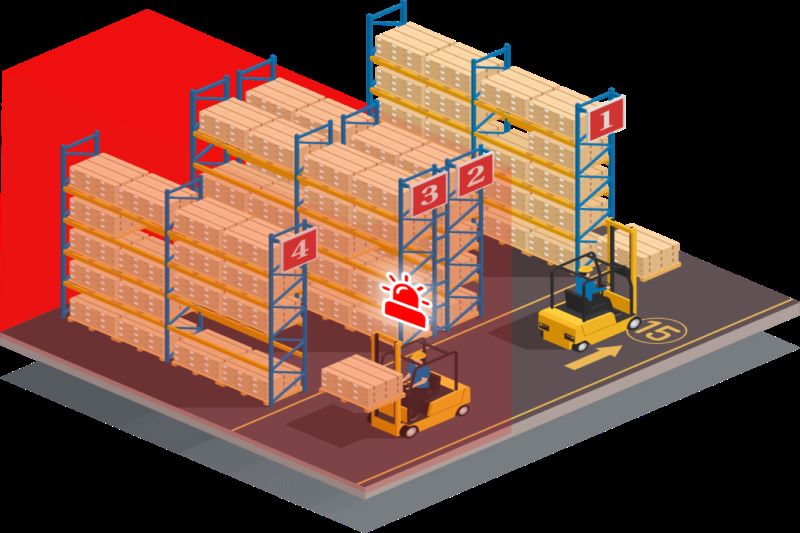
Indoor geofencing requires the use of indoor mapping platforms combined with indoor device detection technologies working together to produce data regarding the position of objects. There are three primary attributes of successful geofencing: position accuracy, ability to create and maintain virtual zones, and the ability to create rules or logic within zones.
In Litum’s indoor geofencing deployments, the platform layer handles zone creation, rule configuration, alert routing, and historical event logging through a single software interface. Operations teams can define unlimited geofenced zones, set entry and exit conditions for each, and connect zone events to broader enterprise systems such as access control, warehouse management, or safety monitoring platforms. For a detailed look at how RTLS infrastructure supports indoor geofencing, see our guide on indoor positioning systems.
How accurate is geofencing?
Different applications of geofence require different levels of accuracy. Indoor systems typically require more accurate location tracking compared to outdoor systems. In the example mentioned earlier a red light camera system does not need to be very accurate, but a forklift operating in an indoor environment with other people and machinery needs to be tracked with a higher level of accuracy to prevent workplace accidents.
The most accurate indoor geofencing systems in 2026 use Ultra-Wideband (UWB) technology. UWB calculates position using time-of-flight measurements across a wide frequency band of 6 to 8 GHz, achieving accuracy of 10 to 30 centimeters. This level of precision is what makes geofencing viable for safety-critical applications where a zone boundary of half a meter can be the difference between a safe operation and a workplace incident.
BLE-based geofencing delivers room or zone-level accuracy, typically within 1 to 3 meters, making it well-suited for broader asset visibility, staff monitoring, and patient flow applications where centimeter precision is not required.
Wi-Fi and other narrowband systems offer lower accuracy, typically 3 to 5 meters, which limits their use to coarse zone detection in environments where existing Wi-Fi infrastructure makes dedicated anchor deployment impractical.
| Technology | Accuracy | Best For |
|---|---|---|
| UWB | 10-30 cm | Forklift safety, infant security, restricted zone enforcement |
| BLE | 1-3 m | Asset tracking, staff monitoring, patient flow |
| Wi-Fi | 3-5 m | Coarse zone detection, visitor tracking |
What are the applications of geofencing?
Almost all industries implement and benefit from geofence. Applications range from location-based marketing to lone worker safety, and companies implementing it include a wide variety of companies such as Uber, Walgreens, Jet Blue, BMW, and Apple.
Indoor applications revolve around improving safety and efficiency. These applications include, but are not limited to:
Applications for safety
- Forklift collision warnings – UWB geofencing triggers alerts when forklifts approach pedestrian zones
- Lone worker safety – geofenced zones detect when isolated workers enter high-risk areas
- Emergency mustering roll-call – geofenced muster points confirm headcount automatically during evacuations
- Infant security – geofenced exit points detect unauthorized movement of newborns
- Staff duress – zone-based alerts trigger when staff activate duress signals in specific areas
Applications for efficiency
- Asset tracking – geofenced zones track asset dwell time and utilization
- Connected worker safety – zone-based monitoring across industrial environments
- Yard management – geofenced gate and dock areas automate vehicle check-in and check-out
- Process tracking – zone transitions log production stage completion automatically
- Patient flow – geofenced clinical areas reveal bottlenecks in real time
Geofencing Technology Benefits in 2026
Real-time safety enforcement
Geofencing technology moves workplace safety from reactive to proactive. Instead of recording that an incident occurred, a properly configured geofence prevents the incident from occurring by triggering an automated response the moment a zone boundary is crossed. According to OSHA, powered industrial trucks are among the leading causes of serious workplace injuries. UWB-based geofencing directly addresses this risk.
Automated compliance records
Every zone entry and exit event is logged automatically with a timestamp, device identity, and duration. This supports regulatory compliance documentation, incident investigation, and operational audit trails without manual data entry.
Reduced asset loss and search time
Geofenced zones alert operations teams when assets leave authorized areas. In healthcare, this reduces the time clinical staff spend searching for equipment before procedures. In warehousing, it reduces shrinkage and unauthorized equipment movement.
Workflow automation
Zone-based rules can trigger downstream actions in connected enterprise systems. A forklift entering a loading zone can automatically update a WMS record. A staff member entering a restricted area can automatically notify security. A patient reaching a discharge zone can trigger a clinical workflow.
Scalable across environments
Modern geofencing platforms support unlimited zones across single or multi-floor facilities, outdoor yards, and campus-scale environments. Organizations typically begin with one high-impact use case and expand zone coverage as operational value is demonstrated.
Which industries use geofencing technology?
Healthcare
In clinical environments, geofencing technology protects vulnerable patients and improves operational flow. Infant security systems use geofenced exit points to detect unauthorized removal of newborns. Wander management systems create geofenced safe zones for at-risk residents. Medical asset tracking uses zone-level geofencing to locate equipment across wards and departments in real time.
Manufacturing and Industrial
Industrial geofencing is primarily a safety technology. UWB-based geofenced zones around heavy machinery, loading docks, and restricted areas can automatically detect when unauthorized personnel or vehicles enter and trigger protective responses. Lone worker monitoring uses geofenced hazard zones to trigger welfare checks when workers enter isolated areas.
Warehousing and Logistics
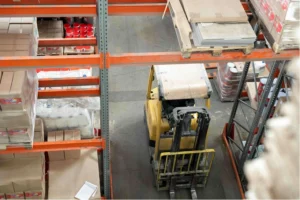
In warehouse environments, geofencing supports both safety and operational visibility. Geofenced pedestrian corridors enforce separation between foot traffic and forklift routes. Geofenced storage zones track asset movement and dwell time for inventory accuracy and utilization analysis.
Construction
Construction sites use geofencing to monitor worker presence across dynamic, multi-phase project footprints. Zone-based monitoring supports both safety compliance and resource allocation, flagging when workers enter hazardous areas or when equipment leaves an authorized perimeter.
Senior Living and Healthcare Campuses
Geofenced safe zones protect at-risk residents while preserving their independence. Alerts trigger only when residents approach zone boundaries rather than continuously monitoring every movement, balancing protection with dignity.
In manufacturing, indoor geofence is used to improve the occupational safety of workers and optimize workforce utilization. In construction, employees and equipment can be monitored in real time to ensure safety and efficient use of resources within the construction site. For the aviation industry it is used to coordinate a network of vehicles, ground support, and staff to efficiently run and automate airport services. In marketing, geofencing is used primarily for location-based advertising campaigns.
Conclusion
Geofencing technology has moved from a niche tracking capability to a core operational layer in industrial and healthcare environments. In 2026, the combination of UWB precision, scalable BLE infrastructure, and intelligent software platforms means that geofencing can be deployed faster, at lower cost, and across more use cases than at any point in its history.
For organizations evaluating indoor geofencing, the starting point is identifying the highest-impact use case, whether that is forklift safety, infant security, asset visibility, or emergency mustering, and building from there. Litum designs and deploys end-to-end indoor geofencing solutions across industrial and healthcare environments globally.
Explore how Litum uses geofencing in connected worker safety, healthcare RTLS, and asset tracking.
Frequently Asked Questions About Geofencing Technology
What is geofencing technology?
Geofencing technology creates virtual boundaries around physical locations and triggers automated responses when tracked devices or people enter, exit, or move within those zones. In industrial and healthcare environments, it is used to enforce safety rules, protect assets, automate workflows, and generate compliance records in real time.
How does indoor geofencing work?
Indoor geofencing combines device detection technology (UWB, BLE, or Wi-Fi) with a software platform that maintains virtual zone maps and processes zone entry and exit events. When a tracked tag or badge crosses a zone boundary, the platform triggers the configured response, which may include an alert, an automated workflow action, or a compliance log entry.
What is the most accurate indoor geofencing technology?
UWB (Ultra-Wideband) delivers the highest indoor geofencing accuracy, typically within 10 to 30 centimeters. This makes it suitable for safety-critical applications such as forklift collision warning and infant security where zone precision directly affects outcomes. BLE provides room-level accuracy suitable for asset tracking and staff monitoring at lower infrastructure cost.
What industries use indoor geofencing?
Indoor geofencing is widely deployed in manufacturing, warehousing, healthcare, construction, aviation, and senior living. Common applications include forklift and pedestrian safety, medical asset tracking, infant security, emergency mustering, lone worker protection, and patient flow management.
What is the difference between indoor and outdoor geofencing?
Outdoor geofencing typically uses GPS, which relies on satellite signals that attenuate inside buildings. Indoor geofencing uses radio technologies such as UWB, BLE, and Wi-Fi that function reliably within enclosed structures. Indoor systems also require higher accuracy and more granular zone configuration than most outdoor applications.