

Hazardous industrial facilities don’t fail because of one dramatic event. They fail because of small visibility gaps: a missing safety tool, a worker unaccounted for during an evacuation, a piece of equipment that sat in the wrong zone for two shifts before anyone noticed.
Real-Time Location Systems (RTLS) exist to close those gaps. In environments classified for explosive gases, combustible dust, or high-risk confined spaces, that visibility isn’t a luxury. It’s a fundamental part of how safe operations run.
What Is RTLS, and Why Does It Matter in Hazardous Areas?
RTLS is a technology that tracks the real-time location of assets, equipment, vehicles, and personnel across a physical facility. Tags attached to objects or worn by workers communicate with fixed infrastructure (gateways, anchors, or sensors) to continuously update their position on a map or dashboard.
In standard industrial environments, deploying RTLS is relatively straightforward. In hazardous or classified areas governed by ATEX, IECEx, or NEC standards, the hardware must meet strict ignition-prevention requirements. That’s where intrinsically safe RTLS hardware and ATEX-certified tags and gateways become essential. Without them, real-time visibility simply isn’t possible in the most risk-critical parts of your operation.
The Real Cost of Poor Asset Visibility
Before exploring what RTLS can do, it’s worth being honest about what poor visibility actually costs.
In oil and gas, petrochemical, pharmaceutical, mining, and heavy industrial facilities, lost or misplaced assets aren’t just inconvenient. They create a chain of compounding problems:
- Workers enter high-risk zones unnecessarily to search for equipment
- Maintenance windows overrun because the right tool or spare part can’t be located
- Emergency response slows when safety equipment (fire suppression gear, gas detectors, evacuation devices) isn’t where it’s supposed to be
- Compliance audits become harder when asset movement through restricted zones can’t be documented
- Procurement budgets inflate as teams reorder equipment they already own but can’t find
These aren’t edge cases. In large, multi-zone facilities with rotating shifts and contractor workforces, asset loss is a chronic operational drag that RTLS directly addresses.
What RTLS Tracks in Hazardous Industrial Environments
Modern RTLS deployments in hazardous areas typically cover several asset categories:
Mobile equipment and tools. Pumps, compressors, pressure gauges, calibrated instruments, and specialized tooling that move between production areas, maintenance zones, and storage.
Safety-critical equipment. Breathing apparatus, gas detectors, fall arrest systems, emergency lighting, and first-aid assets that must be available in specific locations at all times.
Containers and materials. Drums, IBCs, chemical containers, and production-related materials where location and zone compliance directly affect safety protocols.
Portable devices and instrumentation. Handheld analyzers, inspection tablets, and monitoring devices that are expensive to replace and easy to misplace.
With real-time asset visibility, operations teams can see where assets are, how long they’ve been there, which zone they’ve entered, and whether they’re overdue for return or inspection.
Zone Compliance and Restricted Area Control

Hazardous facilities are organized by risk. Zone 0, Zone 1, and Zone 2 under ATEX, or Division 1 and Division 2 under NEC, each carry specific requirements about what equipment can enter, what procedures apply, and who can be present.
RTLS supports zone compliance by generating automatic alerts when assets or personnel enter restricted areas without authorization, when equipment remains in a classified zone beyond its permitted dwell time, or when materials deviate from their intended process path.
This isn’t about surveillance. It’s about building the kind of real-time operational intelligence that lets safety managers catch problems before they become incidents, not after.
Personnel Tracking and Emergency Mustering
Asset tracking is often the entry point for RTLS, but people visibility is where the technology’s safety value becomes most concrete.
During a gas release, fire, explosion risk, or emergency evacuation, knowing who is on site and where they are can be the difference between a fast, coordinated response and a chaotic one. Manual headcounts are slow and prone to error, especially in large facilities with contractors, shift rotations, and multiple muster points.
RTLS-enabled emergency mustering replaces paper lists and radio calls with live location data. Safety coordinators can immediately see:
- Who is still inside the facility or a hazardous zone
- Who has reached a designated muster point
- Whether any personnel are unaccounted for in a high-risk area
This capability is particularly valuable in facilities where personnel counts can run into the hundreds and where every minute of response time matters.
Intrinsically Safe Hardware: The Non-Negotiable Foundation
RTLS in hazardous areas only works if the hardware is built for it. Standard Wi-Fi tags, BLE beacons, or UWB devices designed for warehouses or offices are not appropriate for ATEX-classified zones.
Intrinsically safe RTLS hardware is designed to prevent ignition by limiting the electrical energy available in the device, even in fault conditions. ATEX-certified tags and gateways have been independently tested and approved for use in environments where explosive atmospheres may be present.
When evaluating an RTLS solution for hazardous industrial use, the hardware certification isn’t a checkbox. It determines whether the system can legally and safely operate in the zones where you actually need it.
Building the Business Case for RTLS in Hazardous Operations
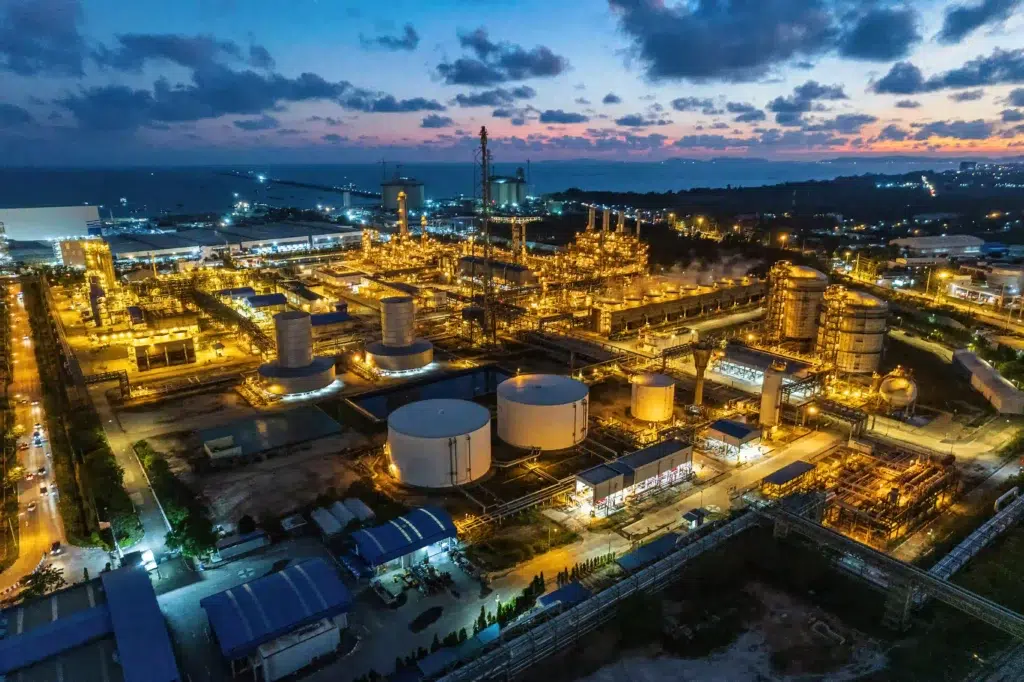
Safety is the primary driver, but RTLS in hazardous environments also delivers measurable operational returns:
Reduced search time. Field teams recovering minutes or hours per shift searching for tools and equipment see compounding efficiency gains across the workforce.
Lower asset loss and replacement costs. Facilities with real-time asset tracking consistently report reductions in unnecessary procurement and asset write-offs.
Improved maintenance and inspection compliance. RTLS data supports calibration schedules, inspection records, and equipment lifecycle management, all critical in regulated industries.
Stronger audit and compliance documentation. Automated logs of asset and personnel movement through classified zones provide defensible records for regulatory inspections and incident investigations.
Better turnaround and shutdown planning. Knowing exactly where critical assets are located in the weeks before a planned shutdown reduces pre-work scramble and downtime.
The Shift from Reactive to Proactive Safety Management
Most industrial safety programs are built around prevention and response. Training prevents incidents. Procedures define response. RTLS adds a third layer: real-time situational awareness that lets safety and operations teams act on what’s actually happening, not what they assume is happening.
When a valve tool hasn’t returned from Zone 1 after a scheduled maintenance window, the system flags it before the next shift starts. When a worker enters a confined space and their tag stops updating, the alert reaches safety control immediately. When an emergency occurs, the muster dashboard shows the gaps instantly rather than building them manually under pressure.
That shift from reacting to events to monitoring conditions in real time is what makes RTLS a genuine safety infrastructure investment, not just an asset management tool.
Who Should Consider RTLS for Hazardous Areas
RTLS for hazardous industrial environments is most relevant for organizations operating in:
- Oil and gas upstream, midstream, and downstream facilities with classified process areas
- Petrochemical and chemical manufacturing plants with Zone 0/1/2 or Division 1/2 areas
- Pharmaceuticals with solvent handling and production environments that carry explosive atmosphere risks
- Mining operations (underground and surface) with combustible dust or gas hazards
- Energy and utilities including power generation, grid infrastructure, and fuel handling
- Heavy industry such as steel, aluminum, and process manufacturing with high-risk zones
If your facility includes classified areas, a mobile workforce, and assets that are critical to safe operations, the visibility case for RTLS is strong.
Real-time location visibility in hazardous industrial areas is no longer a frontier technology. The hardware is certified, the use cases are proven, and the operational and safety returns are documented across industries. The question for most industrial organizations isn’t whether RTLS can work in their environment. It’s how quickly they can close the visibility gaps that already exist.
FAQ
Q1. What is the ATEX Family?
The Litum ATEX Family is a purpose-built intrinsically safe RTLS solution for hazardous industrial environments. It comprises two devices: the Litum ATEX Gateway and the Litum ATEX Dualis Tag. Both are certified hazardous location equipment, purpose-designed for classified areas where standard connected devices cannot be safely deployed. Together, they extend real-time location visibility across those zones and integrate with the broader Litum RTLS platform.
Q2. What makes the ATEX Family different from standard RTLS hardware?
Standard RTLS hardware is designed for general industrial, warehouse, or healthcare environments. It is not suitable for classified hazardous areas where explosive gases, vapors, or combustible dust may be present, because standard electronic components, batteries, signals, and heat can create ignition risks. All electrical equipment for hazardous areas, including location tags and gateways, must meet specific ignition-prevention standards before they can be legally used in those zones. The ATEX Family is specifically designed and certified for these environments, making it the appropriate category of hazardous area products for facilities that need real-time location visibility in classified zones.
Q3. What does intrinsically safe mean?
Intrinsically safe equipment is designed to limit electrical and thermal energy within a device, reducing the risk of ignition in areas where explosive gases, vapors, mist, or combustible dust may be present. This is what allows connected hardware to be used in hazardous environments where standard electronic devices may not be suitable. The same principle applies to intrinsically safe wireless infrastructure, including gateways, access points, and tags, all of which must be ATEX approved before deployment in classified zones. The Litum ATEX Family is built on this intrinsically safe design foundation and complies with IEC 60079, the international standard governing both the ATEX framework in Europe and the IECEx scheme used for global hazardous-area certification. For projects outside the ATEX framework, Litum is ready to work with organizations that require other hazardous-area certifications and assess the appropriate path to support their deployment.
Q4. What is unique about the ATEX Family compared to other intrinsically safe RTLS options?
The Litum ATEX Family is the first intrinsically safe RTLS hardware family to combine ATEX Zone 1 and Zone 2 suitability with both Ultra-Wideband (UWB) and Bluetooth Low Energy (BLE) location capability, integrated with a full enterprise RTLS platform. UWB delivers high-precision location accuracy. BLE provides flexible, low-power coverage across larger areas. For deployments requiring wider area coverage, the infrastructure also supports ATEX WiFi access points and LoRaWAN ATEX connectivity, and tags can function as an intrinsically safe GPS device equivalent for outdoor or boundary-zone tracking. This combination of technologies in a single intrinsically safe system is what sets the ATEX Family apart.
Q5. Why does Zone 1 suitability matter?
Most intrinsically safe hardware available in the market targets Zone 2, where the certification bar is lower and the environments are less demanding. ATEX Zone 1 certification is significantly more rigorous, covering the parts of a facility closest to the source of the hazard, where explosive atmospheres exist regularly under normal operating conditions. A hazardous area classification table maps each zone across a facility, and every piece of hardware must be rated for its specific zone before it can legally be used there. The distinction between ATEX Zone 1 and Zone 2 is not a minor technical detail: it determines the physical and legal boundaries of where the hardware can go. Unlike flameproof enclosure approaches, which contain an ignition rather than prevent it, intrinsically safe ATEX Zone 1 hardware limits the energy available to start one in the first place. For organizations managing the most safety-critical parts of their facilities, Zone 1 suitability determines where the hardware can physically and legally go.
Q6. Is ATEX certification only relevant for EU operations?
ATEX is a European certification framework, but the need Litum’s ATEX Family addresses is global. Industrial sites around the world operate in hazardous areas where standard electronic devices may not be suitable, and where intrinsically safe hardware is required to support safer, compliant operations. The international equivalent of ATEX is IECEx, both frameworks are built on IEC 60079, the underlying standard that defines how electrical equipment for hazardous areas must be designed and tested. The ATEX Family was developed for these environments from the ground up, with intrinsically safe design principles that align with both ATEX and IECEx requirements. For projects outside the EU, certification requirements may vary by country, site, or industry. In those cases, Litum can review the relevant regional requirements with the customer and assess the appropriate certification path for the deployment.
Q7. Does the ATEX Family integrate with Litum’s broader RTLS platform?
Yes. The ATEX Family is designed to integrate with the Litum RTLS platform, allowing organizations to manage visibility across both standard and hazardous areas from a single system. This means teams do not need a separate platform or infrastructure for classified zones. The ATEX deployment extends an existing Litum RTLS investment rather than replacing it.
Q8. What use cases does the ATEX Family support?
The ATEX Family supports a wide range of operational and safety use cases, including asset and equipment tracking in classified zones, workforce visibility and zone access control, emergency mustering and headcount accountability, contractor management, process tracking and operational flow, portable gas detector and safety equipment tracking, serialized asset and chain-of-custody management using ATEX RFID tags read by an ATEX RFID reader at zone entry and exit points, lone worker safety monitoring via intrinsically safe lone worker device functionality built into the tag, and maintenance and inspection asset readiness. For facilities that already use RFID ATEX-rated identification on assets, the ATEX Family can complement that infrastructure with real-time location on top of identification data.
Q9. How do I know if the ATEX Family is right for my facility?
If your facility includes classified hazardous areas where standard connected devices cannot be safely deployed, and you need real-time visibility into people, assets, or equipment in those zones, the ATEX Family is designed for that challenge. A useful starting point is reviewing your facility’s hazardous area classification, specifically which zones are present and what equipment is currently permitted in each, before mapping those requirements to an RTLS deployment. The most relevant next step is a conversation with Litum about your specific zones, use cases, and existing RTLS infrastructure. For more information or to start a conversation about your facility’s requirements, you can visit litum.com or contact the Litum team at [email protected].