


When people talk about asset tracking, the conversation often starts with the tag. That makes sense, because the tag is the most visible part of the system. But strong asset tracking does not come from one piece of hardware alone. It comes from the way tags, infrastructure, software, and analytics work together to create real operational visibility. That is what makes Litum’s asset tracking RTLS valuable as a complete asset tracking system, not just a collection of components.
Litum’s asset tracking solution is built to help organizations know where critical assets are, reduce losses, improve asset utilization, and streamline daily operations. In environments where mobile assets constantly move between rooms, zones, departments, buildings, or production stages, visibility is not just helpful. It directly affects efficiency, responsiveness, and cost control. A stronger RTLS setup helps teams spend less time searching and more time acting.
At a high level, Litum’s asset tracking RTLS comes together through four main layers: tags, fixed infrastructure, software, and analytics. Each one plays a different role, but the real value appears when all four operate as one connected asset tracking system.
Tags: The Connection Point Between Assets and the Tracking System
Choosing the Right Asset Tracking Hardware
Every asset tracking deployment starts with the asset itself. That is where the tag comes in.
Tags are attached to the valuable assets organizations want to monitor, whether those assets are carts, totes, tools, medical equipment, bins, racks, or mobile equipment. Their job is simple in theory, but important in practice. They create the connection between the physical asset and the digital tracking system.
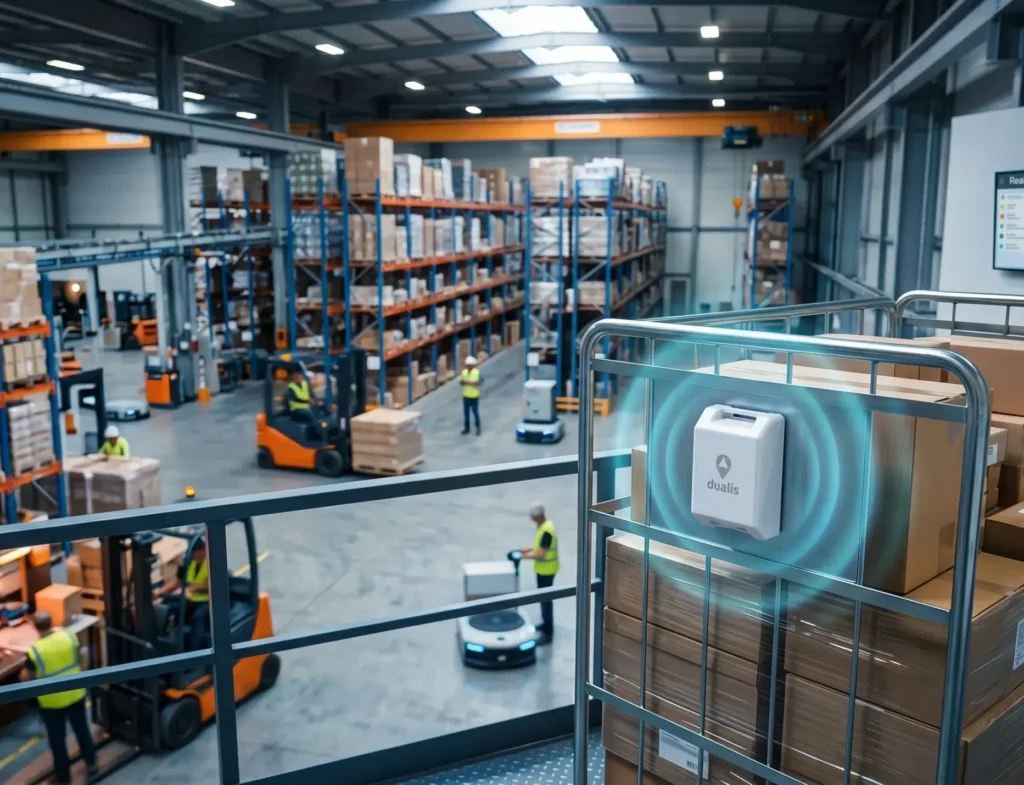
Litum’s asset tracking offering includes different asset tracking devices to support different environments and use cases, including Compact Tag (UWB, rechargeable), BLE Tags, and Dualis Tag (UWB and BLE, long battery life, replaceable battery). This flexibility matters because not every asset tracking need looks the same. Some use cases demand very high precision. Others prioritize long battery life, cost efficiency, or a combination of both.
Dualis Tag: Precision and Battery Life for Long-Term Tracking
Dualis Tag adds an important option within that broader portfolio. It combines UWB and BLE capabilities in a lightweight format and is designed for high-precision asset tracking with up to 5 years of battery life. It also includes key features such as a replaceable primary battery, tamper resistance, remote firmware updates, motion sensing, an integrated buzzer, a multi-purpose user button, and radio-based access control. That makes it especially relevant for organizations that want precise tracking with lower maintenance burden over time. Dualis is not the whole asset tracking story, but it is a meaningful part of it because the right tag can make large-scale deployment more practical and easier to sustain.
Fixed Infrastructure: Anchors and Gateways That Enable Real-Time Asset Location
Industrial and Healthcare Infrastructure for Reliable Asset Monitoring
A tag on its own does not create a real-time location system. To turn movement into usable location data, the system needs fixed infrastructure across the facility.
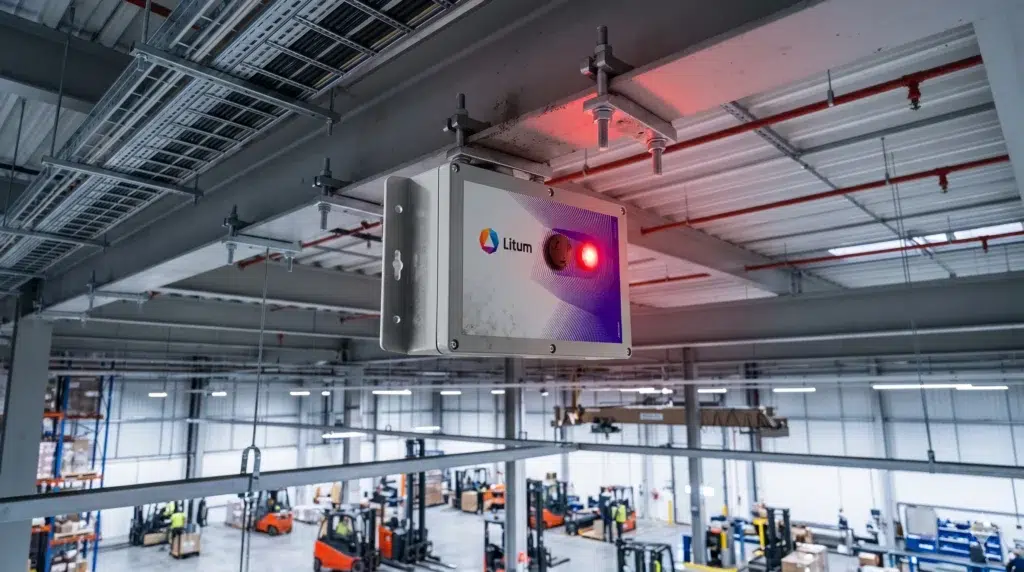
Litum’s asset tracking RTLS includes anchors and gateways designed for both healthcare and industrial environments. Anchors and gateways support wide area coverage and highly accurate location detection in controlled indoor spaces. Endurance anchors and gateways are built for more demanding industrial conditions, adding features like IP67 protection, backup battery support, and industrial durability.
This layer is what allows tracking to remain reliable across larger or more complex environments. A warehouse, a production floor, a hospital, or a mixed industrial site all present different physical challenges. Infrastructure has to do more than exist on paper. It has to perform consistently in the real world so organizations can trust the visibility they are getting. When the infrastructure is strong, teams can track assets across operational areas with more confidence, not just see occasional location updates.
Asset Tracking Software Platform: Where Location Becomes Operational Intelligence
Geofencing, Alerts, and Workflow Automation
Location data becomes far more useful when asset tracking software can turn it into something operational.
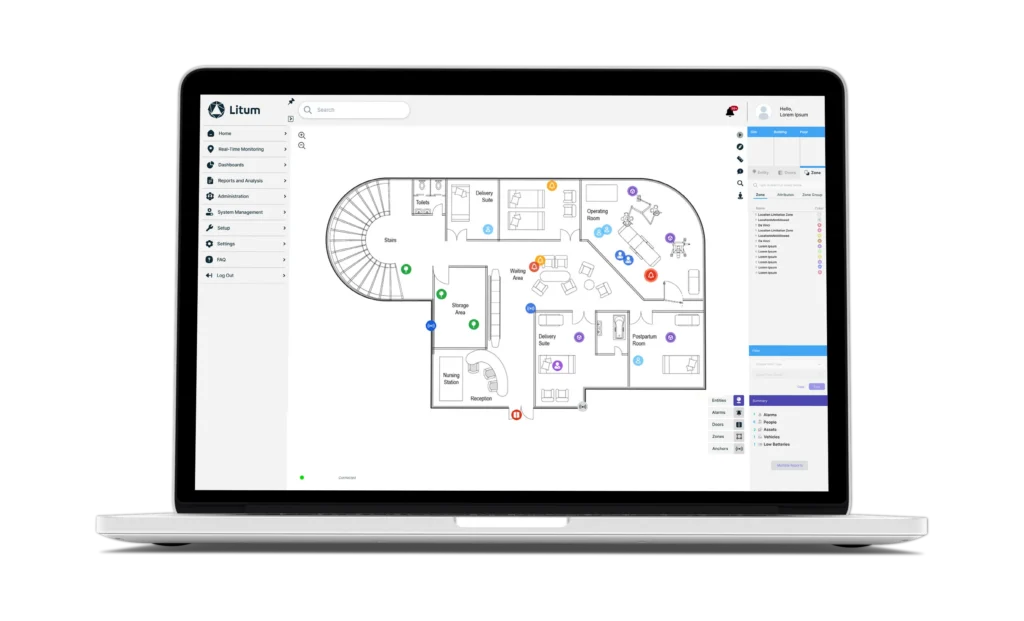
Litum’s RTLS platform is built around a location engine, application software, business rules, and integration capabilities. In practical terms, that means the platform does more than show where an asset is. It helps users monitor movement in real time, search for assets across a facility, assign and unassign asset tags, review asset data, and create workflows around how assets should behave or be used.
This is where asset tracking starts to become more strategic. Business rules can support geofencing, unauthorized movement alerts, condition monitoring, monitoring time spent in zones, entry and exit tracking, and other rule-based actions that help organizations protect valuable assets and improve flow. Integration support also matters because asset tracking becomes more valuable when it can connect with the systems companies already use.
In other words, the asset tracking software layer is what turns a location event into something a business can respond to.
Data and Analytics: Turning Asset Visibility into Measurable ROI
Utilization Reports, Heat Maps, and Asset Performance Insights
Seeing an asset on a screen is useful. Understanding what its movement patterns mean is even more valuable.
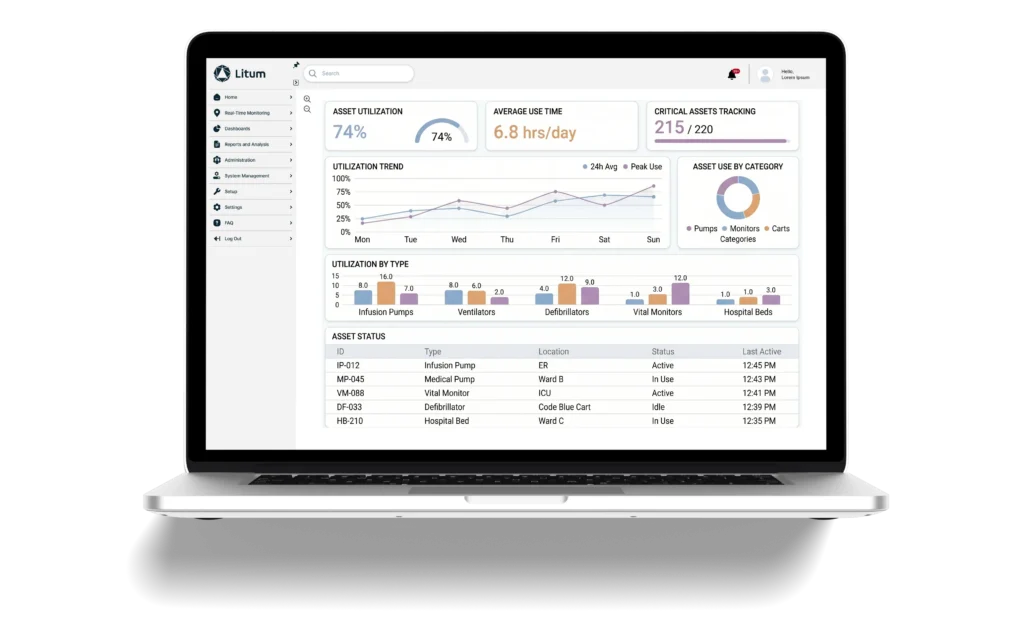
Litum’s asset tracking RTLS includes analytics and reporting capabilities designed to help organizations move beyond basic visibility. These include real-time and historical reporting, heat maps, spaghetti diagrams, utilization reports, zone occupancy reports, dwell time analysis, and workflow-related insights. Together, these tools help teams understand how assets are being used, where congestion happens, which areas experience delays, and where underutilization may be hiding.
That is where the return on investment becomes easier to understand. Better analytics can support better placement of assets, fewer redundant purchases, less search time, and smoother operations overall. Litum’s asset tracking materials point to meaningful reductions in time spent locating assets, as well as utilization improvements that can have a measurable financial impact.
Key Features and Benefits of Asset Tracking with Litum RTLS
From Small Asset Tracking to Enterprise Asset Management Solutions
The goal of asset tracking is not just to know where things are. It is to improve how business operations run. Litum’s asset tracking platform delivers a range of key features that translate location data into operational value:
- Real-time location and usage: Live tracking of asset location and usage across the entire facility, supporting faster search and stronger operational awareness
- Asset utilization reporting: Utilization data helps teams identify underused assets, reduce redundant purchases, and improve resource utilization across departments
- Inventory management: Real-time location data supports accurate inventory records, reducing ghost assets and supporting better stock planning
- Asset lifecycle tracking: Track asset information across the full asset lifecycle, from deployment to maintenance to retirement
- Small asset tracking: Compact asset trackers support monitoring of small, high-value assets such as spare parts, calibration equipment, and specialty tools
- Time location tracking: Time-stamped location data supports workflow analysis, dwell time reporting, and compliance documentation
- Equipment tracking in transportation and logistics: Track returnable assets, pallets, bins, and containers across logistics and warehousing environments
The benefits of asset tracking with Litum RTLS extend across industrial and healthcare settings. Reduced search time, stronger asset performance visibility, fewer duplicate purchases, improved inventory accuracy, and better control over asset data are all outcomes organizations have documented when deploying Litum’s asset management solutions.
Why the Full Asset Tracking System Matters
It is easy to focus on a single element, especially the tag. But the real strength of Litum’s asset tracking RTLS is that it is built as an end-to-end system.
The tags create the connection to the asset. The anchors and gateways support real-time location detection. The asset tracking software turns location data into workflows, rules, alerts, and visibility. The analytics layer helps organizations understand patterns, improve utilization, and make better decisions. When those layers come together, asset tracking becomes more than a way to find missing equipment. It becomes a way to improve how operations run.
That is also where Litum’s broader experience matters. The company’s asset tracking materials highlight a long-standing focus on RTLS, in-house R&D and production, end-to-end delivery, and deployments across industrial and healthcare environments in more than 50 countries. That kind of depth matters because a full RTLS solution depends on more than technology alone. It depends on how well the provider can bring the whole system together.
Frequently Asked Questions
Q1: What environments is Dualis Tag designed for?
Dualis Tag is built for demanding, real-world conditions. The IP67 rating means it is fully protected against dust and water, so it holds up in industrial facilities, warehouses, and outdoor settings. It also meets the cleanliness requirements of healthcare environments, where equipment is regularly cleaned or sterilized.
Q2: What results can organizations expect from deploying Dualis Tag?
Clients using Litum’s asset tracking solutions have seen a 97% reduction in asset loss and 40% improvement in asset utilization. In practice, that means less time searching for equipment, fewer duplicate purchases, and stronger day-to-day control over the assets your operation depends on.
Q3: Does tracking get interrupted during software updates?
No. Dualis Tag supports over-the-air (OTA) firmware updates, so the device stays current without any downtime or interruption to tracking.