


A nurse needs an infusion pump. She checks the last known location in the system. It says Room 412. She walks to 412. No pump. She checks the supply room, the hallway, the adjacent unit. Twelve minutes later she finds it in a storage closet on a different floor.
This scenario plays out hundreds of times a day in hospitals across the country. According to research published in the Journal of Nursing Administration, nurses spend an average of 20 to 30 minutes per shift searching for equipment. Across a 300-bed hospital with three nursing shifts, that is thousands of minutes of clinical time lost every day to a logistical problem.
Real-time location systems change this. When every asset carries a tag and every tag reports its location continuously, nurses and clinicians find equipment in seconds, not minutes. This guide covers how hospital asset tracking systems work, what they track, what the implementation looks like, and how to evaluate vendors.
The Scale of the Problem: What Gets Lost and Why It Matters
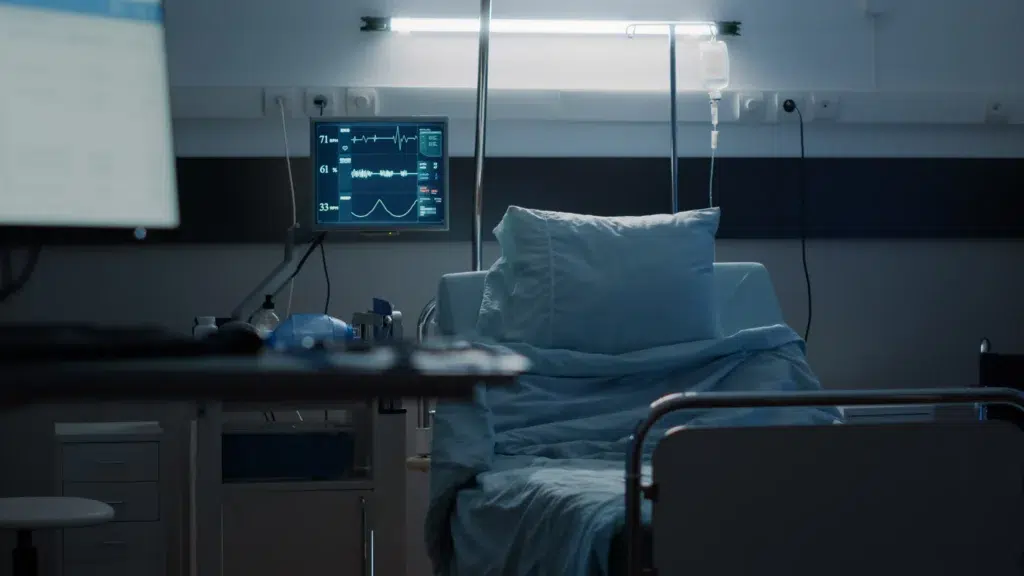
Hospitals operate large, complex fleets of mobile medical equipment. The average hospital manages thousands of assets across dozens of units, floors, and departments. Assets move constantly: between patients, between units, between storage and active use. Some are returned to the correct location. Many are not.
The cost of missing or misplaced equipment is not just the nurse’s time. It includes:
- Equipment over-purchasing: Hospitals routinely buy more equipment than they need because they cannot locate what they already have. Studies estimate that 10 to 20 percent of hospital equipment expenditure goes toward replacing assets that are lost rather than broken.
- Rental costs: When a needed piece of equipment cannot be found, clinical staff often request an emergency rental. Hospital equipment rental costs run to millions of dollars annually at large institutions, with a significant portion attributable to assets that exist in the hospital but cannot be located quickly.
- Patient care delays: When an infusion pump, ventilator, or patient monitor is not available at the point of care when it is needed, procedures are delayed and patient flow is disrupted. In high-acuity settings, equipment availability directly affects patient outcomes.
- Preventive maintenance gaps: Equipment that cannot be reliably located cannot be reliably maintained. Assets that fall out of the tracking system accumulate missed maintenance cycles, increasing the risk of equipment failure and regulatory non-compliance.
| Nurses spend 20 to 30 minutes per shift searching for equipment. Real-time location systems reduce that search time to seconds. |
How Hospital Asset Tracking Systems Work
A hospital asset tracking system built on RTLS uses wireless tags attached to each asset and a network of location receivers to report every tag’s position in real time. When a nurse looks up an infusion pump, the system shows its current location on a facility map, updated continuously.
The underlying technology varies by deployment:
BLE (Bluetooth Low Energy)
BLE is the most widely deployed technology for hospital asset tracking. Tags are small, inexpensive, and battery-powered with long life (typically 1 to 5 years). BLE beacons mounted throughout the facility pick up tag signals and report location. Accuracy is room-level or zone-level: the system knows a pump is in Room 412, but not exactly where in the room.
BLE is well-suited for most hospital asset tracking use cases where room-level accuracy is sufficient: finding equipment, managing utilization, triggering maintenance alerts when an asset enters a service zone.
UWB (Ultra-Wideband)
UWB provides sub-meter accuracy, making it the right choice when precise location matters. In healthcare, UWB is used for high-value mobile equipment that needs pinpoint tracking (surgical instruments, high-acuity monitors), staff duress systems where a precise location is needed for a rapid response, and infant security where tracking must be accurate enough to trigger alerts at specific thresholds near exits.
Litum’s platform supports both BLE and UWB on the same infrastructure, allowing hospitals to deploy room-level tracking for general assets and high-precision tracking for priority equipment and personnel without running separate systems.
RFID (Active)
Active RFID operates over longer ranges (up to 50 to 200 meters per reader) and is used for checkpoint-based tracking: knowing when an asset passes through a specific doorway or enters a defined zone. RFID does not provide continuous real-time location between checkpoints, making it less suitable for finding equipment across a large floor but useful for tracking assets across building entrances, elevator banks, or department boundaries.
What Hospitals Track with RTLS

A healthcare RTLS for healthcare platform is not limited to medical equipment. Hospitals that have deployed asset tracking typically expand coverage to additional use cases once the infrastructure is in place:
| Asset Category | Tracked Items | Primary Use Case |
|---|---|---|
| Mobile medical equipment | IV pumps, ventilators, monitors, wheelchairs, stretchers, beds | Find equipment, reduce rental costs, improve utilization |
| High-value assets | Surgical instruments, infusion stands, specialized diagnostic equipment | Prevent loss, trigger maintenance, audit trails |
| Clinical staff | Nurses, physicians, technicians (opt-in wearable tags) | Staff safety, duress alerts, workflow optimization |
| Patients | Patient wristbands or bed tags | Patient flow, wait time management, elopement prevention |
| Infants | Ankle tags or wristbands | Infant security, abduction prevention, mother-baby matching |
| Medications and supplies | High-value medication carts, blood products, supply kits | Chain of custody, temperature monitoring, compliance |
The Real-Time Workflow: From Search to Find
The operational difference between a hospital without RTLS and one with it comes down to how a search request is handled.
Without RTLS, a nurse needing an infusion pump relies on memory, word-of-mouth, and physical search. The process is undocumented, inefficient, and varies by individual. The outcome depends on luck.
With a hospital asset tracking system:
- The nurse opens the asset tracking dashboard on a workstation or mobile device.
- She searches for the nearest available infusion pump of the required type.
- The system displays the pump’s current location, last seen timestamp, and current status (in use, available, or in maintenance).
- She walks directly to the location and retrieves the pump in under two minutes.
The same system that resolves individual search requests also generates the data that reveals systemic patterns: which assets are chronically misplaced, which units have utilization rates below threshold (suggesting over-purchasing), and which equipment needs to be recalled for maintenance.
Staff Safety and Duress Alerting
Hospital staff safety is an increasingly critical application of RTLS infrastructure. Healthcare workers, particularly those in behavioral health, emergency, and isolated areas of a facility, face elevated risk of patient-initiated incidents.
A staff duress system built on RTLS infrastructure allows a staff member to trigger an alert using a wearable tag. The alert sends the staff member’s precise real-time location to a central security console and to nearby colleagues simultaneously. Response time drops from minutes to seconds.
Because the duress system uses the same RTLS infrastructure as asset tracking, there is no additional anchor or gateway installation required beyond what the asset tracking deployment already put in place. The incremental cost of adding staff safety to an existing RTLS deployment is significantly lower than deploying a standalone duress system.
Infant Security

Infant abduction is rare but carries catastrophic consequences for patients, families, and institutions. Regulatory and accreditation bodies including The Joint Commission require hospitals to have documented infant security protocols in place.
RTLS-based infant security systems work by tagging each infant with a wearable band immediately after birth. The system monitors tag location continuously and triggers an alert when:
- An infant tag approaches a restricted perimeter (elevator, stairwell, or exit zone) beyond the defined threshold distance.
- A tag signal is lost, indicating possible removal or tampering.
- An infant tag moves to a location that does not match their assigned room or mother-baby pairing.
Alerts are sent to nursing stations, security, and facility management simultaneously. Some systems integrate with door access control to lock elevator banks and stairwell doors automatically when an alert fires.
Litum’s infant security solution uses UWB for the precision needed to trigger alerts at specific perimeter thresholds, combined with BLE for broader coverage across the maternity unit.
Emergency Mustering in Healthcare Environments
Hospitals have unique emergency evacuation challenges: patients cannot self-evacuate, staff are distributed across multiple units, and the difference between an orderly evacuation and a chaotic one has direct patient safety implications.
An emergency mustering system built on RTLS infrastructure provides a real-time roll call during an emergency. Staff wearables report their location to a central console. Managers see who has evacuated, who is still on the floor, and where. Missing staff are identified immediately rather than discovered after the fact.
In a hospital context, mustering data is also used to verify that assigned staff are present in their evacuation assembly areas and to coordinate patient transport by linking patient location data with available transport resources.
How to Evaluate a Hospital Asset Tracking Vendor

The healthcare RTLS vendor landscape includes both large enterprise platforms and purpose-built clinical deployment specialists. The evaluation criteria that matter most in a hospital environment:
Integration with existing hospital systems
A hospital asset tracking system generates value only if its data is accessible where clinical decisions are made. Confirm that the vendor’s platform integrates with your EMR, CMMS (Computerized Maintenance Management System), and nurse call systems via standard APIs. Vendors who offer data export only through proprietary dashboards create operational silos that limit the system’s impact.
Infection control considerations
Tags that attach to medical equipment enter patient care environments. They must be cleanable with hospital-grade disinfectants without degrading the tag or its wireless performance. Ask vendors for the specific disinfection protocols their tags support and whether tags have been tested under those conditions in production deployments.
Tag form factor and attachment method
The right tag form factor depends on the asset. Large mobile equipment uses clip-on or adhesive-mounted tags. Patient wristbands require comfort and skin-safe materials. Staff wearables need to be inconspicuous and easy to activate in a duress situation. A vendor with a single tag format for all use cases will not perform as well as one with asset-specific hardware designed for each context.
Battery management at scale
A 500-asset deployment means 500 tags, each with a finite battery life. Ask vendors specifically: how are low-battery tags identified and replaced? Can battery status be monitored remotely in the dashboard? What is the average battery life under continuous tracking conditions in a clinical environment? Vendors who cannot answer these questions in detail have not operated their system at the scale you are evaluating.
Clinical workflow experience
RTLS in healthcare is not the same as RTLS in a warehouse. Clinical environments have different privacy requirements, different infection control constraints, and different stakeholder groups (nursing leadership, biomedical engineering, security, facilities) who each have distinct requirements from the same system. A vendor with deep healthcare deployment experience will have solved problems that a vendor new to clinical environments has not yet encountered.
Frequently Asked Questions
What is the best asset tracking system for hospitals?
The best hospital asset tracking system depends on the facility’s size, the use cases it needs to support, and whether the priority is equipment tracking alone or a broader platform covering staff safety, infant security, and emergency mustering. For most hospitals, a BLE-based platform with room-level accuracy covers equipment tracking and general staff location. Facilities with specific high-precision needs, such as infant security or surgical instrument tracking, benefit from a platform that combines BLE with UWB on shared infrastructure. Vendors who design and manufacture their own hardware and software, and who have significant healthcare deployment experience, deliver more consistent outcomes than general-purpose IoT platforms applied to clinical environments.
How do hospitals track medical equipment in real time?
Hospitals track medical equipment in real time by attaching wireless tags to each asset and deploying a network of location receivers throughout the facility. Tags transmit their identity and location continuously. When a clinician searches for a piece of equipment, the dashboard displays its current room and status in seconds. The most widely deployed technology for this use case is BLE, which provides room-level accuracy at a cost point that supports large-scale deployments across an entire hospital campus. High-value or high-precision assets are tracked using UWB, which provides sub-meter accuracy for applications where exact location within a room matters.
What is the best RTLS solution for healthcare asset tracking?
The best RTLS solution for healthcare asset tracking is one that can scale across the full scope of clinical use cases on a single infrastructure: medical equipment, staff safety, infant security, and emergency mustering. Platforms that require separate hardware infrastructure for each use case impose significantly higher total cost of ownership and integration complexity. Litum’s healthcare platform supports all of these use cases on unified BLE and UWB infrastructure, with all hardware, firmware, and software developed in-house for consistent quality and a single point of accountability across the entire deployment.
What is the best way to track assets in a hospital?
The most effective approach starts with a pilot in a single high-value unit, such as critical care or the emergency department, where equipment search time is highest and the ROI of tracking is most visible. Pilot the system with a defined asset set (50 to 100 tagged items), measure search time before and after, and calculate utilization rates to identify over-purchased asset categories. Use pilot data to build the business case for campus-wide deployment. When selecting the pilot unit, prioritize one where clinical staff are engaged in the process, because staff adoption of the search workflow determines how quickly the system delivers its value.
How does RTLS improve hospital efficiency?
RTLS improves hospital efficiency through three direct mechanisms. First, it eliminates equipment search time, recovering clinical staff hours that can be redirected to patient care. Second, it reveals utilization data that allows hospitals to right-size their asset fleets, reducing over-purchasing and unnecessary rental costs. Third, it provides maintenance visibility: assets can be located for scheduled service without manual searches, reducing missed maintenance cycles and extending equipment lifespan. Across all three mechanisms, hospitals that have deployed RTLS-based asset tracking consistently report double-digit reductions in equipment rental costs and measurable improvements in nursing staff time devoted to direct patient care.