
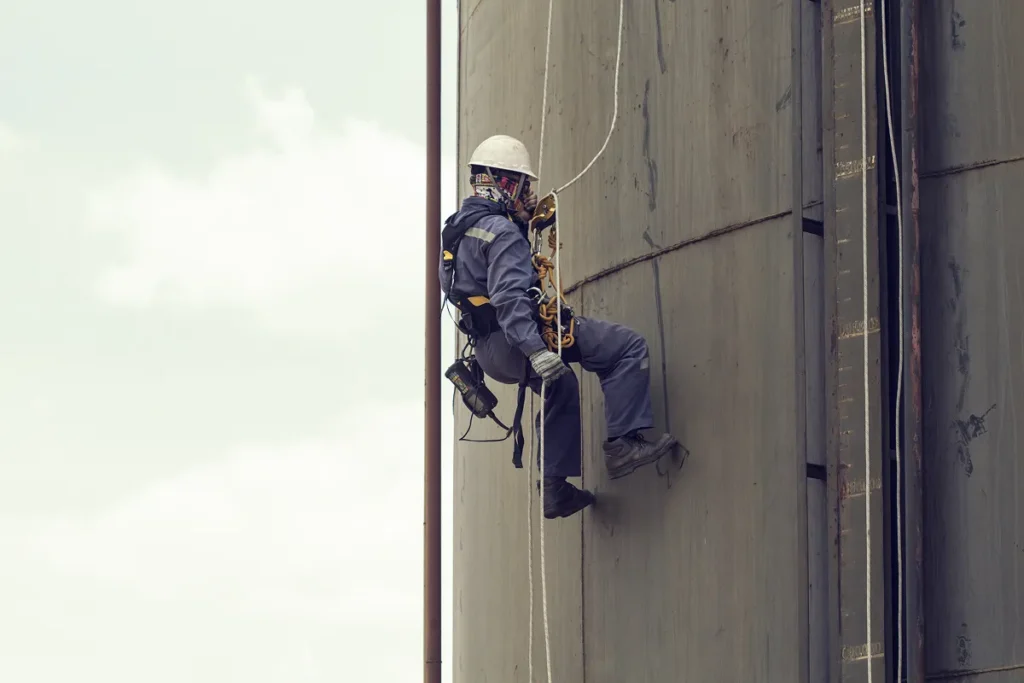
Lone workers operate in some of the most demanding and high-risk environments in industry. Whether working in remote areas of a plant, entering confined spaces, maintaining equipment overnight, or operating in hazardous zones without direct supervision, these workers face risks that standard safety measures cannot fully address. When something goes wrong, response time matters. And response time depends on knowing where the worker is.
That is where Ultra-Wideband (UWB) technology-powered RTLS changes what is possible. Real-time location tracking combined with automated alerts, man-down detection, and emergency mustering gives organizations the tools to respond faster, document incidents more thoroughly, and build a stronger lone worker safety and workforce safety program that holds up to regulatory scrutiny.
This blog covers what lone worker safety UWB tracking means in practice, why UWB tracking is well-suited for high-risk industrial environments, and how Litum’s Connected Worker RTLS platform addresses the full range of lone worker protection needs.
What Is Lone Worker Safety?
Defining the Lone Worker Risk
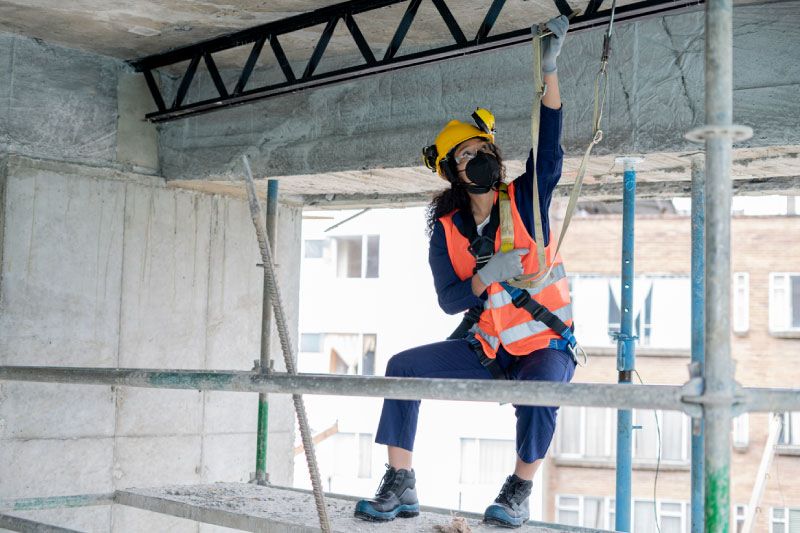
A lone worker is broadly defined as any employee who performs work without close or direct supervision, and in conditions where help may not be immediately available if something goes wrong. In practice, this covers a wide range of roles and environments:
- Night shift maintenance workers in manufacturing plants
- Personnel entering confined spaces such as tanks, vessels, or tunnels
- Security or inspection staff covering large campuses or remote zones
- Oil and gas workers in field or offshore settings
- Healthcare workers responding to isolated patient areas or conducting home visits
- Contractors or third-party workers unfamiliar with site layout
In these scenarios, worker safety depends on more than following procedures. It depends on having systems in place that can detect when something has gone wrong and trigger a response before the situation becomes critical.
Why Is Lone Worker Safety Important?
Lone worker incidents, including slips, falls, medical events, and exposure to hazardous zones, are among the most serious workplace accidents organizations face because they can go undetected for extended periods. Without real-time worker monitoring, a worker who falls, becomes incapacitated, or triggers a duress event may not receive help for minutes or longer.
Workplace safety regulations in many jurisdictions place specific obligations on employers to assess lone working risks, implement controls, and provide means of raising an alarm. But compliance alone is not enough. Organizations that take lone worker protection seriously move beyond minimum requirements to build systems that actively monitor worker safety in real time.
The Role of UWB Tracking in Lone Worker Protection
Why UWB Technology Outperforms Other Indoor Tracking Methods
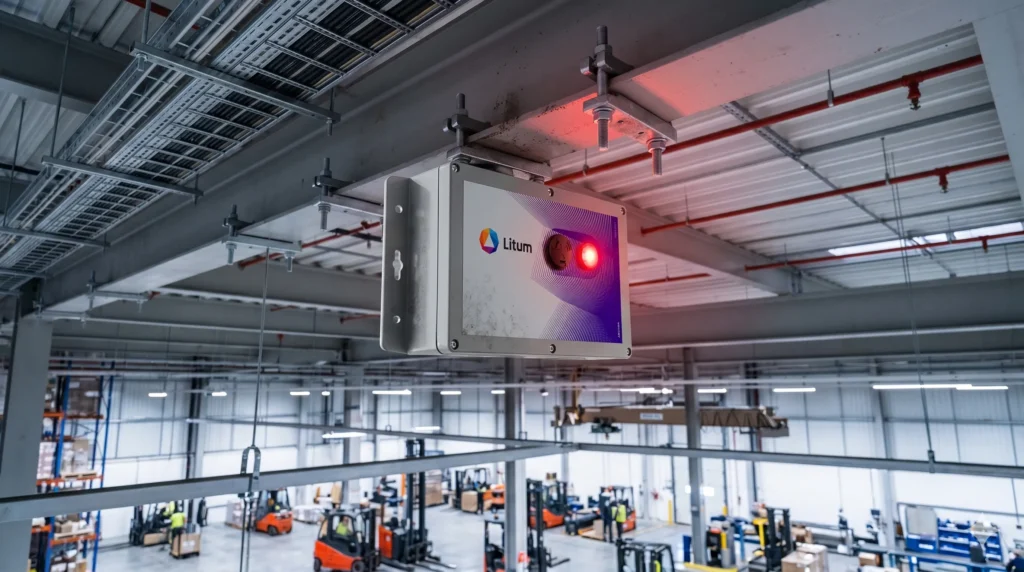
Many lone worker safety tools rely on manual check-ins, GPS-based devices, or simple panic buttons. These approaches have real limitations. GPS does not work reliably indoors. Manual check-ins depend on the worker remembering to act. Panic buttons only help when the worker is conscious and able to press them.
UWB technology solves these problems by providing continuous, sub-meter indoor positioning for every tagged worker. The system does not wait for the worker to do something. It tracks their location automatically, detects changes in movement patterns, and can trigger alerts based on what the data shows, not what the worker reports.
Compared to BLE, Wi-Fi, or RFID-based approaches, UWB provides greater location precision and is better suited to environments with complex layouts, interference, or dense infrastructure. In a large industrial plant, a hospital, or an energy facility, that precision makes a meaningful difference in both response speed and incident reconstruction accuracy.
Real-Time Location Tracking as a Safety Foundation
The foundation of any effective lone worker safety program is knowing where workers are at all times. Litum’s Lone Worker Safety RTLS solution provides continuous, real-time location tracking for every worker wearing a tag. This creates a live operational picture that safety teams and supervisors can monitor from a central dashboard, across the entire facility.
Time location tracking also creates a verifiable record of worker movements. If an incident occurs, safety teams can reconstruct exactly where the worker was, how long they were in each zone, and whether any alerts were triggered prior to the event. This supports both incident investigations and ongoing safety and compliance reporting.
Key Features of a UWB-Based Lone Worker Safety System
Man-Down Detection and Automatic Alerts

Man-down detection is one of the most critical features of any lone worker safety system. When a worker falls, loses consciousness, or becomes incapacitated, the system detects the change in movement and posture and automatically triggers an alert. Unlike a panic button, man-down detection works even when the worker cannot respond.
Litum’s RTLS platform monitors worker movement continuously. If a worker becomes stationary in an unusual location, or if motion patterns suggest a fall has occurred, the system generates an alert and displays the worker’s exact location so responders know exactly where to go. This eliminates the idle time that typically occurs between an incident and a response when manual check-ins or fixed alarm systems are used.
Duress Alerting
Not every lone worker safety incident involves a physical fall. Workers may also face situations that require immediate assistance without a visible injury. Lone Worker solution allows workers to trigger a duress alert manually, signaling that they need immediate help. The alert is sent in real time, along with the worker’s precise location, allowing safety teams to respond without delay.
Duress alerting is especially important in environments where workers may face security risks, unpredictable situations, or circumstances where calling out for help is not practical. Combined with real-time location tracking, it gives lone workers a reliable way to communicate their status and receive rapid emergency response when needed.
Zone-Based Access Control and Geofencing
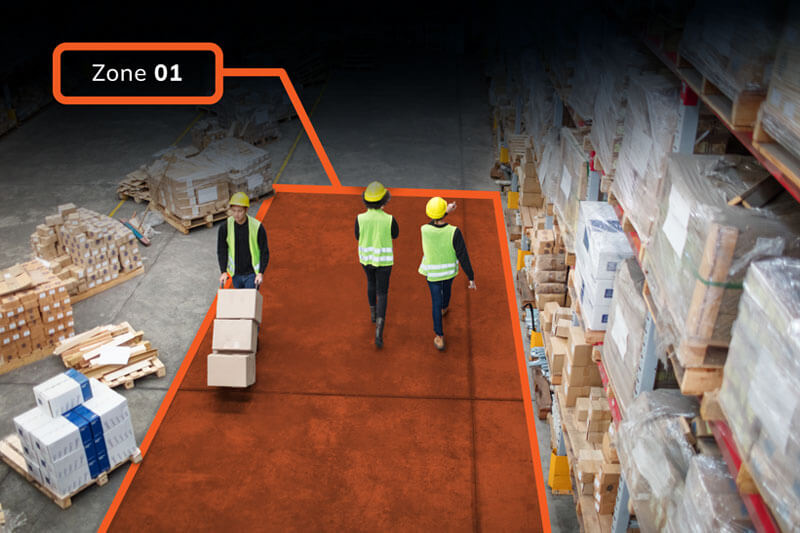
Lone worker safety is not only about responding to incidents. It is also about preventing them. Zone-based access control and geofencing allow organizations to define which areas only authorized people are supposed to enter, and to trigger alerts when workers enter hazardous zones without proper authorization or without following permit-controlled access procedures.
When a worker enters a defined zone, the system logs their entry automatically. Zone alerts are triggered if they remain in a hazardous zone beyond a set time limit, or if they enter an area they should not be in, the system generates a real-time alert. This creates a layer of proactive worker safety monitoring that can catch potential incidents before they escalate.
Zone-based logic also supports access control for areas that require specific qualifications, permits, or supervision. If an unqualified worker approaches a restricted zone, the system can alert supervisors before entry occurs, reducing the risk of workplace accidents caused by unauthorized access.
Evacuation and Emergency Mustering Support
Automated Mustering and Roll Call
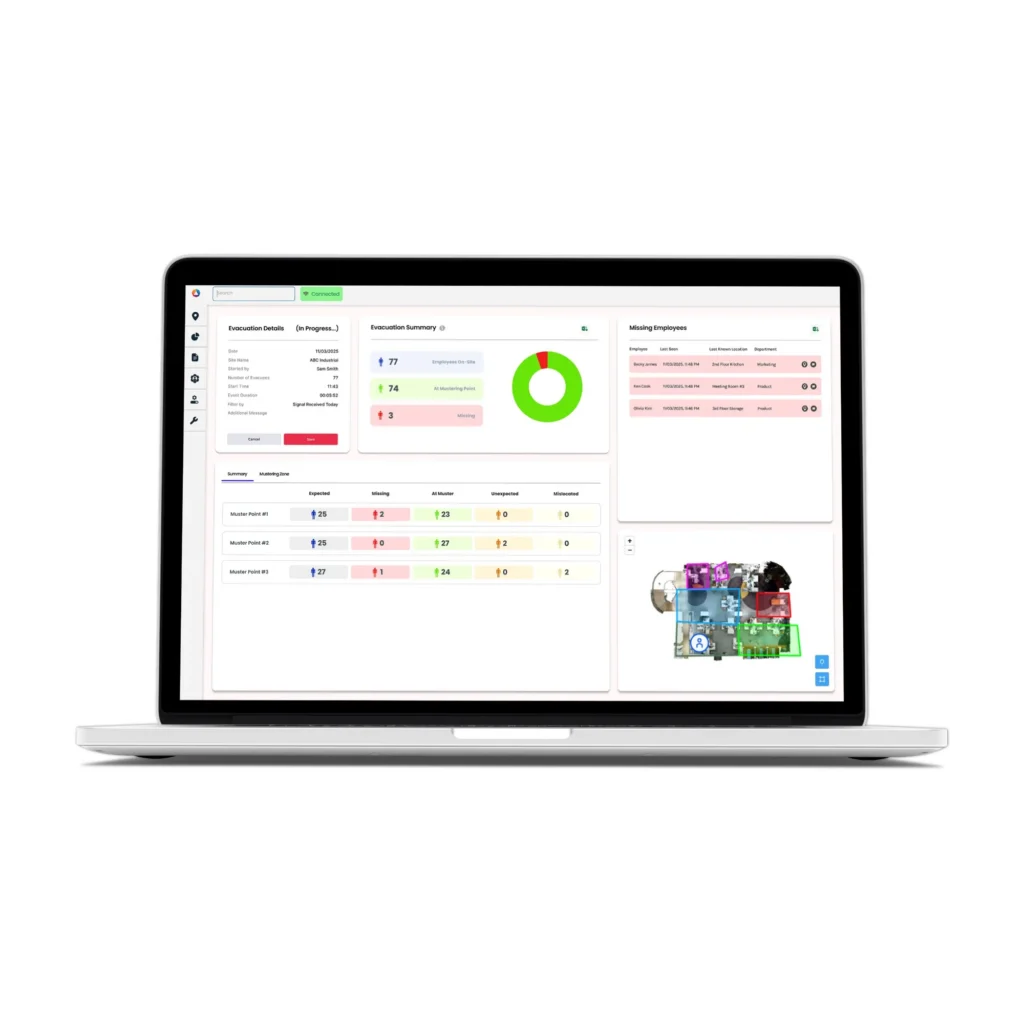
In an emergency, knowing who is on site and where they are is critical. Traditional mustering processes rely on manual head counts, which are slow, error-prone, and particularly challenging when lone workers may be in remote or isolated areas of a facility.
Litum’s Emergency Mustering RTLS solution automates this process. The system generates a real-time roll call based on live location data, showing which workers have reached the muster point and which are still unaccounted for. Safety teams can see the last known location of any missing worker immediately, allowing search and rescue efforts to be directed accurately from the start.
For organizations with lone workers, automated mustering is especially valuable. A lone worker in a remote section of a plant may not be visible during a manual evacuation count. With RTLS-powered mustering, their location is known and their status is visible throughout the emergency response process.
Incident Documentation and Safety and Compliance Reporting
One of the underappreciated benefits of a UWB-based lone worker safety system is the quality of the data it generates for safety and compliance purposes. Every location event, zone entry, alert trigger, and response action is time-stamped and stored. When a workplace accident or near-miss occurs, safety teams have access to a complete and objective record of what happened.
This level of documentation supports internal investigations, regulatory reporting, and insurance documentation. It also helps organizations identify patterns, such as workers frequently approaching hazardous zones, unusually long periods of worker location inactivity, or recurring alert triggers in specific areas, that can inform future safety improvements.
How Litum’s Connected Worker RTLS Covers Lone Worker Safety
A Single Platform for Personnel Safety and Operational Visibility
Litum’s Connected Worker RTLS platform is built to address the full range of personnel safety needs within a single system. Lone worker safety is not a separate module. It is part of a broader worker monitoring framework that covers real-time location for all workers, zone-based access control, man-down and duress alerts, evacuation support, and compliance documentation.
This integrated approach means organizations do not need separate systems for different safety requirements. The same infrastructure that provides real-time location tracking for workers in normal operations also supports lone worker protection, emergency mustering, and incident investigation. And because it runs on the same UWB and BLE infrastructure as Litum’s asset tracking and forklift safety solutions, organizations can extend safety coverage without deploying additional hardware.
Proven in High-Risk Industrial and Healthcare Environments
Litum’s RTLS platform which supports personnel tracking across industrial and healthcare deployments, has been deployed in aerospace, defense manufacturing, automotive, energy, logistics, and large-scale industrial sites. In these environments, worker safety and productivity depend on knowing where workers are, being able to respond quickly when something goes wrong, and maintaining a defensible record of safety controls for audits and regulatory reviews.
In healthcare environments, the platform supports staff safety in clinical settings, including duress alerting for clinical personnel and real-time worker location across hospital floors and wards. Whether the environment is industrial or healthcare, the core requirement is the same: reliable, real-time awareness of every worker’s location and status, even when that worker is alone.
Common Risks Associated with Lone Working
What Makes Lone Worker Environments Uniquely Dangerous
Lone worker risks vary by environment, but several patterns appear consistently across industries:
- Falls and physical injuries with no one nearby to respond or call for help
- Medical events such as cardiac episodes, loss of consciousness, or seizures
- Exposure to hazardous substances, gases, or environmental conditions
- Entrapment in confined spaces or equipment
- Security incidents in isolated or low-visibility areas like dark and dusty areas
- Errors in permit-controlled access procedures, leading to unauthorized entry into restricted zones
The common thread is delay. In each scenario, the injury or incident itself may be survivable, but the outcome worsens significantly if help does not arrive quickly. Worker safety monitoring systems that rely on manual check-ins or self-reporting cannot close this gap. Real-time location tracking combined with automated detection and alerting can.
Legal Requirements and Employer Obligations for Lone Worker Safety
Regulatory requirements for lone worker safety vary by jurisdiction, but the general direction is consistent: employers have a duty of care to assess lone working risks, implement appropriate controls, and provide mechanisms for workers to raise an alarm.
In many countries, this includes requirements to conduct risk assessments for lone working activities, implement monitoring systems for high-risk lone work, and ensure workers have access to a reliable means of calling for help. For activities like confined space entry or work in hazardous zones, additional requirements often apply, including permit-controlled access procedures and buddy systems or continuous monitoring.
UWB-based RTLS technology supports compliance with industrial safety requirements by providing real-time lone worker monitoring, automated alerting, and time tracking and time-stamped documentation of worker locations and zone access events. This creates an auditable record that demonstrates the organization has implemented active controls, not just paper-based procedures.
Frequently Asked Questions
What is a UWB RTLS System?
A UWB RTLS (Ultra-Wideband Real-Time Location System) is a technology platform that uses ultra-wideband radio signals to determine the precise indoor location of tagged people and assets. UWB anchors installed across a facility communicate with worker tags to calculate location continuously, with sub-meter accuracy. The location data is fed into a software platform where it can be monitored in real time, used to trigger alerts, and stored for reporting and compliance purposes.
What is Lone Worker Safety?
Lone worker safety refers to the set of policies, systems, and controls an organization puts in place to protect employees who work without direct supervision, particularly in high-risk or isolated environments. It includes risk assessment, monitoring systems, alerting mechanisms such as man-down detection and duress buttons, and emergency response procedures.
Why is lone worker safety important?
Lone workers face a higher risk of undetected incidents because there is no colleague nearby to observe an injury or call for help. The risk is not just the initial incident. It is the delay in response. Worker safety monitoring systems that can detect and alert on incidents automatically, without requiring the worker to act, significantly reduce the time between an incident occurring and help arriving.
What are the common risks associated with lone working?
Common lone worker risks include falls and physical injuries, medical emergencies, exposure to hazardous materials or environments, entrapment, and unauthorized entry into restricted zones. In each case, the severity of the outcome is often determined by how quickly a response is initiated. Real-time location tracking and automated alerting directly address this by removing the dependency on manual check-ins or self-reporting.
Are there legal requirements for lone worker safety?
Yes. In most jurisdictions, employers have a legal duty of care to assess risks for lone workers and implement appropriate controls. For high-risk activities such as confined space entry or work in hazardous environments, specific regulatory requirements often apply, including continuous monitoring, permit-controlled access, and emergency response procedures. UWB RTLS supports compliance with these requirements by providing automated monitoring, real-time alerts, and auditable location records.
What measures can employers take to protect lone workers?
Employers can implement several measures to improve lone worker safety: conducting risk assessments for lone working activities, deploying real-time location tracking systems with automated man-down and duress alerting, establishing zone-based access controls for hazardous areas, ensuring training for CPR and first aid is current for workers and responders, collision prevention for vehicle and pedestrian safety, and creating clear emergency response procedures that leverage location data. Technology-based safety solutions give organizations the ability to monitor lone worker safety actively. Lone worker safety solutions such as Litum’s Connected Worker RTLS give organizations the ability to monitor lone worker safety actively, rather than relying on periodic check-ins or reactive procedures.