

Most facilities know they have forklifts. Fewer know where they are, how much they are being used, or how often operators are taking risks. That gap between owning a fleet and understanding it is where productivity, safety, and cost control quietly erode.
Forklift tracking closes that gap. By combining real time location data with a monitoring system built for industrial environments, operations teams get live visibility into every forklift in the facility and the operational data to act on what they find.
What Is Forklift Tracking?
Forklift Tracking System: The Basics
Forklift tracking is the use of a real time location system (RTLS) to monitor the position, movement, and activity of forklifts across a facility. Each forklift carries a tag or device that communicates with fixed infrastructure anchors or readers installed throughout the site and the system displays location data on a live map.
A forklift tracking system does more than show where vehicles are. It records movement history, measures utilization, identifies patterns, and can trigger alerts when a forklift enters a restricted zone or approaches a pedestrian area.
For a broader overview of how RTLS works across industrial environments, see our guide on what RTLS is and how it works.
How Forklift Tracking Works
How Forklift Tracking Works: RTLS in Practice
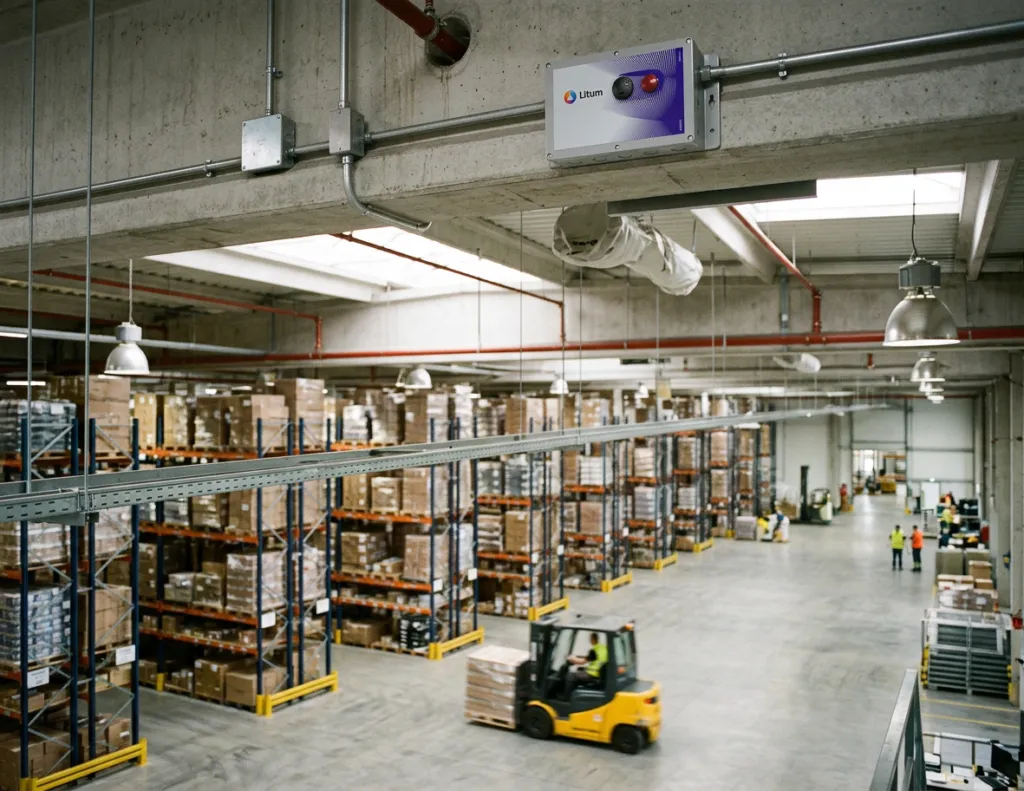
Forklift tracking works by attaching a tag to each forklift. The tag communicates continuously with fixed anchors installed across the facility. The RTLS platform calculates the forklift’s position based on signal data from multiple anchors and updates the location in real time on a digital map.
Depending on the technology used UWB, BLE, or a hybrid approach the system can deliver location accuracy ranging from zone-level visibility down to sub-meter precision. For environments where exact positioning matters, such as narrow aisles, dock doors, or pedestrian crossings, higher accuracy makes a direct operational difference.
The same infrastructure used for forklift tracking can support other use cases on a shared platform including connected worker safety, asset tracking, and yard management.
Tracking Works Across Complex Environments
Modern forklift tracking works across multi-zone, multi-level, and outdoor-adjacent environments. Systems can be configured to handle different site layouts, door transitions, and mixed indoor-outdoor operations making them suitable for large distribution centers, manufacturing plants, and mixed-use industrial sites.
What a Forklift Tracking System Monitors
System Monitoring: What the Data Captures
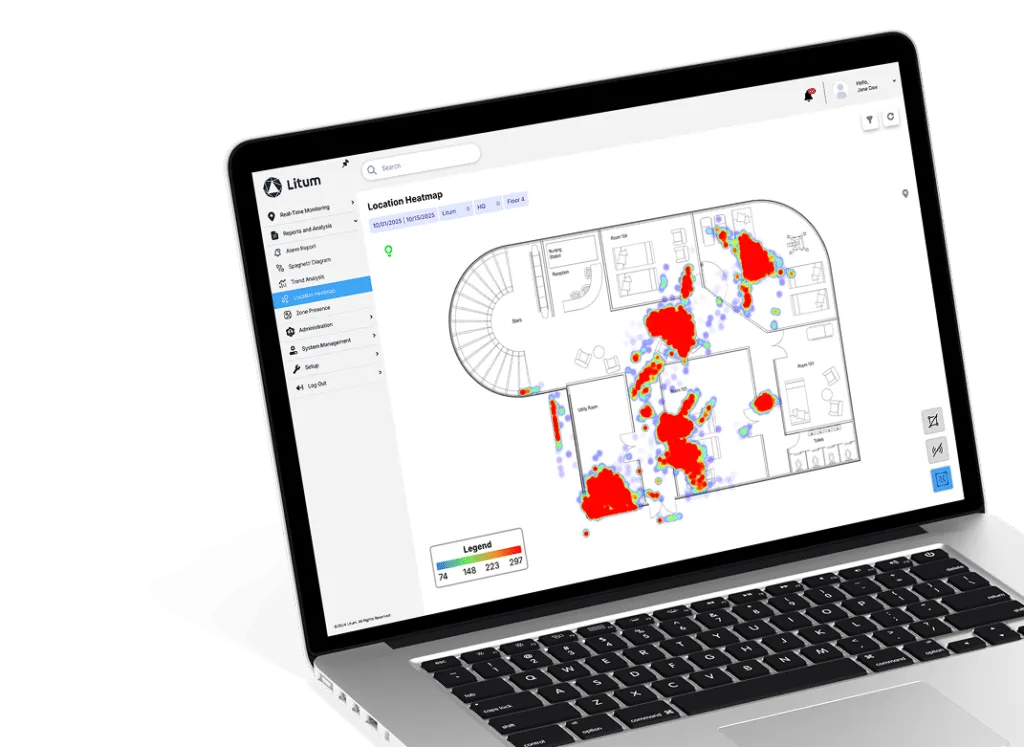
A forklift tracking system captures a range of operational data beyond simple location. Depending on system configuration, it can monitor:
- Real time location live position of every forklift on a digital floor map, updated continuously
- Time in zone how long each forklift spends in specific areas such as docks, charging stations, or storage zones
- Fleet utilization active vs. idle time across the fleet, broken down by shift, zone, or vehicle
- Speed and movement whether forklifts are operating within safe speed thresholds in defined areas
- Zone entry and exit automated alerts when a forklift enters a restricted or pedestrian zone
- Historical movement time-stamped records of where each forklift was and when, supporting incident review and compliance
This operational data is available in real time through dashboards and in historical form through reports giving both floor supervisors and operations managers the information they need at the time they need it.
Fleet Utilization: Knowing What Your Forklifts Are Actually Doing
Fleet Utilization and Time Location Data
One of the most consistent findings from forklift tracking deployments is that actual fleet utilization is lower than expected. Many facilities are operating more forklifts than they need carrying maintenance costs, insurance, and capital tied up in vehicles that sit idle for significant portions of every shift.
A forklift tracking system reveals utilization clearly. By measuring active time, idle time, and time location patterns across the fleet, operations teams can right-size vehicle numbers, redeploy underused assets, and make fleet investment decisions based on data rather than estimates.
Fleet utilization data also helps with maintenance scheduling. Instead of calendar-based service intervals, teams can track actual usage hours per vehicle reducing both unplanned downtime and unnecessary maintenance cycles.
For facilities managing both forklifts and other mobile assets, real-time asset tracking extends the same utilization visibility across the broader equipment fleet.
Forklift Tracking and Safety
Safety Standards and Real Time Monitoring
Forklifts are among the most dangerous pieces of equipment in any industrial facility. According to OSHA’s powered industrial truck safety data, forklift incidents cause approximately 85 fatalities and nearly 35,000 serious injuries annually in the US. Meeting safety standards for forklift operations is a legal and operational priority.
Forklift tracking strengthens safety in several ways:
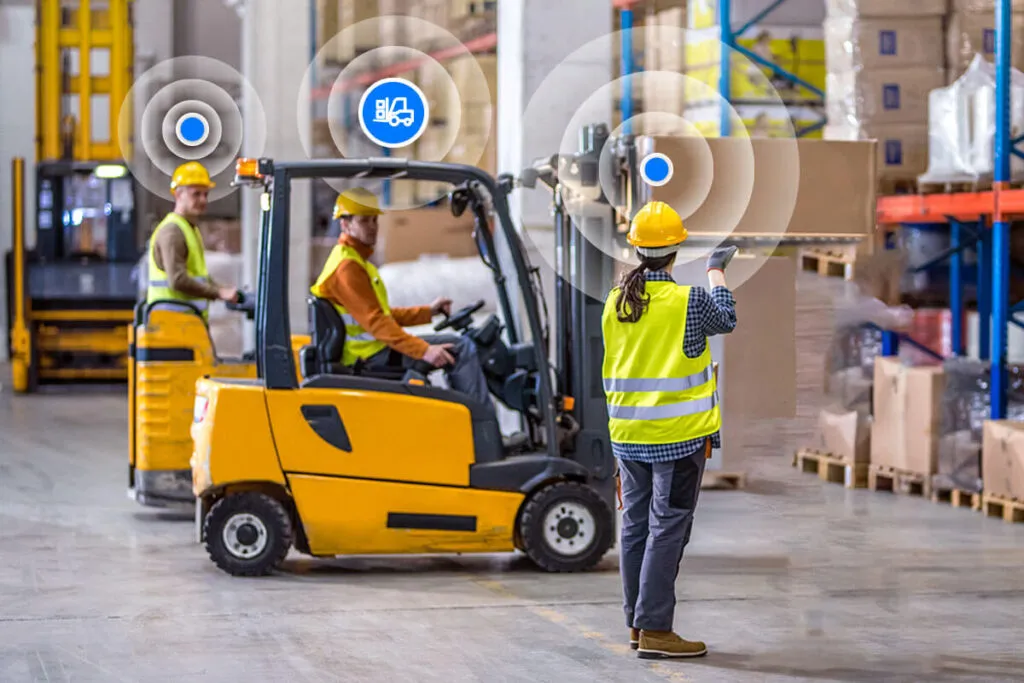
- Zone-based alerts the system triggers warnings when a forklift enters a pedestrian zone, restricted area, or high-risk location
- Speed monitoring data on forklift speed in defined areas helps identify and address unsafe operating patterns
- Proximity integration forklift tracking can work alongside forklift collision and proximity warning systems for active collision prevention
- Incident reconstruction time-stamped location data provides an objective record for post-incident review, reducing reliance on eyewitness accounts
For facilities managing pedestrian and vehicle traffic together, forklift tracking is also the foundation for a broader connected worker safety platform that protects both operators and people on foot.
Operational Data That Drives Better Decisions
RTLS Data for Forklift Fleet Management
The value of forklift tracking goes beyond safety and utilization. The operational data generated by a forklift tracking system gives managers a factual picture of how the facility is actually running not how they assume it is running.
Common operational improvements driven by forklift tracking data include:
- Identifying bottleneck zones where forklifts consistently queue or slow down
- Detecting inefficient travel patterns and redesigning traffic flow
- Comparing performance across shifts to identify training or process gaps
- Supporting insurance and compliance reporting with objective movement records
This data becomes even more valuable when forklift tracking integrates with WMS, ERP, and other operational systems connecting vehicle activity to production schedules, order fulfillment, and maintenance workflows. For broader process visibility, see how RTLS process tracking extends this data layer across manufacturing operations.
How Litum RTLS Forklift Tracking Works
Litum Forklift Tracking System
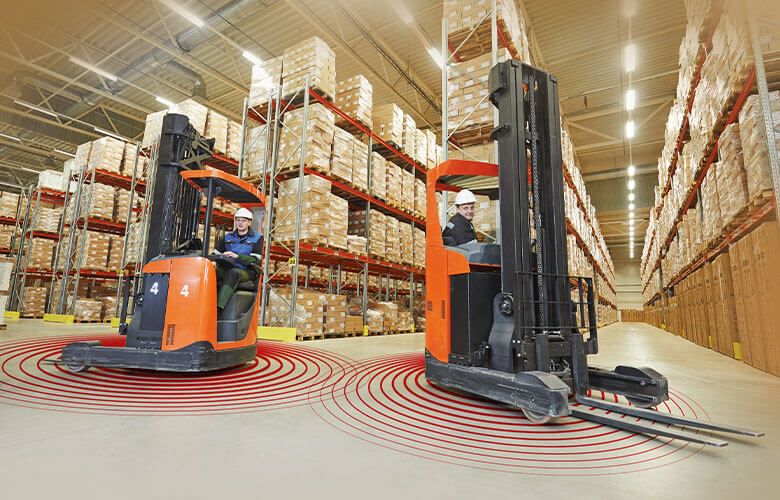
Litum’s forklift tracking solution is built for the realities of industrial operations multi-zone facilities, mixed fleets, and environments where safety and efficiency need to work from the same platform.
Key capabilities include:
- Real time forklift location on a live digital floor map, updated continuously across the facility
- Fleet utilization reporting with active/idle breakdowns, zone dwell times, and shift comparisons
- Zone-based safety alerts triggered when forklifts enter pedestrian or restricted areas
- Historical movement data for incident review, compliance reporting, and operational analysis
- Integration-ready architecture connecting forklift data with WMS, ERP, and existing safety systems
The same RTLS backbone supports collision and proximity warning for active pedestrian protection, lone worker safety monitoring, and emergency mustering all on shared infrastructure, without separate systems for each use case.
For real-world deployment examples, see Litum’s industrial case studies. For the broader context of how forklift tracking fits within manufacturing RTLS and warehouse and logistics RTLS, explore Litum’s segment pages.
Frequently Asked Questions
What is forklift tracking?
Forklift tracking is the use of a real time location system to monitor the position, movement, and activity of forklifts across a facility. It uses tags on each vehicle and fixed anchor infrastructure to calculate and display live location data, fleet utilization, zone activity, and safety alerts.
How does forklift tracking work?
A tag attached to each forklift communicates with anchors installed throughout the facility. The RTLS platform calculates position from signal data and updates the location in real time on a digital map. The system also records historical movement, tracks zone entry and exit, and generates utilization reports.
What data does a forklift monitoring system capture?
A forklift monitoring system captures real time location, time in zone, fleet utilization, speed, zone entry and exit events, and historical movement records. This operational data supports safety management, fleet right-sizing, incident review, and process improvement.
Can forklift tracking improve fleet utilization?
Yes. Forklift tracking reveals actual active vs. idle time across the fleet. Many facilities discover they are operating more forklifts than needed. Utilization data supports fleet right-sizing, redeployment decisions, and usage-based maintenance scheduling.
Does forklift tracking integrate with other systems?
Yes. Modern forklift tracking systems are designed to integrate with WMS, ERP, and safety platforms. Litum’s RTLS platform also connects forklift tracking with collision warning, worker safety monitoring, and emergency mustering all on shared infrastructure.
Ready to get full visibility into your forklift fleet? Explore Litum’s forklift tracking solution and see how real time location data improves fleet utilization, strengthens safety, and drives better operational decisions.