



Contents
What is RFID?
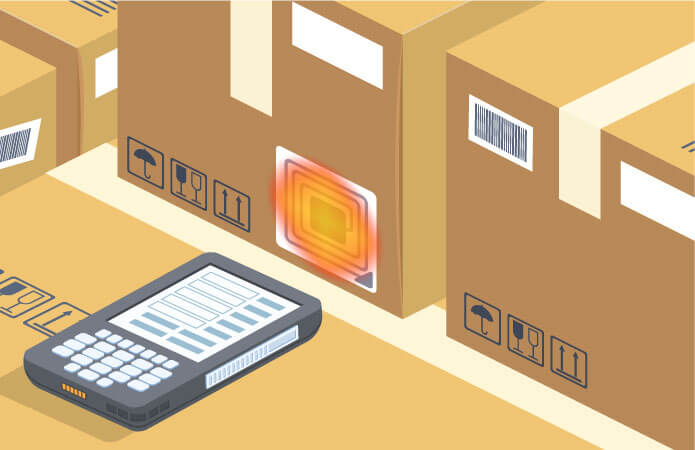
RFID, short for radio-frequency identification, uses electromagnetic fields to identify and track physical objects without a direct line of sight. A small RFID tag is attached to a person, machine, vehicle, or item, and a nearby RFID reader picks up its signal to confirm what it is and, in some setups, where it has been. Think of it as an intelligent barcode: instead of a laser scanning a printed pattern, radio waves pull data from a chip. RFID is one of the core building blocks covered in our complete guide to RTLS, alongside BLE, UWB, and Wi-Fi.
Brief history of RFID
In 1973, Mario Cardullo patented the first technological ancestor of the systems used today. He built the first passive transponder with built-in memory: a device with no internal power source of its own, running instead on the interrogating signal it received. That early transponder held 16 bits of memory and served as a toll device. Before building his transponder, Cardullo pitched a business plan describing how the device could serve transportation, banking, security, and medicine. The idea matured over the following decade, and in 1983 the first patent for the modern approach was granted to Charles Walton, an American inventor from Maryland.
How does RFID work?
Tracking objects with RFID relies on three pieces: a transponder attached to the object, a receiver, and a transmitter. An RFID tag needs to be triggered by an RFID reader device before it sends out digital data about itself, usually an identification number. According to the U.S. Food & Drug Administration, the system is built from two primary components: tags and readers.
RFID readers are devices with one or more antennas that emit radio waves toward tags and pick up the signal sent back. That signal carries identification data and other information tied to the object the RFID tag is attached to.
RFID readers come as handheld units, but they can also be mounted to posts or overhead, or built directly into walls, desks, and cabinets to scan continuously. A modern RFID tag can hold anything from a single serial number to several pages of data. Combined with software and infrastructure, this becomes the foundation of an RTLS solution. Learn how active RFID differs from passive RFID in real-world deployments.
What are the types of RFID?
RFID tags fall into three categories: active (battery powered), passive (no battery), or semi-passive (battery assisted).
An active RFID tag is a miniature transmitter that constantly sends out a signal. It carries an internal power source, usually a small, long-lasting battery, and some units run for years before needing a recharge or replacement.
Passive RFID labels or inlays work more like a simple antenna paired with an RFID chip. When one comes within range of a reader transmitting a signal, that signal energizes the antenna. Once activated, the tag replies with its unique ID number, which the reader picks up.
An active RFID tag also sends its signal to a matching active RFID reader, but it does so under its own power rather than borrowing energy from the reader’s transmission.
What is an RFID tag (smart label)?
RFID tags, also called RFID chips, are small devices that send radio waves to a reader. The RFID reader then passes that signal to a computer program that translates it into something useful to a person, such as an identification number. These devices are commonly attached to merchandise, vehicles, pets, hospital patients, and virtually anything else that needs to be identified at a distance.

What do RFID tags do?
An RFID tag transmits and receives information through a microchip and antenna, and it can be programmed with whatever data its owner needs. As noted above, RFID tags are either passive or active.
Passive RFID tags draw their power from the radio frequency sent by a reader; active RFID tags carry their own battery to assist with sending data. When a passive RFID tag is scanned, it absorbs just enough energy to activate its chip and send a reply back through its antenna. An active RFID tag, by contrast, sends signals on a regular schedule or whenever a scanner comes into range.
What are the types of RFID tags?
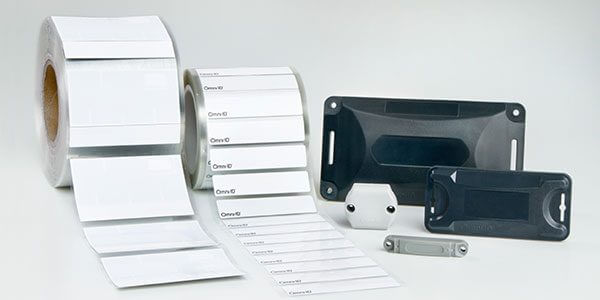
RFID tags operate across a range of frequencies, and each band suits different situations: low-frequency (30 kHz to 300 kHz), high-frequency (3 MHz to 30 MHz), and ultra-high-frequency (300 MHz to 3 GHz).
Low-frequency RFID tags
This band covers 30 kHz to 300 kHz and has the shortest range and slowest read rate of the three.
Its strength is resistance to interference from metals and liquids, a byproduct of the longer wavelengths it uses. That makes it the right choice when a tag needs to sit on or near metal, such as a beer keg or a car.
High-frequency RFID tags
Operating between 3 MHz and 30 MHz, this band offers more memory and longer range than the low-frequency option, making it practical where interference isn’t a concern, such as library book tracking or festival wristbands. It’s generally considered the most versatile of the three bands.
Near field communication (NFC) tags
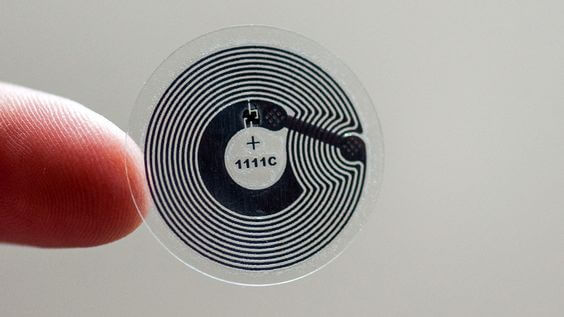
NFC is a subcategory of the high-frequency band, running at 13.56 MHz with a much shorter read range than its high-frequency peers. An RFID reader needs to sit within centimeters of an NFC tag, and it can only read one at a time.
What sets NFC apart is its ability to hold more data and support two-way communication, which makes it well suited to secure contactless payments.
Ultra-high-frequency RFID tags.
This band spans 300 MHz to 3 GHz, with a shorter range and lower data rate than the high-frequency option but more than the low-frequency one. Its defining advantage is cost: these RFID tags are cheaper to manufacture than the alternatives, which makes them the practical choice for supply chains that need to identify large volumes of inventory at once.
Where are RFID tags used?
Businesses most often deploy RFID to track inventory, but its uses extend well beyond that. Anywhere individual objects need to be identified quickly, this approach tends to show up, including:
- Supply chain management
- Inventory tracking
- Textile tracking
- Returnable transit item tracking
- Access control
- Tolls
- Animal tracking
- Jewellry tracking
- Pipe and spool tracking
- Marketing campaigns
- Real-time location systems (RTLS)
- Race timing
- Pharmaceutical tracking
- Information technology asset tracking
- File tracking
- Event & attendee tracking
- Hospital patient tracking
- Tool tracking
- Material management
- Library book tracking
For applications that need continuous visibility rather than checkpoint-based reads, organizations increasingly pair RFID with real-time location systems. Learn how asset tracking works as part of a broader RTLS solution.
In industrial and healthcare environments, RFID is often combined with UWB and BLE to build more capable real-time location systems. See how asset tracking works in practice.
What is an RFID tracker?
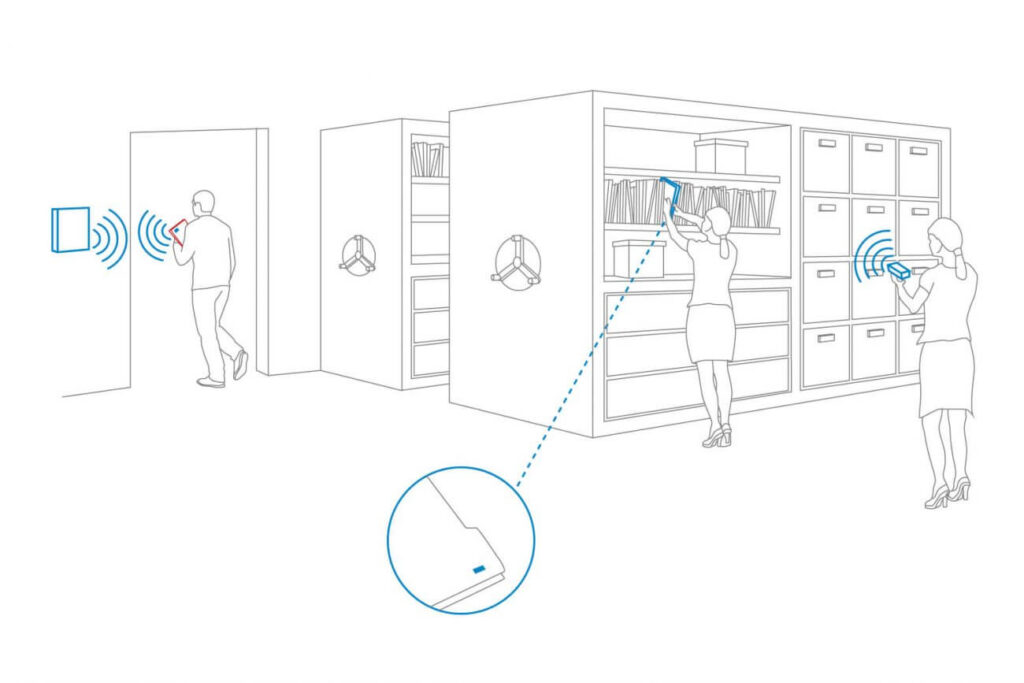
An RFID tracker is a device built specifically for tracking purposes: automating the management and location of physical assets in a cost-effective way. These trackers typically hold data on names, condition, quantity, and location.
For enterprise-grade continuous tracking, see how Litum applies RFID to asset tracking and how it compares to UWB-based RTLS for applications where precision matters most.
Benefits of RFID trackers
Trackers offer several advantages: the ability to track many assets at once without human intervention, real-time data collection, greater asset visibility, faster location of misplaced or lost items, and highly accurate inventory counts.
How is RFID used for tracking?
Passive RFID tags are the most common choice for tracking. They can be scanned by an RFID reader at any point along a supply chain or a product’s life cycle, and they’re used more often than active tags because they need no onboard battery. That absence of a battery is also what keeps their cost down: passive RFID tags typically run $0.10 to $1.00 each, while active RFID tags run $5 to $15 each.
Can RFID tags be tracked?
Yes. Tracking can happen automatically through active RFID tags or manually through passive ones. Either way, a tag provides data on where it has been and where it currently sits, and how that data gets used is up to whoever designed the system and whoever is receiving the information.
How far can RFID be tracked?
Range depends on whether an RFID tag is active or passive. Active tags carry their own battery, which lets them reach readers over longer distances, typically up to 30 meters or more. Passive tags depend entirely on power supplied by the reader itself, which limits their range to roughly 1 to 5 meters. That extra range is why active tags scale better across large areas.
How to track an RFID location?
Tracking an RFID tag’s location requires readers positioned wherever that location needs to be known. Each scan can be logged in a computer system for later reference, and RFID tags can be built into devices or clothing for ongoing motion tracking.
Accuracy improves when multiple RFID tags are placed on the same object, since the system can calculate changes in position or shape from timing differences between them.
Active RFID tags are easier to track than passive ones because a reader doesn’t need to sit close by to interact with them, which means a much larger area can be covered.
What are RFID readers?
RFID readers, sometimes called interrogators, are the devices that make the whole system work by transmitting and receiving radio frequencies to and from tags.
RFID readers vary by frequency range, mobility, connectivity, external device support, power options, processing power, and antenna ports, and they’re typically the most expensive component in an RFID system, ranging from $400 to $3,000 depending on the feature set.
What are the types of RFID readers?
RFID readers fall into two categories: fixed and mobile. Fixed units stay put, mounted to a wall, desk, or other stationary spot. Mobile units are handheld and either connect to an external computer or include their own onboard computer for displaying tag information. Units with a built-in computer are called Mobile Computing Devices; those that need an external computer are called Sleds.
What are RFID badges?
RFID badges are tags purpose-built for security: identifying students at a school, employees at a workplace, or anyone else who needs to be verified. They can grant or deny access to specific areas, log check-ins and check-outs, and confirm identity.
Unique identities of RFID badges
Each RFID badge is programmed with a unique identity by its supplier, and that identity is generally locked after creation to keep the system secure. Mutable IDs are technically possible, but it’s uncommon practice.
How do RFID badges work?
RFID badges function the same way as any other RFID tag, requiring a reader to scan them for information. They tend to outlast magnetic strips or barcodes in durability, but their contactless nature is also their main weakness.
Because an RFID reader can pick up a badge’s signal from a distance, that same trait opens the door for malicious actors to scan it without permission, a practice known as RFID skimming, widely seen as the technology’s biggest security and privacy concern.
Skimming can be countered by requiring an extra step, such as a biometric check or a PIN, before information is released. Another safeguard is storing the badge or RFID tag inside a sleeve or case that blocks radio frequencies from passing through.
Is RFID harmful to humans?
RFID is generally considered safe for people. Most of the concern around it traces back to skimming and privacy, not physical harm. The radio frequencies involved don’t carry enough energy to injure a human or animal under typical conditions like inventory management, product tracking, or animal tracking.
Thermal effects
The Federal Communications Commission refers to the biological impact of radio frequencies as thermal effects: tissue damage that can occur only at very high exposure levels. In ordinary use, exposure levels are low enough that thermal effects are not a meaningful concern.
Non-thermal effects
Claims of harm beyond thermal effects remain unproven. Studies pointing to non-thermal harm have not been reliably reproduced, though many scientists, citizens, and organizations still argue for further research into how these frequencies interact with the human body
What are the safety concerns related to RFID implantation into the human body?
Implanting a tag in the body raises a separate set of concerns: the device could shift to an undesirable location, and risks include electrical hazards, infection, adverse tissue reactions, and incompatibility with equipment like MRI machines. Researchers also flag possible pharmaceutical reactions and electromagnetic interference with medical devices.
This kind of implantation is typically a last resort, chosen voluntarily by patients managing conditions such as cardiovascular disease or diabetes.
Are there RFID safety regulations?
Organizations and governments continue to track new research on potential health effects and revisit safety standards as evidence develops.
RFID in 2026: Where the Technology Stands
RFID has moved well past its early commercial adoption. Three developments define where things stand in 2026:
Integration with RTLS. Organizations increasingly combine tag-based identification with real-time location systems to move beyond checkpoint reads toward continuous positioning. Where one excels at identification, the other delivers real-time accuracy for safety-critical work.
UWB convergence. Enterprise deployments now often pair passive tags for inventory and access control with active UWB-based RTLS for worker safety and asset visibility, balancing cost and precision across use cases within the same facility.
Healthcare and industrial adoption. This technology remains the backbone of pharmaceutical tracking, surgical instrument management, and supply chain visibility. In industrial settings, the active version is giving ground to more precise UWB RTLS for applications like forklift safety and emergency mustering, where centimeter-level accuracy matters.
RFID vs RTLS: When to Use Which
These two approaches solve different problems. One is built for identification at checkpoints, inventory counts, and access control. The other delivers continuous positioning across an entire facility.
| RFID | RTLS |
Tracking type | Checkpoint-based | Continuous real-time |
Accuracy | Proximity | 10 cm to 3 m depending on technology |
Best for | Inventory, access control, identification | Worker safety, asset visibility, collision warning |
Litum solution | RFID asset tracking | RTLS solutions |
Many enterprise deployments use both together, handling identification and inventory on one side while real-time location and safety-critical workflows run on the other.
Frequently Asked Questions About RFID
What does RFID stand for?
Radio Frequency Identification: a wireless technology that uses electromagnetic fields to identify and track tags attached to objects, people, or animals.
What is the difference between active and passive RFID?
Active tags carry an onboard battery and transmit continuously, reaching up to 30 meters or more. Passive tags carry no battery and draw power from a reader’s signal, limiting range to 1 to 5 meters. Active tags cost more but suit real-time tracking over large areas.
What is the difference between RFID and RTLS?
One identifies an object as it passes near a reader. The other provides continuous, real-time visibility across a defined space. The former can be a component of the latter, but RTLS typically layers in additional technologies like UWB and BLE for more precise, continuous data.
How accurate is RFID tracking?
Passive tags are proximity-based, typically accurate to within 1 to 5 meters. Active tags can cover larger areas but with lower positional accuracy than UWB. For centimeter-level precision, UWB-based RTLS is the better fit.
Where is RFID commonly used?
Supply chain management, inventory tracking, access control, healthcare asset tracking, manufacturing, logistics, race timing, library management, and other applications that call for automated identification.
Conclusion
What started as a simple identification tool has become a foundational layer of operational intelligence. Paired with real-time location software and complementary technologies like UWB and BLE, it lets organizations track assets, protect people, and automate workflows at scale.
Litum builds enterprise RTLS solutions that combine RFID with UWB and BLE to deliver precise, reliable location visibility across healthcare and industrial environments. Whether the goal is tracking medical equipment, managing forklift safety, or monitoring lone workers, identification and real-time positioning work together to give operations the visibility they need.
Explore how Litum applies RFID to emergency mustering, asset tracking, and healthcare RTLS.