


If you are evaluating asset tracking technology, you will quickly encounter two terms: RFID and RTLS. They are related, often used together, and frequently confused. Understanding the difference between them is the first step toward choosing the right solution for your operation.
RFID, or radio frequency identification, uses radio waves to identify tagged objects automatically. RTLS, or Real-Time Location System, goes further; it tells you not just what something is, but exactly where it is, continuously, in real time.
This guide explains both technologies in depth, compares their capabilities, and helps you decide which approach or which combination fits your operational needs.
What Is RFID?
Radio Frequency Identification: The Basics
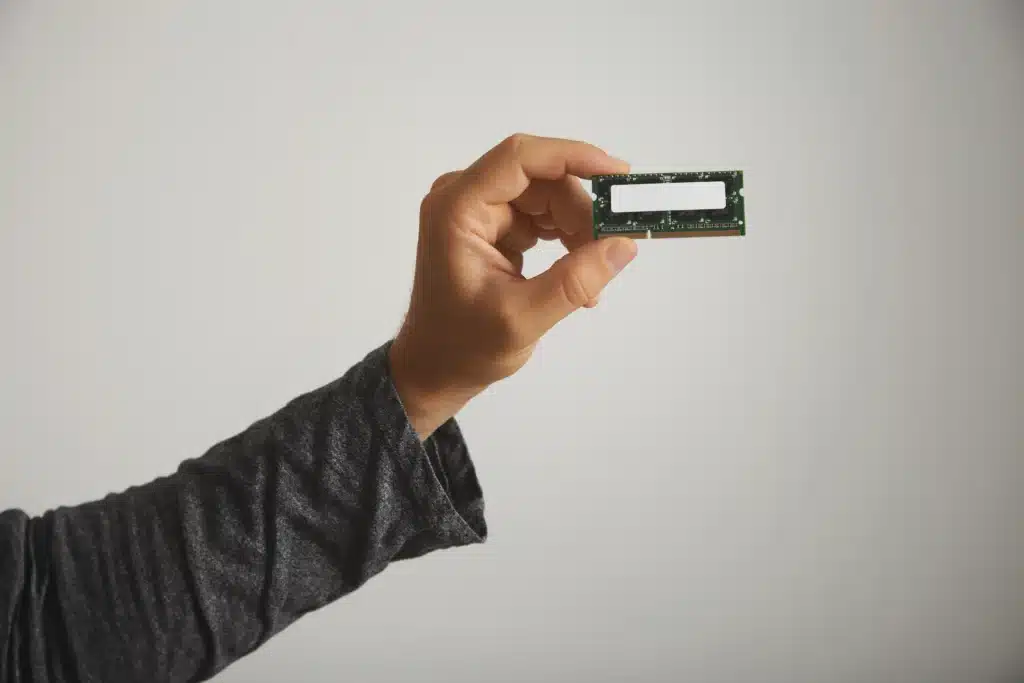
RFID, or radio frequency identification, is a wireless communication technology. It uses radio waves to automatically identify and track tags attached to objects, people, or animals.
An RFID system has three core components:
- A tag (or transponder) is a microchip combined with an antenna, attached to or embedded in an object
- A reader (or interrogator) is a device that emits radio frequency signals and receives data from tags
- Software is a platform that processes and stores the tag data, turning raw identification into usable information
When a reader emits a signal, tags within range respond by transmitting their stored data typically a unique identifier. The reader captures it and passes it to the software layer for processing, logging, or triggering automated actions.
Unlike bar codes, RFID does not require line of sight. Multiple tags can be read at once. The technology also works through many non-metallic materials, which makes RFID especially valuable in fast-moving, high-volume environments.
RFID Systems: How They Are Structured
RFID systems range from a simple access control reader at a single door to enterprise-wide networks spanning warehouses, hospitals, and manufacturing plants. Regardless of scale, the structure is the same: tags carry identification information, readers capture it, and software turns that data into operational intelligence.
Modern RFID systems connect to ERP, WMS, and other enterprise software enabling automatic data collection and real-time decision-making without manual input.
What Is RTLS?
Real-Time Location Systems Explained
RTLS stands for Real-Time Location System. Where RFID tells you what something is, RTLS tells you where it is and keeps updating that location continuously.
An RTLS platform combines tags, fixed infrastructure (anchors, gateways, readers), and software to track the position of people, assets, and vehicles inside a facility. Location updates in real time on a live digital map, typically every few seconds.
RTLS is built for environments where GPS does not work reliably inside warehouses, hospitals, factories, and other large indoor or mixed indoor-outdoor spaces. For a full technical overview, see our guide on what RTLS is and how it works.
RTLS uses several underlying technologies including UWB, BLE, and RFID depending on the required level of precision, coverage, and cost. This is where the two technologies intersect: RFID can be the identification layer within a broader RTLS architecture.
How RFID Works
Radio Frequency and Signal Transmission
RFID operates through electromagnetic communication between a tag and a reader. When a reader activates, it emits an electromagnetic field at a specific radio frequency. The field acts as both a communication channel and, for passive tags, a power source.
A passive RFID tag harvests energy from the reader’s field through its antenna. That energy powers the microchip, which then transmits its stored digital data back to the reader. The reader decodes the response and passes the information typically an Electronic Product Code (EPC) to the connected software system.
An active tag works differently. It has its own battery, which powers a built-in radio transmitter. This allows the tag to broadcast signals independently, without relying on the reader’s field for power.
Some applications require not just identification but also real-time location data. In those cases, RFID is often combined with RTLS technology. The result is a system that can track exactly where tagged assets are within a facility at any given moment.
One key advantage of RFID is speed. A single reader can interrogate hundreds of tags per second high-throughput identification that manual or barcode-based systems cannot match.
Types of RFID Tags: Active, Passive, and Semi-Passive

Passive RFID Tags
Passive RFID tags have no internal battery. They draw energy from the reader’s electromagnetic field. Because they have no power source of their own, passive tags are smaller, lighter, and cheaper than active tags. They also have virtually unlimited operational lifespans.
A passive RFID tag consists of a chip and antenna. The chip stores the tag’s identification data. The antenna captures the reader’s signal and powers the chip. Passive tags are widely used in retail, supply chain, and access control applications.
The trade-off is read range. Passive tags typically operate within a few centimeters to a few meters of the reader, depending on the frequency used.
Active RFID Tags
Active RFID tags contain a battery that continuously powers the tag. This allows the tag to broadcast signals at regular intervals or on demand. Read ranges are much longer typically 30 to 100 meters. That makes active tags well suited for real-time asset tracking, vehicle tracking, and large-scale industrial environments.
Active tags are more costly than passive tags. They have a finite battery life, though modern tags can operate for several years before needing replacement.
Semi-Passive RFID Tags
Semi-passive tags, also called battery-assisted passive tags, have an internal battery that powers the microchip. They still rely on the reader’s field to initiate communication. This provides better read range and reliability than passive tags while remaining more affordable than fully active tags.
RFID Frequencies: LF, HF, UHF, and Microwave
Low Frequency (LF) 125 to 134 kHz
LF RFID has a short read range, typically under 10 cm. It performs well near water and metal. Common uses include animal identification (such as the Canadian Cattle Identification Agency system), access control cards, and automotive immobilizers.
High Frequency (HF) 13.56 MHz
HF RFID is the foundation of Near Field Communication (NFC) technology. It is used in contactless payment cards, smart labels, library management, and ticketing systems. Read range is typically up to 1 meter.
This is the frequency most commonly associated with credit card contactless payments. Because HF tags operate at close range, the personal information they carry is harder to intercept than with longer-range systems.
Ultra-High Frequency (UHF) 860 to 960 MHz
UHF RFID offers the longest read ranges for passive tags up to 12 meters and supports high read speeds. It is the dominant standard for supply chain, retail inventory, and industrial asset tracking.
UHF RFID is the basis for the Electronic Product Code (EPC) standard. It is also the basis for universal product code (UPC) successor standards now used across retail and logistics.
The term UHF RFID refers specifically to the 860–960 MHz frequency band where most modern enterprise RFID deployments operate.
Microwave RFID 2.45 GHz and Above
Microwave RFID is used in specialized applications including electronic toll collection and some vehicle identification systems. It supports high data transfer rates but is more susceptible to interference than lower frequencies.
RFID vs. Barcode: Key Differences
Barcode vs. RFID: When to Use Each
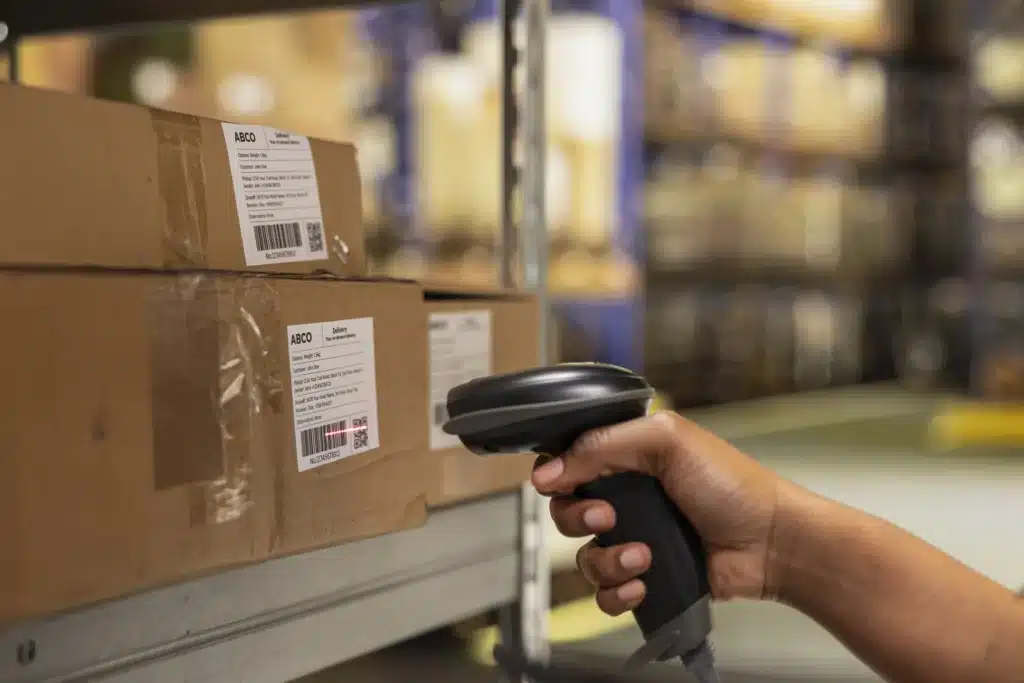
Barcodes and RFID both serve identification and tracking purposes but work very differently.
- Line of sight barcodes require direct visual access. RFID does not. Tags can be read through packaging and containers.
- Read speed a barcode scanner reads one item at a time. An RFID reader processes hundreds of tags simultaneously.
- Data capacity barcodes carry limited fixed data. RFID microchips store larger data payloads and can sometimes be rewritten with updated RFID tag data.
- Durability RFID tags are more resilient to dirt, moisture, and wear than printed bar codes.
- Cost barcode labels are significantly cheaper than RFID tags, making them preferable for very high-volume applications where scanning one item at a time is acceptable.
For many industrial and supply chain environments, RFID and barcodes are used together. Barcodes handle consumer-facing identification. RFID handles operational tracking and data collection at speed and scale.
RTLS vs. RFID: How They Compare
Frequency Identification vs. Real-Time Location
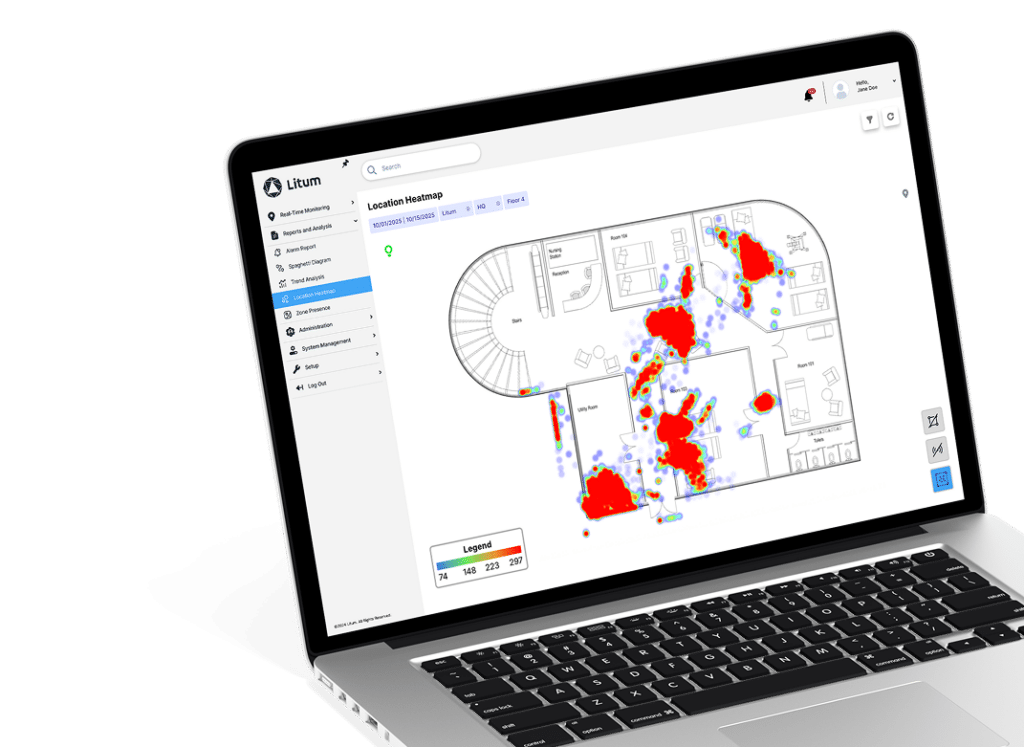
RFID and RTLS are not competing technologies they are different layers of visibility. Understanding which layer you need is the key to choosing the right system.
RFID answers the question: what is this? It identifies tagged objects when they pass a reader. It is event-based you get a data point when a tag is scanned.
RTLS answers the question: where is this, right now? It tracks the continuous position of tagged objects across a facility. It is location-based you get a live map, not just scan events.
Technology Comparison: RFID vs. RTLS
- Location precision: RFID tells you a tag passed a reader at a specific point. RTLS tells you where a tag is anywhere in the facility, continuously.
- Infrastructure: RFID needs readers at fixed checkpoints. RTLS needs anchors distributed throughout the facility to triangulate position.
- Use case fit: RFID is strong for access control, inventory counts, and checkpoint-based visibility. RTLS is strong for worker safety, forklift tracking, and any use case requiring continuous location awareness.
- Cost: RFID infrastructure is generally less costly than full RTLS deployments, especially with passive tags. RTLS delivers higher operational value but requires more investment.
- Technology: RFID uses passive or active tags and fixed readers. RTLS uses UWB, BLE, or active RFID tags alongside distributed anchor infrastructure and a real-time software platform.
Many enterprise deployments use both. RFID handles identification at entry/exit points and inventory checkpoints. RTLS handles continuous indoor tracking of high-value assets and personnel.
RFID Applications Across Industries
In each of the industries below, RFID provides the identification layer but the full operational value comes when RFID is combined with RTLS. RTLS adds continuous location visibility, real-time alerts, and analytics that RFID alone cannot deliver.
RFID Applications: Supply Chain and Logistics

RFID is the backbone of modern supply chain visibility. It tracks pallets, cases, and items as they move through warehouses and distribution centers. When combined with RTLS for warehouse and logistics operations, it enables not just checkpoint scans but continuous location awareness faster cycle counts, reduced shrinkage, and better inventory accuracy.
According to Controltek’s RFID inventory tracking research, RFID-based inventory systems consistently outperform manual and barcode-based approaches in accuracy, speed, and labor efficiency.
Retail Technology and Item-Level Tracking
Retailers use UHF RFID for near-real-time inventory accuracy at the item level. RFID-enabled stores conduct full inventory counts in hours rather than days. This supports omnichannel fulfillment by keeping an accurate digital record of what is in stock and where.
Healthcare Applications
In healthcare, RFID technology is used for medical asset tracking, patient identification, medication management, and blood product tracking. Automated identification reduces mismatch errors and improves compliance with patient safety protocols. RFID also supports emergency mustering and roll call across large healthcare campuses. When RFID is extended into a full healthcare RTLS platform, it also covers infant security, staff duress, patient flow, and wander management on shared infrastructure.
Manufacturing and Industrial Systems
Manufacturing environments use RFID for work-in-progress tracking, tool management, container tracking, and process tracking across production lines. When combined with manufacturing RTLS, RFID identification becomes a full real-time operational visibility layer manufacturers can monitor the status and location of every assembly and component as it moves through the plant, with live alerts and analytics rather than just scan records.
Access Control Technology
RFID-based access control systems use smart cards, key fobs, and wearable tags to authenticate individuals and grant access to secured areas. When integrated with connected worker RTLS, RFID access data becomes part of a broader operational visibility layer spanning the entire facility with continuous location awareness, zone compliance monitoring, and safety workflows.
Animal Identification and Agriculture
LF RFID has been used for livestock identification for decades. The Canadian Cattle Identification Agency uses RFID-based ear tags to track individual animals for traceability, disease management, and compliance.
Sports, Events, and Timing Systems
RFID timing chips are used in mass participation sports events. Early deployments such as Ironman Germany showed how RFID enabled accurate automated timing for thousands of participants simultaneously.
Transportation and Tolling
Electronic toll collection systems use RFID to identify vehicles at highway speed, enabling cashless payment. Similar systems handle fleet management, parking access, and intermodal container tracking.
Benefits and Advantages of Each Technology
Key Advantages and Disadvantages to Consider
Understanding the advantages and disadvantages of RFID and RTLS helps organizations make informed deployment decisions.
The main benefits of RFID include:
- Speed hundreds of tags read per second with no manual handling
- Accuracy automated data collection eliminates human error in identification and inventory
- Cost efficiency passive RFID tags are inexpensive at scale
- Integration modern RFID systems connect to ERP, WMS, and Internet of Things (IoT) platforms, enabling automated digital data flows across the enterprise
- Durability RFID tags survive environments where bar codes deteriorate
The main benefits of RTLS include:
- Continuous visibility live location of every tagged asset, vehicle, or person at all times
- Safety enables geofencing, lone worker protection, duress alerts, and collision warnings
- Operational intelligence analytics on movement patterns, dwell time, and utilization
- Response speed helps teams locate the nearest qualified responder or resource in seconds
The main limitations of RFID are shorter read range for passive tags, checkpoint-only visibility, and no continuous positioning. The main limitation of RTLS is higher infrastructure investment and deployment complexity relative to basic RFID.
For most industrial and enterprise environments, the benefits outweigh the limitations. Many organizations start with RFID and expand to a full RTLS platform as their visibility needs grow.
RFID Systems and Standards
How RFID Systems Achieve Compatibility
RFID compatibility across tags, readers, and data formats depends on shared standards. The ISO/IEC standards framework governs most global RFID deployments. An RFID chip must conform to these standards to work across different readers and systems.
- ISO/IEC 18000 Part 2 LF RFID parameters for air interface communication
- ISO/IEC 18000 Part 4 parameters for 2.45 GHz microwave RFID air interface
- ISO/IEC 18000 Part 6 UHF RFID air interface for item management (860–960 MHz)
- ISO/IEC 18000 Part 7 active air interface at 433 MHz
GS1 governs the Electronic Product Code (EPC) standard, which defines how products are identified in global supply chains. EPC Gen2 is the dominant passive UHF RFID standard in retail and supply chain.
The RFID Journal is the leading industry publication covering standards developments, new deployments, and emerging use cases across the RFID ecosystem.
Privacy and Security Concerns
Personal Information and RFID Privacy
As RFID becomes more widespread, privacy and security have become important areas of consideration especially for applications that handle personal information.
Unauthorized Reading and RFID Security
Passive RFID tags respond to any compatible reader, not just authorized ones. Someone with the right equipment could scan tags without the owner’s knowledge. This matters most for RFID-enabled payment cards and identity documents.
Whether a blocking wallet is necessary depends on the card. It also depends on the security protocols of the issuing system. Modern contactless cards use dynamic cryptographic codes. These codes make the raw RFID data nearly useless without the payment infrastructure behind it.
Enterprise RFID Security
Enterprise RFID systems implement multiple layers of security: encrypted communication, role-based data access, and audit trails. When RFID is integrated with RTLS platforms like Litum’s, security and privacy controls are built into the platform architecture.
Organizations deploying RFID for employee tracking or access control should establish clear policies on data retention, access to location records, and employee notification.
The History of RFID
The origins of RFID trace back to World War II. British forces used radio transponders on aircraft to tell friendly planes from enemy aircraft. This was an early form of Identify Friend or Foe (IFF) technology. Modern RFID is a direct descendant of that principle.
The concept of using reflected radio waves for identification was described by Harry Stockman in a 1948 paper. His work laid the theoretical foundation for what would become RFID. Early radar research also contributed to the understanding of how radio signals interact with physical objects.
By the 1980s, RFID was being used for animal identification and electronic toll collection. The 1990s saw expansion into supply chain and logistics. The 2000s brought the EPC Gen2 UHF standard and a dramatic reduction in tag costs that made widespread deployment viable.
Since then, RFID has expanded into healthcare, manufacturing, retail, aviation, and virtually every sector that depends on accurate automated identification of physical objects.
Which Technology Is Right for Your Operation?
Choosing Between RFID and RTLS
The answer depends on what question you are trying to answer.
Choose RFID if your primary need is:
- Identifying assets, containers, or items at specific checkpoints
- Automating inventory counts and reducing manual scanning
- Access control and personnel identification
- High-volume item tracking where continuous location is not required
Choose RTLS if your primary need is:
- Worker safety, geofencing, and incident response
- Forklift tracking and collision warning
- Real-time operational dashboards and utilization analytics
- Emergency mustering and personnel accountability
- Knowing where assets, vehicles, or people are at all times not just at checkpoints
Choose both if you need identification at checkpoints AND continuous indoor tracking. This is the most common enterprise approach RFID at the perimeter and dock doors, RTLS across the operational environment.
Litum supports hybrid deployments that combine RFID with UWB and BLE giving organizations a single platform that scales from basic identification to full real-time location intelligence. Explore Litum’s RFID and RTLS solutions, review industrial case studies, and see how healthcare RTLS and warehouse and logistics RTLS deployments are structured in practice.
Frequently Asked Questions
What Is RFID Used For?
RFID is used for automatic identification and tracking of objects, people, or animals. Common uses include supply chain and inventory management, retail, healthcare asset tracking, access control, animal identification, and electronic toll collection. When combined with RTLS, RFID also enables real-time location visibility inside facilities.
What Is an RFID Tag Used For?
An RFID tag stores a unique identifier that can be read wirelessly by an RFID reader. Tags are attached to products, assets, vehicles, or animals or worn by people to enable automatic identification and tracking. The use depends on the tag type and frequency: passive UHF tags are common in retail and supply chain, while active tags are used in industrial asset tracking and real-time location systems.
What is the difference between RFID and RTLS?
RFID identifies what something is when it passes a reader. RTLS tracks where something is continuously, across the entire facility. RFID is event-based and checkpoint-driven. RTLS is location-based and continuous. Many enterprise systems use both RFID for identification and inventory, RTLS for real-time operational visibility.
What is RFID on a wallet?
RFID wallets contain a shielding layer that blocks radio frequency signals. This prevents RFID-enabled cards such as contactless payment cards and transit passes from being scanned without the owner’s knowledge. Whether this is necessary depends on the card. Most modern contactless payment cards use dynamic cryptographic codes that make the raw data difficult to exploit.
How serious is RFID theft?
RFID skimming is theoretically possible but rarely results in real-world fraud. Most modern contactless payment and identity systems use cryptographic protections that limit the value of any captured data. Enterprise RFID systems add further protection through encrypted readers, access controls, and audit logging.
Can RFID tags be tracked?
Yes. Passive RFID tags provide checkpoint-based visibility they are read when within range of a compatible reader. Active RFID tags and RTLS-enabled systems provide continuous, real-time location tracking across a facility.
Can RFID tags be hacked?
RFID tags can be vulnerable to unauthorized reading and tag cloning. The risk depends on the implementation. Consumer payment systems use cryptographic protections that significantly limit exposure. Enterprise RFID systems add encrypted readers, role-based access, and full audit trails.
Ready to find the right tracking technology for your operation? Explore Litum’s RFID and RTLS solutions from asset tracking and connected worker safety to healthcare operations and yard management.