

Worker Safety RTLS
When employees work alone or in high-risk environments, ensuring their safety can be challenging. Litum’s Worker Safety RTLS provides a reliable solution to monitor worker locations, detect emergencies, and enable rapid response.





Ensure Worker Safety, Reduce Response Times, and Save Lives

Do your workers face these safety concerns?
Delayed emergency responses due to lack of worker location visibility.
Manual safety checks that consume time and lack real-time data.
Inability to detect falls, duress, or inactivity in isolated areas.
High operational risks in remote or hazardous work environments.
Ensuring worker safety is not just a legal requirement, it’s critical to operational success and employee well-being. Litum’s Worker Safety RTLS delivers a reliable solution with Ultra-Wideband (UWB) technology, offering precise, real-time location tracking. Proactively monitor worker locations, detect emergencies instantly, and enable rapid responses with automated alerts and pinpoint accuracy.
How Litum Worker Safety Works
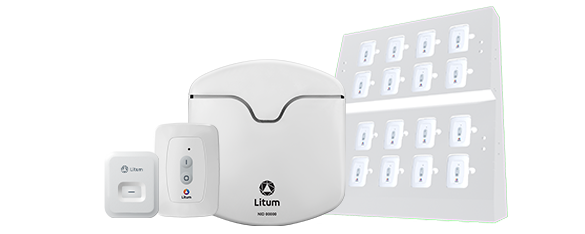
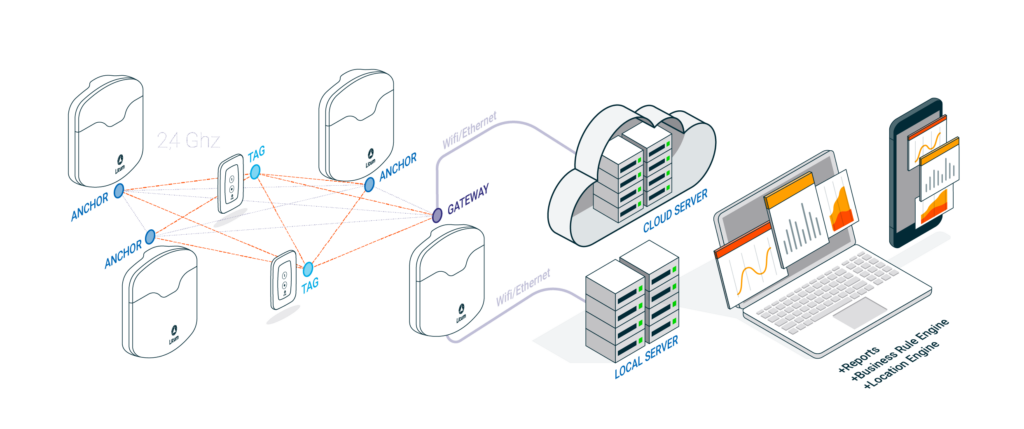
Litum leverages advanced Ultra-Wideband (UWB) and BLE technology in compact, rechargeable tags designed for lone worker safety. These tags integrate seamlessly with Litum’s scalable RTLS mesh network, ensuring reliable real-time data transmission across large, complex facilities.
The system captures precise worker location and movement data, enabling real-time monitoring, rapid emergency detection, and actionable reporting. Key features include automated alerts for falls, inactivity, or panic triggers, as well as geofencing to monitor restricted zones and trigger notifications for safety violations. Together, these technologies keep workers visible, connected, and protected at all times.
*Covered by Litum solutions to date
Connect. Locate. Protect.
Real-time locating and alerts to protect your workforce
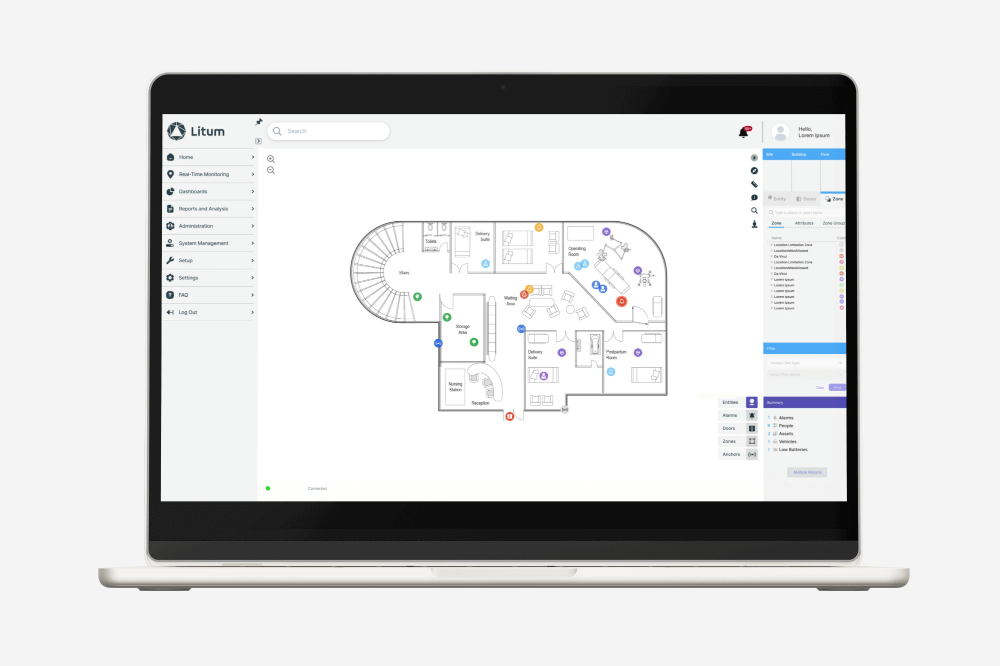
Real-Time Location Data
- Strengthen emergency response with real-time location data, ensuring workers are quickly found and assisted during crises
- Boost productivity by resolving workflow bottlenecks, enabling employees to work more efficiently
- Enhance safety with alerts for restricted or hazardous zones, reducing risks and enabling quick intervention
- Optimize facility layouts by analyzing movement patterns to reduce congestion and improve operations
- Simplify compliance with automated tracking of attendance, zone adherence, and time spent in critical areas
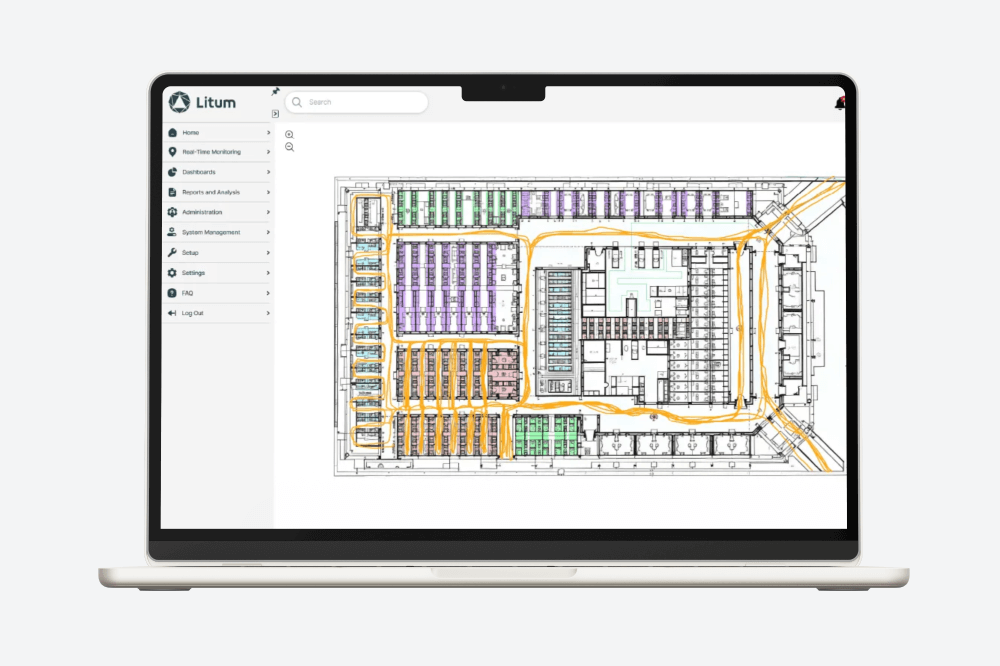
Spaghetti Diagrams
- Visualize movement paths to identify risky patterns and ensure safer task execution for workers
- Reduce safety risks by uncovering unnecessary back-and-forth movements, minimizing exposure to hazardous areas
- Identify high-risk zones by highlighting underutilized areas and overburdened spaces that need safety interventions
- Enhance safety measures by pinpointing high-traffic intersections to reduce congestion and prevent incidents
- Support proactive safety decisions with clear visual insights into worker movement and task flows
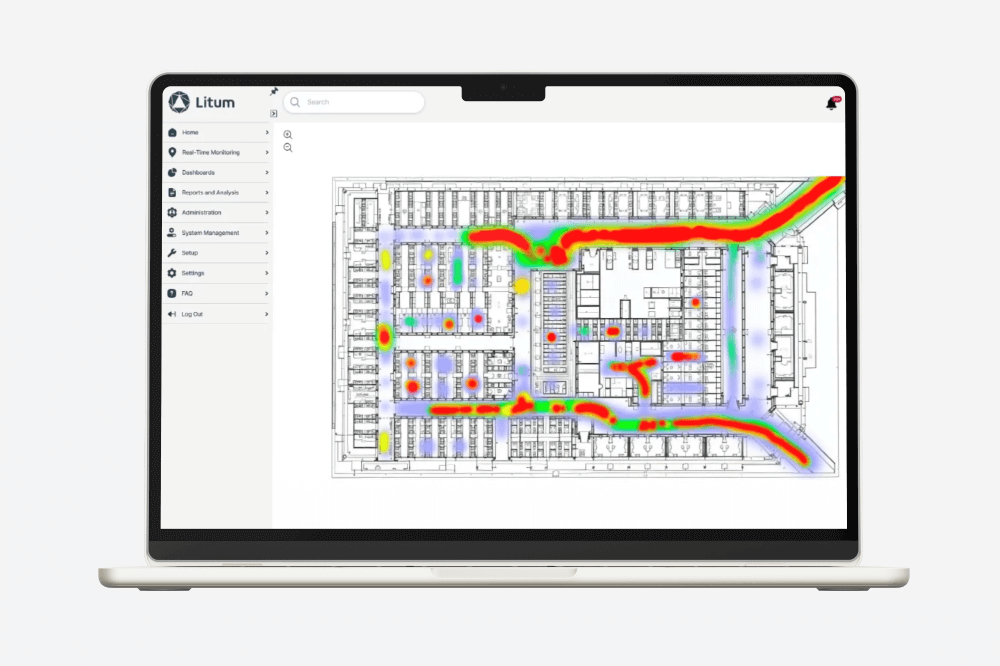
Heat Maps
- Identify high-risk areas by visualizing zones where workers spend the most time or face recurring incidents
- Highlight safety hotspots to pinpoint hazardous locations that require immediate attention and intervention
- Improve resource allocation by analyzing worker distribution and ensuring coverage in critical zones
- Enhance safety planning with clear insights into movement patterns, helping to optimize workflows and reduce risks
- Monitor activity trends over time to proactively address emerging safety concerns and prevent incidents
Built for Results, Trusted by Leaders
In-House Expertise, Industry-Leading Results
At Litum, every component — from hardware to software — is designed, manufactured, and rigorously tested in-house. This end-to-end control guarantees seamless performance, faster customization, and innovation at every step. By eliminating third-party dependencies, we provide unmatched quality and agility in adapting to client needs.
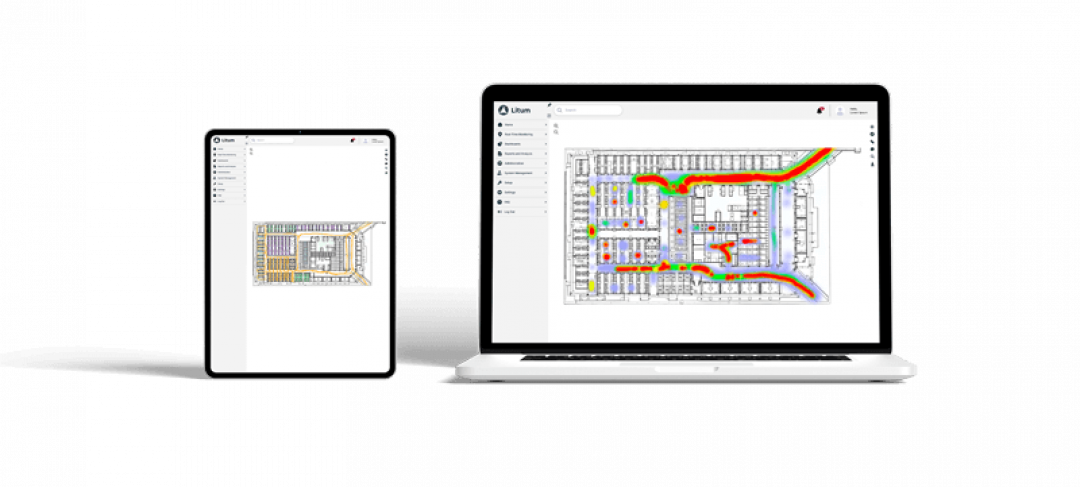
Access Dashboards Customized for Your KPIs
Litum’s solutions go beyond real-time insights by delivering robust historical data reporting. Our platforms allow businesses to identify trends, pinpoint inefficiencies, and make data-driven decisions to optimize safety and productivity.
With powerful tools like heatmaps, spaghetti diagrams, and transaction logs, businesses gain invaluable insights into their operations from every angle. Most importantly, our customizable reporting ensures the data is tailored to your unique needs, helping you achieve your KPIs with precision and confidence.
Solutions That Fit Seamlessly Into Your Operations
Litum solutions are purpose-built to integrate with existing industrial systems, including fleet management platforms, maintenance systems, and operational monitoring tools. Our technology ensures minimal disruption while delivering maximum compatibility, enabling businesses to enhance safety and efficiency without overhauling their infrastructure. This adaptability streamlines implementation, empowering organizations to achieve operational excellence with ease.
Certified for Safety, Reliability, and Performance Worldwide
All Litum hardware meets rigorous global standards for safety, durability, and performance. Certified for industrial environments, our devices comply with FCC, CE, and IC standards, ensuring reliability in diverse and demanding settings.






Explore Our Resources
Precise and Reliable Tracking with UWB Technology
UWB technology delivers unmatched precision in real-time tracking, essential for safety-critical environments. Its high accuracy, low latency, and reliable performance ensure rapid emergency detection, worker visibility, and fast response times.
Real-Time Alerts for Proactive Protection of Workers
Instant location visibility and automated alerts ensure rapid detection of emergencies like falls, inactivity, or distress signals. By enabling faster response times and proactive intervention, workers remain protected, connected, and compliant with safety protocols.
Actionable Insights and Reports for Risk Prevention
Generates detailed reports on worker movement, time spent in hazardous zones, and incident trends, providing actionable insights that help businesses identify risks, optimize response strategies, and proactively reduce safety-related incidents.
Explore Our Resources


Discover Other Safety Solutions
FAQ
What is a lone worker?
A lone worker is any employee who performs their job without close or direct supervision from another person. This includes maintenance technicians working in isolated areas, night shift staff, workers in remote sections of large facilities, and anyone operating in environments where help may not be immediately available if something goes wrong.
What is lone worker safety RTLS?
Lone worker safety RTLS is a real-time location system that monitors the location of workers operating alone or in high-risk environments. It detects emergencies automatically, allows workers to trigger manual alerts, and notifies response teams instantly with the worker’s exact location so help can reach them as quickly as possible.
What are the legal requirements for lone worker safety?
OSHA requires employers to establish procedures for monitoring employees who work alone and to ensure they can summon help in an emergency. Many states and countries have additional regulations specific to lone worker protection. A documented RTLS-based monitoring system supports compliance with these requirements and provides a time-stamped audit trail of worker safety events.
How does lone worker monitoring detect an emergency?
The system uses several detection methods. Workers can trigger a manual duress alert by pressing a button on their tag or badge. The system also detects immobility, where a worker has not moved for longer than a configured threshold, which may indicate a fall or incapacitation. Man-down detection automatically triggers an alert in these situations without requiring the worker to take any action.
What is man-down detection?
Man-down detection is an automatic alert triggered when a worker stops moving for an unusual period of time or assumes a position inconsistent with normal activity. It does not rely on the worker being able to press a button, which makes it critical for situations where a worker is unconscious or physically unable to call for help.
What industries require lone worker protection?
Lone worker safety monitoring is most common in oil and gas, manufacturing, construction, mining, utilities, warehousing, and healthcare. Any facility where workers may be isolated, work outside standard hours, or operate in physically hazardous environments has a duty of care obligation to monitor those workers.
Can lone worker RTLS work in areas with poor connectivity?
Yes. Litum’s worker safety system is built for industrial environments where network coverage may be inconsistent. The system architecture supports operation across complex, multi-zone facilities and can be configured to maintain monitoring capability even in challenging signal environments.
Can the same RTLS platform support other worker safety use cases?
Yes. The same infrastructure supports connected worker safety, emergency mustering, forklift tracking, asset tracking, and collision warning, all without requiring separate systems for each use case.