


Lone Worker Safety in Underground Tunnels: How Litum Protected 400 Workers on the Grand Paris Metro Project
At a Glance
Client: Societe du Grand Paris (Metro Paris)
Project: Grand Paris Express metro expansion
Scale: 400 workers, 33 km of tunnel across 5 stretches
Challenge: Lone worker safety in GPS-denied underground environments
Technology: UWB RFID tags, mesh network, Litum IoT software
Start Date: 2017
Result: Minimized accident risk, improved regulatory compliance, faster emergency response
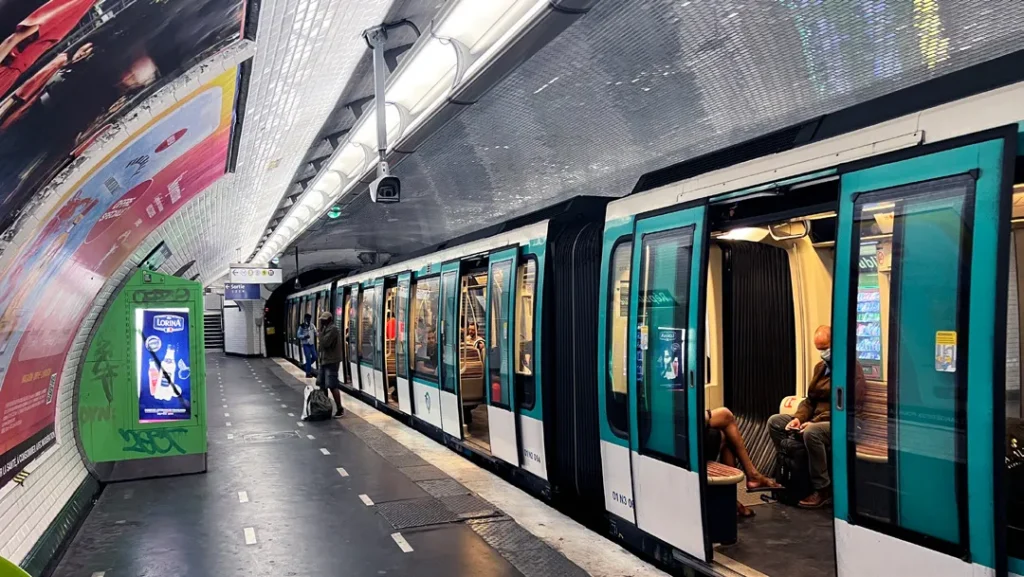
The Grand Paris Express is Europe’s largest urban infrastructure project: a major expansion of the Paris metro network that adds multiple new rapid-transit lines across the Paris region. The latest rail line alone comprises five stretches of tunnel totaling 33 kilometers and requires approximately 400 workers operating underground, often in isolated conditions where GPS signals do not reach and conventional communication infrastructure does not exist.
As OSHA notes, underground construction workers face serious hazards: reduced light conditions, difficult access and egress, potential exposure to air contaminants, and the risk of fire and explosion. Ensuring the safety of every worker in this environment, in real time, required a technology solution purpose-built for GPS-denied spaces.
Litum was selected to deploy a lone worker safety system using Ultra-Wideband (UWB) RTLS technology across the tunnel construction area. The system went live in 2017 and ran throughout the multi-year project.
The Challenge: Worker Safety in a GPS-Denied Environment

Underground tunnel construction presents safety challenges that surface-level worksites do not. GPS signals do not penetrate below ground. Standard Wi-Fi infrastructure cannot be deployed at scale across kilometers of active tunnel. And the physical environment, with low light, dust, noise, and confined spaces, makes manual supervision and traditional radio communication unreliable.
The Grand Paris project also had to meet strict safety regulations restricting access to specific tunnel sections to authorized personnel only. Workers needed to be tracked in real time to prevent unauthorized entry into restricted areas and to detect unsafe behaviors before they led to incidents.
For emergencies, including fire, structural events, or medical incidents, the team needed a system that could locate every worker in the tunnel within seconds and guide them to evacuation routes without relying on line of sight or stable communications infrastructure.
Key Requirements
- Real-time location of every worker across up to 33 km of active tunnel
- Restricted zone monitoring with automated alerts for unauthorized entry
- Emergency notification delivered directly to each worker’s badge
- Integration with the company’s time and attendance system for headcount accuracy
- Hardware rated for harsh underground conditions including dust, moisture, and temperature variation
The Solution: UWB RTLS Across a Tunnel Mesh Network
Litum deployed an end-to-end lone worker safety solution built on UWB RFID technology and a purpose-built mesh network infrastructure spanning the tunnel construction area.
Worker Tags and ID Badges
Every worker was issued a battery-powered UWB RFID tag attached to their hard hat when reporting to the job site. Each tag transmitted a unique ID linked to the employee’s name and job title in Litum’s IoT software. As each worker moved through the tunnel, their location updated on a live dashboard map in real time.
Mesh Network Infrastructure
Anchors and gateways were installed throughout the tunnel construction area to create a continuous mesh network capable of receiving and relaying tag signals across the full tunnel length. RTLS UWB nodes were installed every 100 meters as standard coverage points, with additional nodes positioned at emergency activation zones so workers could trigger the alarm system from anywhere along the tunnel.
Amplifiers were deployed to enhance bandwidth within the tunnels, compensating for the signal attenuation typical in confined underground spaces. IP67-rated hardware was selected throughout to meet the demands of the harsh working environment, including resistance to dust and water ingress.
Litum Location Engine Software
The precise location of each tag was calculated by Litum’s location engine software using proprietary algorithms. The system forwarded each tag ID and its location through the mesh network structure, displaying every worker’s position on a dashboard map as a live dot. Supervisors and managers could monitor the entire workforce from a control room without entering the tunnel.
The system also integrated with the company’s existing time and attendance system, ensuring that the digital headcount matched the physical headcount at all times and providing accurate records for regulatory compliance.
How the System Handled Incidents and Emergencies
Restricted Zone Monitoring
The tunnel was divided into defined zones with access restrictions. If an unauthorized individual entered a restricted area, the system issued an immediate alert directly to on-site managers and supervisors. This allowed the team to address access violations in real time rather than discovering them after the fact.
Emergency Alerts and Evacuation Guidance
In the event of an emergency, the system activated each worker’s badge to vibrate and emit an audible warning, alerting the worker without requiring voice communication through the tunnel noise. The software simultaneously displayed every worker’s current location on a mounted screen, allowing supervisors to identify who was in affected sections and to indicate evacuation routes to specific individuals or groups.
RTLS UWB nodes installed every 100 meters provided complete tunnel coverage, ensuring no worker was outside the detection range of the alert and location system at any point during the project.
Maintenance and Task Alerts
Beyond emergency response, the system sent email alerts to personnel and managers related to maintenance requirements and other operational tasks, keeping the project running on schedule and reducing the risk of deferred maintenance creating safety hazards.
Results: Minimized Risk and Improved Compliance
Minimized Accident Risk
Real-time location tracking of every worker reduced the risk of workers entering restricted or hazardous areas undetected. Immediate alert capabilities meant that supervisors could respond to unsafe situations before they escalated, and emergency evacuation guidance reduced confusion during drills and real events.
Faster Emergency Response
Emergency response times were shortened significantly. In a tunnel environment where a few minutes can determine the outcome of a medical or structural emergency, the ability to locate every worker instantly and guide them to exits provided a meaningful improvement in response capability compared to manual head counts and radio communication.
Regulatory Compliance
The project achieved better compliance with regulatory guidelines governing underground construction. The system’s integration with time and attendance provided auditable records of worker presence, zone access, and incident response. Paris Metro also used the system during its firefighting exercises, allowing managers to track staff progress from the control room and verify that evacuation procedures were followed correctly.
Underground construction safety is governed by OSHA’s Subpart S standards for underground construction, which require documented procedures for worker location, emergency response, and restricted area access control. Litum’s RTLS system directly supported compliance with these requirements throughout the project lifecycle.
Why RTLS Works in GPS-Denied Underground Environments
The Metro Paris deployment demonstrates a capability that is increasingly relevant as tunneling and underground construction projects grow in scale: RTLS using UWB technology works precisely where GPS and conventional tracking fail.
UWB operates through a mesh network of fixed anchors rather than satellite signals, making it independent of above-ground infrastructure. The technology delivers accurate positioning in confined spaces, around metal structures, and through the noise and interference typical of active construction environments. And because the network is self-contained, it continues to function even when communications with the surface are disrupted.
This makes Litum’s lone worker safety RTLS applicable beyond construction, to any environment where workers operate in GPS-denied or communication-limited conditions: mines, energy facilities, offshore platforms, large industrial sites, and data centers.
Protect workers in challenging environments with Litum RTLS. Explore Litum’s lone worker safety solution and see how real-time location tracking keeps isolated and underground workers safe.