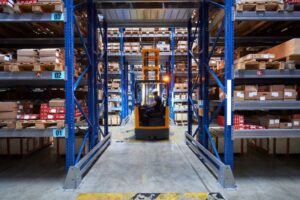


Modern facilities cannot afford blind spots.
As operations grow more complex, it becomes harder to know where critical assets are, how people move through a site, and where safety or process risks are building in real time. Traditional visibility tools only go so far. GPS works well outdoors, but once you move inside a warehouse, hospital, factory, or industrial site, it quickly loses reliability.
That is where indoor positioning systems come in.
Indoor positioning systems give organizations real-time location visibility inside buildings and controlled environments where satellite-based tracking falls short. When applied at an operational level, they help teams improve safety, reduce search time, respond faster to incidents, and make better decisions using live location data.
In this guide, we explain what an indoor positioning system is, how RTLS works, which technologies are used, and what to look for when choosing an indoor location solution for your facility in 2026.
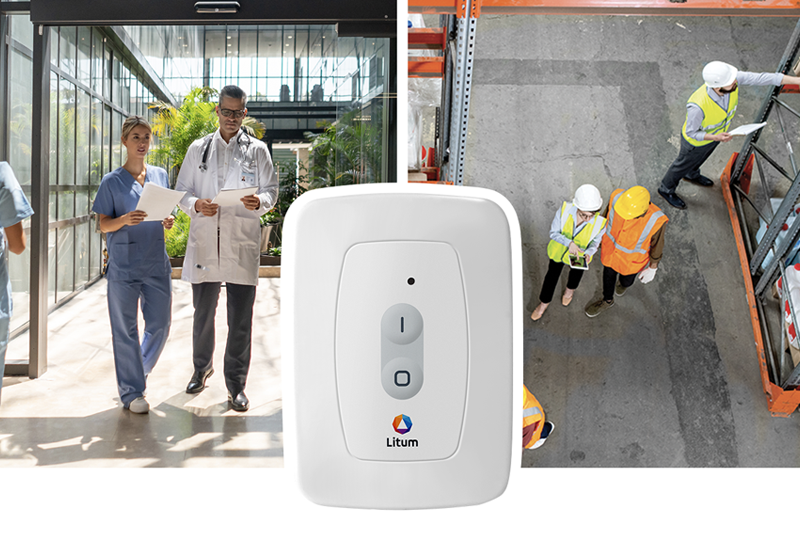
What Is an Indoor Positioning System?
An indoor positioning system, or IPS, is a combination of hardware, wireless infrastructure, and software used to determine the location of people, assets, and equipment inside buildings or other environments where GPS is unreliable.
These systems are used across manufacturing, warehousing, healthcare, aviation, logistics, and other industries that need better visibility inside complex environments. For a broader look at how RTLS compares across verticals, see Litum’s RTLS solutions overview.
When an indoor positioning system is used for continuous, real-time visibility, it becomes a Real-Time Location System, or RTLS.
In practical terms, RTLS helps organizations answer questions like:
- Where is a critical asset right now?
- Which zone is a worker or device currently in?
- When did equipment enter or leave a restricted area?
- How are people, vehicles, and materials moving through the facility over time?
More importantly, RTLS does not just show location on a screen. It turns location data into alerts, workflows, and analytics that teams can act on immediately.
How Does RTLS Work?
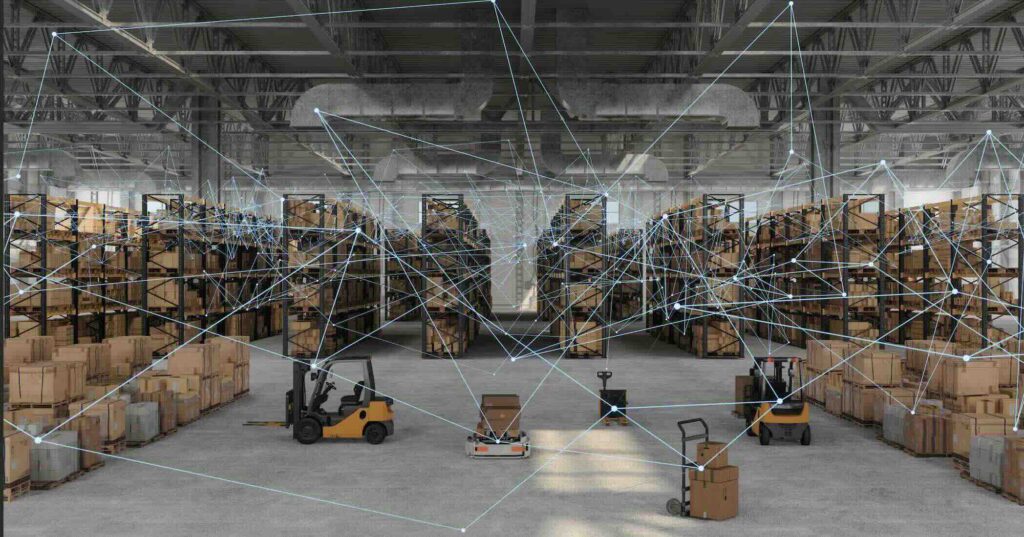
Most RTLS solutions work by combining tags, fixed infrastructure, and software.
A tag attached to an asset, vehicle, person, or piece of equipment communicates with anchors, gateways, sensors, or readers installed throughout the facility. The platform then processes those signals to calculate location and movement, displaying the data on digital maps, dashboards, or application interfaces in real time.
Depending on the use case, the system can trigger actions such as:
- Alerting when an asset enters a restricted zone
- Notifying teams when a worker needs assistance
- Identifying bottlenecks in material flow
- Supporting faster mustering during an emergency
- Showing where equipment is and how it is being used
At Litum, RTLS is not approached as a one-size-fits-all deployment. Litum’s platform combines technologies such as UWB and BLE to support different levels of precision, coverage, and scalability depending on the operational need. Learn more about Litum’s connected worker RTLS platform and asset tracking solutions.
In some industrial safety applications, location intelligence can also extend beyond traditional tag-based visibility. For example, forklift safety solutions may include tagless detection capabilities alongside tag-based options, depending on the environment and the level of protection required.
Indoor Positioning Technologies Explained
Ultra-Wideband (UWB)
Ultra-Wideband, or UWB, is a radio technology that transmits data across a wide frequency spectrum using very short pulses. The FCC formally allocated spectrum for UWB devices, enabling its adoption in precision indoor location applications. UWB is well suited to environments where precise positioning matters — hospitals, warehouses, manufacturing plants, and other operational settings where safety and workflow depend on accurate real-time visibility.
UWB is often the best fit for applications such as high-value asset tracking, infant security, staff safety, and other use cases where fine-grained location accuracy is critical.
Bluetooth Low Energy (BLE)
Bluetooth Low Energy, or BLE, is a wireless standard governed by the Bluetooth Special Interest Group (Bluetooth SIG). It was designed specifically for low-power, short-range communication — making it well suited for tracking applications where battery life and scalable deployment across large facilities matter.
BLE is especially useful when the goal is to support coverage across a large footprint without requiring the same level of precision as UWB in every area. See how BLE is applied in healthcare staff tracking workflows.
Wi-Fi
Wi-Fi-based positioning estimates location using existing wireless access points rather than dedicated infrastructure. For a closer look at how this works, see our dedicated guide on RTLS WiFi positioning. It may be a practical option for organizations seeking general visibility without the need for high precision. However, it is typically less accurate than UWB and is not always the right fit for safety-critical or process-critical use cases.
RFID and Other Technologies
RFID, infrared, ultrasound, and other technologies can also play a role in indoor location strategies depending on the application. In many cases, these are better suited for checkpoint-based visibility or specific workflows rather than continuous, highly precise real-time positioning. Learn how RFID mustering and roll call systems use RFID for emergency accountability.
The key is not choosing the trendiest technology. It is choosing the right technology mix for the operational challenge.
Indoor Positioning vs. GPS
GPS is excellent for outdoor navigation, but it was not designed for indoor environments.
Walls, ceilings, metal structures, and multi-floor layouts can weaken or block satellite signals, making GPS unreliable inside hospitals, factories, warehouses, and other enclosed facilities. The National Institute of Standards and Technology (NIST) has been actively researching indoor positioning as a distinct discipline precisely because GPS falls short in these environments.
Where GPS tells you where something is outdoors, RTLS gives you usable location visibility inside the spaces where real operations happen.
That distinction matters because most operational decisions are made indoors, where organizations need to know not just where things are, but how they are moving, whether they are safe, and what action to take next.
Where Indoor Positioning Systems Deliver Value
Indoor positioning systems create value when location data becomes operationally useful. The strongest deployments are not just about tracking. They are about improving safety, efficiency, responsiveness, and control.
Asset Tracking
One of the most common uses of RTLS is real-time asset tracking. In industrial environments, that may include tools, forklifts, returnable containers, work-in-progress inventory, or mobile equipment. In healthcare, it can include beds, infusion pumps, wheelchairs, and other critical devices.
With real-time asset visibility, teams spend less time searching, reduce equipment loss, improve utilization, and gain better control over how resources move across the facility.
Worker Safety
RTLS can play a major role in protecting workers in hazardous or fast-moving environments. According to the U.S. Bureau of Labor Statistics, workplace injuries cost employers billions annually in lost productivity and compensation — and a significant share occur in exactly the environments where RTLS creates the most value. By knowing where people are in real time, organizations can support geofencing, duress workflows, restricted-zone alerts, immobility detection, lone worker protection, and faster incident response.
Forklift Safety
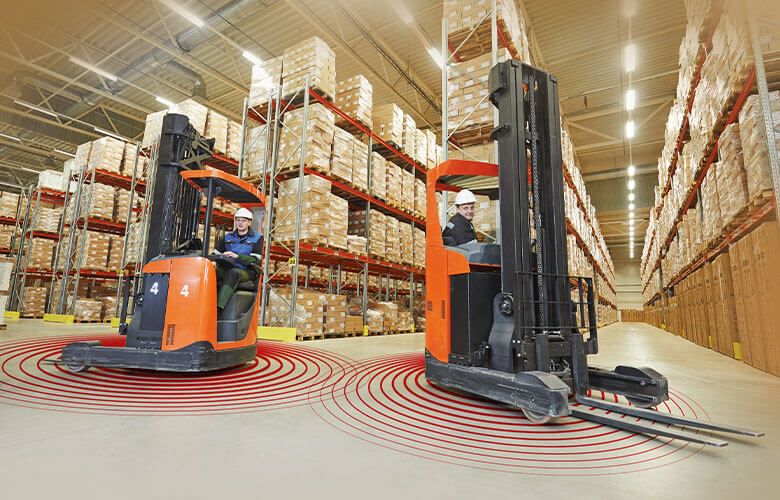
In industrial settings, RTLS and proximity technologies can help reduce collision risk between forklifts, pedestrians, assets, and infrastructure. OSHA identifies powered industrial trucks as one of the leading sources of serious workplace injuries. RTLS-based proximity warning systems warn operators and nearby workers when a collision risk is forming — helping facilities take a more proactive approach to site safety. Learn more about forklift collision and proximity warning solutions.
Emergency Mustering and Incident Response
During an emergency, organizations need to know who is safe, who is missing, and where to focus response efforts. RTLS-powered emergency mustering helps teams account for personnel in real time, improving speed, visibility, and confidence during evacuations or incident response.
Patient Flow and Healthcare Operations
In healthcare, indoor positioning systems support more than asset visibility. They can help hospitals improve patient flow, support staff safety, strengthen infant security, reduce delays, and build more responsive workflows across departments.
Physical Security and Access Awareness
Indoor location data can also strengthen physical security by improving awareness of movement throughout a facility. When integrated with existing security systems, RTLS becomes part of a broader operational intelligence layer. Explore how RTLS supports physical security workflows.
What to Look for in an Indoor Positioning Solution in 2026
As more organizations evaluate indoor positioning systems, the key question is no longer whether location data matters. It is whether the solution can support real operational outcomes.
1. Accuracy That Matches the Use Case
Not every use case requires the same level of precision. Forklift safety, infant security, and step-level process visibility may require highly accurate location data. Other applications may not. The best solutions match the level of accuracy to the actual business need.
2. A Scalable Hardware and Software Architecture
A strong RTLS deployment should not become harder to manage as it grows. Look for a platform that can scale across sites, support a large number of tags and devices, and expand into new use cases without forcing a full rip-and-replace approach.
3. Technology Flexibility
Many facilities do not need the same location technology everywhere. A modern indoor positioning platform should support different technologies depending on the use case, coverage needs, and environment.
4. Real Integration Capabilities
Location data becomes far more valuable when it connects to the systems your organization already relies on. The best RTLS platforms integrate with tools such as WMS, ERP, nurse call, access control, security platforms, and operational dashboards.
5. Clear Software, Maps, and Analytics
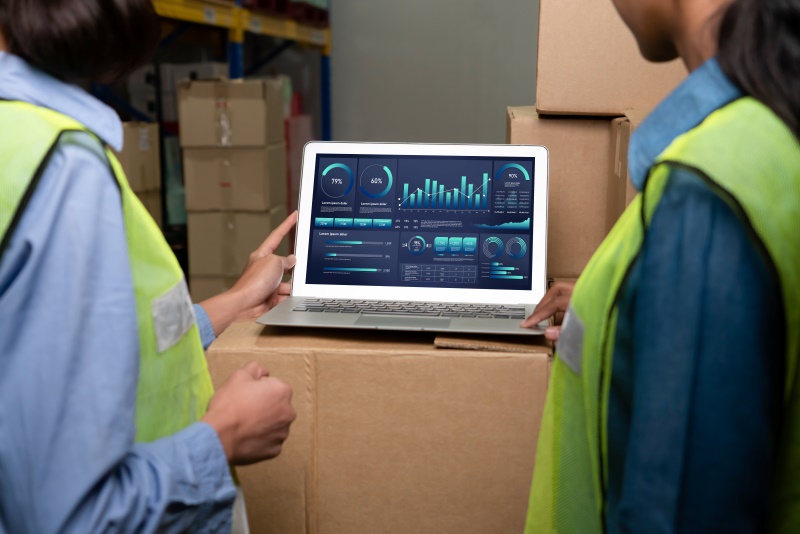
The value of RTLS does not come from dots on a map alone. The software should make it easy for operations, safety, security, and clinical teams to understand what is happening and take action.
6. Vendor Expertise
Indoor positioning is not just a hardware purchase. It is an operational system. Choose a vendor that understands your industry, your workflows, and the real problems you are trying to solve. Review Litum’s customer case studies to see how real deployments have been structured across different industries.
Why Indoor Positioning Matters More Than Ever
As facilities become larger, more dynamic, and more dependent on real-time coordination, visibility has become a competitive requirement.
Organizations need to know where assets are, how people move, where risks are building, and what is happening across the site right now — not after the fact.
That is why indoor positioning systems are no longer niche technology. They are becoming foundational infrastructure for safer, smarter, and more efficient operations.
For further reading on how RTLS is reshaping industries, explore Gartner’s Market Guide for Indoor Location Services and ABI Research’s RTLS market analysis for independent market perspectives.
How Litum Approaches Indoor Positioning
At Litum, indoor positioning is not treated as a standalone tracking tool. It is part of a broader platform designed to support safety, efficiency, and operational intelligence across industrial and healthcare environments.
With a hybrid technology approach, modular platform architecture, and support for multiple use cases on shared infrastructure, Litum helps organizations move beyond simple tracking and turn location data into real operational value.
From asset tracking and forklift safety to connected worker, emergency mustering, staff duress, infant security, and patient flow, Litum’s RTLS solutions are designed to help facilities respond faster, operate smarter, and build a safer environment for everyone inside.
Conclusion
Indoor positioning systems have become essential for organizations that need better control over assets, people, and workflows inside complex environments.
The question is no longer whether indoor location data is useful. It is how effectively your organization can turn that data into action.
RTLS makes that possible by delivering the visibility needed to improve safety, reduce inefficiency, strengthen security, and make smarter operational decisions in real time.
For modern facilities, visibility is no longer optional. It is the foundation of better operations.
Ready to explore what indoor positioning can do for your facility? Discover Litum’s RTLS solutions and see how real-time location visibility can help improve safety, efficiency, and operational control across your environment.