


What is Bluetooth Low Energy (BLE)?
Bluetooth Low Energy (BLE) is a wireless communication technology introduced in 2011 as part of the Bluetooth 4.0 standard. Designed for short-range, low-power data transmission, BLE allows devices to communicate efficiently without draining battery life. It uses the same 2.4 GHz frequency band as classic Bluetooth, but with key differences that make it especially suitable for real-time location tracking and other low-energy applications.
BLE is now widely used in industries such as healthcare, manufacturing, retail, and logistics. At Litum, we develop Real-Time Location Systems (RTLS) that incorporate both BLE and UWB.
From Nokia to the Bluetooth Standard: BLE Origins
The origins of Bluetooth LE trace back to Nokia, which developed the technology internally as a project called Wibree around 2001. Nokia presented Wibree publicly in 2006 as a proposed open standard for ultra-low power wireless connectivity designed for small, battery-powered devices. In 2010, the Bluetooth SIG (Bluetooth Special Interest Group) incorporated the technology into the Bluetooth specification, releasing it as Bluetooth Low Energy within the Bluetooth 4.0 standard.
The bluetooth standard has continued to evolve since then. Bluetooth 5.0 doubled the data rate and range. Bluetooth 5.1 introduced direction finding. Each revision of the bluetooth specification has expanded what low energy protocols can deliver, making BLE one of the most widely deployed wireless technology standards in the world, running in billions of smart devices, mobile phones, and IoT devices today.
The Bluetooth Special Interest Group (Bluetooth SIG) governs the BLE standard and publishes annual market reports showing BLE’s growth trajectory across IoT and enterprise deployments.
How BLE Works
To understand how BLE works in practice, it helps to think of it as a system built around two behaviours: advertising and scanning.
A BLE device in advertising mode broadcasts short packets at regular intervals, typically every 20ms to 10 seconds depending on configuration. These packets travel across three dedicated advertising channels, chosen specifically to minimise interference from Wi-Fi networks that dominate the 2.4 GHz band. Each packet carries identifying data, most commonly a UUID, that allows receiving devices to distinguish one tag or beacon from another.
On the receiver side, a BLE scanner opens periodic scan windows to listen for these packets. When a packet is detected and a connection is appropriate, the two devices negotiate a data exchange in milliseconds before both return to sleep. BLE achieves its low power consumption by spending the vast majority of its operating lifetime in this sleep state. The radio is only active for a tiny fraction of each cycle.
To transmit data with reduced interference across the 2.4 GHz band, BLE uses Gaussian frequency shift keying (GFSK), a modulation method that shapes signal pulses to limit spectral bleed into adjacent channels.
In Litum’s RTLS deployments, this advertising and scanning cycle underpins zone-level location tracking. BLE anchors installed throughout a facility continuously collect advertising packets from BLE tags worn by workers or attached to assets. The signal strength (RSSI) of each received packet provides a proximity estimate, which the RTLS platform converts into a real-time location update. The result is continuous visibility across large floor areas without the power infrastructure that Wi-Fi tracking requires.
BLE Technical Specs: Data Rate, BR PHY, and SoCs
BLE’s physical layer has evolved through several Bluetooth specification revisions, each expanding what the technology can deliver in real-world deployments.
The foundational LE 1M PHY, introduced with Bluetooth 4.0, operates at 1 Mbps over the 2.4 GHz ISM band. For most RTLS and asset tracking applications, this data rate is more than sufficient. Location update packets are small, and throughput is not the constraint.
Bluetooth 5.0 added two significant options. The LE 2M PHY doubles throughput to 2 Mbps for applications where faster data exchange is needed. More relevant for industrial tracking is the LE Coded PHY, which trades speed for range, achieving reliable communication at distances that would exceed the capabilities of LE 1M. This is particularly useful in high-bay warehouses or outdoor yard environments where standard BLE range falls short.
Bluetooth 5.1 introduced direction finding through Angle of Arrival (AoA) and Angle of Departure (AoD) measurements. By analysing phase differences across multiple antennas, AoA-capable infrastructure can resolve the direction of a tag’s signal, pushing location accuracy toward sub-metre levels. For deployments where BLE is the primary technology and higher accuracy is needed in specific zones, AoA provides a meaningful upgrade path without replacing existing BLE hardware.
Classic Bluetooth uses the BR PHY (Basic Rate physical layer) operating at 1 Mbps. The BR/EDR specification underpins continuous audio and file transfer applications. BLE physical layers are purpose-built for sensors, trackers, and IoT connectivity where low duty cycles matter far more than sustained throughput.
Modern BLE implementations are built into SoCs (System-on-Chips) that combine the BLE radio, microcontroller, and memory into a single component. This consolidation keeps tag hardware compact and inexpensive, directly relevant to large-scale deployments where hundreds or thousands of tags must be maintained. Battery replacement cycles measured in years, common in well-designed BLE SoCs, reduce operational overhead significantly in manufacturing and healthcare environments where tag access is not always straightforward.
Bluetooth LE vs. Classic Bluetooth: Low Power Connectivity
While BLE and Bluetooth share similar security protocols and operate on the same frequency, they are designed for different use cases.
- Power Efficiency: BLE consumes significantly less power by remaining in sleep mode until a connection is required. This allows BLE tags and sensors to operate for years on a single coin cell battery.
- Range and Throughput: Classic Bluetooth offers greater range and higher throughput (up to 2 Mbps), making it suitable for continuous data transmission. BLE, by contrast, transmits smaller data packets at 100–250 Kbps, which is sufficient for location tracking, alerts, and basic sensor data.
- Connection Speed: BLE connects in just a few milliseconds, compared to about 100 milliseconds for Bluetooth.
- Scalability: BLE devices can connect with more peripherals at once, depending on memory and implementation. This makes BLE more effective for environments with many tracked assets.
- Cost: BLE devices tend to have simpler hardware and smaller batteries, resulting in lower cost and easier deployment across large facilities.
Litum leverages BLE in real-time tracking applications where long battery life, fast connection, and scalability are essential.
BLE Connectivity vs. Zigbee, Bluetooth Mesh, and Other Low Energy Protocols
BLE is not the only short-range low energy wireless technology in use. Zigbee is a competing low energy protocol widely used in smart home and industrial automation, operating on the same 2.4 GHz band but using a mesh topology by default. While Zigbee offers good range and low power usage, its ecosystem of ready devices is much smaller than BLE. Almost every Android smartphone, tablet, and modern laptop ships as a BLE-compatible device, giving BLE a massive installed base advantage.
Bluetooth mesh extends BLE’s capabilities by enabling many-to-many device communication across a network. Standard BLE creates point-to-point or point-to-multipoint connections, while Bluetooth mesh allows messages to propagate through a relay network of BLE nodes. This makes Bluetooth mesh well-suited for smart building lighting, HVAC control, and large-scale IoT sensor deployments. Litum’s RTLS infrastructure uses BLE as one of its core low energy protocols for zone-level tracking and monitoring, alongside UWB for precision use cases.
Compared to Wi-Fi, BLE consumes far less power and requires no network authentication, making it easier to deploy at scale in facilities. Compared to RFID, BLE supports active, continuous location tracking rather than checkpoint-based reads. Each technology serves a role, but BLE’s combination of low power consumption, broad compatibility with smart devices and mobile phones, and support for proximity sensing makes it the most versatile choice for indoor IoT tracking systems.
BLE Beacons and How They Work
BLE beacons are small devices that periodically broadcast signals containing identifying information, typically a universally unique identifier (UUID). These signals are picked up by compatible receivers, such as smartphones or gateways, that use the data to trigger actions or determine proximity.
The UUID helps distinguish one beacon from another. BLE beacon protocols include iBeacon (used by Apple), AltBeacon (open source), and Eddystone (developed by Google). Some beacons can also transmit additional data such as battery level or temperature.
Did you know?
UUIDs are designed with 128 bits of data, allowing for an enormous number of unique combinations. That’s why the chance of two being the same is almost zero. To put it into perspective: if you created 1 billion UUIDs every second, it would take you over 100 trillion years to run out of unique ones.
Interaction with BLE beacons usually requires compatible software on the receiving device. This ensures that signals are only acted upon when appropriate, enhancing privacy and control.
In Litum’s RTLS deployments, BLE beacons play a key role in enabling indoor tracking, zone-based alerts, and guided navigation in facilities.
How Bluetooth Positioning Works
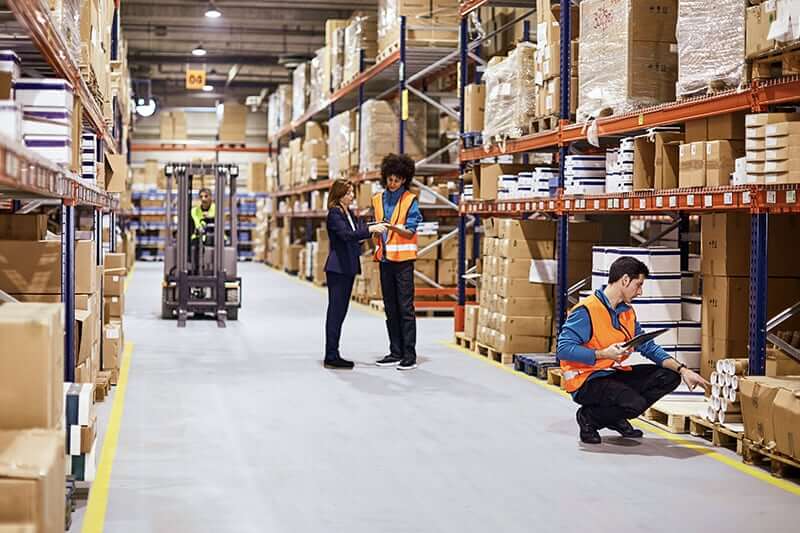
BLE-based positioning works by measuring the signal strength (RSSI) between beacons and receiving devices. As signal strength varies with distance, systems can estimate how far a device is from a beacon and triangulate its position using multiple beacons.
For higher accuracy, techniques such as Angle of Arrival (AoA) and Angle of Departure (AoD) can be used. These require multiple antennas or synchronized transmitters to determine the direction of signals.
Litum uses BLE positioning for applications where sub-meter accuracy is not critical but power efficiency and cost-effectiveness are. For use cases that demand higher precision, such as collision warning or staff duress, we typically use UWB.
See how BLE positioning is applied in medical asset tracking and staff workflow tracking in healthcare environments.
BLE vs. UWB
While BLE is designed for low-power, cost-efficient tracking, Ultra-Wideband (UWB) offers much higher precision and lower latency. UWB uses time-of-flight (ToF) measurements to determine distance with sub-meter accuracy and very low latency.
BLE is suitable for many indoor positioning needs, especially in settings like retail, logistics, and healthcare asset tracking. UWB is preferred when exact positioning is required, such as in staff safety systems, forklift collision warning, or secure access control.
Litum provides both BLE and UWB-driven RTLS solutions to match the specific requirements of each deployment.
For a detailed comparison, see our guide on choosing the right RTLS technology.
| Feature | BLE | UWB | Wi-Fi | RFID |
|---|---|---|---|---|
| Accuracy | 1-3m | 10-30cm | 3-5m | Proximity only |
| Battery life | Years | Up to 5 years (Dualis Tag) | N/A | Years (passive) |
| Infrastructure cost | Low | Medium | Low (existing) | Low |
| Best for | Zone tracking, asset visibility | Collision warning, infant security | Broad coverage | Checkpoint scanning |
| Litum use | Staff tracking, patient flow, asset monitoring | Forklift safety, staff duress, asset tracking (Dualis Tag) | Not primary | Emergency mustering, roll call, asset tracking |
BLE in 2026: Where the Technology Stands
Bluetooth Low Energy has matured significantly since its introduction. In 2026, BLE 5.4 is widely deployed, with direction finding capabilities now standard in enterprise RTLS anchors and tags. Channel Sounding, introduced in the Bluetooth 5.4 specification, enables centimeter-level ranging using phase-based measurements, narrowing the accuracy gap between BLE and UWB for specific indoor positioning use cases.
On the deployment side, the shift toward hybrid BLE and UWB architectures has accelerated. Organizations no longer treat these as competing technologies. BLE handles broad facility coverage and zone-level tracking while UWB handles precision-critical zones such as loading docks, surgical suites, and forklift operating areas. This layered approach reduces infrastructure cost while maintaining accuracy where it matters most.
AI integration is also changing how BLE location data is used. Rather than simply reporting where a tag is, modern platforms analyze movement patterns, dwell times, and zone transitions to surface operational insights automatically. For healthcare and industrial operators, this means BLE is no longer just a tracking layer. It is becoming a source of predictive operational intelligence.
BLE Use Cases by Application
BLE supports a wide range of indoor applications where real-time visibility, automation, and contextual interaction are needed.
- People and Asset Tracking: BLE is widely used to track the locations of people, equipment, and goods within indoor environments. It improves operational visibility and safety, especially in warehouses and healthcare facilities.
- Navigation and Wayfinding: BLE can guide people through complex environments like hospitals, airports, or factories. When paired with mobile apps, beacons can help users reach their destination efficiently.
- Point of Interest and Item Finding: BLE beacons can trigger contextual content or help locate specific items in a facility, such as tools, wheelchairs, or storage bins.
- Information Sharing: BLE can broadcast URLs or trigger app notifications to deliver relevant content based on proximity. This is common in museums, exhibitions, or retail stores.
- Learn more about how healthcare RTLS uses BLE for patient flow and asset visibility.
Want to experience asset tracking logic in action? Try Assets Rush, Litum’s interactive asset tracking game.
BLE Use Cases by Industry
Various sectors rely on BLE technology to improve operations, safety, and user experience through low-power, location-based services.
- Healthcare: BLE supports patient flow, asset tracking, and staff visibility while maintaining low infrastructure costs.
- Manufacturing: BLE enhances visibility across production lines and helps track assets and personnel in real time.
- Education: Schools and universities use BLE for automated attendance, access control, and location-based messaging.
- Retail and Advertising: BLE enables personalized promotions and tracks in-store behavior to optimize layout and marketing.
- Travel and Entertainment: BLE improves guest experiences through guided navigation, digital check-ins, and context-aware content delivery.
- Security: BLE helps secure access to restricted areas and monitors environmental conditions such as temperature and humidity.
BLE in European Industrial and Healthcare Environments
Bluetooth Low Energy has seen rapid adoption across UK industries, driven by the growing demand for cost-effective indoor tracking without the infrastructure overhead of traditional systems.
In UK manufacturing and warehousing, BLE beacons are widely deployed for real-time asset tracking, tool management, and worker safety monitoring across large factory floors and distribution centres. Facilities operating under BS OHSAS 18001 or transitioning to ISO 45001 health and safety standards increasingly rely on BLE-based location data to demonstrate compliance and reduce incident rates.
In NHS and UK healthcare settings, BLE enables continuous tracking of medical equipment, infusion pumps, and mobile assets across hospital wards, reducing the time clinical staff spend locating equipment and improving overall patient flow. BLE’s low power consumption makes it particularly practical for large NHS trusts managing thousands of tagged assets across multiple buildings.
In UK logistics and supply chain operations, BLE integrates with warehouse management systems to provide zone-level visibility of inventory and personnel, supporting the real-time operational oversight required under UK Health and Safety Executive (HSE) workplace monitoring guidelines.
Litum’s BLE-based RTLS solutions are deployed across industrial and healthcare environments globally, including operations across Europe and the United Kingdom.
Conclusion
Bluetooth Low Energy is a versatile technology that powers a wide range of real-time tracking and communication solutions. Its low power requirements, flexible deployment options, and compatibility with most modern devices make it a practical choice for scalable location-based services.
At Litum, we combine BLE and UWB technologies to deliver reliable, accurate, and efficient RTLS solutions across industries. Whether the priority is battery life, cost, or high-precision, we build systems that match the need.
FAQ
What is Bluetooth Low Energy (BLE)?
Bluetooth Low Energy (BLE) is a wireless communication technology introduced in 2011 as part of the Bluetooth 4.0 standard. It is designed for short-range, low-power data transmission, allowing devices to communicate efficiently without draining battery life. BLE is widely used in real-time location tracking, asset monitoring, and IoT applications across healthcare, manufacturing, and logistics.
How does BLE work?
BLE operates across 40 narrow channels in the 2.4 GHz ISM band. Devices broadcast advertising packets in short bursts while spending the majority of their time in low-power sleep mode. When a nearby receiver detects these packets, a connection is established and data is exchanged before both devices return to sleep. This low-duty-cycle approach allows BLE tags and sensors to run for months or years on a single small battery.
What is the difference between BLE and classic Bluetooth?
Classic Bluetooth is designed for continuous, high-throughput data transfer, audio streaming, file transfer, and phone connectivity. BLE is optimised for low-power, intermittent communication with small data payloads. BLE devices consume significantly less energy, making them practical for large-scale deployments where battery replacement needs to be minimised, such as in RTLS asset tracking or worker safety systems. BLE is one of several technologies used in real-time location systems. For a broader look at how RTLS works across BLE, UWB, RFID, and Wi-Fi, see our complete guide to RTLS.
How accurate is BLE for indoor positioning?
BLE provides zone-level to room-level accuracy, typically within 1 to 3 metres depending on beacon density and environmental conditions. For applications requiring sub-metre precision, BLE is often combined with UWB (Ultra-Wideband), which delivers accuracy down to 10-30 centimetres. Litum’s RTLS solutions support both technologies depending on the accuracy requirements of the deployment.
What industries use BLE tracking?
BLE tracking is deployed across healthcare, manufacturing, warehousing, logistics, retail, and construction. Common use cases include medical equipment tracking, forklift and vehicle monitoring, worker safety systems, inventory management, and indoor navigation. BLE’s low hardware cost and minimal infrastructure requirements make it one of the most scalable options for large facilities.
How is BLE used in UK warehouses and NHS facilities?
In UK warehouses, BLE beacons provide zone-level asset and personnel tracking without complex cabling or infrastructure overhaul. Facilities operating under ISO 45001 health and safety standards use BLE location data to support compliance reporting and incident reduction. In NHS and private healthcare settings, BLE tracks the real-time location of medical equipment, reduces asset loss across wards, and supports staff safety systems. BLE’s low cost per tag and minimal power requirements make it particularly practical for large NHS estate environments managing thousands of tagged assets across multiple buildings.
What is the range of a BLE beacon?
Standard BLE beacons have an effective range of 10 to 30 metres indoors, though this varies based on transmit power, physical obstructions, and RF interference. In open or outdoor environments, ranges of up to 100 metres are achievable. For RTLS deployments, beacon density is typically planned to ensure overlapping coverage zones, which improves location accuracy and reduces dead spots.
What is the difference between BLE 4.0, 5.0, and 5.1?
Bluetooth 4.0 introduced BLE as a core specification. Bluetooth 5.0 doubled the data rate to 2 Mbps and extended range through the LE Coded PHY mode. Bluetooth 5.1 added direction finding capabilities, enabling angle-of-arrival (AoA) and angle-of-departure (AoD) measurements that significantly improve indoor positioning precision. Most modern BLE RTLS infrastructure supports Bluetooth 5.x to take advantage of these improvements.