

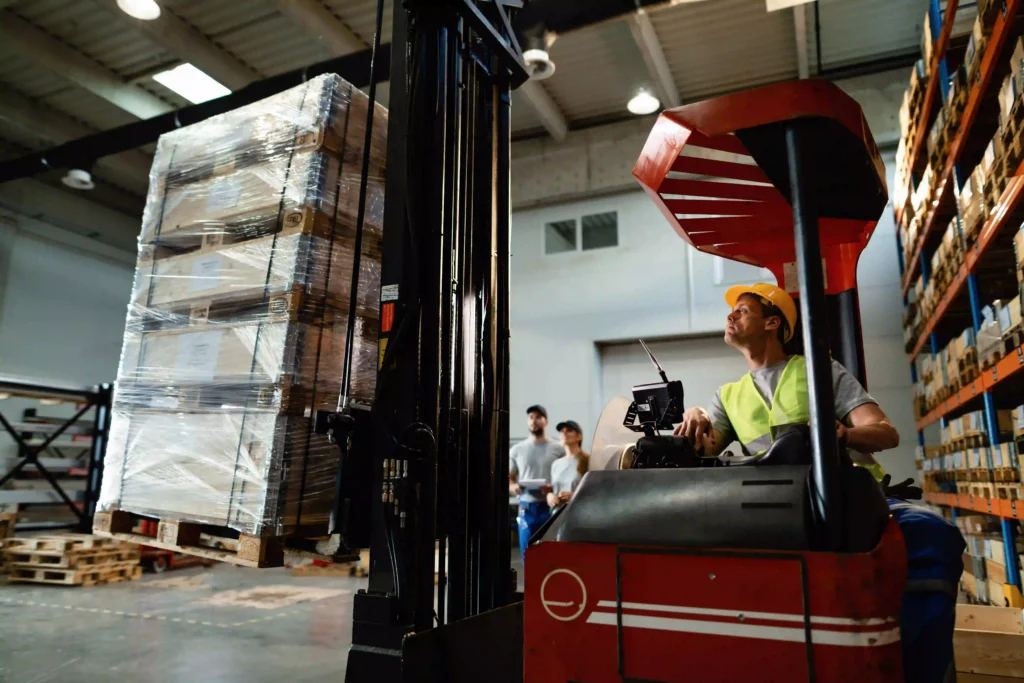
If you manage a warehouse, distribution center, or manufacturing facility, you already know that OSHA forklift certification is not optional. What you may not know is that the rules governing how that certification is conducted changed meaningfully in 2026. The update shifts the emphasis away from one-time written exams toward ongoing behavioral monitoring and documented performance records, and that shift has direct consequences for how your compliance program needs to work.
This guide covers what OSHA forklift training requirements actually look like under the revised standard, what behavioral monitoring means in practical terms, and how a forklift tracking system fits into a compliant operation.
What Does OSHA Require for Forklift Certification?

The governing regulation is OSHA 1910.178, the Powered Industrial Trucks standard. Under this rule, employers, not certification agencies or online course providers, are responsible for ensuring every forklift operator is trained and evaluated before operating any powered industrial truck.
The standard requires three components for valid forklift certification:
● Formal instruction: classroom or online training that covers truck-related topics (stability, load handling, pre-operation inspection) and workplace-related topics (floor conditions, ramp procedures, pedestrian traffic).
● Practical training: hands-on exercises under the supervision of a qualified trainer.
● Evaluation: a performance evaluation conducted in the workplace, with the operator demonstrating competency on the actual equipment and terrain they will be using.
OSHA does not issue forklift operator certificates directly. A forklift certification card or printed record generated by a third-party course provider does not satisfy the standard unless the employer has also conducted a site-specific evaluation. This is one of the most common misconceptions in forklift certification training programs.
What Changed in 2026: The Behavioral Monitoring Shift

The 2026 revision to OSHA’s forklift certification guidance does not replace 29 CFR 1910.178, but it adds specificity to how employers are expected to demonstrate compliance during an inspection. The change centers on one word: observation.
Previously, many facilities treated forklift training as an event: a course is completed, a record is filed, and the file is produced when an OSHA inspector asks. The 2026 guidance makes clear that OSHA expects continuous behavioral verification, not just certification history. In plain terms, inspectors are now asking whether your operation monitors how certified operators actually behave in the field, not just whether they passed a course.
What Behavioral Verification Means in Practice
Behavioral verification under the new framework means your training program should include:
● Documented on-floor observations of operator performance after initial certification
● Recorded near-miss and incident data linked to specific operators and equipment
● Speed, route, and load-handling data that can demonstrate or contradict safe operating patterns
● Evidence of refresher training when unsafe behavior is identified
Manual documentation, such as clipboards, spot checks, and handwritten logs, does not scale to this expectation across a fleet of 20, 50, or 100 powered industrial trucks. This is where the compliance case for a forklift tracking system becomes concrete. An RTLS-based forklift tracking system generates the behavioral record automatically: timestamped speed data, zone violations, proximity events, and operational patterns that constitute real evidence of how certified operators are performing day to day.
OSHA Forklift Training Requirements: The Full Picture
Beyond the behavioral monitoring shift, the underlying OSHA forklift training requirements remain structured and non-negotiable. Here is what the standard requires across the certification lifecycle.
Pre-Certification Training Topics
OSHA lists the required training topics for powered industrial trucks in 1910.178(l)(3). Forklift operators must receive training on:
● Truck-related topics: operating instructions, warnings, precautions for the type of truck the operator will use; differences between the truck and an automobile; truck controls and instrumentation; engine or motor operation; steering and maneuvering; visibility; fork and attachment capacity and handling; refueling and battery charging; operating limitations; and other topics from the manufacturer’s operating manual
● Workplace-related topics: surface conditions; load composition and stability; load manipulation, stacking, and unstacking; pedestrian traffic; narrow aisles and restricted areas; hazardous locations; ramps and inclines; closed environments and atmospheric hazards; inspections and maintenance; industrial truck hazards specific to the operating environment; and operating in areas with battery charging hazards
Types of Forklifts and Equipment-Specific Training
The standard requires that certification be specific to the type of powered industrial truck the operator uses. Types of forklifts recognized under OSHA standards include counterbalanced trucks, narrow-aisle trucks, order pickers, reach trucks, pallet jacks, and rough terrain forklifts. Understanding the different forklift types is not just a regulatory box to check: each type has distinct load capacity, visibility, and maneuvering characteristics that affect safe operation. An operator certified on a counterbalanced sit-down unit is not automatically certified to operate a reach truck in a narrow-aisle warehouse. Separate evaluations are required. When selecting a forklift certification course, verify that the course details specify which truck types are covered and whether the curriculum includes hands-on evaluation for each type your facility operates.
When Refresher Training Is Required
Refresher training is required when:
● An operator is observed operating the truck in an unsafe manner
● An operator is involved in or nearly involved in an accident or near-miss incident
● An operator receives a poor evaluation
● An operator is assigned to a different type of truck
● Workplace conditions change in a way that could affect safe operation
There is no fixed interval. OSHA does not require annual recertification by default. However, OSHA guidance states that each operator’s performance must be evaluated at least every three years. A certification valid period of three years is the maximum between evaluations, not a guarantee that no osha training is needed in between. When behavioral monitoring identifies unsafe patterns earlier, that three-year window becomes less relevant: the trigger for refresher training is the observed behavior, not the calendar.
How a Forklift Tracking System Supports Certification Compliance

A forklift tracking system built on real-time location technology (UWB, BLE, or RFID) does more than track where equipment is. In the context of OSHA forklift certification compliance, it creates the evidentiary record that behavioral verification now requires.
Automatic Speed and Zone Records
Every time a forklift enters a pedestrian crossing zone above a set speed threshold, that event is logged. Every time a truck accelerates faster than operating policy allows, the timestamp and operator ID are recorded. This data directly supports the post-certification evaluation requirement under OSHA 1910.178 (also referenced as OSHA 1910 178), not as a one-time observation, but as a continuous, searchable history.
Pedestrian Safety and Proximity Detection
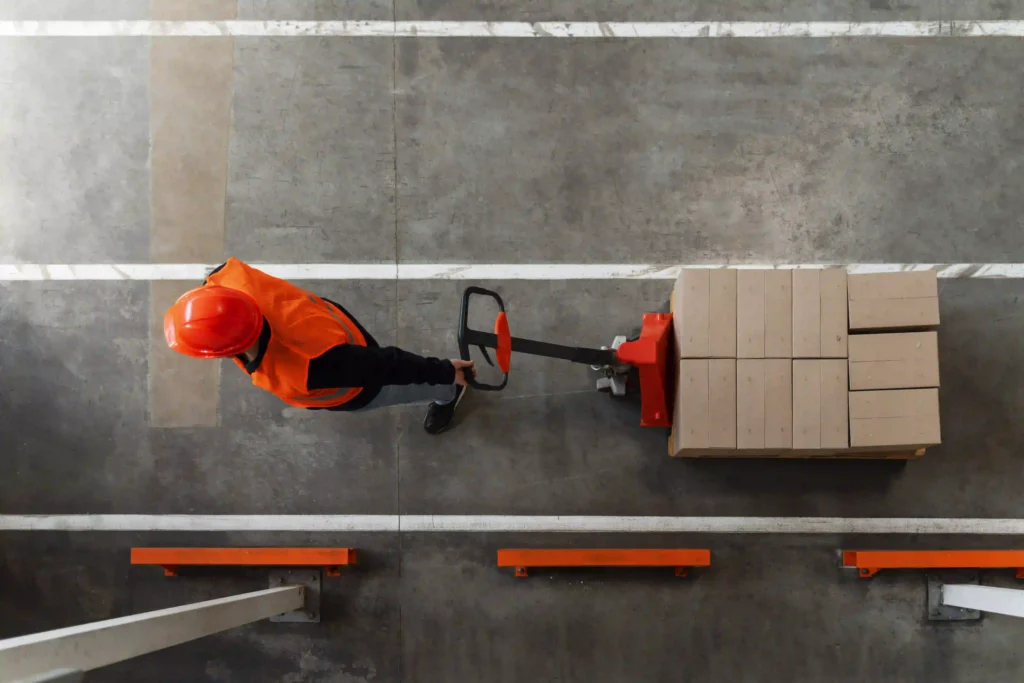
Forklift pedestrian safety is one of the highest-stakes areas under OSHA’s powered industrial trucks standard. OSHA records roughly 85 fatal accidents and 34,900 serious injuries annually across forklift operations in the U.S. A forklift tracking system with proximity detection capability generates real-time alerts when a forklift and a pedestrian wearable are within a set distance, and logs every proximity event for review. This creates both a preventive control and an auditable record of where and when pedestrian risk occurs in your facility.
Linking Behavioral Data to Operator Records
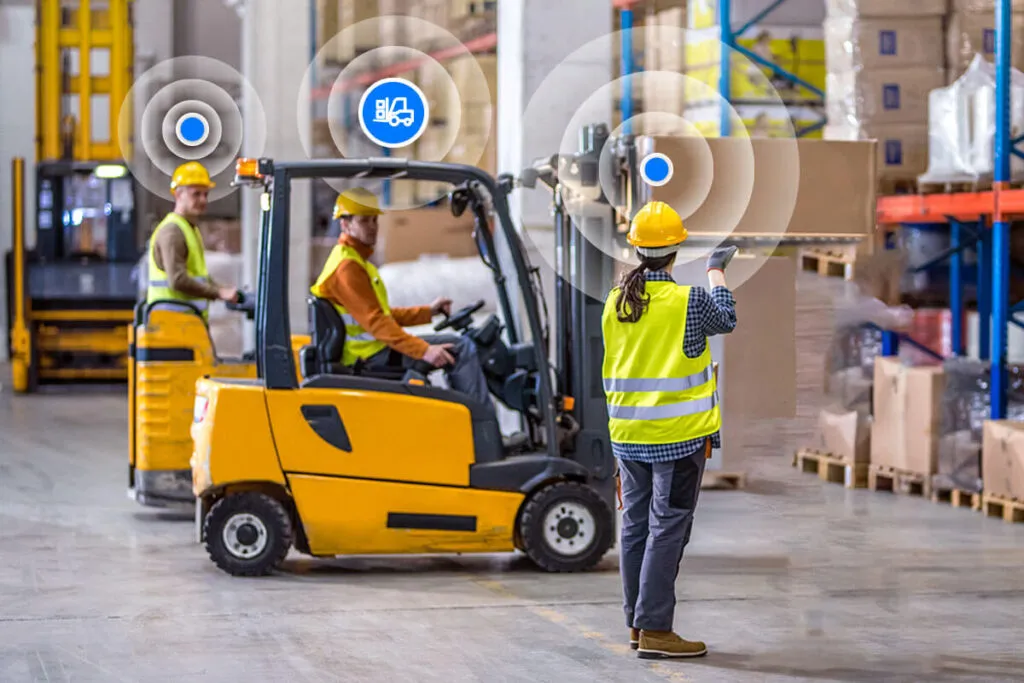
The most direct compliance value comes from linking tracking data to individual operator IDs. When an operator’s behavioral record shows repeated speed violations or pedestrian proximity events, that data becomes the documented basis for refresher training, which is precisely what OSHA’s revised standard expects. Rather than relying on supervisors to observe every operator every shift, the forklift tracking system provides the systematic behavioral record that an inspection can verify.
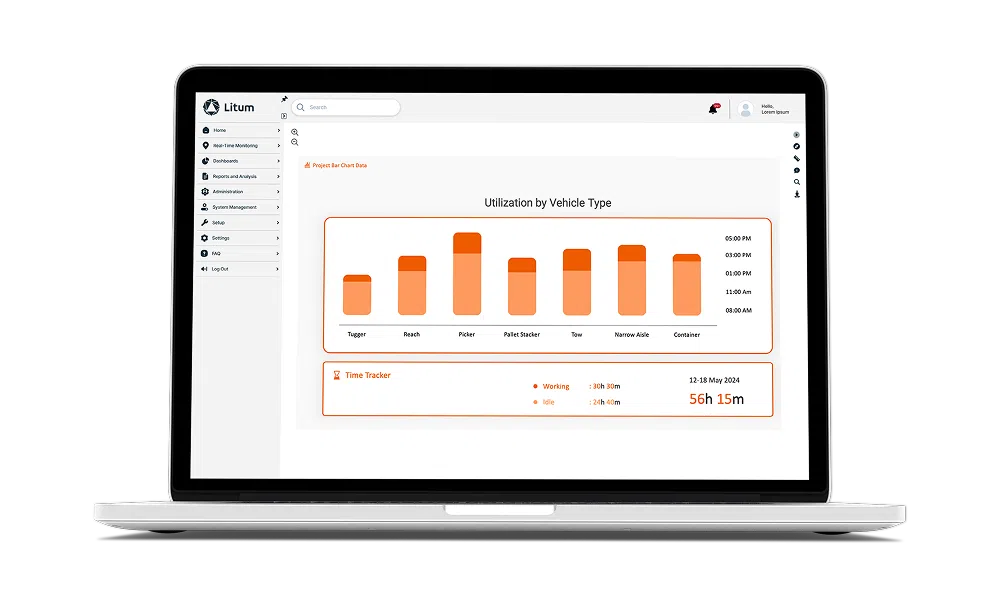
Litum’s PathAware forklift tracking solution combines UWB-precision location data with operator dashboards that surface these behavioral patterns automatically. Facilities running PathAware can generate compliance-ready reports that document operator behavior across every shift, the kind of behavioral record that the 2026 OSHA certification guidance now expects.
Forklift Certification FAQ
How to get OSHA certified for a forklift?
OSHA does not certify individual operators directly. Forklift certification is the employer’s responsibility. The process involves formal instruction (classroom or online training covering truck-specific and workplace-specific topics), followed by practical training exercises, followed by a performance evaluation conducted by a qualified evaluator in the operator’s actual work environment. Once the evaluation is passed, the employer issues a certification record. Online courses alone are not sufficient: a site-specific evaluation is always required under OSHA regulations for forklifts.
Is an OSHA forklift certification worth it?
Yes, and it is legally required. Operating a powered industrial truck without a valid forklift certification exposes your facility to OSHA citations, which can reach $16,131 per violation for serious violations and $161,323 for willful or repeated violations. Beyond the regulatory risk, certified forklift operators have demonstrably lower incident rates. The forklift certification course investment is modest relative to the cost of a single lost-time injury or OSHA inspection.
How much does a forklift certification cost?
Forklift certification cost varies significantly depending on format and provider. In-person certification training from a third-party provider typically runs $150 to $400 per operator, excluding time off the floor. Online forklift training courses range from $40 to $150 but do not satisfy the OSHA evaluation requirement on their own: the employer still needs to conduct and document the on-site practical evaluation. Keep in mind that neither an online course completion certificate nor a forklift license issued by a third party replaces the employer-conducted workplace evaluation required under OSHA standards. For large fleets, developing an in-house training program with a designated qualified evaluator is generally the most cost-effective approach.
Does OSHA require annual forklift training?
No. OSHA does not mandate annual forklift training by default. The standard requires that operators be evaluated at least every three years. Refresher training must be provided whenever specific triggering events occur: observed unsafe behavior, near-miss incidents, assignment to a different equipment type, or changes in workplace conditions, regardless of how recently initial certification training was completed. Many osha compliance programs choose to conduct annual safety training reviews as a best practice, but the three-year evaluation cycle is the regulatory minimum.
What Operations Need to Do Now
The 2026 shift in OSHA’s forklift certification guidance is not a grace period item. If an OSHA inspector visits your facility today and asks how you verify that certified forklift operators are operating safely, your answer needs to be more than a folder of training records.
Three practical steps for occupational safety and compliance teams:
● Audit your current certification records for completeness: does each operator have a documented workplace evaluation, not just an online course completion?
● Review your behavioral monitoring capability: how do supervisors currently identify unsafe operating patterns between formal evaluations?
● Evaluate whether a forklift tracking system closes the behavioral documentation gap, particularly for larger fleets where manual observation cannot cover every shift
For operations already tracking assets and personnel with an RTLS platform, extending that system to cover forklift behavioral data is a logical next step. For operations that have not yet deployed location technology, the 2026 OSHA certification standard provides a concrete compliance rationale to do so. A full review of osha training requirements and regulations and resources is available directly from OSHA’s Powered Industrial Trucks page at osha.gov/poweredindustrialtrucks.
Summary
OSHA forklift certification in 2026 requires more than a forklift certification card in a personnel file. The revised guidance makes behavioral verification a documented expectation: employers need evidence that forklift operators are performing safely in the field, not just that they completed forklift training at some point.
The combination of rigorous initial certification training, structured refresher training triggers, and a forklift tracking system that generates continuous behavioral records is the compliance posture that the standard now points toward. For most operations managing heavy equipment fleets of any meaningful size, that means technology plays a central role in workplace safety and OSHA compliance, not because an inspector demands it, but because it is the only way to produce the behavioral evidence the standard expects.
Learn more about how Litum’s forklift safety solutions support OSHA compliance and operator behavioral monitoring.