

Healthcare facilities are among the most demanding environments for any technology deployment. Staff work under constant pressure, patients require continuous monitoring, and critical equipment must always be where it is needed. Traditional approaches, such as manual check-ins, paper-based logs, and passive alarm systems, cannot keep pace with the complexity of modern hospital operations.
Real-time location systems (RTLS) address this gap. By providing continuous, precise time location data for patients, staff, and assets, RTLS in healthcare enables faster incident response, more reliable monitoring, and stronger operational oversight across even the largest hospital campuses.
This blog presents six real-world case studies from Litum’s healthcare deployments, covering wander management, staff duress, infant security, and asset tracking. Each illustrates a specific challenge, the RTLS solution deployed, and measurable outcomes achieved.
What Is RTLS in Healthcare?
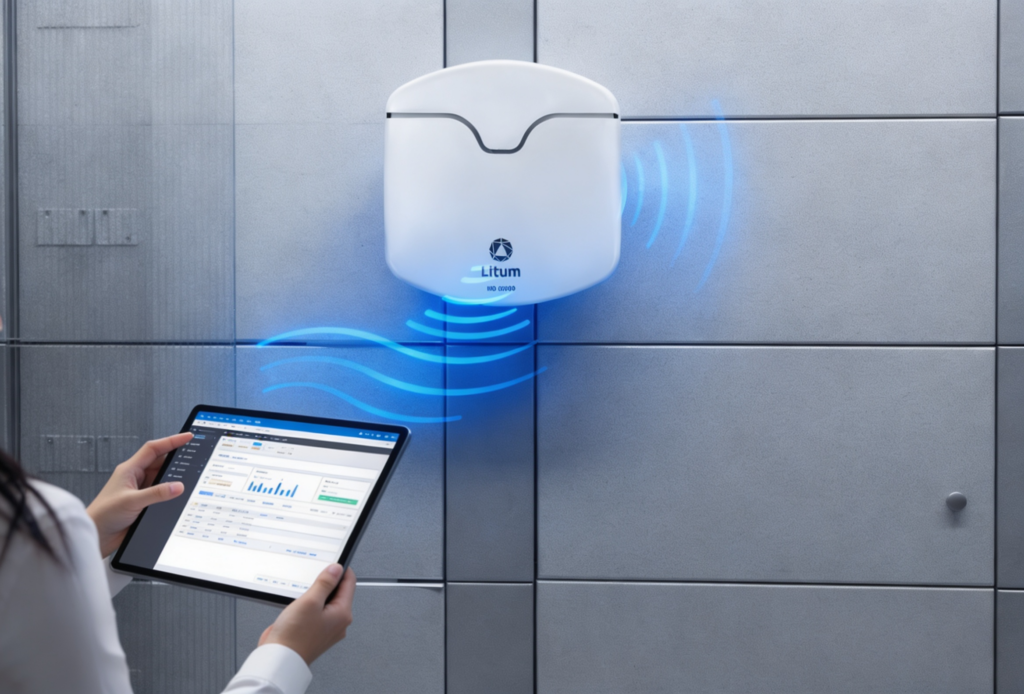
RTLS stands for Real-Time Location System. In healthcare, RTLS refers to a system of hardware and software that tracks the real-time location of people and assets within a hospital or clinical facility. The core components are small wearable or attachable tags worn by patients and staff (or attached to medical equipment), fixed anchors and gateways installed throughout the facility to determine location, RTLS software to process and display time location data and trigger alerts, and integrations with clinical and security systems.
In hospitals, RTLS technology is used across a wide range of applications, from monitoring patients at risk of wandering to protecting staff in high-risk environments, tracking medical equipment across large campuses, and securing newborn units. When deployed as an integrated system, RTLS in healthcare becomes a real-time operational layer that supports both safety and efficiency.
RTLS Technologies Used in Hospitals
Different RTLS deployments in healthcare settings use different wireless technologies. Ultra-Wideband (UWB) delivers the highest location accuracy available for indoor healthcare environments, with room-level and sub-meter precision. Bluetooth (BLE) is used for zone-level tracking where cost efficiency and battery life are priorities. Infrared was one of the original technologies used in hospital RTLS; it detects tag presence within a room using ceiling-mounted readers. RFID is widely used in healthcare for asset tracking and inventory management. Active RFID tags broadcast location continuously, while passive RFID tags are scanned at checkpoints. Litum uses UWB as the primary technology in its healthcare RTLS deployments, often combined with BLE where appropriate.
Core Use Cases for RTLS in Healthcare Facilities
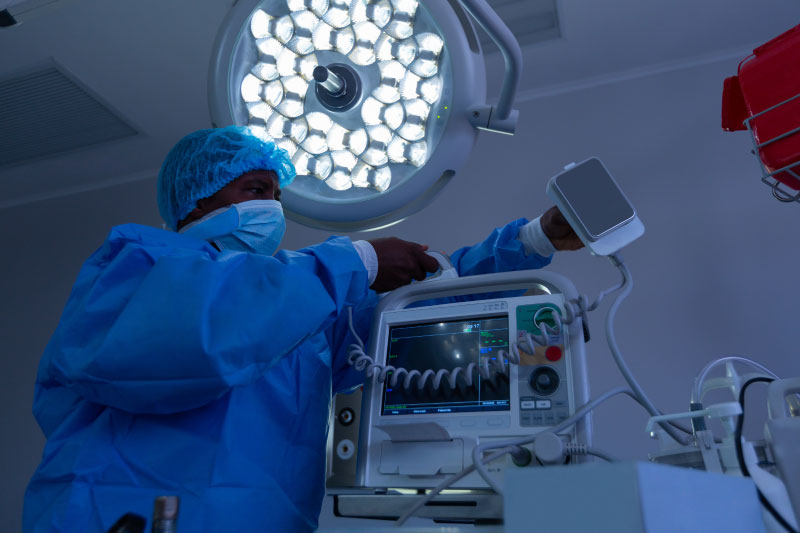
Healthcare RTLS systems are deployed across a range of use cases that address persistent challenges in hospital operations:
Wander Management and Patient Monitoring
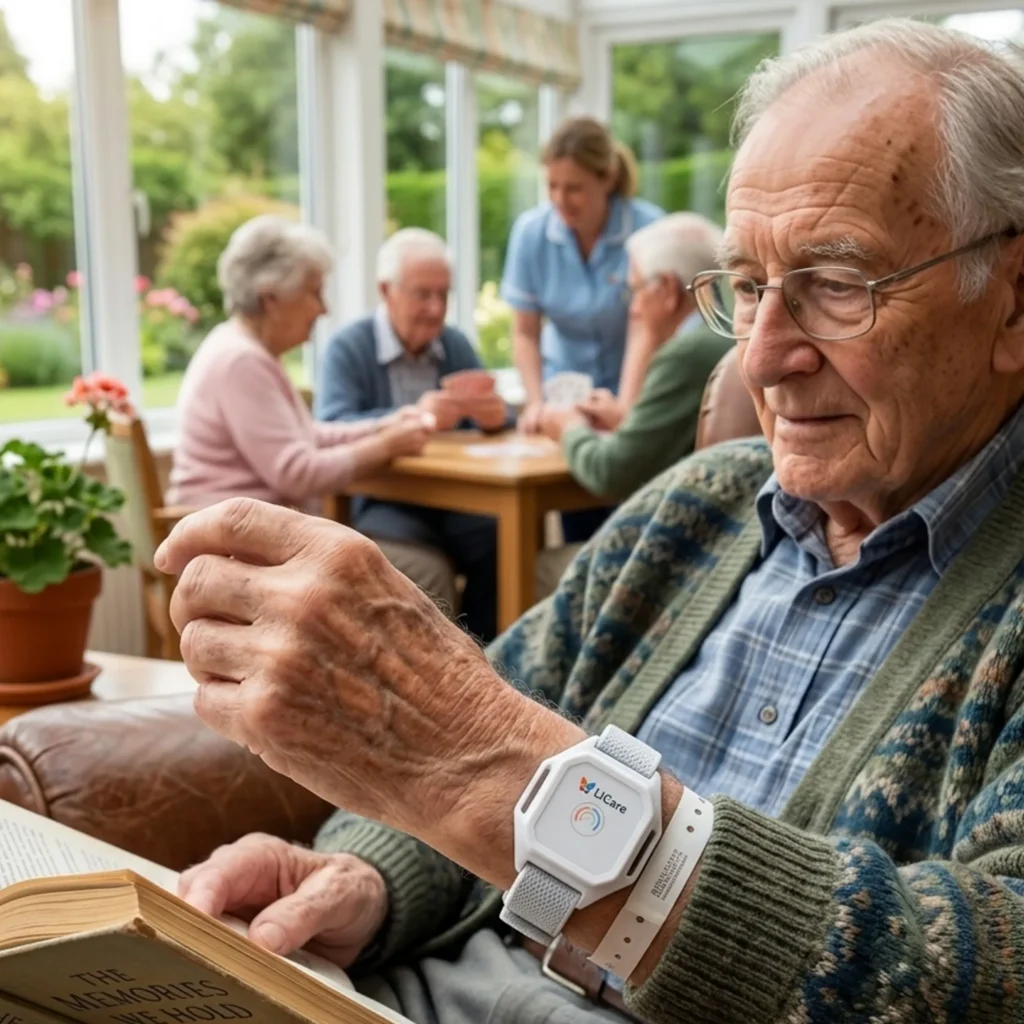
Patients with dementia or cognitive impairments may inadvertently enter unsafe areas. Wander management RTLS uses real-time location tracking and zone-based alerts to monitor patient movement and support timely intervention without restricting freedom of movement within safe zones.
Staff Duress Protection
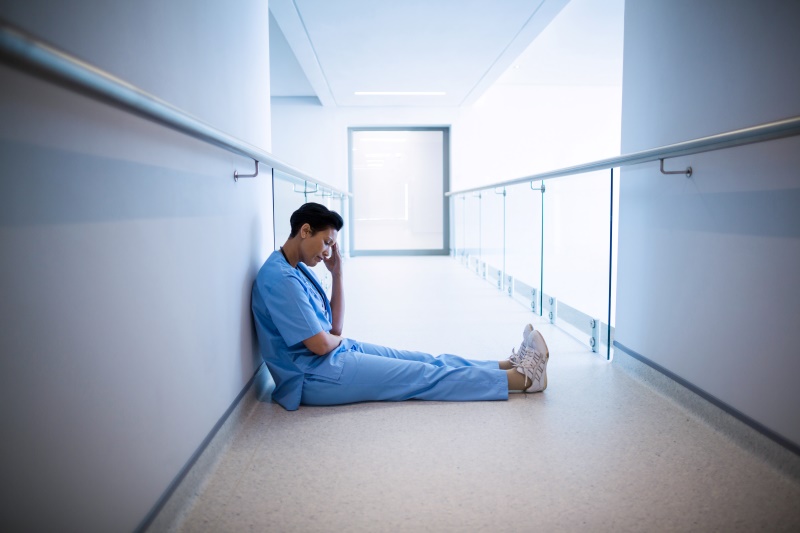
Healthcare workers in emergency departments and mental health units face elevated risk. Staff duress systems use wearable tags with integrated alert buttons that transmit real-time location data when activated, enabling security teams to respond quickly to the right location.
Infant Security

Infant security RTLS uses tamper-resistant tags attached to newborns at birth, with zone monitoring, elevator and exit door control, and immobility alerts to prevent abduction and mismatches while supporting normal operations within the maternity unit.
Medical Equipment and Asset Tracking
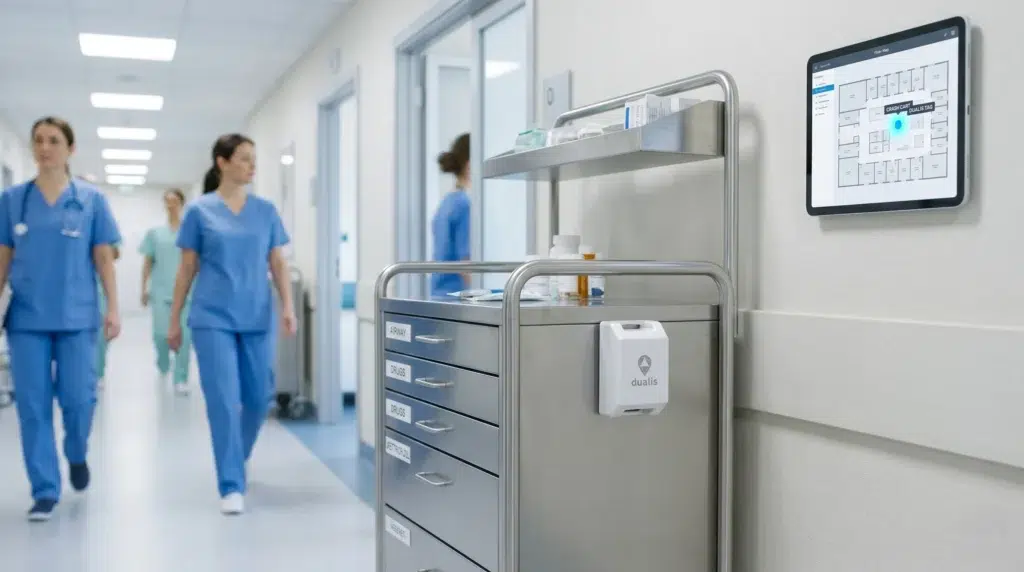
RTLS provides real-time location visibility across mobile assets such as infusion pumps, wheelchairs, and specialty beds, improving equipment utilization, reducing search time, and supporting maintenance management.
Patient Flow Management
RTLS can track patient movement through admission, treatment, and discharge processes, identifying bottlenecks, supporting bed management, and providing the data needed to improve patient flow and care delivery timelines across the facility.
Case Study 1: 360° Visibility in Care — St. Joseph’s Guelph

Hospital: St. Joseph’s Guelph, Ontario, Canada — Healthcare and Rehabilitation Center
St. Joseph’s Guelph, a renowned healthcare and rehabilitation center in Canada, faced critical challenges in enhancing patient safety, ensuring the safety of healthcare staff, and efficiently tracking critical assets. The organization needed a single RTLS platform capable of addressing all three requirements simultaneously, without deploying separate systems for each use case.
Solution and Results at St. Joseph’s Guelph
Litum’s end-to-end solution harnessed ultra-wideband (UWB) technology for effective management of patient wandering, staff safety, and asset tracking. Patients were given compact tags, which helped monitor their movements across the facility. The system provided continuous real-time visibility into patient locations, supporting timely intervention when patients approached restricted zones. Key RTLS features deployed included real-time location tracking, fall detection, tamper alerts, zone entry and exit alerts, staff duress alerts, third-party software integration, and low battery alerts for tags.
Litum’s solution notably improved patient safety by effectively managing wandering, reducing incidents of patients inadvertently entering risky areas, and supporting their freedom of movement within the facility.
Case Study 2: Safety Across the Care Floor — St. Joseph’s Brantford
Hospital: St. Joseph’s Brantford, Ontario, Canada — Largest Long-Term Care Home in Ontario
St. Joseph’s Brantford, a prominent healthcare and rehabilitation center, faced challenges in managing patient safety and staff security at scale. As the largest long-term care home in Ontario, the center required a system that could operate reliably across a large and complex facility while covering both patient monitoring and staff safety.
Solution and Results at St. Joseph’s Brantford
Litum deployed an end-to-end solution leveraging ultra-wideband (UWB) technology for wander management and staff duress. For patient safety, Litum implemented wander management using UWB tracking to monitor patient movement across the campus. For staff safety, wearable staff tags with integrated duress buttons provided real-time location data when alerts were triggered. Features deployed included real-time location tracking, fall detection, zone entry and exit alerts, staff duress alerts, tamper alerts, third-party software integration, and low battery alerts.
Litum’s deployment led to notable improvements in patient and staff safety. Patients benefited from continuous, secure monitoring that allowed for more nuanced and humane management of movement across the facility. Staff gained a reliable real-time duress alerting capability that improved confidence and response speed in safety-critical situations.
Case Study 3: Precision Where It Matters Most — Grande Prairie Regional Hospital

Hospital: Grande Prairie Regional Hospital, Alberta, Canada — Mental Health Unit
The newly opened Grande Prairie Regional Hospital needed a more accurate and responsive duress alert system to protect staff working in its mental health unit. The environment posed unique safety challenges, requiring real-time, room-level location accuracy to enable targeted and efficient emergency response. The hospital’s legacy system could not deliver the precision or reliability required for this high-risk environment.
Solution and Results at Grande Prairie
The hospital replaced its legacy system with Litum’s Staff Duress RTLS, deploying over 70 ceiling-mounted devices and 100 staff tags across the mental health floor. The system was installed remotely, minimizing disruption to hospital operations. To enhance physical security and response coordination, the solution integrated at the hardware level with LenelS2™ OnGuard® version 7.5 via Modbus gateways, allowing alerts to be relayed through the existing access control infrastructure. Features included instant duress alerts, room-level accuracy, LenelS2 integration, customizable triggers, historical data access, and expandable design.
With Litum’s Staff Duress solution in place, the hospital significantly improved the precision and speed of incident response. Staff working in the mental health unit now benefit from real-time protection with verified room-level location accuracy.
Quote: “The system provides a major step in staff safety compared to legacy RTLS systems. It enhances staff and patient safety by providing accurate, real-time location tracking throughout the unit.” — Engineering Project Lead
Case Study 4: Real-Time Protection in High-Risk Care Areas — North York General
Hospital: North York General Hospital, Toronto, Canada — Emergency Department and Mental Health Units
North York General Hospital in Toronto needed to strengthen staff safety in its Emergency Department and mental health units, two environments known for elevated risk of workplace violence. Staff safety in these areas required a system that could deliver real-time duress alerting with precise location accuracy, integrated with existing hospital alerting and security workflows.
Solution and Results at North York General
The hospital deployed Litum’s Staff Duress RTLS with 80 ceiling-mounted devices and 550 duress-enabled staff tags, with approximately one tag per staff member. When a staff member presses the duress button, the system immediately sends an alert to the on-site security desk with real-time location data. The solution integrates with the hospital’s Connexall nurse call and alerting system for faster escalation. Key features included instant duress alerts, room-level accuracy, security desk visibility, Connexall integration, historical incident data, and easy expansion capability.
With Litum’s RTLS active across its ER and mental health units, the hospital gained real-time visibility into duress events and improved coordination between clinical and security teams. The deployment has laid the foundation for expansion across additional floors, with Infant Security planned as a next phase.
Case Study 5: Oversight for a 2,000+ Bed Campus — Izmir City Hospital
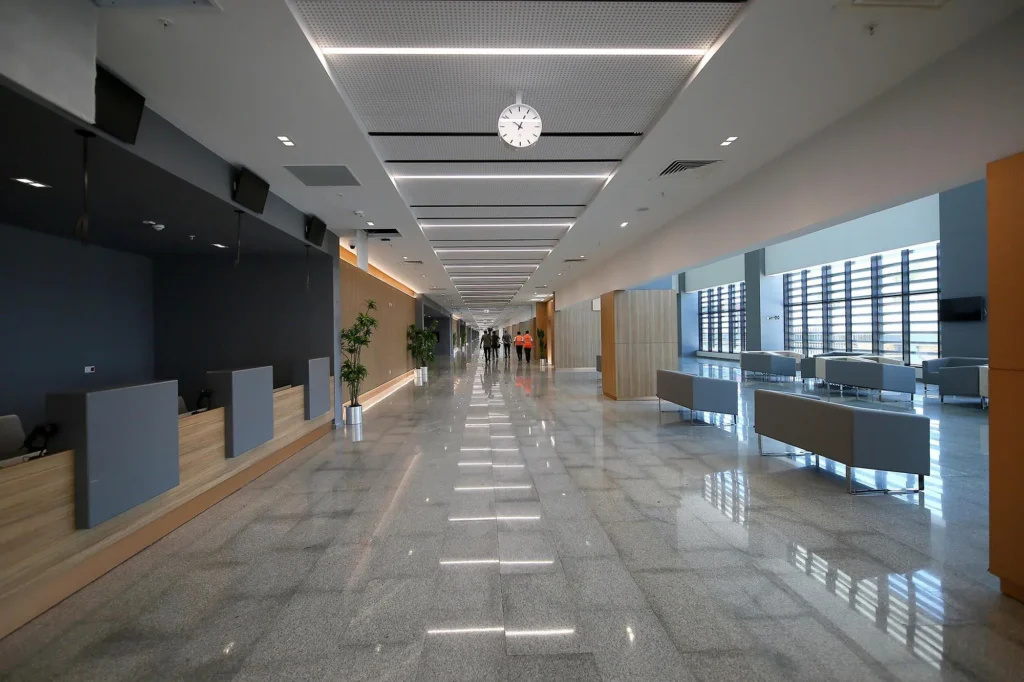
Hospital: Izmir City Hospital, Turkey — Large-Scale Multi-Unit Health Campus
Izmir City Hospital, a large health facility in Turkey, faced the complex challenge of managing and securing a large-scale healthcare environment. With a vast campus comprising various specialized units, the hospital needed comprehensive real-time visibility into the location and status of patients, staff, and mobile assets across all areas simultaneously.
Solution and Results at Izmir City Hospital
Litum addressed these challenges by deploying an end-to-end solution with 1,500 anchors and gateways strategically placed across the hospital. Ultra-wideband (UWB) technology delivered precise real-time location tracking across the campus, supporting patient monitoring, staff safety, and asset management on a single platform. Features deployed included real-time location tracking, fall detection and immobility alerts, staff duress alerts, out-of-sight alerts for wander management, zone-based monitoring and alerts, low battery and tamper alerts for tags, and elevator and exit door control.
Litum’s deployment enhanced both operational efficiency and security at Izmir City Hospital. Real-time tracking capabilities greatly improved asset management and equipment utilization. Staff safety was strengthened through reliable duress alerting, and patient monitoring across the large campus became more consistent through continuous location visibility.
Case Study 6: Protection for Every Newborn — Izmir City Hospital Infant Security

Hospital: Izmir City Hospital, Turkey — Maternity and Newborn Unit
The hospital’s newborn unit required a solution that could prevent infant abduction and mismatches while streamlining daily operations. With a large volume of patients and staff moving across various departments, the hospital needed reliable, continuous monitoring for the maternity unit that could enforce controlled movement without disrupting routine clinical workflows.
Solution and Results: Infant Security
Litum deployed an end-to-end Infant Security RTLS across the maternity unit. Infants were equipped with Litum’s Little® Tag, secured using a tamper-resistant ankle band and tracked using Ultra-Wideband (UWB) technology for precise real-time visibility. Key features included real-time location tracking, immobility alerts, tamper alerts, low battery alerts for tags, zone entry and exit alerts, and automated elevator and exit door control.
Since the deployment, Izmir City Hospital has operated with zero incidents of infant abduction or mismatches. The system’s proactive monitoring, combined with automated door and elevator control, created a secure environment while supporting normal clinical workflows throughout the maternity unit.
Key Outcome: Zero incidents of infant abduction or mismatches since deployment
Why Litum for Healthcare RTLS?
Accuracy, Flexibility, and Integration
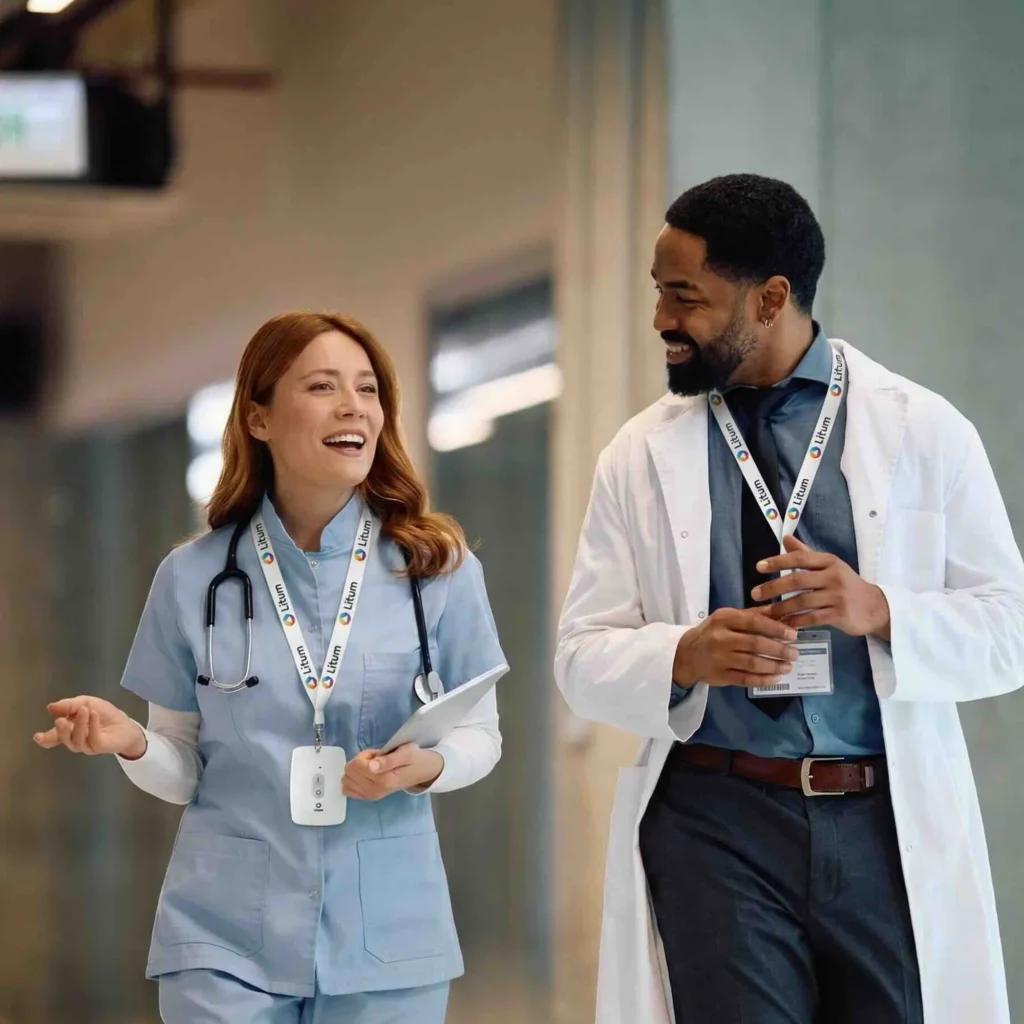
Litum uses Ultra-Wideband (UWB) technology to deliver precise, room- and zone-level location visibility in healthcare settings. Different healthcare use cases require different levels of precision and coverage. Litum combines UWB and Bluetooth (BLE) within a single RTLS platform, allowing organizations to balance accuracy and cost efficiency. The platform integrates with clinical, security, and operational systems, including nurse call systems, access control platforms, and software systems such as Oracle Health EHR, to ensure time location data supports established workflows rather than replacing them.
Built for Safety-Critical Use Cases at Scale
Healthcare facilities are complex, high-pressure environments where systems need to work reliably across shifts, departments, and edge cases. Litum’s healthcare solutions focus on scenarios where location awareness directly impacts outcomes: infant security, wander management, staff safety, and asset availability. The system is designed with these realities in mind, covering both safety and efficiency. Beyond safety, Litum helps healthcare organizations improve visibility into daily operations, from reducing time spent searching for assets to improving staff response coordination and supporting patient flow and care delivery.
Key Benefits of RTLS in Healthcare
Across the case studies in this blog, consistent benefits emerge from successful RTLS implementation in healthcare settings:
- Improved patient safety: Continuous monitoring of at-risk patients supports faster intervention and reduces incidents related to wandering, falls, and unsupervised movement
- Faster staff emergency response: Real-time duress alerts with precise location data enable security and clinical teams to respond to incidents more quickly and accurately
- Stronger infant security: Automated monitoring and access control in maternity units protects newborns without disrupting routine care delivery
- Better asset tracking and equipment utilization: Real-time visibility into medical equipment location reduces search time, improves equipment utilization, and reduces unnecessary asset purchases
- Compliance and documentation: Logged location data and event history supports compliance reporting, incident investigations, and quality improvement
- System integration: RTLS data connected to nurse call, access control, and software systems creates a unified operational and safety environment
- Scalability: From a single unit to a multi-building campus, RTLS systems can expand to cover additional use cases as needs evolve
Choosing the Right RTLS Solution for Your Healthcare Facility
Define Use Cases and Match Technology to Accuracy Requirements
The most successful RTLS implementations start with a clear definition of what the system needs to do. A facility focused on wander management will have different requirements than one prioritizing staff duress or infant security. Identifying the core use cases and the accuracy, coverage, and alerting requirements is the essential first step. Zone-level tracking using BLE or infrared may be sufficient for asset tracking and basic presence monitoring. Room-level and sub-meter accuracy, typically delivered by UWB systems, is required for staff duress and infant security where precise location matters to the response.
Integration, Scalability, and the Right RTLS Solution
A healthcare RTLS that operates in isolation delivers only part of its potential value. Integration with nurse call systems, access control platforms, EHR and health systems, and security management software transforms RTLS from a standalone monitoring tool into a connected layer of operational intelligence. Understanding required integrations before selecting an RTLS vendor will prevent costly limitations later. Many facilities begin with a single unit or use case. Choosing a system with a scalable architecture and a demonstrated track record of multi-unit and campus-wide deployments ensures the initial investment can grow with the organization’s needs. Finding the right RTLS solution means aligning technology capabilities, integration support, and scalability with the specific safety and operational priorities of your healthcare setting.
Frequently Asked Questions About RTLS in Healthcare
Can RTLS be used in healthcare?
Yes. RTLS is widely deployed in healthcare settings and is one of the most established applications of real-time location technology. Hospitals, long-term care homes, and large health campuses use RTLS for patient monitoring, wander management, staff duress protection, infant security, medical equipment and asset tracking, and patient flow management. The case studies in this blog represent active deployments across multiple countries and facility types.
What is RTLS in hospitals?
In hospitals, RTLS refers to a system that uses wireless tags worn by patients and staff or attached to medical equipment, combined with fixed infrastructure and RTLS software, to provide continuous real-time location visibility. The time location systems data is used to trigger alerts, support compliance monitoring, guide emergency response, and improve operational decision-making. Hospital RTLS systems typically integrate with clinical and security systems to extend their value across established workflows.
What is the difference between RFID and RTLS?
RFID (radio frequency identification) and RTLS are related but distinct technologies. RFID systems use readers at fixed checkpoints to detect tagged items as they pass. RFID tells you that an asset passed a certain point at a certain time but does not provide continuous real-time location within a space. Passive RFID is used for inventory management; active RFID supports zone-level detection. RTLS provides continuous real-time tracking within a space with much higher location accuracy. In healthcare, RTLS is preferred for wander management, staff duress, and infant security where precise real-time location is critical, while RFID is more commonly used for supply chain applications.
What is the difference between IPS and RTLS?
IPS stands for Indoor Positioning System. The terms RTLS and IPS are often used interchangeably, but there is a nuance. An IPS broadly refers to any system that determines the location of a person or object indoors, including passive and on-demand positioning. RTLS specifically implies continuous, real-time tracking of multiple tagged entities simultaneously, within a defined infrastructure. In healthcare, RTLS is the more precise term for systems that actively monitor patient, staff, and asset locations in real time, as opposed to systems that only determine location when queried.
What RTLS technologies are used in healthcare?
Healthcare RTLS deployments commonly use a combination of Ultra-Wideband (UWB) for room-level precision, Bluetooth (BLE) for zone-level tracking and monitoring, infrared for legacy room-presence detection, and RFID for asset inventory management. UWB has become the preferred technology for safety-critical applications such as staff duress, wander management, and infant security due to its accuracy and reliability in complex hospital environments.
What are the key benefits of RTLS in healthcare?
The key benefits of RTLS in healthcare include improved patient safety, faster staff emergency response, stronger infant security, better asset tracking and equipment utilization, improved compliance documentation, support for patient flow management, and a scalable foundation that can expand across use cases as the facility’s needs grow. The case studies in this blog demonstrate each of these benefits in live deployments across multiple hospital environments.
RTLS in Healthcare: From Individual Departments to Campus-Wide Systems
The six case studies in this blog represent a broad cross-section of how RTLS in healthcare is being applied across different facility types, scales, and safety priorities. From a single mental health unit to a 2,000+ bed campus, the consistent thread is the same: reliable real-time location visibility transforms how hospitals protect patients, support staff, and manage operations.
These RTLS systems are active, operational deployments that have delivered measurable improvements in safety outcomes, response times, and facility management. For healthcare organizations evaluating their own RTLS needs, these examples provide a practical reference for what is achievable and what the deployment process looks like in practice.
To learn more about Litum’s healthcare RTLS solutions, visit litum.com.