


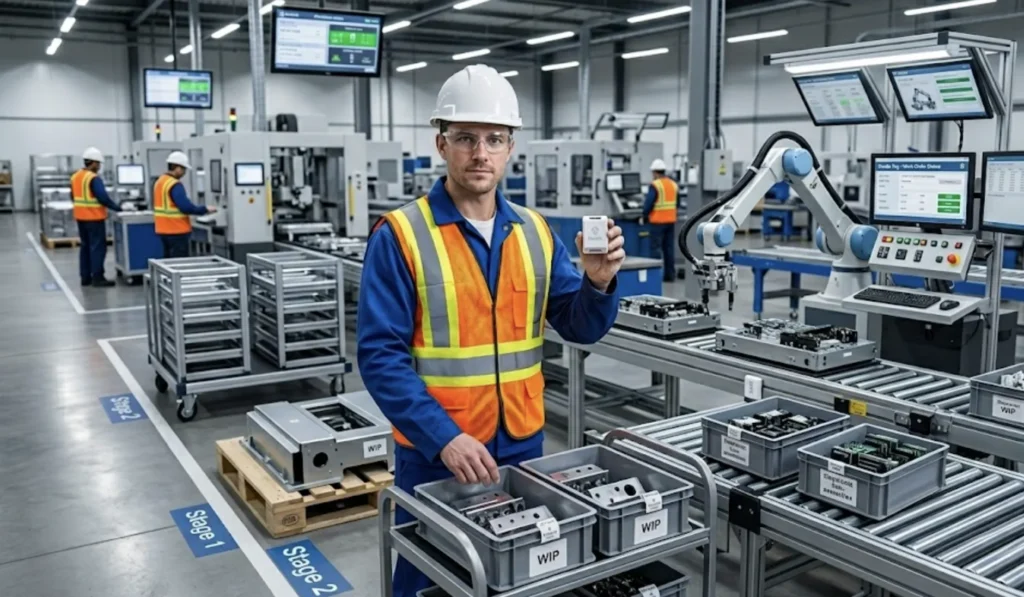
Asset tracking is often viewed as a way to find missing items. But that is only part of the story. The bigger value of a strong asset tracking system is what it does for the business every day. Better visibility helps teams move faster, use physical assets more effectively, avoid unnecessary purchases, and make smarter operational decisions. That is where Dualis Tag can make a real difference.
Built for high-precision asset tracking with multi-year battery life, Dualis helps organizations improve asset monitoring visibility into the assets that keep operations moving. As part of Litum’s broader asset tracking solutions and RTLS platform, it supports a more practical and scalable way to track mobile assets across industrial and healthcare environments.
The Hidden Cost of Poor Asset Visibility and Asset Management
When asset visibility is weak, the problem rarely stays limited to a few misplaced items. It spreads across the operation.
Teams lose time searching for tools, totes, bins, carts, racks, medical equipment, work-in-progress materials, and other critical assets. Tasks are delayed because the right item is not in the right place at the right time. Workflows become less predictable. In some cases, organizations respond by buying more assets than they actually need, simply because they do not have enough confidence in what is already available.
Poor visibility also affects asset usage and utilization. An asset may exist somewhere in the facility, but if teams cannot find it quickly, it is almost as if it does not exist at all. That leads to underused physical resources, avoidable downtime, and unnecessary spending. Litum’s asset management materials highlight challenges such as search effort, workflow disruption, operational downtime, replacement costs, inventory mismanagement, and administrative delays, all of which are tied to limited visibility into asset location and movement.

What Happens When Teams Cannot Quickly Locate the Assets They Need
Equipment Tracking and Asset Usage in Practice
The operational impact adds up quickly.
A warehouse team may lose time trying to locate a cart or returnable container. A production team may wait on a tool or piece of equipment that should already be nearby. A plant leader may struggle to understand where work-in-progress materials are getting delayed. A healthcare team may spend valuable time searching for mobile equipment instead of focusing on patients and workflows.
This is why real-time location tracking matters. The real issue is not just location. It is speed, coordination, and control. When teams can quickly see where important assets are, they can respond faster, allocate resources better, and avoid the daily friction that slows operations down.
How Better Asset Tracking Software and Systems Improve Operations
The benefits of asset tracking create value in several ways. Modern asset tracking software and asset tracking systems give operations teams a real-time view of every physical asset across the facility.
First, it helps reduce search time. When teams can locate assets quickly using asset tracking devices and monitoring dashboards, they spend less time hunting and more time working.
Second, it helps optimize utilization. Real-time visibility makes it easier to identify underused assets, overused assets, and opportunities to place equipment more effectively across large warehouses and production floors.
Third, it helps support smoother workflows. When assets move through the right zones at the right time, operations become easier to manage and less vulnerable to disruption.
Fourth, it helps reduce unnecessary purchases. If organizations can see what they already have and where it is, they are less likely to buy duplicate assets to compensate for poor visibility.
These are the kinds of business operations outcomes that make asset tracking ROI easier to understand. Litum’s asset tracking materials associate RTLS with reduced time spent locating assets, improved utilization, and lower costs related to missing assets, downtime, and redundant purchases.
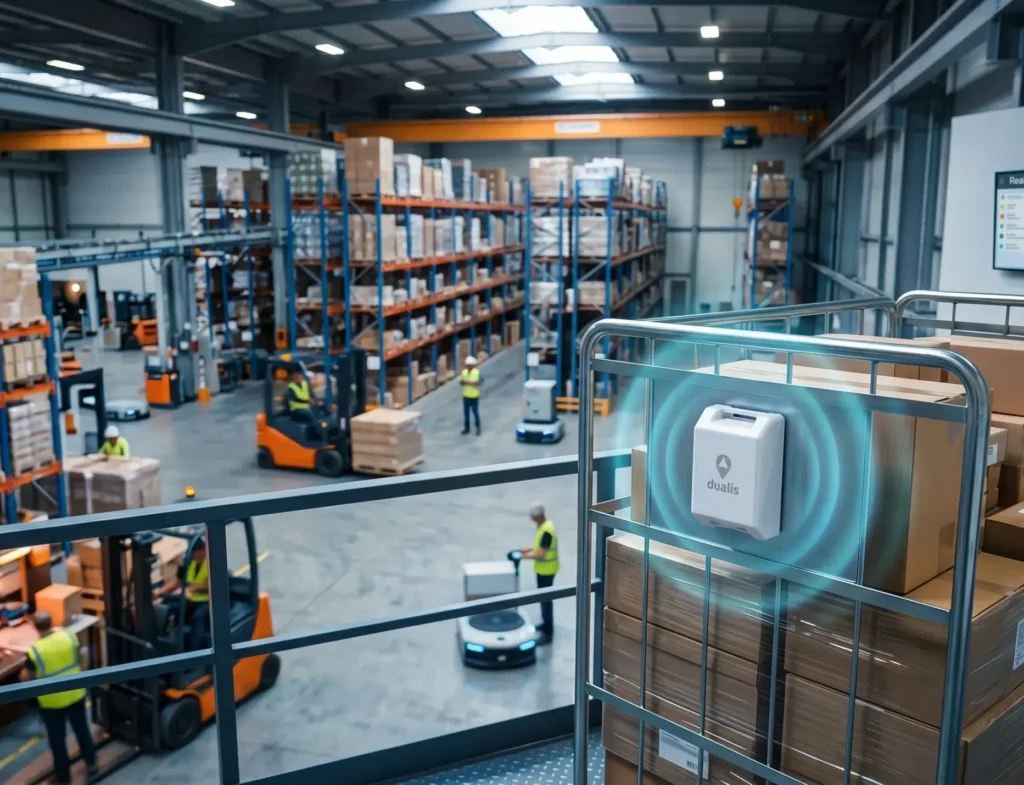
Where Dualis Supports Asset Tracking and Asset Management Solutions
This is where Dualis Tag fits in.
Dualis combines UWB and BLE in one lightweight asset tracking hardware device, giving organizations a strong option for high-precision asset tracking while keeping long-term maintenance management practical. As one of Litum’s most versatile asset trackers, it also includes key features such as a replaceable primary battery, tamper resistance, remote firmware updates, motion sensing using wireless sensors, an integrated buzzer, and a multi-purpose user button. That combination helps make asset tracking more reliable and more manageable over time.
For day-to-day operations, that matters. A tag that supports strong location visibility but creates constant service burden can limit the value of a deployment. Dualis is designed to help organizations improve speed and control without turning asset tracking work into a maintenance-heavy effort.
That makes it relevant for operations leaders, engineering teams, warehouse managers, plant leaders, and healthcare leaders who need a better way to track mobile assets while keeping asset tracking systems practical to scale.
Asset Tracking Technologies: RFID, Barcode, GPS, and UWB
Understanding the role of Dualis Tag requires a brief look at the broader asset tracking technologies landscape. Organizations have historically relied on a range of tracking methods, each with different strengths.
Barcode asset tracking and barcode asset labels have long been used for asset inventory management. They are low-cost and widely adopted but require manual scanning, which limits their usefulness for real-time location tracking across large facilities.
RFID (radio frequency identification) and RFID asset tags offer a step up, enabling faster scanning without line of sight. RFID is widely used for inventory management checkpoints and asset life cycle management in logistics and warehousing and shipping and logistics operations.
GPS tracking and GPS asset trackers are effective for outdoor fleet management and trucking and transportation use cases. GPS trackers and GPS asset tracking solutions work well for vehicles and equipment that operate outdoors, but GPS technology does not deliver reliable indoor positioning, making it unsuitable for facilities, hospitals, or large warehouses.
Bluetooth tracking and IoT asset tracking technologies such as BLE beacons fill part of the indoor gap, supporting smart spaces and connected facility management, while UWB provides the highest level of indoor precision available. Geotab and telematics platforms have expanded into fleet asset management, including IoT in fleet management use cases, using sensor data and location data from connected devices.
Dualis Tag combines UWB and BLE in a single device, covering both the high-precision needs of industrial and healthcare asset management and the broader coverage requirements of large-scale deployments. It is a practical response to environments where GPS asset tracker solutions fall short and where barcode asset tracking cannot provide real-time location data.
Why Small Visibility Improvements Create Large Operational Gains
Monitoring Asset Utilization Across Business Operations
One of the most overlooked truths in asset tracking is that even modest improvements in visibility can create meaningful business impact.
If teams spend a little less time searching every day, those hours add up. If assets are used a little more efficiently, fewer redundant purchases may be needed. If workflows become a little smoother, the effect can be felt across production, transportation and logistics, and service delivery.
That is why better asset visibility is not a minor improvement. It often becomes a broader operational advantage. Small gains in locating speed, utilization, and workflow consistency can create large gains in productivity, responsiveness, and cost control over time.
How to Identify Assets Worth Tracking First: Types of Assets and Small Asset Tracking
For organizations considering modern asset tracking solutions, the best place to start is not with everything. It is with the assets that create the most friction when they are hard to find.
That often includes:
- Frequently moved assets and powered assets such as forklifts, AGVs, and utility vehicles
- Shared tools or equipment used across multiple teams or production lines
- Returnable containers, carts, or bins in logistics and warehousing operations
- Work-in-progress materials moving through production stages
- High-value or operationally critical assets across the full asset life cycle
- Mobile medical equipment in healthcare environments
Small asset tracking is also worth considering for high-value items that are infrequently used but difficult to locate quickly: spare parts, calibration equipment, and specialty tools. These are the types of assets where tracking work pays off most clearly, because the cost of not finding them quickly is high.
A good rule is simple. If the asset is difficult to locate, important to daily operations, and costly to replace or delay, it is probably worth evaluating for tracking devices or asset tags.
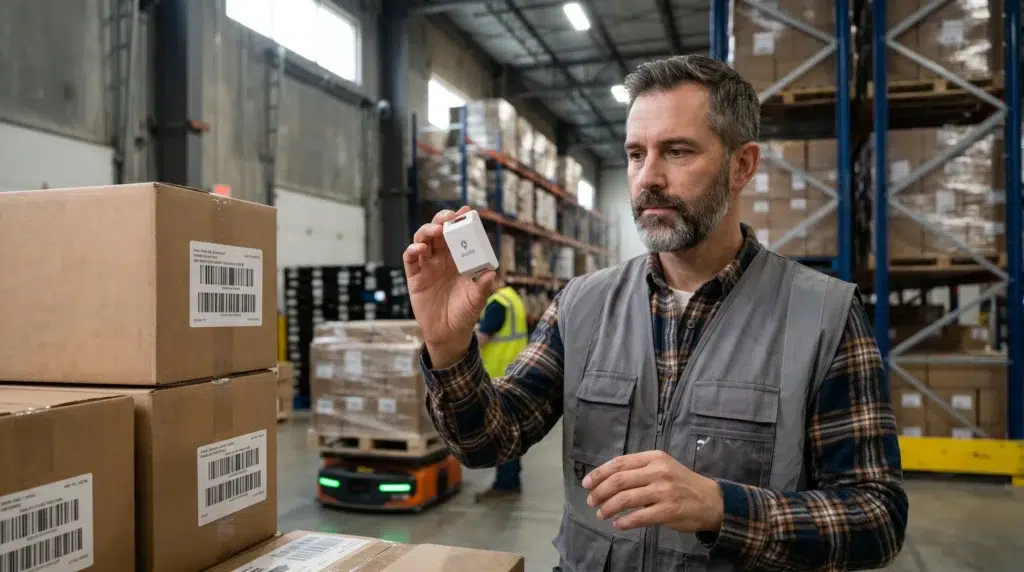
Better Tracking, Better Business Operations and Outcomes
Asset tracking with Dualis, using the latest asset tracking technologies, is about more than location. It is about improving utilization, speed, and control across the operation.
When organizations gain stronger visibility into the assets that matter, they can move faster, reduce wasted time, improve workflows, and make better use of what they already own. As part of Litum’s asset tracking RTLS, Dualis helps support that kind of operational improvement with a practical mix of precision, flexibility, and long-term usability.
That is what better asset tracking should deliver. Not just visibility, but measurable business value.
Frequently Asked Questions
What is the difference between RFID and UWB asset tracking?
RFID (radio frequency identification) uses radio waves to identify assets at checkpoints, typically for inventory management and asset label scanning. It does not provide continuous real-time location data across a facility. UWB (ultra-wideband) delivers continuous, sub-meter indoor positioning for every tagged asset, making it more suitable for real-time asset tracking in large warehouses, production floors, and healthcare environments. Dualis Tag combines both UWB and BLE for precise indoor location tracking with broad facility coverage.
How does asset tracking software work with Dualis Tag?
Dualis Tag transmits location data to fixed RTLS anchors across the facility. That data feeds into Litum’s asset tracking software platform, where teams can view real-time asset positions on a digital floor plan, search for specific assets, review location and usage history, set geofence alerts for zone-based monitoring, and generate utilization and maintenance tracking reports. The software connects to ERP, WMS, and CMMS systems through integration APIs, making asset data available across broader asset management solutions.
What types of assets are best suited for Dualis Tag?
Dualis Tag is suited for any physical assets that move frequently, are shared across teams, or are costly to replace or delay. Common types of assets include shared tools and production equipment, powered assets such as forklifts and AGVs, returnable containers and bins in logistics and warehousing, mobile medical equipment in healthcare, work-in-progress materials, and small asset tracking use cases such as spare parts and calibration devices. If an asset causes search delays or affects maintenance strategy when unavailable, it is a strong candidate for tracking.
How is UWB asset tracking different from GPS tracking?
GPS asset tracking and GPS trackers are designed for outdoor use, relying on satellite signals that do not penetrate buildings reliably. UWB-based asset tracking devices work indoors, using fixed anchors to calculate precise location data in real time. For facilities, hospitals, production floors, and large warehouses where GPS technology is ineffective, UWB is the preferred approach. Dualis Tag uses UWB for indoor precision and BLE for broader coverage, covering environments where GPS asset tracker solutions cannot deliver reliable results.
What is IoT asset tracking?
IoT asset tracking refers to using Internet of Things connected devices, wireless sensors, and asset tags to monitor the location and usage of physical assets in real time. IoT asset tracking systems collect sensor data from tagged assets and transmit it to a software platform where it can be analyzed. Dualis Tag is an IoT asset tracking device that connects to Litum’s RTLS platform, enabling real-time asset monitoring, inventory management, maintenance management scheduling, and utilization reporting across industrial and healthcare environments.
Can Dualis Tag support maintenance tracking and maintenance management?
Yes. Dualis Tag’s location data connects to Litum’s asset tracking software, which can integrate with CMMS and ERP systems to support maintenance tracking and maintenance management workflows. By tracking actual asset usage rather than relying on calendar-based schedules, organizations can build a more accurate maintenance strategy that reduces unplanned downtime and extends asset life cycle.