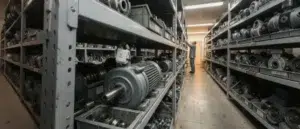


Every business has assets that matter: tools, equipment, medical devices, returnable containers, forklifts, and the physical items that keep operations running. When those assets are misplaced, lost, or unaccounted for, the cost shows up in time, productivity, and operational reliability.
RFID asset tracking gives organizations a way to know where their valuable assets are, how they are being used, and when they last moved. The global asset tracking market was valued at $36.3 billion in 2020 and has continued to grow as organizations recognize the value of real-time asset visibility.
This guide explains what RFID asset tracking is, how it works, what components an RFID tracking system requires, and where it delivers the most value.
What Is RFID Asset Tracking?
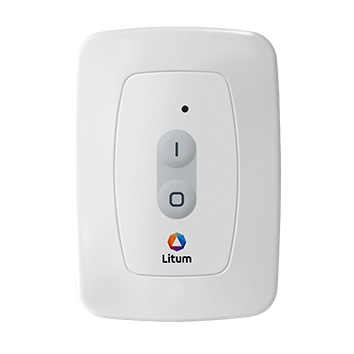
RFID asset tracking uses radio frequency identification technology to identify, locate, and manage physical assets. Each asset carries an RFID tag containing a microchip and antenna. When a tag enters range of an RFID reader, it transmits its unique identifier. The system logs and processes that data.
Unlike manual tracking methods that rely on clipboards or barcode scanning, RFID technology works without line of sight between reader and tag. Multiple items can be read in a single pass, making it far more practical in high-volume, fast-moving environments.
RFID asset tracking systems give businesses:
- Real-time knowledge of asset locations
- Automated records of asset movement and usage
- Less time spent searching for misplaced assets
- Utilization data for maintenance planning and procurement
- Audit trails for compliance and asset management reporting
RFID Asset Tracking System: The Core Concept
An RFID asset tracking system replaces manual, error-prone processes with automated data collection. Assets are tagged once. Every time a tagged asset passes an RFID reader, its location and status update in the system. This creates a reliable record of asset data with no manual input required.
The RFID asset tracking solution brings together hardware , tags and readers , with asset tracking software and integration capabilities. Together, these components form an RFID tracking system that scales from a single facility to enterprise-wide deployments.
How RFID Asset Tracking Works
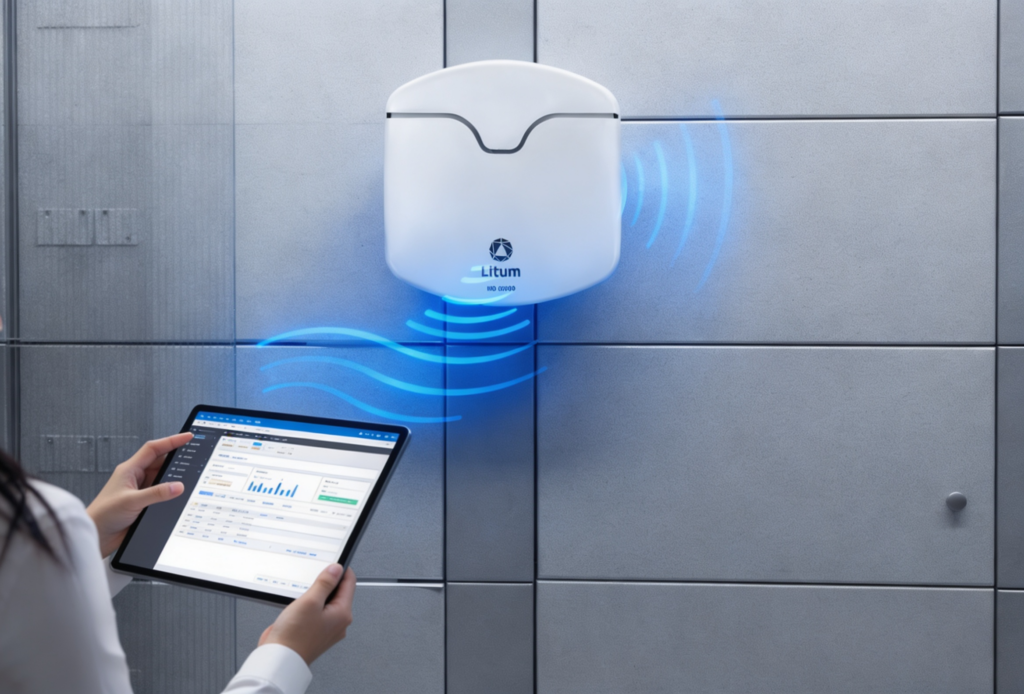
RFID asset tracking works through electromagnetic communication. Radio signals pass between tags and readers, transmitting asset identity and updating the tracking system.
When an RFID reader emits a signal, RFID tags within range respond with their stored identifier. The reader captures this and passes it to the asset tracking software, which updates the asset record with location, timestamp, and any other data requirements.
Fixed RFID Readers
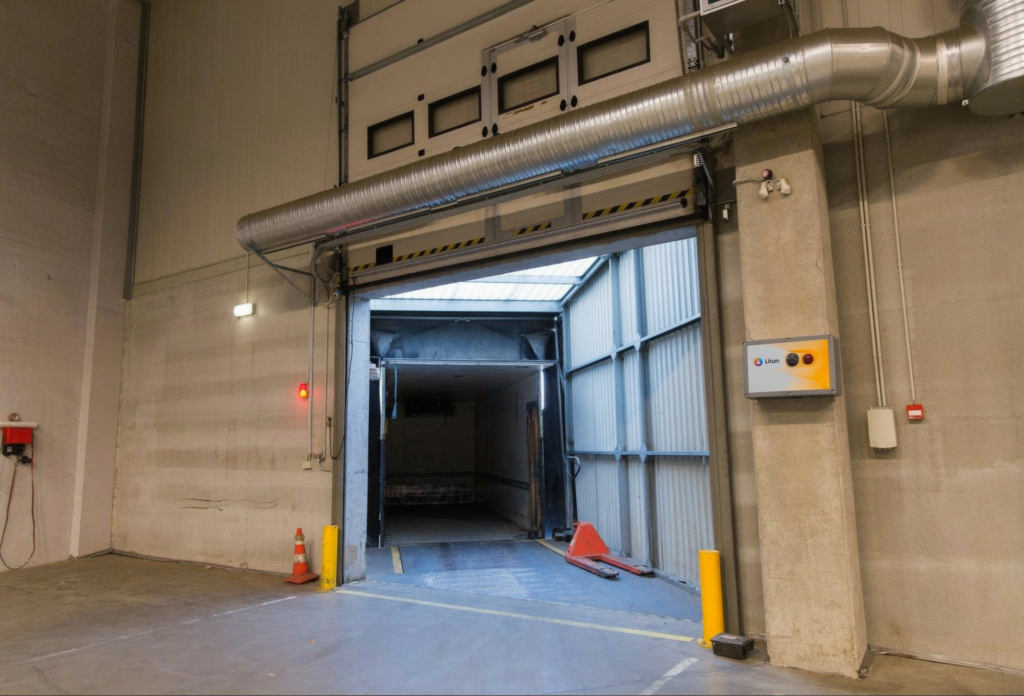
Fixed readers are installed at specific locations , dock doors, room entrances, or storage zones. Every time a tagged asset passes through, the system logs the event. This works well for tracking asset movement between zones and monitoring access to controlled areas.
Handheld RFID Readers
Handheld RFID readers let users scan assets in any location. An operator walks through a storage area and captures the location of every tagged asset within range. A manual count that takes hours can be done in minutes.
How RFID Work: The Tag-Reader Exchange
A passive RFID tag has no battery. It draws energy from the reader’s radio signal, powers the microchip, and transmits its stored ID back. An active tag has its own battery and broadcasts its signal independently. In both cases, the exchange happens in milliseconds. The system can process multiple assets in a single read cycle , a major efficiency advantage over one-at-a-time barcode scanning.
Key Components of an RFID Asset Tracking System
RFID Technology Components
RFID Tags
RFID asset tags are attached to or embedded in assets. Each tag contains a microchip storing a unique identifier and an antenna that communicates with readers. RFID devices come in many form factors , labels, hard tags, encapsulated tags for harsh conditions , suited to different asset types.
RFID Readers
RFID readers emit radio frequency signals and receive tag responses. Fixed readers are installed at defined locations. Handheld readers allow mobile scanning. The choice depends on the workflow , fixed readers for automated zone tracking, handheld for periodic audits.
Asset Tracking Software
RFID asset tracking software receives data from readers, maintains a database of all tagged assets, tracks movement history with active RFID, generates utilization reports, and triggers alerts when assets leave defined areas. Good asset management software connects with ERP, WMS, and CMMS systems, linking asset data to broader business workflows.
Supporting Data Infrastructure
RFID asset tracking systems need network infrastructure to move reader data to software. This may be Wi-Fi, LAN, or cellular. Integration middleware connects RFID data to enterprise systems. Configuration tools manage tag populations and reader settings. These components handle the data requirements of a full RFID deployment.
Types of RFID Tags for Asset Tracking
Passive RFID Tags
Passive tags have no battery. They draw energy from the reader’s field to power the chip and send their ID. They are small, lightweight, and last virtually indefinitely. Passive tags are the most widely used type for asset tracking.
Passive tags use UHF RFID frequencies (860–960 MHz). Read distance reaches up to 12 meters with fixed readers. That is enough for most asset tracking needs: inventory management, tool tracking, and returnable container tracking.
Active RFID Tags
Active tags carry their own battery and broadcast signals at set intervals. Read range extends to 30-100 meters. They provide real-time location accuracy and precision, unlike passive RFID tags which only register presence at fixed read points and do not capture movement data. This makes them well suited for large assets, vehicle tracking, and range tracking across wide areas. They are best for high-value assets where continuous long-range detection is needed.
UHF RFID Tags
UHF RFID is the dominant standard for enterprise asset tracking. UHF tags support long read ranges, high read speeds, and reading multiple assets in a single pass. This makes UHF the standard choice for supply chain, industrial, and healthcare asset tracking.
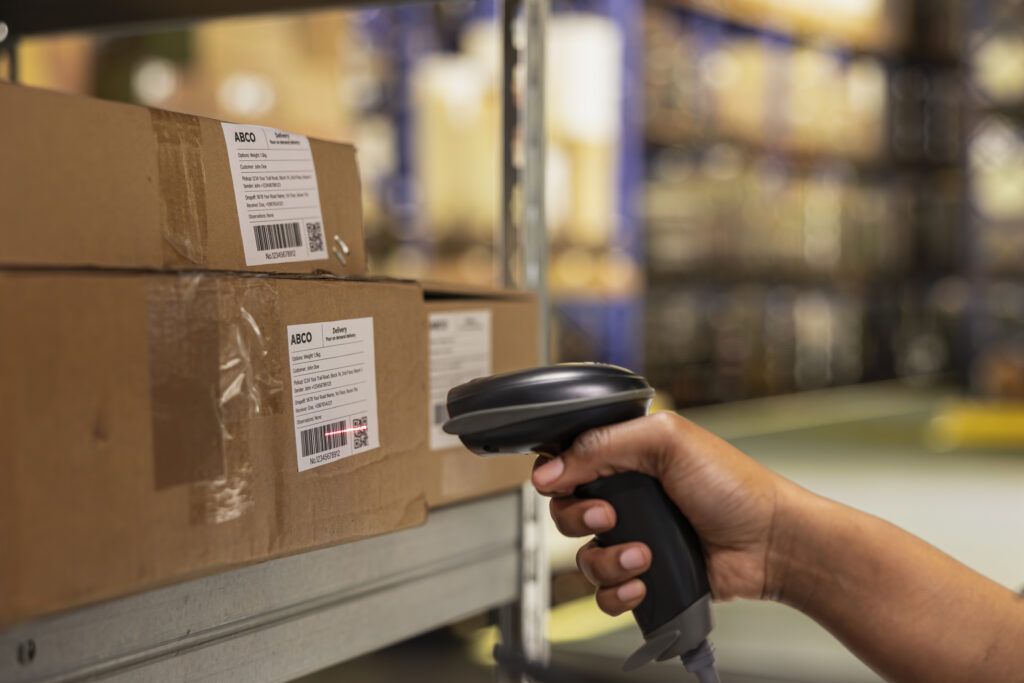
RFID Asset Tracking vs. Barcodes
Barcodes and RFID both serve identification purposes, but they work very differently in practice.
- Line of sight: Barcodes require direct visual access. RFID reads through packaging, boxes, and containers.
- Read speed: A barcode scanner reads one item at a time. An RFID reader handles multiple items in one pass.
- Automation: Barcodes need a person to scan each item. Fixed RFID readers log assets as they pass , no manual interaction needed.
- Durability: Barcode labels deteriorate from dirt, moisture, and wear. RFID tags hold up in industrial conditions.
- Data: Barcodes store limited fixed data. RFID tags store unique identifiers and support larger data payloads.
For operations conducting large-scale inventory counts or tracking assets in challenging environments, RFID asset tracking delivers more business value than barcode-based systems.

RFID Asset Tracking Applications by Industry
RFID asset tracking creates value wherever businesses manage large numbers of physical assets. The technology is industry-agnostic , the core mechanism is the same, but the assets and outcomes differ by sector.
Healthcare Applications
In healthcare, RFID asset tracking locates and manages medical equipment , devices, beds, infusion pumps, wheelchairs, and ventilators. Clinical staff spend significant time searching for misplaced medical equipment. RFID eliminates most of this by showing every tagged item’s location on a live map.
Healthcare RFID also supports maintenance compliance by recording actual usage hours per device. This enables service scheduling based on real utilization rather than calendar estimates.
Manufacturing and Construction Applications
Manufacturers use RFID to manage tools, fixtures, returnable containers, and mobile equipment. Knowing where key assets are at each production stage reduces delays and prevents loss.
In construction, tool and equipment theft costs the industry $1 billion annually in the United States. RFID asset tracking creates an auditable record of where equipment is and when it was last seen.
Warehousing and Logistics Applications
In warehousing and logistics, RFID manages returnable packaging, pallets, containers, and handling equipment. Industry estimates put pallet and packaging losses at $750 million a year across US industries. RFID creates accountability across the supply chain.
Retail Applications
Retailers use RFID for item-level inventory management across large store footprints. This supports near-real-time accuracy, loss prevention, and omnichannel fulfillment. Some retailers have reported $500 million in inventory-related savings after large-scale RFID deployments.
Aviation Equipment Tracking
In aviation, RFID tracks aircraft components, tools, and service equipment. Airlines lose millions of dollars each year to misplaced equipment. RFID provides the traceability needed to reduce this loss and support safety compliance requirements.
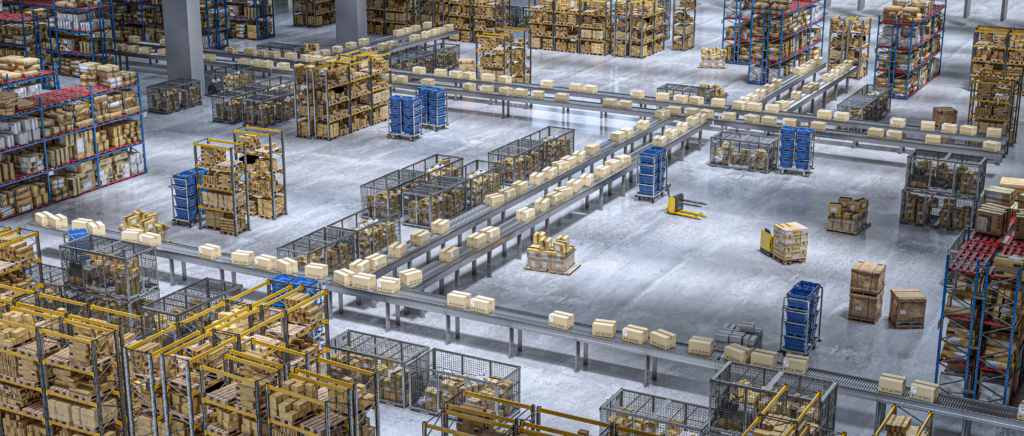
RFID Asset Tracking in the Supply Chain
RFID inventory tracking is one of the most established applications of RFID technology. Across the supply chain, RFID connects physical goods to digital records in real time.
RFID Inventory Tracking
RFID inventory tracking replaces periodic manual counts with continuous visibility. Instead of closing a section for a manual audit, RFID tracking systems update inventory records as items move , through dock doors, into storage zones, and out to fulfillment. This supports higher inventory accuracy and faster cycle counts.
Supply Chain Management
Across supply chain management, RFID provides end-to-end visibility into where assets, containers, and goods are at every stage. This supports faster receiving and shipping, better dock scheduling, and more accurate inventory data across distribution networks.
Businesses that deploy RFID in supply chain management consistently report strong returns. Research cited by Inc. found that location intelligence deployments deliver an ROI of 275% on average.
Benefits of RFID Asset Tracking
Reduced Asset Loss
Ghost assets , items that appear in a database but cannot be found , are a persistent problem in large asset portfolios. RFID asset tracking eliminates ghost assets by keeping a continuously updated record of every tagged item’s location. This reduces write-offs and gives procurement teams better data for replacement decisions.
Improved Asset Visibility
When businesses know where valuable assets are, teams use them more effectively. Assets are shared across departments, idle time drops, and organizations avoid sourcing additional items they already own. RFID asset tracking provides the reliable asset visibility that manual methods cannot sustain at scale.
Better Inventory Management
Accurate inventory management depends on accurate data. RFID asset tracking provides real-time inventory accuracy across warehouses, stores, and supply chain nodes , replacing periodic estimates with continuously updated records. This supports better ordering decisions and reduces overstock situations.
Time Tracking and Maintenance Planning
RFID asset tracking records actual usage data for every tagged asset. This supports time tracking for maintenance scheduling , servicing assets based on real hours of use. The result is better asset reliability, fewer unplanned breakdowns, and documented histories that support compliance.
Operational Efficiency
The time cost of manual asset management is significant across all asset-intensive industries. RFID asset tracking reclaims this time by reducing search time that accumulates across thousands of daily decisions. The efficiency gains are one of the most consistent findings in RFID deployments across industries.
RFID Asset Management Software and Data
When active RFID is deployed for real-time asset location across a facility, the software transforms that raw tracking data into actionable insights for decision makers. RFID hardware collects the raw data. Asset management software turns that data into decisions.
What RFID Asset Tracking Software Does
RFID asset tracking software receives data from the active RFID tracking system, maintains a structured database of all tagged assets, and presents information in dashboards and reports. Key capabilities include:
- Live asset location maps showing where every tagged asset is now
- Movement history , a full time tracking log of where each asset has been
- Utilization reporting , showing how often multiple assets are active versus idle
- Alerts when assets leave defined zones or go missing
- Integration with ERP, WMS, and CMMS for seamless data flow
Asset management software also handles the data requirements of large RFID deployments , managing multiple assets across large tag populations, processing high-volume reader data, and keeping records accurate as inventories change.
Choosing an RFID Asset Tracking Solution
The right RFID asset tracking solution depends on the environment, asset types, and operational goals. Key factors include the range tracking needed, whether real time location of assets are required or not, integration requirements with existing systems, and whether the solution needs to scale across multiple items and multiple sites.
RFID Asset Tracking and RTLS: How They Work Together
RFID asset tracking and Real-Time Location Systems (RTLS) serve different but related purposes.
RFID tells you what an asset is and when it passed a specific reader. It is event-based , a data point each time a tag is read.
RTLS tells you where an asset is right now, on a live map, updated continuously. Many businesses start with RFID asset tracking for checkpoint visibility and inventory management, then extend to RTLS for continuous indoor positioning. Litum’s platform supports both on shared infrastructure, allowing organizations to start with RFID asset tracking and expand into real-time asset tracking as needs grow.
For healthcare, this supports medical asset tracking alongside patient safety and staff duress on a single platform. For industrial businesses, RFID asset tracking integrates with forklift tracking, connected worker safety, and process tracking.
Frequently Asked Questions
What is RFID asset tracking?
RFID asset tracking uses radio frequency identification technology to identify, locate, and manage physical assets. RFID tags on assets communicate with readers to transmit unique identifiers, which are logged by asset tracking software. The result is a continuous record of where assets are, how they are being used, and when they last moved , with no manual scanning or data entry.
How does RFID asset tracking work?
RFID tags contain a microchip and antenna. When a reader emits a signal, tags within range respond with their stored identifier. Fixed readers at doorways log assets as they pass. Handheld readers let users scan in any location. The data flows to asset tracking software that maintains location history, generates reports, and triggers alerts.
RFID vs. Barcode: Which is better for asset tracking?
RFID outperforms barcode tracking in most operational environments. RFID does not require line of sight, reads multiple items in a single pass, and can be fully automated with fixed readers. Barcode scanning is done one item at a time and needs direct line of sight. For high-volume, automated, or large-scale asset tracking, RFID delivers significantly more business value.
What types of assets can be tracked with RFID?
Any physical asset can be tagged and tracked , from small tools and medical equipment to large machinery, vehicles, and pallets. Common applications include medical device tracking in hospitals, tool and equipment tracking in manufacturing and construction, returnable container and pallet tracking in logistics, and inventory management in retail and warehousing.
What is the difference between RFID asset tracking and RTLS?
RFID asset tracking provides checkpoint-based visibility , it tells you what an asset is and when it passed a specific reader. RTLS (Real-Time Location System) provides continuous indoor positioning , it tells you where an asset is at any moment, anywhere in the facility. Many businesses use RFID for inventory management and checkpoint tracking, then add RTLS for continuous location awareness of high-value assets.
Ready to transform your asset visibility? Explore Litum’s asset tracking solutions and see how RFID and RTLS technology can give your business complete control over every asset , from real-time location to utilization data and compliance reporting.