

Yard Management RTLS
Limited yard visibility creates risk, delays, and operational disruption. Litum delivers Yard Management RTLS to drive live location awareness for vehicles, assets, and personnel, backed by movement history. Improve safety and keep yard operations on track.





Real-Time Yard Visibility That Eliminates Guesswork

When yard operations rely on manual checks, delays become inevitable. Litum Yard Management RTLS delivers real-time and historical visibility across vehicles, assets, and people, so teams can act faster and run a safer, more efficient yard.
Stop searching for trailers, vehicles, or equipment with real-time tracking and a live yard map
Prevent congestion and misrouted yard moves using zones, geofences, and automated alerts
Reduce dwell time and transportation costs with movement history and performance reporting
Improve accountability across yard activity with time-stamped location data and traceability
Lower risk in high-traffic areas with controlled zones, alerts, and faster response visibility
*Covered by Litum solutions to date
Turn Yard Movement Into Operational Intelligence
Real-time tracking and reporting for smarter yard operations
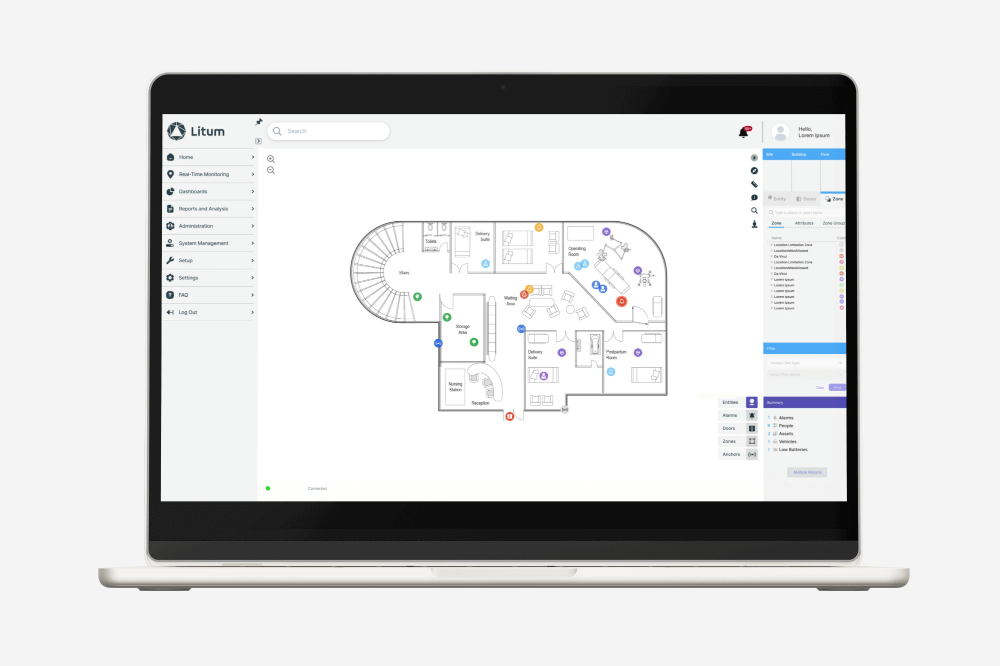
Real-Time Location Data
Maximize yard throughput with real-time location data across vehicles, trailers, assets, and people, ensuring everything is in the right place at the right time
Streamline yard workflows by identifying idle vehicles, stalled loads, or underutilized equipment, reducing delays and improving coordination from gate to dock
Minimize losses and unplanned dwell with real-time alerts for unauthorized movement, wrong-zone entry, and overdue trailers or equipment
Improve yard efficiency by analyzing movement patterns and dwell history to uncover congestion points, optimize routes, and refine yard layout
Automate compliance and reporting with time-stamped location history for yard activity, safety zones, incident review, and operational accountability
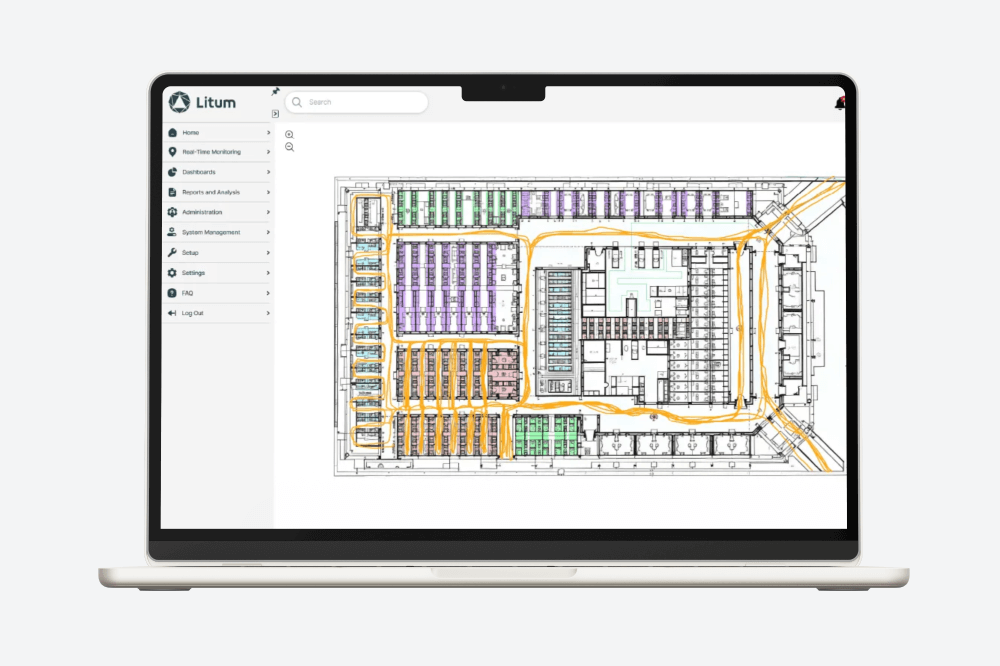
Spaghetti Diagrams
Visualize yard movement paths across vehicles, trailers, equipment, and personnel to identify redundancies and optimize yard flow
Reduce inefficiencies by uncovering unnecessary moves, misrouted yard trips, and avoidable relocations that create delays and idle time
Highlight underutilized areas and congestion points to improve space utilization and allocate yard resources more effectively
Pinpoint high-traffic zones to prevent bottlenecks near gates, staging lanes, and docks, improving turnaround and availability where it’s needed most
Support data-driven decision-making with clear visual insights into yard movement and dwell patterns, enabling smarter planning and continuous improvement
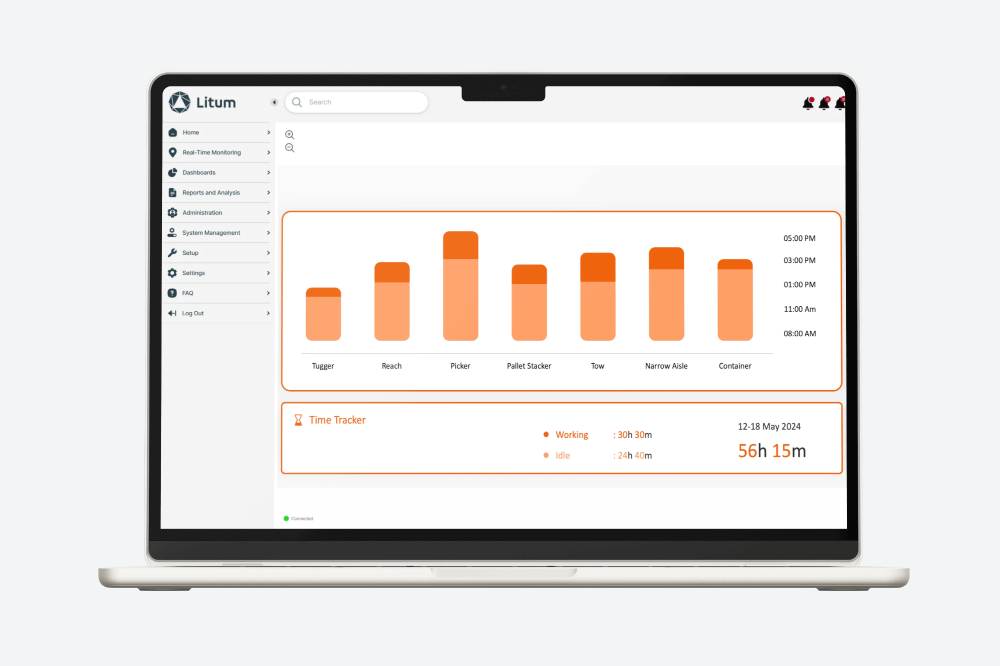
Utilization Reports
Track utilization by vehicle, trailer, or equipment type to identify underused resources and overloaded yard capacity
Generate zone-specific utilization reports (gate, staging, dock, parking) to optimize placement and reduce unnecessary yard moves
Monitor total dwell and active time to reduce idle hours, improve turnaround, and control detention/demurrage exposure
Use zone-based insights to uncover stalled assets, overloaded areas, and opportunities to rebalance yard activity
Track movement frequency to identify congestion patterns, streamline routing, and reduce delays across yard workflows
Identify peak activity periods to better allocate labor, vehicles, and equipment while ensuring operational continuity
Proven Innovation, Recognized Globally





Explore Our Resources
Discover Other RTLS Solutions
FAQ
What is yard management RTLS?
Yard management RTLS is a real-time location system that provides live visibility over vehicles, trailers, assets, and personnel across a logistics or industrial yard. It replaces manual clipboard-based tracking with automatic location data, giving yard managers a live map of everything in the yard and a full movement history for every asset.
What is a yard management system?
A yard management system is a software and hardware solution that helps logistics and industrial facilities manage the movement of trailers, trucks, yard vehicles, and equipment through a yard. When powered by RTLS, it provides real-time location data rather than relying on manual check-ins, radio calls, or gate logs that quickly become outdated.
What problems does yard management RTLS solve?
The most common problems are trailers sitting unlocated, gate queues forming during peak hours, dock doors waiting on vehicles that are in the wrong position, and detention charges accumulating because dwell time is not monitored. RTLS solves these by giving dispatchers and yard managers live location data and automated dwell alerts before delays become costly.
How does yard management RTLS work?
Tags are assigned to trailers, yard trucks, and other assets at the gate or point of entry. As tagged assets move through the yard, fixed infrastructure reads their location and updates a live map automatically. The system tracks dwell time, dock assignments, gate entry and exit, and generates reports for carrier coordination and operational analysis.
Can yard management RTLS reduce detention charges?
Yes. Detention charges accumulate when carriers wait beyond their allotted time because yard operations are not moving fast enough. RTLS gives dock leads and dispatchers real-time visibility into where trailers are and how long they have been waiting, enabling faster dock assignments and reducing the idle time that triggers detention fees.
Does yard management RTLS integrate with WMS, ERP, and TMS?
Yes. Litum’s platform integrates with WMS, ERP, and TMS systems so yard location and status data flows automatically into scheduling, inventory, and carrier management workflows. This eliminates double entry and keeps all systems updated without manual intervention.
Can RTLS cover both indoor and outdoor areas?
Yes. Litum’s yard management solution supports mixed indoor and outdoor environments using UWB, BLE, or a hybrid approach depending on the layout. This makes it suitable for facilities where assets move between covered docks, open yard areas, and staging lanes.
What size operations benefit most from yard management RTLS?
Any facility with a significant volume of trailers, yard trucks, or mobile assets moving through a yard benefits from RTLS visibility. The ROI is strongest in high-throughput distribution centers, manufacturing plants with active inbound and outbound flows, ports, and intermodal facilities where yard delays have a direct impact on production or delivery performance.