

Process Tracking RTLS
Track every product, step, and movement in real time. Litum helps manufacturers reduce bottlenecks, improve cycle times, prevent delays, and turn production visibility into measurable ROI.





Track each step with Manufacturing Process Tracking
Track and trace manufacturing processes from start to end with our process tracking system. Track products through all manufacturing steps, create alerts for products that fail tests, and trace products through rework. Recognize each product and display specific instructions for the operator, thereby eliminating manual scans. Manage rejects and products through rework.
Track with maintenance status
Maintenance tracking lets you monitor status, calibration schedules, and repair records. Litum process tracking system Instantly identifies assets that require immediate attention, as they pass their due date, with their periodic maintenance or calibration.
Instant notification of breakdowns with maintenance tracking system
Trigger maintenance requests via the call button on the tag in case equipment malfunctions, instead of calling for a maintenance operator. Our manufacturing process tracking software can detect operating malfunctions to enable quick response for repairs.
Improve manufacturing workflows
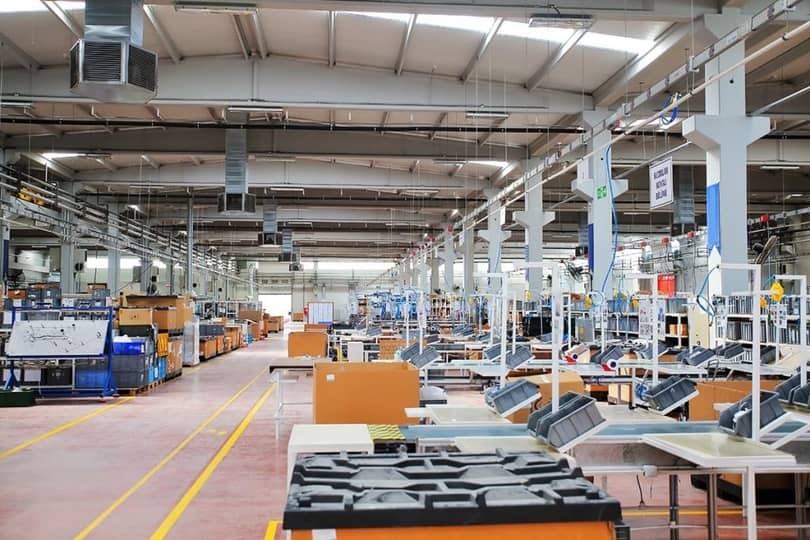
Provide product-based information to assembly workers and keep production uninterrupted. Record data unique to each product, and gather information that enables analysis of how the assembly system operates and how it can be modified to enhance KPI’s.
Improve repair time with Maintenance Tracking
Track and manage maintenance teams, monitor repair time, and enforce maintenance KPIs (such as MTTR – mean time to repair, MTBF – mean time between failures, etc. using the Litum process tracking system.
Equipment replacement
When a device is down, the manufacturing tracking system can automatically identify, locate, and source a replacement from another department.
Visibility
Production line disruption is prevented by providing visibility into the quantity and location of all raw materials, subassemblies, and finished products
Flexible
The process tracking system facilitates production customization and manufacturing of multiple work orders at a time
Traceability
Critical components of every single product can be identified for traceability using our manufacturing part tracking system
How Maintenance & Process Tracking Works
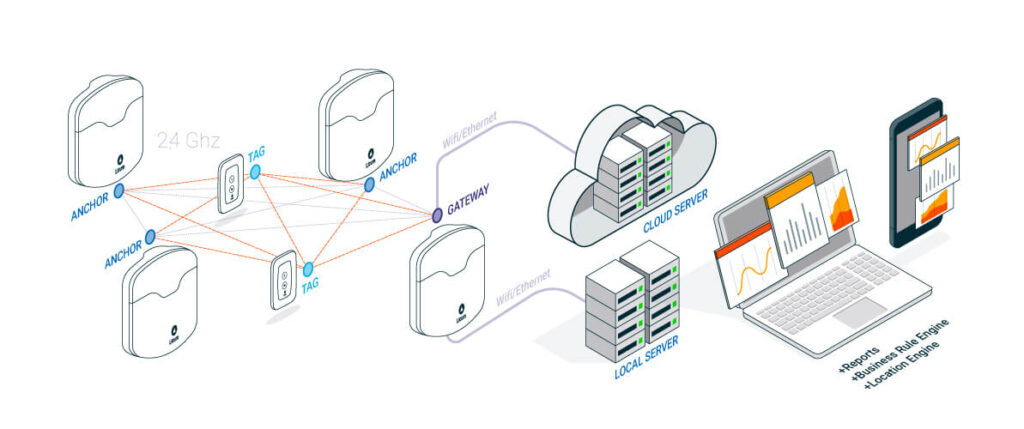
Litum integrates UHF RFID and ultra-wideband – UWB RTLS technology into battery-powered active RFID trackers installed on the products in the manufacturing process. Litum also provides housings for products to ensure a secure and reliable fit. Our tags work in conjunction with our RTLS mesh network, installed throughout your facility to create an invisible “indoor tracking system” that monitors every product’s location with the highest accuracy available.
Our track-and-trace manufacturing solution and process tracking system can identify malfunctions in assembly processes. The signals from process tracking RTLS tags are converted into location data using various proprietary algorithms. The location of each product is then sent on to our process management software, where it is interpreted and displayed in an easy-to-understand manner, and company-specific business rules are applied. The received data can then be used to monitor the manufacturing process for future improvements and facilitate automated maintenance tracking to reduce downtimes and keep optimal operation status.




Discover Our Resources

Discover Other Efficiency Solutions
FAQ
What is process tracking in manufacturing?
Process tracking in manufacturing is the use of a real-time location system to identify and monitor each product, component, or work-in-progress item as it moves through production stages. It gives operations teams live visibility into where each item is on the floor, how long it has spent at each station, and whether the production flow is running on schedule.
How does RTLS process tracking work?
Each product, fixture, carrier, or work-in-progress item is tagged. Fixed infrastructure across the production floor tracks tag location continuously and maps each item to its current production stage. The system records time spent at each station, flags deviations from expected flow, and gives supervisors a live view of the entire production line.
What is the difference between process tracking and asset tracking?
Asset tracking monitors the location and utilization of tools, equipment, and other physical assets. Process tracking focuses on the movement of products and work-in-progress through defined production stages. Both use the same RTLS infrastructure but serve different operational goals. Many facilities deploy both on a shared platform.
How does process tracking reduce production bottlenecks?
By recording how long each item spends at each station, the system reveals where work-in-progress is consistently delayed. Operations teams can use this data to identify understaffed stations, equipment constraints, or sequencing problems that slow throughput, and make targeted improvements based on real data rather than estimates.
Can process tracking support quality control and traceability?
Yes. The system creates a time-stamped record of every stage each product passed through, which station processed it, and how long it took. This supports root cause analysis when defects occur, provides documentation for regulatory or customer audits, and enables traceability across the entire production history of each item.
What types of manufacturing environments use RTLS process tracking?
Process tracking is used across automotive assembly, aerospace manufacturing, electronics production, heavy equipment manufacturing, food and beverage processing, and any production environment where real-time visibility into work-in-progress flow creates measurable operational value.
Can process tracking integrate with MES and ERP systems?
Yes. Litum’s platform integrates with MES, ERP, and CMMS systems so real-time production location data connects to scheduling, quality, maintenance, and inventory workflows automatically. This eliminates manual status updates and keeps all systems synchronized with what is actually happening on the floor.
Can the same RTLS platform support other use cases in the facility?
Yes. The same infrastructure supports asset tracking, connected worker safety, forklift tracking, collision warning, and emergency mustering, all without requiring separate systems for each use case.